

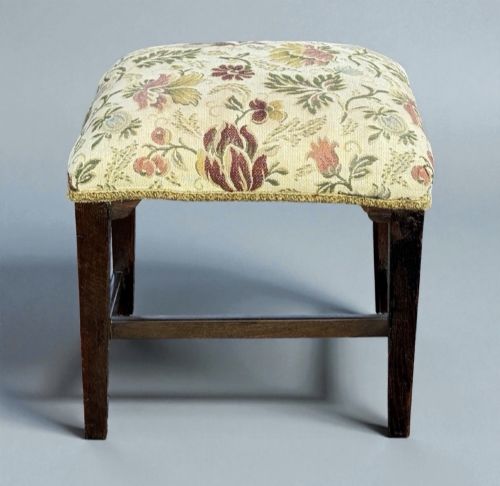


Carved Oak Dressing Stool
A carved oak dressing stool is a solid timber seat designed for the bedroom, offering period character and practical use.
Carved Oak Dressing Stool
A carved oak dressing stool is a low timber seat typically placed beside a dressing table or lowboy. The selection here ranges from nineteenth century revival interpretations down to twentieth century examples.
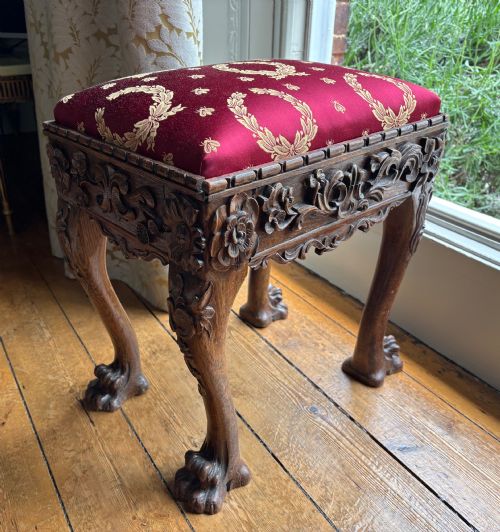
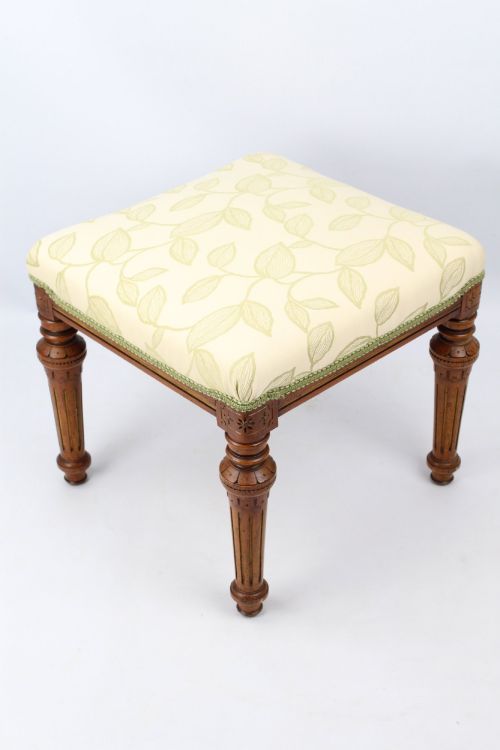
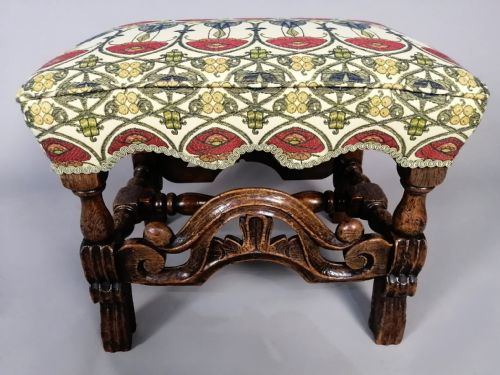
Most pieces show traditional joinery and carved wooden frames paired with upholstered pads in fabric, tapestry, or damask. Buyers frequently encounter nineteenth century interpretations of earlier styles such as William and Mary or Carolean.
Forms vary from straightforward rectangular frames to X-frame designs and pieces featuring turned legs. These items serve as functional bedroom seating or occasional seats in a hallway or living space.
How they were made
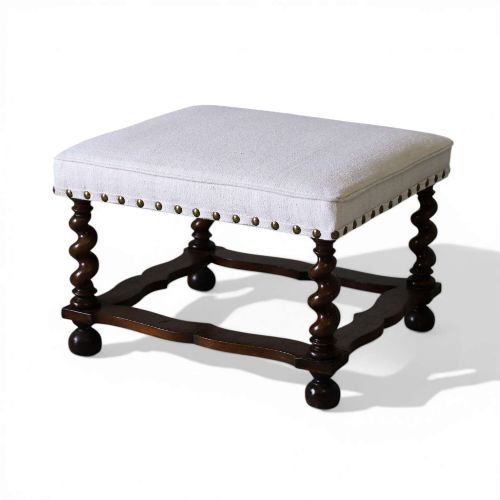
Timbers such as oak and walnut form the structural frames, often shaped with hand carving or decorative turning including spiral and bobbin details. Some examples incorporate supplementary elements like brass fittings and parcel gilt highlights.
Upholstery relies on traditional textiles, linen, and tapestry fabrics secured over padded seats. Particular pieces utilise specialist decorative methods like oyster veneered stretchers beneath the main frame.
Stool designs incorporate barley-sugar legs, oyster veneers, and X-frame structures.
What varies in quality
The standard of a carved oak dressing stool depends on the depth and crispness of the timber carving across the frame. Firmer construction in the joints and the use of substantial oak timbers elevate certain pieces above simpler production.
The choice of upholstery materials and the fidelity of revival styles also distinguish individual items. Pieces that retain period textiles or balanced proportions demonstrate superior craftsmanship.
The Carved Oak Dressing Stool Glossary
- Oyster Veneer
- Slices of wood cut across branches to reveal circular growth rings, arranged to form decorative patterns on furniture surfaces. This technique appears on specific eighteenth century and revival frames.
- Barley-Sugar Legs
- A style of wood turning resembling a twisted rope or confectionery. This decorative form is common on seventeenth century and revival seating.
- X-Frame
- A structural form where two diagonal supports cross beneath the seat to create an X shape. This Neoclassical and Renaissance-derived design provides both support and visual symmetry.
- Lowboy
- A small table with drawers, commonly used as a dressing table in the seventeenth and eighteenth centuries. It often pairs with a matching low stool.
Carved Oak Dressing Stool: Frequently Asked Questions
How do I use a dressing stool?
These low timber seats fit neatly underneath a dressing table or lowboy when not in use. They also function well as occasional seats in a bedroom or hallway.
Because of their compact size, they move easily between rooms to provide extra seating when needed.
Are these stools comfortable to sit on?
Most examples feature upholstered pads covered in fabric, linen, or tapestry to provide a soft seating surface. The padding depth varies depending on the specific period and style of the piece.
Revival pieces from the nineteenth century often replicate earlier compact proportions rather than deep modern cushioning.
What periods do these stools come from?
The selection includes pieces spanning from the seventeenth century through the Georgian era and into the nineteenth and early twentieth centuries. Many nineteenth century examples are revival pieces that imitate earlier seventeenth or eighteenth century designs.
Examining the turning, carving style, and timber helps indicate whether a piece is from an earlier period or a later revival.
How do I match a stool to a table?
Look at the timber and the decorative style, such as oak frames with carved details or turned legs, to pair a stool with a dressing table or lowboy. Matching the general period style helps create a cohesive look in a bedroom.
Height is also a practical consideration to ensure the seat fits comfortably beneath the table surface.