

Carved Oak Table Desk
When you search for a carved oak table desk, you are looking at solid timber work surfaces shaped by centuries of stylistic revival and domestic utility.
Carved Oak Table Desk
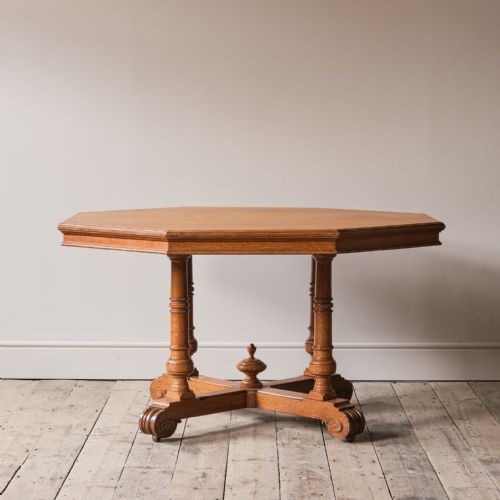
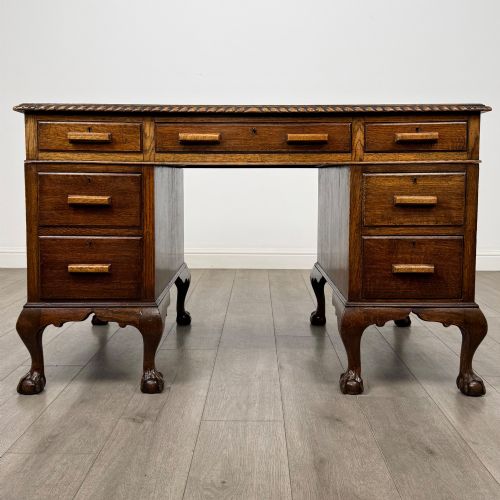
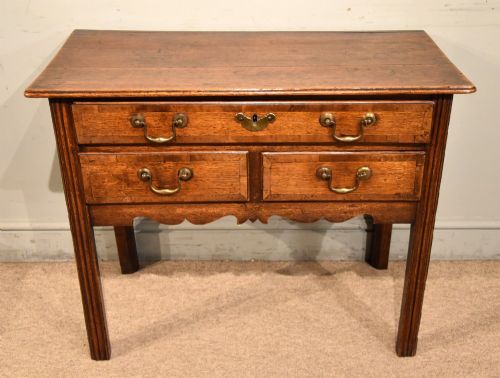
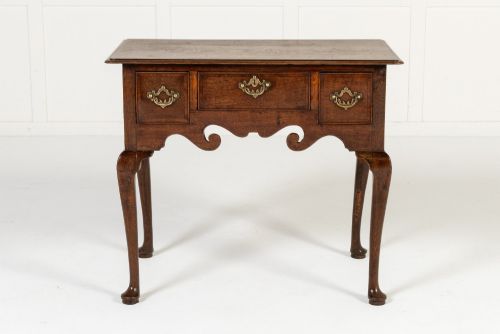
A carved oak table desk brings together sturdy timber construction and functional writing or display surfaces, spanning forms from simple lowboys to complex partners desks. The items encountered here range across the 17th, 18th, 19th, and 20th centuries, reflecting changing domestic habits.
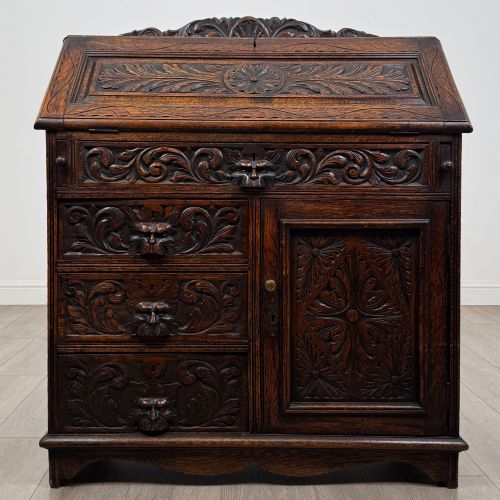
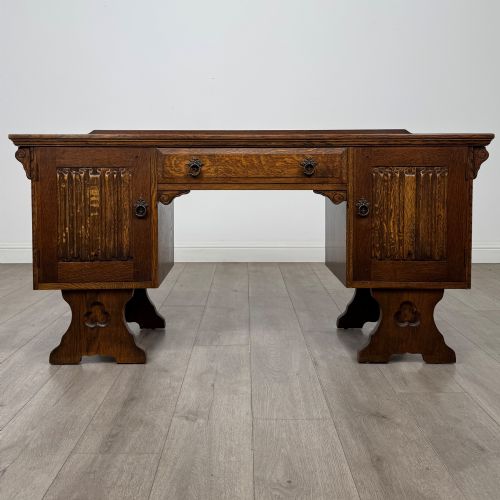
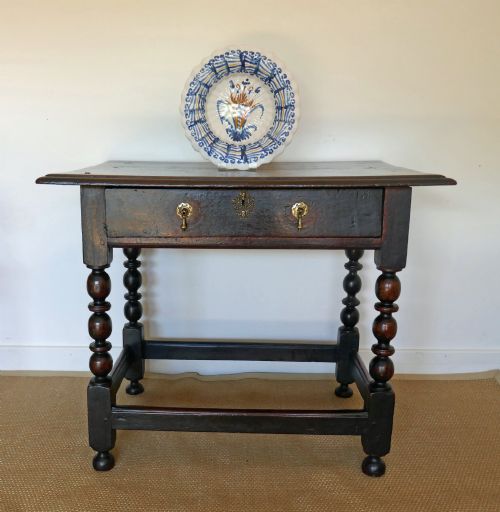
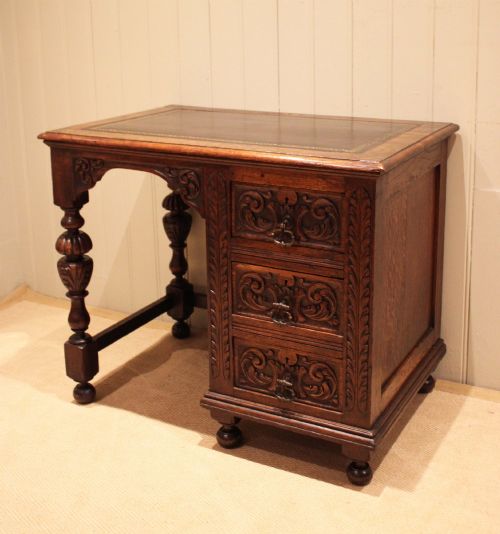
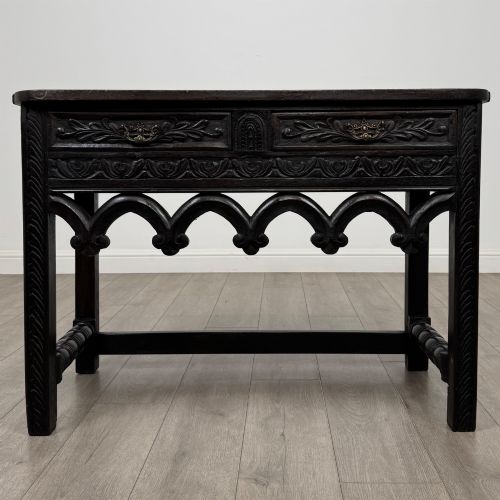
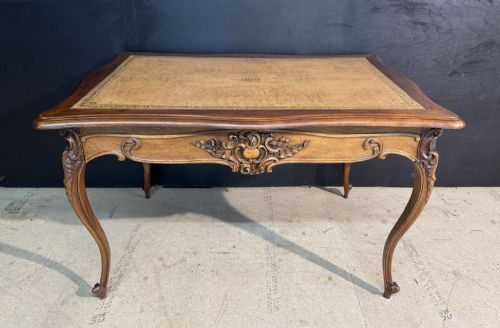
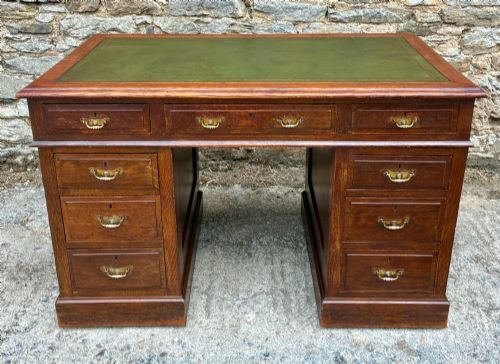
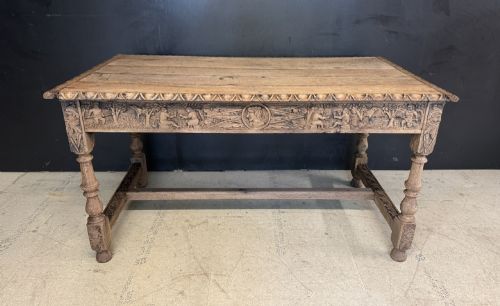
Victorian and Edwardian iterations frequently incorporate revivalist motifs such as Green Man carvings, linenfold panels, and Gothic detailing alongside standard pedestal or writing table formats. Earlier Georgian and 17th-century examples appear as lowboys and side tables with drawers, showing simpler proportions and functional restraint.
The material palette centres on oak, often paired with brass handles, leather inserts, and iron hardware, though occasional variations include beech or burr walnut. These pieces served as library desks, hall tables, and centre tables in domestic and institutional settings.
What varies in quality
The depth and crispness of the timber carving separate standard production pieces from higher-tier examples, where carvers spent substantial time rendering figures and foliage with distinct relief. Timber selection also dictates grade, with quarter-sawn oak showing pronounced medullary rays.
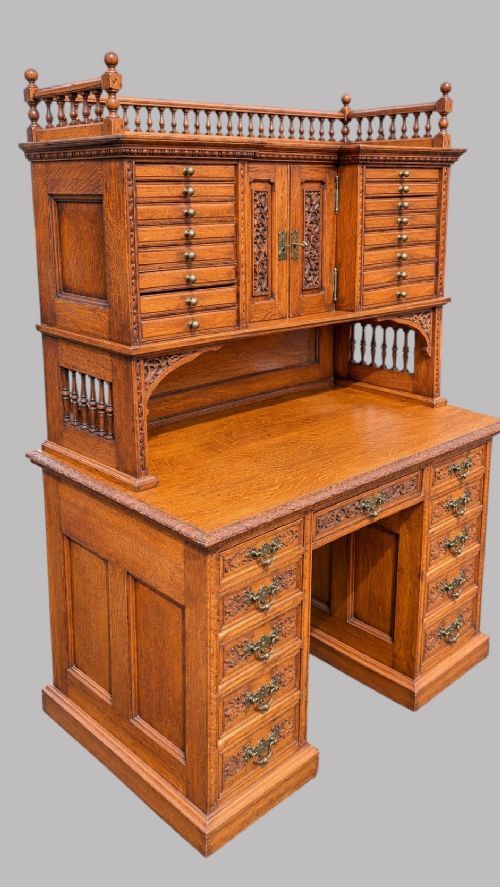
Proportion and structural integrity define the upper tier, where drawers operate smoothly within dovetailed frames and original brass hardware remains intact. Lesser examples show simpler execution, heavier machine milling, or replaced writing surfaces and hardware.
Styles represented across the inventory include Jacobean Revival, Gothic Revival, Arts and Crafts, and French Rococo influences.
Arthur Simpson of Kendal·James Shoolbred and Co·Winterhalder·Gillows
The Carved Oak Table Desk Glossary
- Lowboy
- A small oak side table with one or more drawers, originating in the 18th century and frequently used for writing or dressing.
- Green Man
- A decorative architectural and furniture motif depicting a human face emerging from or entwined with foliage.
- Linenfold
- A style of wood carving that imitates vertical folds of linen cloth, common on panels from revival periods.
- Partners desk
- A large double-sided writing table designed for two people to work face-to-face, often fitted with drawers on both sides.
- Bobbin legs
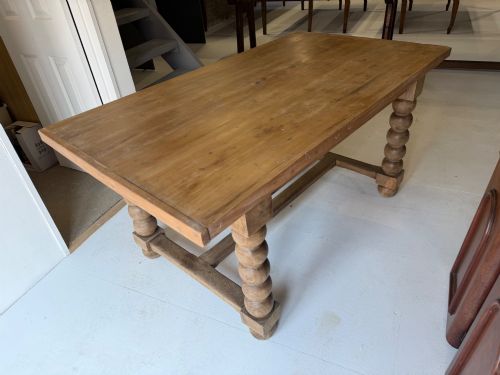
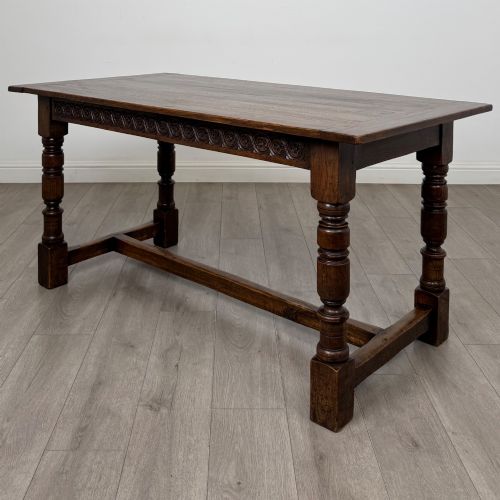
- Furniture supports turned on a lathe to resemble a string of rounded bobbins or spools, seen on 17th- and 19th-century pieces.
Carved Oak Table Desk: Frequently Asked Questions
What is a lowboy?
A lowboy is a small, leggy table featuring one or more drawers beneath the working surface. They date primarily to the 18th century and served multifunctional roles as side tables or writing desks.
Their compact proportions allowed them to sit comfortably in smaller rooms or hallways without dominating the floor space.
How do I identify a partners desk?
A partners desk is built to be accessed from both sides, featuring banks of drawers or cupboards facing each other across a central kneehole. This layout enabled two people to share the same workspace simultaneously.
They are typically larger in scale and were designed for libraries, studies, or administrative offices.
What is a Green Man carving?
A Green Man carving represents a human face surrounded by or sprouting from leaves, vines, and foliage. This motif appears frequently on Victorian and Gothic revival pieces.
It draws on ancient symbolism associated with rebirth and nature, executed here in deep relief on oak drawer fronts and friezes.
Are writing surfaces original?
Many desks retain their tooled leather writing inserts, though heavy use often necessitated replacement over time. Leather was pasted directly onto the timber or set into a recessed wood border.
Examining the edges and wear patterns helps determine whether the hide dates to the manufacture of the desk or represents a later restoration.
How do I care for an oak desk?
Solid oak benefits from regular dusting with a dry cloth and occasional treatment with appropriate beeswax to nourish the timber. Avoid placing wooden furniture near direct heat sources or in fluctuating humidity.
Leather writing surfaces require gentle cleaning and should be kept away from excessive moisture to preserve the tooling.