


Slant Top Oak Box
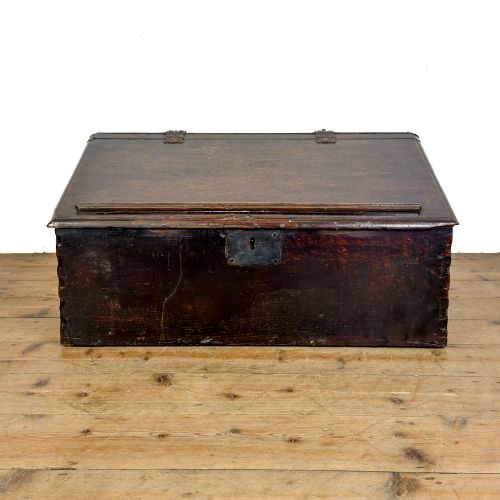
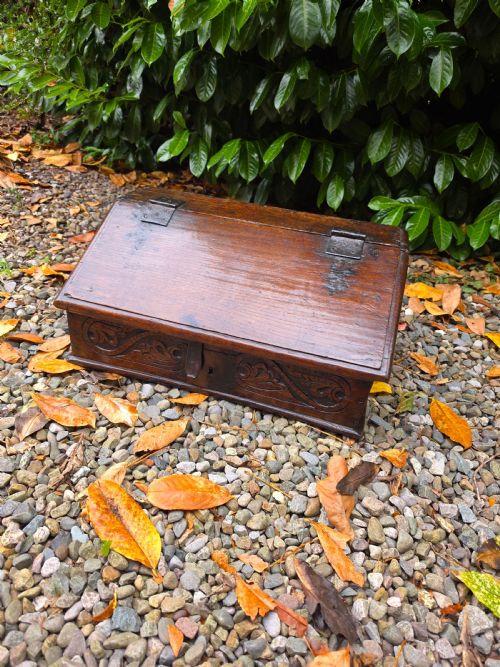
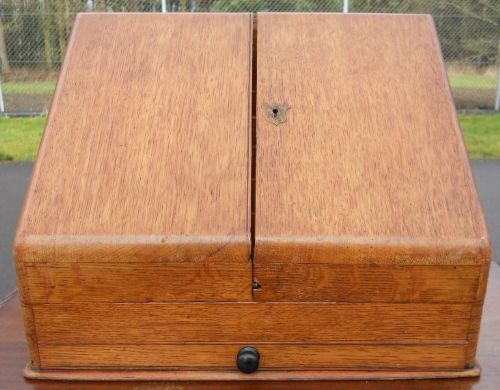
These slant top oak box examples bring solid timber utility to a room, offering practical storage with sloping writing surfaces spanning several centuries.
Slant Top Oak Box
A slant top oak box combines a sloping lid with a compact storage body, appearing across periods from the seventeenth century through to the Edwardian era. When searching for a slant top oak box, buyers encounter forms that double as small desks, bible boxes, and stationery cabinets.
The selections on this page range from early seventeenth century examples to Victorian and Edwardian iterations. Pieces include table top bureaus, desk boxes, and letter boxes constructed mainly in oak with occasional brass and iron fittings.
Construction and materials
Makers utilised solid oak to build these boxes, often pairing the timber with brass hinges, escutcheons, and iron hardware. Construction methods reflect the period of manufacture, from seventeenth century joinery to later nineteenth century manufacturing techniques.
Internal fittings vary to accommodate writing equipment and documents, sometimes incorporating glass, paper, or leather elements alongside the primary wooden structure.
The listings span from the seventeenth century through to the Edwardian period, uniting oak with brass, iron, and glass fittings.
Assessing quality
Quality rests in the integrity of the timber and the period joinery, distinguishing early examples from later adaptations like desks placed on later stands. Original hardware and untouched surfaces elevate a piece above those with replaced fittings or later alterations.
The sophistication of the internal layout, from simple storage wells to adjustable dates and fitted stationery compartments, marks the distinction between utilitarian boxes and finer table top bureaus.
The Slant Top Oak Box Glossary
- Bible box
- A hinged wooden box historically used to store a family bible, often featuring a sloping lid that served as a reading rest. These form the basis for many early slant top designs.
- Table top bureau
- A small desk designed to sit on a table or stand, featuring a slanted fall-front lid that opens to reveal compartments for writing materials.
- Escutcheon
- A flat plate of brass or iron surrounding a keyhole, serving both to protect the surrounding wood and to decorate the front of the box.
- Stationery cabinet
- An upright cabinet or box designed to hold writing paper and envelopes, often appearing in later Victorian and Edwardian variations.
Slant Top Oak Box: Frequently Asked Questions
What is a slant top oak box used for?
These pieces were originally designed for writing letters, storing important documents, or holding bibles. The sloping lid provided a convenient angle for reading and writing before dedicated desks became common.
Today, owners utilise them for desktop storage, letter sorting, or as decorative antique furniture pieces in studies and living rooms.
How do I date an oak slant top box?
Dating relies on observing construction methods, timber patination, and hardware styles. Seventeenth-century pieces typically show heavier joinery and pegged construction, whereas Victorian and Edwardian examples feature machine-sawn elements and different interior fittings.
Hardware such as brass hinges and locks also provides clues, though fittings can be replaced over centuries of use.
Are these boxes comfortable for daily writing?
While the sloping lids provide an authentic writing surface, the height depends on whether the box sits directly on a table or rests on a dedicated stand. Most table top boxes require placement at a comfortable table height.
Modern users often reserve them for occasional correspondence or laptop storage rather than heavy daily administrative work.