

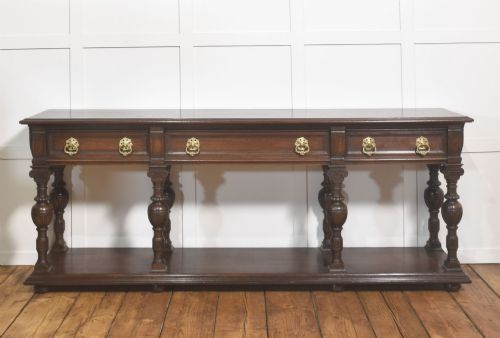


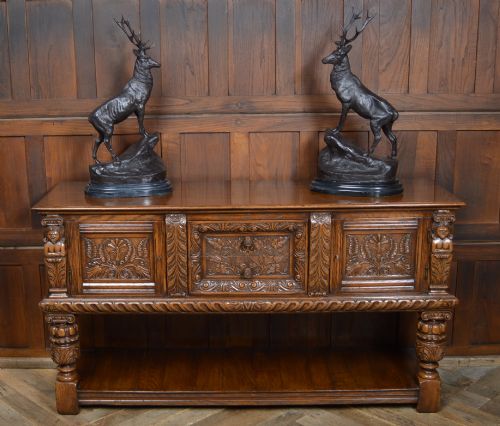
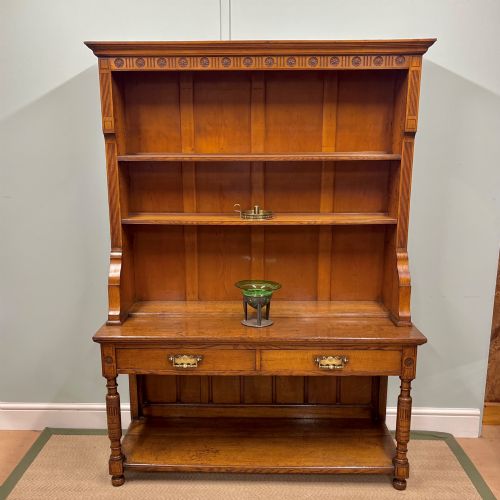


Carved Oak Pot Board
These carved oak pot board pieces are sturdy timber bases built to hold household vessels, offering enduring utility and historic character for any room.
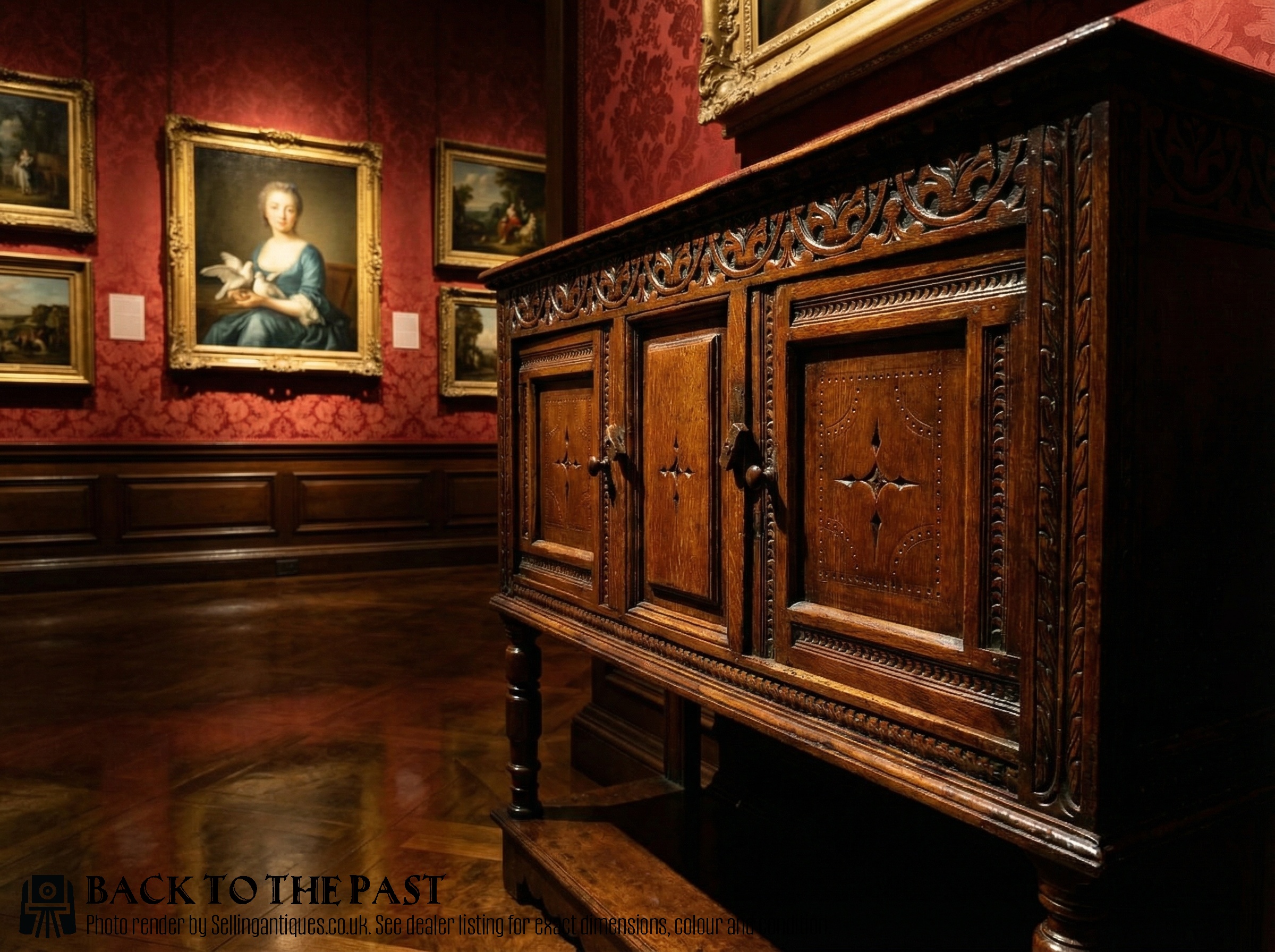
Carved Oak Pot Board
A carved oak pot board represents a sturdy tradition of domestic furniture designed with a lower shelf specifically intended for storing pots and kitchen vessels. When searching for a carved oak pot board, buyers encounter forms ranging from low dresser bases and sideboards to hall cupboards and buffet units.
The examples gathered here span several centuries and revival movements, including pieces from the seventeenth, eighteenth, and nineteenth centuries alongside Edwardian and 1920s revivals. Dresser bases and sideboard configurations dominate the selections, often displaying regional Welsh characteristics or heavy Jacobean and Tudor stylistic influences.
Earlier origins are represented by mid-eighteenth-century Welsh furniture, while later decades favour revivalist interpretations in Jacobean and Renaissance styles. Buyers most frequently meet Edwardian and early twentieth-century sideboard adaptations that retain the traditional lower pot board tier.
Materials and construction methods
The primary material across these pieces is solid oak, sometimes supplemented by secondary timbers such as fruitwood for marquetry inlay details. Master carpenters utilised traditional joinery techniques to frame heavy timber panels, ensuring structural stability for daily storage demands.
Surface decoration relies heavily on carving, linenfold panelling, and contrasting fruitwood marquetry inlays rather than applied veneers. Metalwork fittings such as brass handles and iron accents appear on opening doors and drawers, completing the utilitarian assembly of the boards and cupboards.
Carved Oak Pot Board Retail Price Guide 2026
Typical asking prices for carved oak pot board among the pieces listed under this phrase on Sellingantiques today, from the lower quarter to the upper quarter. They describe what is for sale here now, not the wider market.
Some Victorian bedside cabinets also double as pot cupboards, proving that even the smallest bedroom needed a place for its pots.
Distinctions in craftsmanship and condition
Quality separates along the depth of the carving and the integrity of the timber framing. Superior examples display crisp, hand-chiselled relief work and well-balanced proportions across the upper surfaces and lower pot boards.
The choice of timber grain and the honesty of the construction determine the standing of each piece. Finer items maintain their original structural cohesion and patination, while lesser variants show mechanical alterations or coarser timber selection.
The Carved Oak Pot Board Glossary
- Pot board
- The lower open shelf on a dresser or sideboard traditionally used for storing pots and pans. This defining feature sits near the floor between the supporting legs.
- Dresser base
- A low cabinet featuring drawers or cupboards along the top surface, omitting the upper plate rack. These units provide surface workspace and enclosed storage.
- Linenfold
- A style of carved wooden panelling that resembles folded vertical linen cloth. It appears frequently on Tudor and Jacobean revival cupboard doors.
- Marquetry
- Decorative inlay work using various coloured woods to create pictorial or geometric patterns. Artisans fit thin pieces of fruitwood into carved recesses on the oak surface.
- Jacobean Revival
- A nineteenth and early twentieth century design movement copying the heavy, geometric styles of the early seventeenth century. Furniture from this period uses bold oak turnings and deep panel moulding.
Carved Oak Pot Board: Frequently Asked Questions
What is a pot board used for?
A pot board serves as an open lower shelf designed to hold heavy kitchen pots, earthenware, and household vessels off the floor. In traditional settings, it kept essential cooking equipment within easy reach of the workspace.
Over time, these sturdy shelves transitioned from purely utilitarian kitchen storage to display areas for decorative ceramics and pewter in dining rooms and halls.
How do I date an oak sideboard?
Dating requires examining the construction marks, timber shrinkage, and style of carving on the oak panels. Seventeenth and eighteenth-century pieces often show hand-pegged joinery and distinct adze marks from manual shaping.
Revival pieces from the Edwardian era or the 1920s typically feature machine-sawn components and standardised hardware behind historical styling. Comparing the drawer linings and backboards helps confirm whether the construction is period or later revival.
Where should I place a dresser base?
A dresser base fits well in a dining room, hallway, or spacious kitchen where its surface and lower pot board receive everyday use. Placing the piece against a flat wall allows the proportions of the sideboard or buffet to anchor the room.
Ensure the room maintains stable humidity levels to protect the solid oak timber and prevent the historic joints from drying out over time.
Are these pieces made of solid oak?
Most pieces listed use solid oak as the principal construction timber for the frame, top, and lower pot board. Secondary woods sometimes appear on internal drawer linings or decorative marquetry inlays.
Makers selected oak for its density and strength, ensuring the furniture could support heavy loads of ceramics and provisions without sagging.