
Dark Oak Buffet Cupboard
A dark oak buffet cupboard anchors a dining room with heavy timber, deep grain, and centuries of utility.
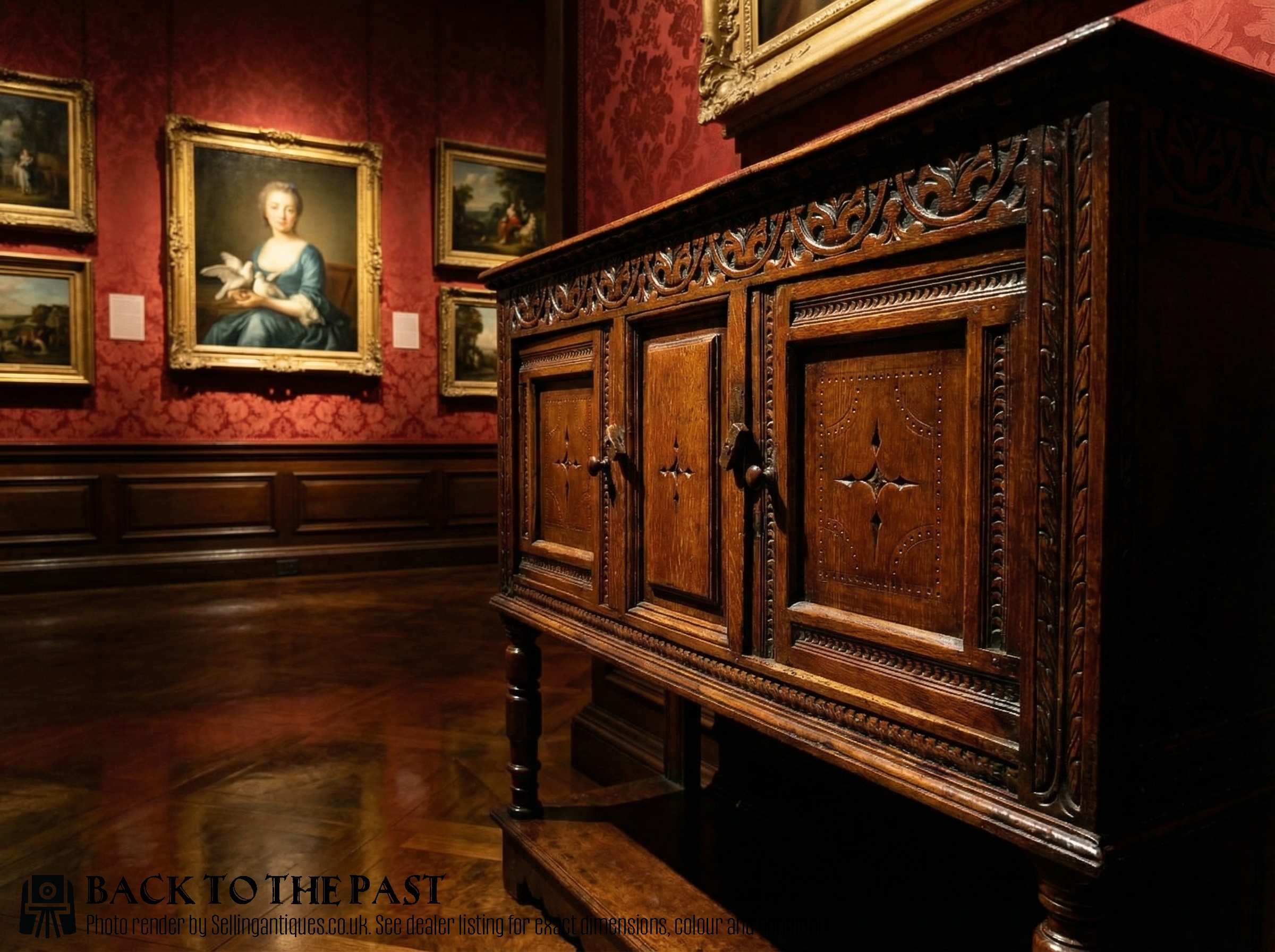
Dark Oak Buffet Cupboard
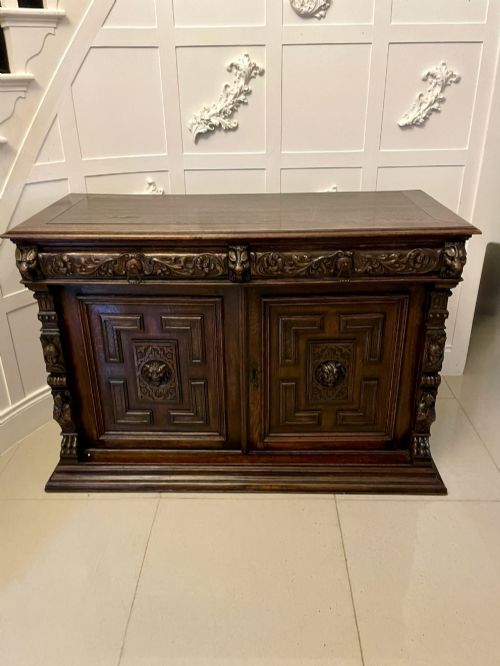
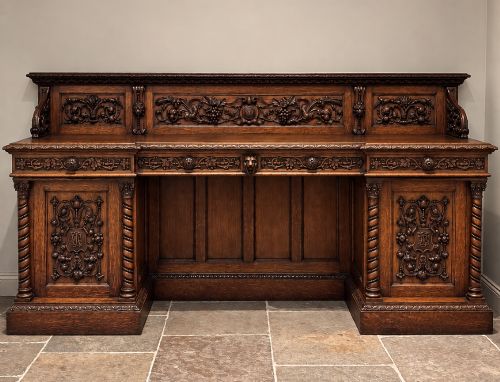
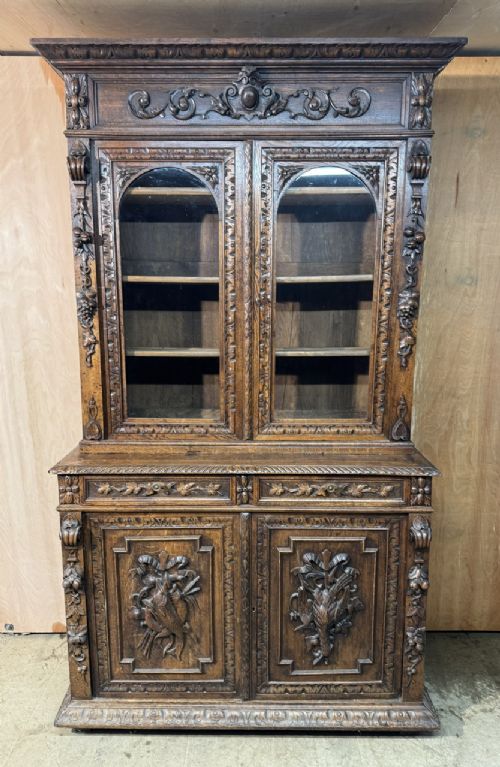
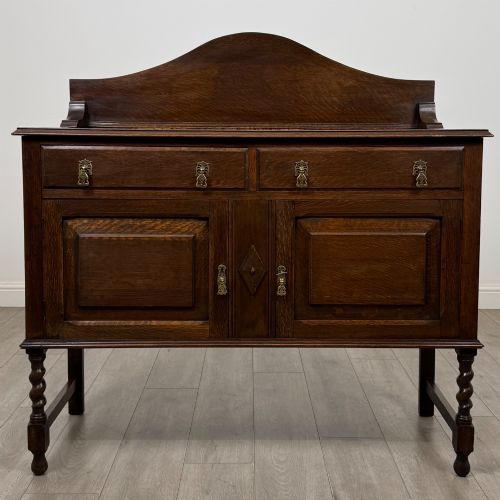
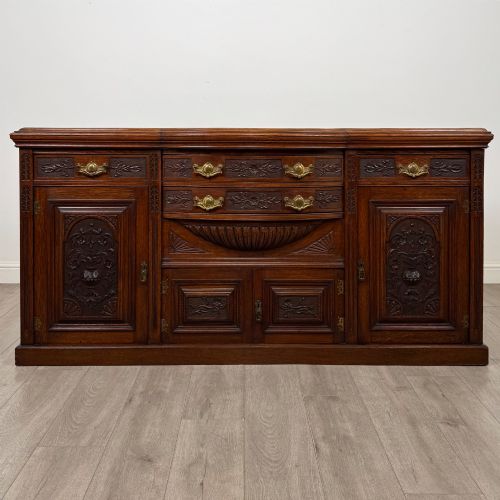
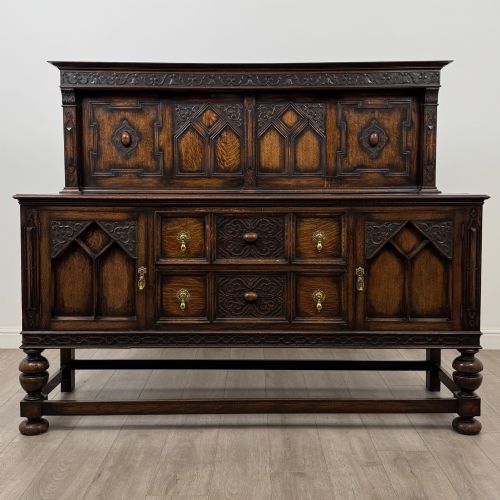
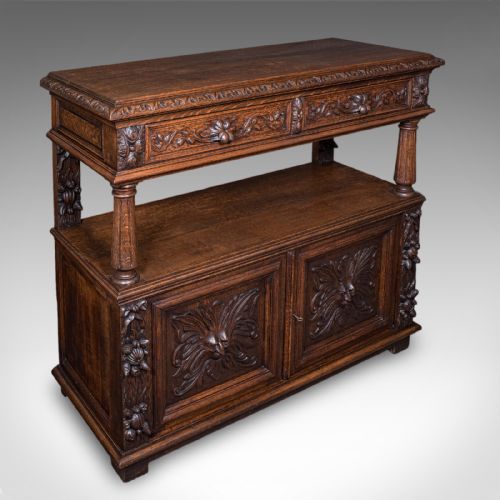
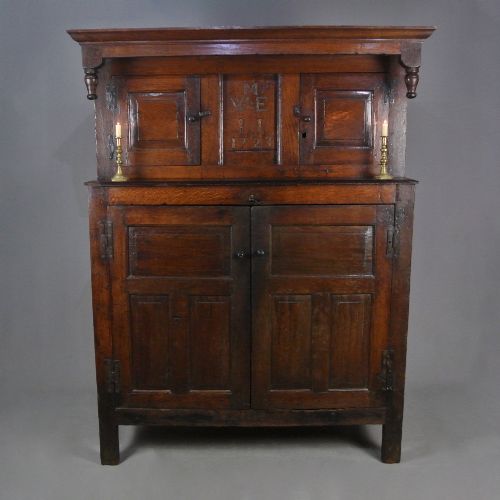
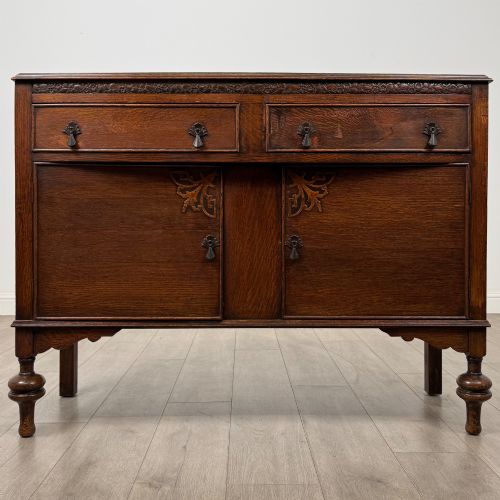
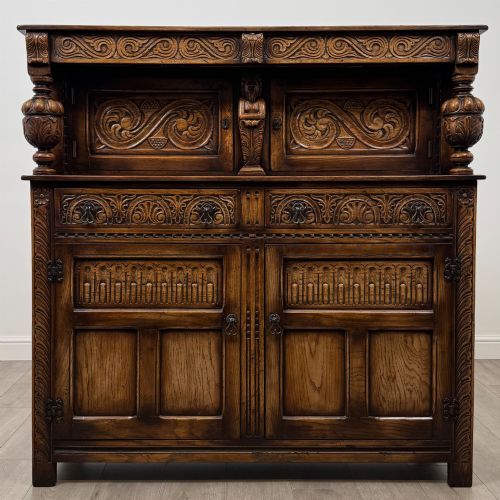
When buyers search for a dark oak buffet cupboard, they seek heavy, timber-built storage furniture designed for dining spaces and hallways. These pieces range from seventeenth-century press and court cupboards to Victorian and Edwardian sideboards built in revival styles.
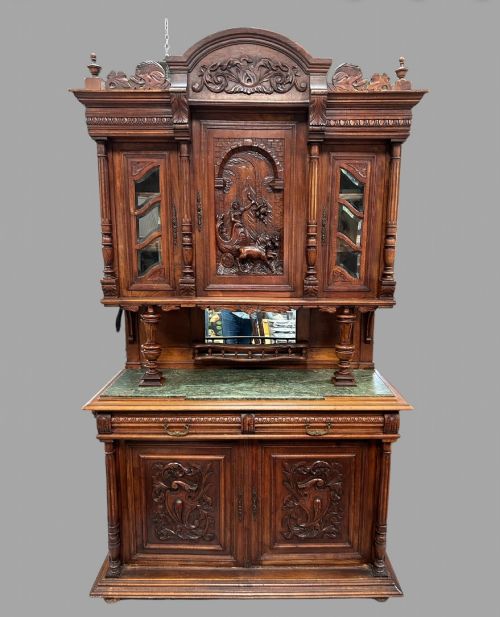
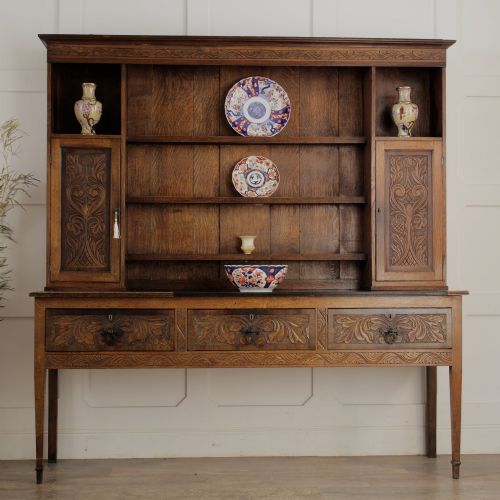
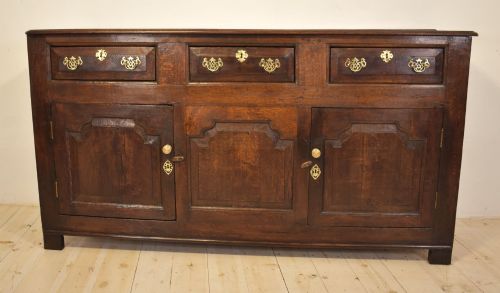
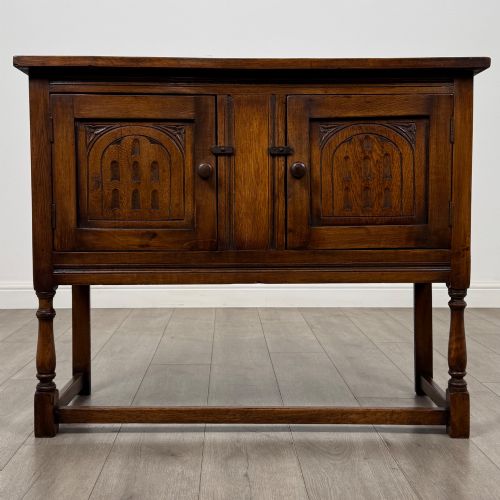
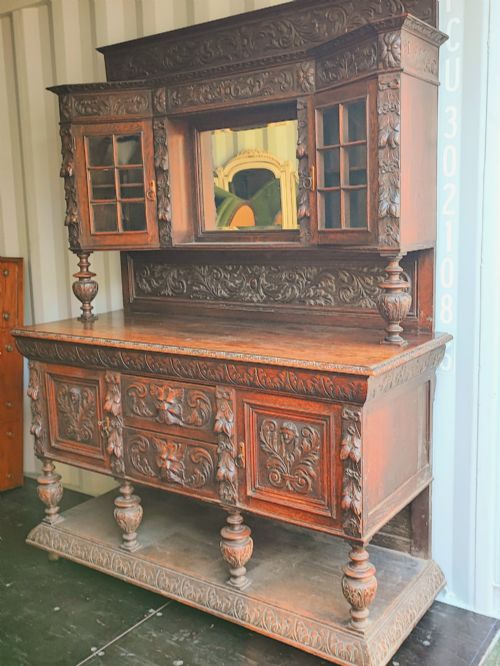
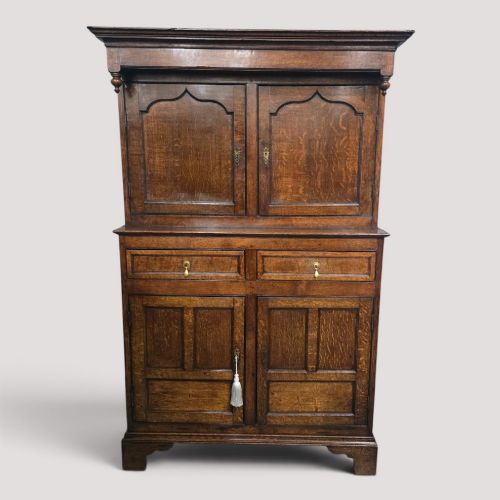
The versions most commonly found here include Victorian and Edwardian sideboards, alongside eighteenth-century dresser bases and court cupboards. Formats shift from low servers to towering mirror-backed cabinets, united by dark oak construction.
Originating across England, Scotland, and France, these cupboards combine utilitarian storage with elaborate surface carving. They function equally well as contemporary sideboards or traditional dining room focal points.
What varies in quality
The distinction between ordinary and superior pieces rests on the depth and crispness of the carving and the integrity of the timber. Pieces retaining original patination and untouched surfaces command greater respect than those stripped or heavily restored.
Proportion and hardware also separate standard regional work from finer examples. Well-balanced proportions, original brass or iron fittings, and tight joinery indicate a higher grade of craftsmanship.
Listings span from the seventeenth century through the Edwardian period, constructed primarily in solid oak with occasional walnut and fruitwood.
The Dark Oak Buffet Cupboard Glossary
- Court cupboard
- A two-stage seventeenth-century cupboard featuring a recessed upper section supported by pillars, used for displaying plate.
- Dresser base
- A low wooden sideboard fitted with drawers above cupboards, originating in the eighteenth century or earlier for kitchen and dining utility.
- Livery cupboard
- A traditional standing cupboard used for storing food and provisions, often ventilated through pierced wooden panels.
- Barley twist
- A type of turned wooden column resembling a twisted rope, frequently found on Edwardian and seventeenth-century revival furniture.
- Press cupboard
- A heavy enclosed storage piece with upper and lower cabinet doors, designed for linens and garments.
Dark Oak Buffet Cupboard: Frequently Asked Questions
What is the difference between a court cupboard and a sideboard?
A court cupboard is typically a seventeenth-century piece featuring a recessed upper stage supported by columns. They were designed for displaying plate and storing provisions in the main hall.
Sideboards emerged later, offering a longer, lower surface primarily used for serving food and storing dining utensils during the Victorian and Edwardian eras.
How do I care for a dark oak cupboard?
Keep wooden furniture away from direct heat sources and radical humidity shifts to prevent the timber from splitting. Feed the oak periodically with a traditional beeswax polish to maintain the dark finish.
Avoid modern silicone sprays, which build up on the surface and dull the original patination over time. A soft, dry cloth is sufficient for weekly dusting.
Where should I place a heavy oak buffet in a modern home?
These substantial cupboards suit dining rooms, large hallways, or spacious living areas where their dark timber and carved details can anchor the space. Ensure the floor can support the weight of solid oak construction.
Allow enough clearance around the cabinet doors and drawers so they can open fully without obstruction from nearby furniture.