


Carved Oak Plate Shelves
These carved oak plate shelves and dressers bring centuries of domestic utility and rich timber grain straight into modern rooms.
Carved Oak Plate Shelves
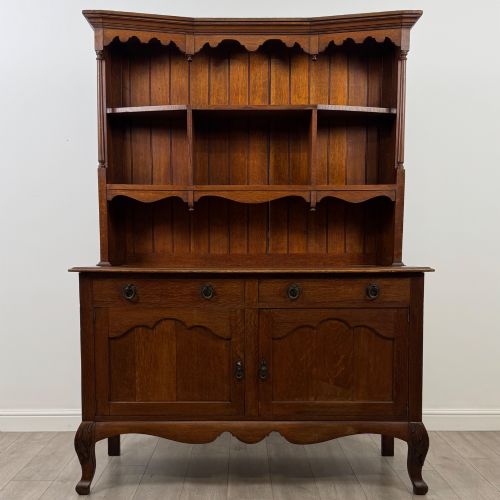
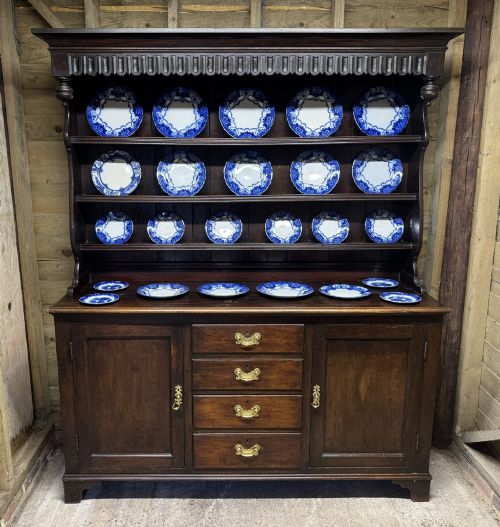
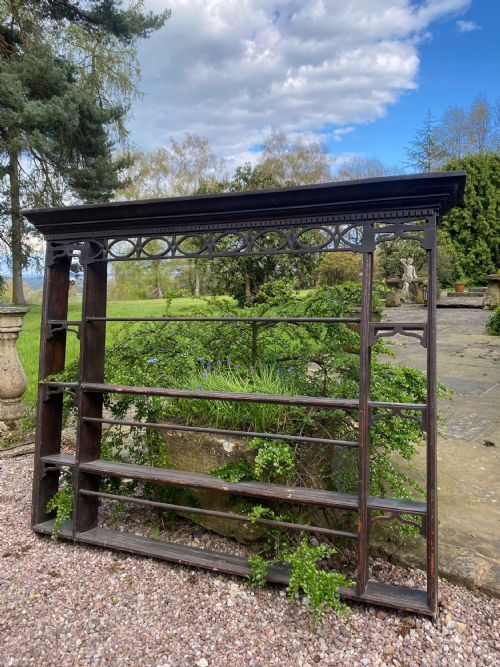
Carved oak plate shelves appear across several distinct centuries, taking the form of hanging wall racks, slender wall shelves, and substantial Welsh dressers. The listings frequently offer examples from the eighteenth and nineteenth centuries, alongside Edwardian and nineteen-ten revival pieces.
Buyers encounter country furniture styles ranging from plain Georgian proportions to ornate Jacobean, Gothic, and Renaissance revivals. English country and rustic cottage pieces sit alongside larger two-part dressers complete with open plate display tiers.
Materials and construction
Solid oak serves as the primary structural timber, occasionally supplemented by pine or mahogany elements and accented with brass hardware. Artisans shaped these functional storage pieces using traditional joinery and hand-carving techniques.
Surfaces display the natural grain or historic staining of the wood, with decorative detailing spanning from simple architectural mouldings to figural carvings and classical Corinthian columns.
Some eighteenth-century oak dressers arrive with carved wooden kings keeping permanent watch over the dinner plates.
Assessing the work
Quality rests upon the crispness of the hand-carving and the proportional balance of the tiers, cornices, and retaining rails designed to hold heavy ceramic plates. Earlier seventeenth and eighteenth-century examples display greater individuality in their joinery compared to later revival pieces.
The integration of decorative elements, such as applied columns or figural panels, distinguishes standard utility furniture from more ambitious vernacular commissions.
The Carved Oak Plate Shelves Glossary
- Delft rack
- An open wall-mounted shelving unit specifically constructed with shallow ledges and retaining rails to display ceramic plates upright.
- Welsh dresser
- A large dining-room storage combination featuring lower cupboards or drawers surmounted by open plate shelves.
- Jacobean Revival
- A nineteenth or early twentieth-century decorative style imitating seventeenth-century English furnishings through heavy proportions and geometric carvings.
- Corinthian column
- A classical architectural column capital featuring ornate acanthus leaves, occasionally found flanking the sides of eighteenth-century rack uprights.
Carved Oak Plate Shelves: Frequently Asked Questions
How were these wall shelves used?
These shelves served in historical kitchens and dining spaces to store and display earthenware plates and platters within easy reach of the table.
The open tiers allowed drying ceramics to remain accessible while decorating the kitchen wall with colourful tableware.
Are these pieces strictly eighteenth century?
The selection spans a wide chronological range, including seventeenth-century wall timber, Georgian designs, and later Edwardian revival interpretations.
Craftsmen continued building these traditional forms well into the twentieth century using historic stylistic revivals.
Do dressers come in two parts?
Larger examples often utilise a two-part construction, separating the heavy base cupboards from the upper plate rack for transport.
Smaller domestic variations consist of single-piece hanging wall shelves or compact cottage dressers.
How do I secure hanging shelves to a wall?
Original hanging shelves feature integrated structural fixing points or heavy backboards designed to bear the considerable weight of solid oak and stacked ceramics.
Modern installations require robust fixings suited to the substantial combined weight of the timber and heavy dishes.