



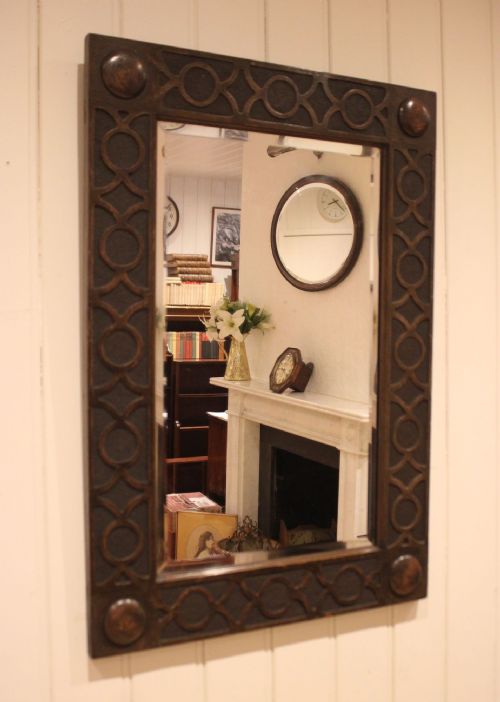
Carved Oak Overmantel Mirror
A carved oak overmantel mirror brings substance to a chimney breast, offering substantial timber frames and heavy glass designed to anchor a room.
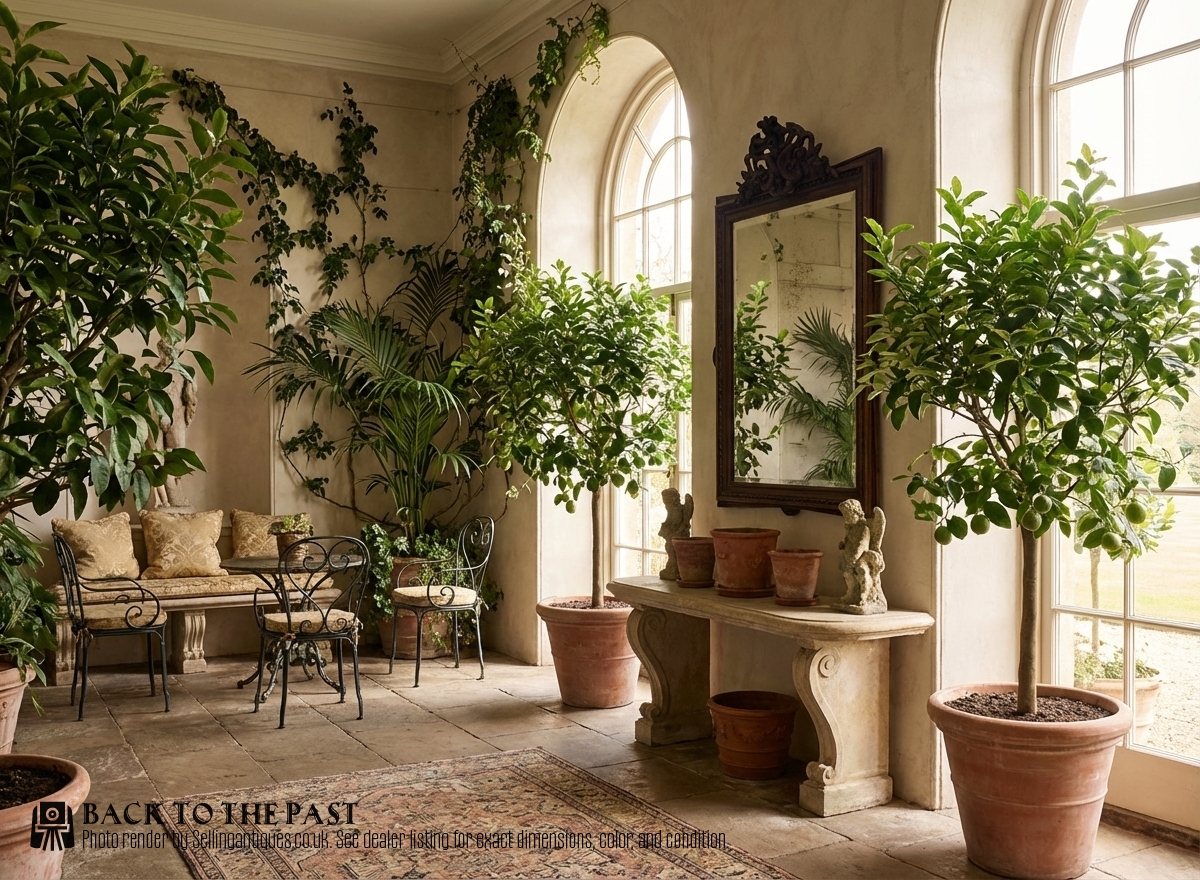
Carved Oak Overmantel Mirror
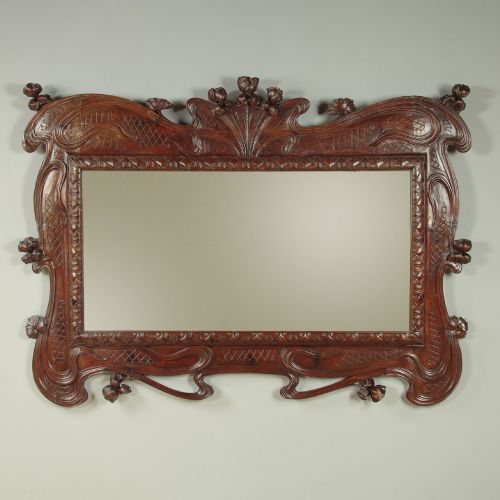
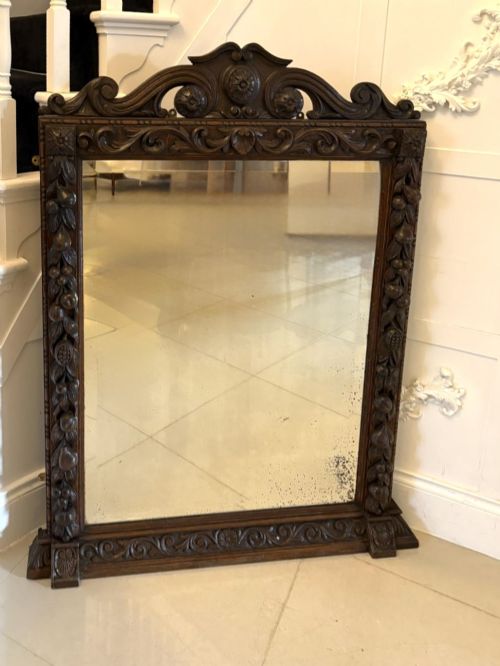
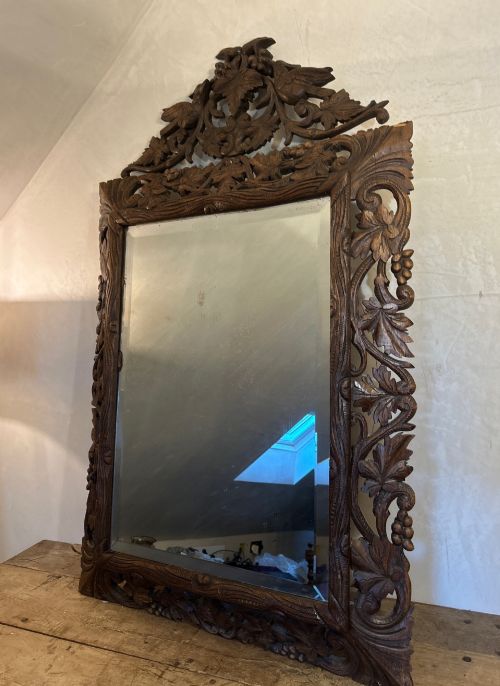
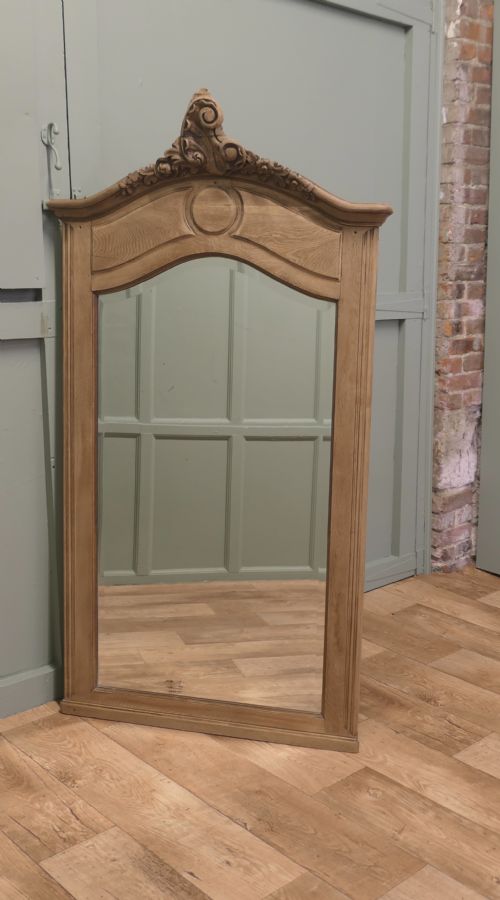
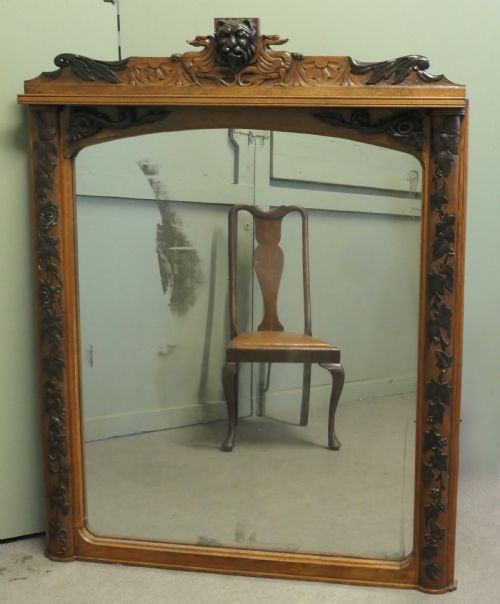
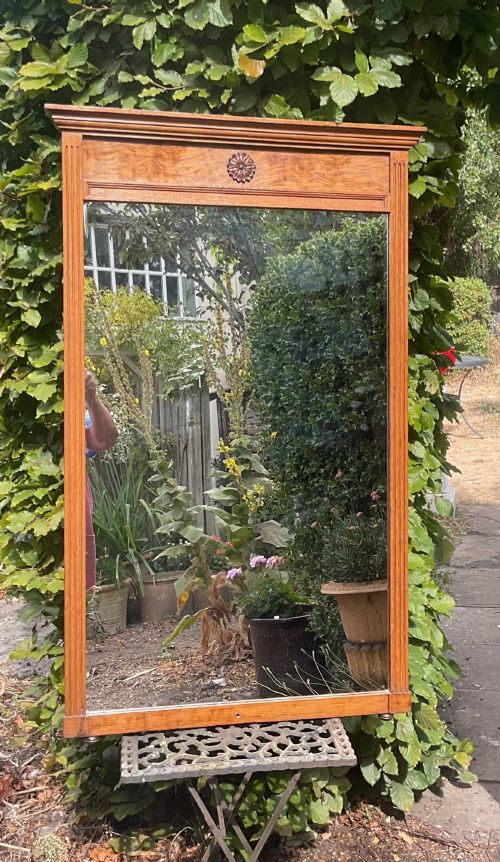
A carved oak overmantel mirror is a substantial architectural furnishing designed to sit above a fireplace, reflecting light and filling the wall space of a reception room. These pieces appear primarily in heavy Victorian and Edwardian iterations, alongside examples spanning the nineteenth and early twentieth centuries.
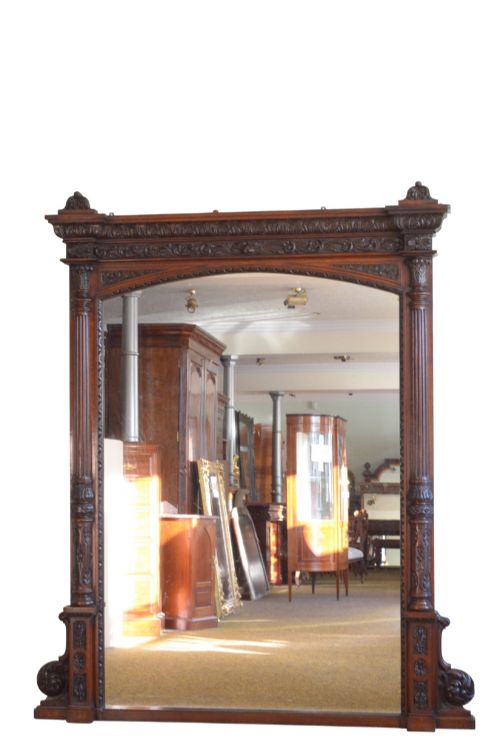
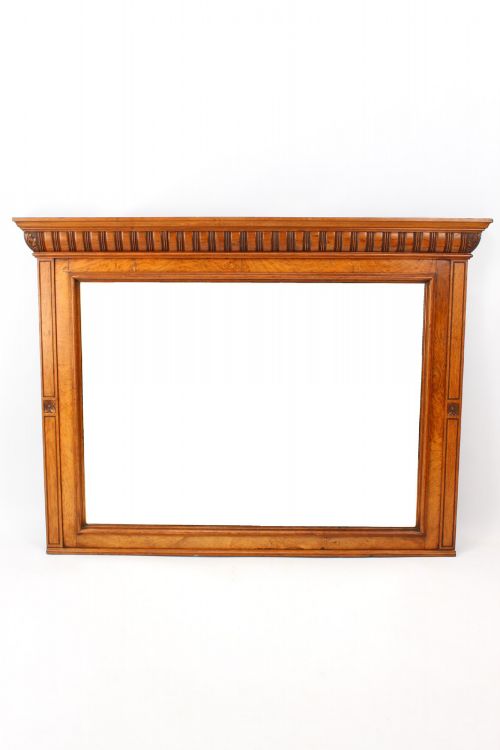
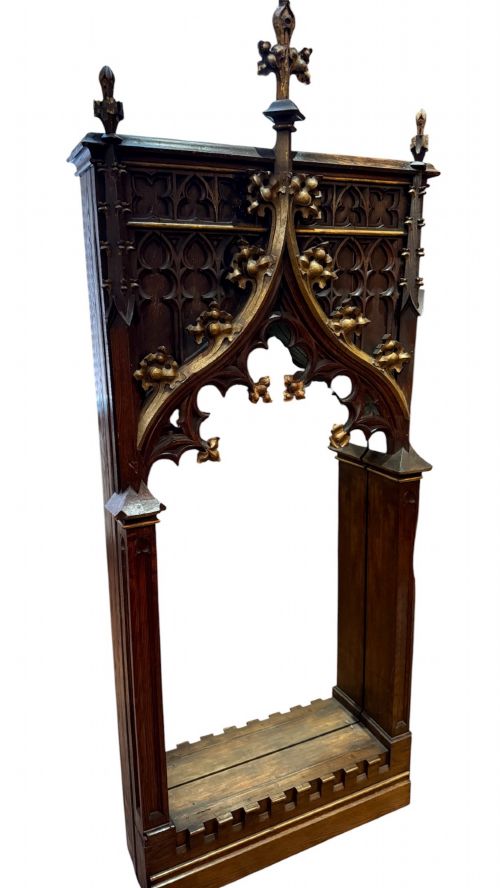
The selection ranges from simple domestic wall hangings to grand, architectural pieces with carved crests, side columns, and cushion frames. Regional and continental influences surface through French provincial designs, Gothic revival motifs, and Arts and Crafts simplicity.
How They Were Made
Makers utilised solid oak, often heavy and dark, alongside variations like pollard oak, bleached oak, and scrubbed oak to form the sturdy framework. Frames were constructed using traditional joinery methods to support the significant weight of large mirror glass.
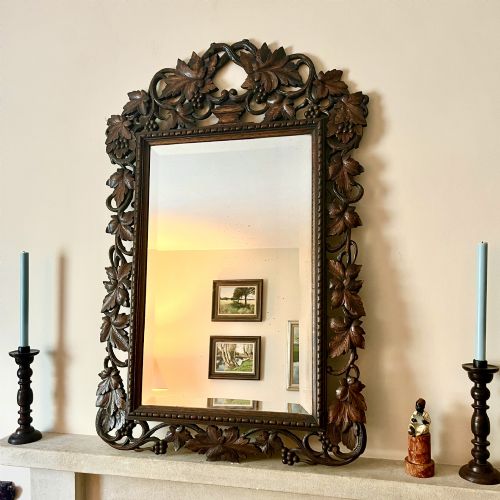
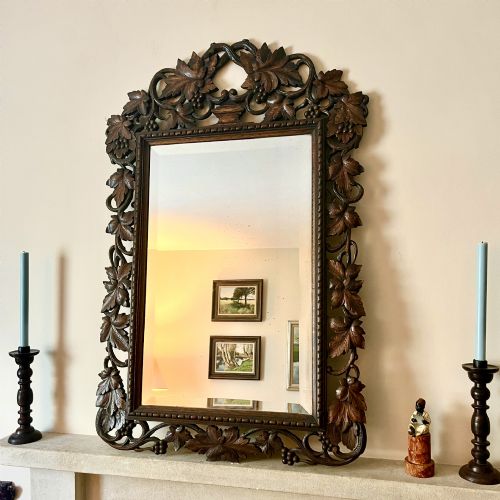
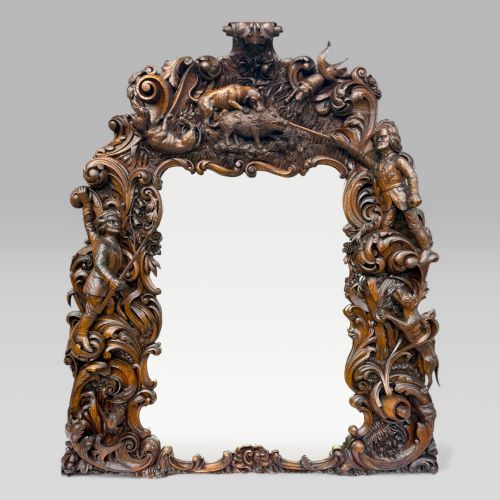
Carving was executed by hand, displaying intricate details such as foliage, lions, mythological creatures, and geometric mouldings. Some pieces incorporate secondary timbers like walnut, alongside painted surfaces and etched mirror glass.
What Varies in Quality
Quality rests in the depth and crispness of the hand carving upon the oak frame, where deep relief work and well-defined motifs distinguish superior workshops from plain production. The proportion and scale of the timber relative to the mirror glass dictate the visual balance of the piece.
The integrity of the original mirror plate, whether bevelled, aged, or reverse painted, contributes significantly to the character and authenticity of the mirror. Construction methods, particularly the robustness of the joints and the backing boards, determine how well the heavy structure survives over time.
Liberty And Co·Rowley Gallery
The Carved Oak Overmantel Mirror Glossary
- Overmantel
- A mirror or panel specifically proportioned to hang on the wall directly above a fireplace mantelpiece. These pieces often feature horizontal layouts or towering vertical frames.
- Pollard Oak
- Timber taken from trees that have been pollarded, producing a dense wood with a distinctive clustered grain pattern. It was selected for decorative cabinet work and mirror frames.
- Cushion Frame
- A convex, outwardly curved moulding surrounding the mirror glass. This style creates a pronounced, rounded profile that catches light across the timber.
- Pediment
- The decorative architectural crowning feature at the top of the mirror frame. It frequently incorporates carved crests, pediments, or figurative motifs.
Carved Oak Overmantel Mirror: Frequently Asked Questions
Are these mirrors meant to stand or hang?
Overmantel mirrors are primarily constructed for wall hanging above a fireplace surround. Their proportions and weight distribution suit vertical or horizontal wall mounting.
Some large examples were traditionally designed to rest upon the mantel shelf while secured to the wall above. Check the back for original hanging loops or fixing points before installation.
How do I clean and care for antique oak?
Maintain the timber by dusting with a dry, soft cloth and occasionally applying natural beeswax to nourish the dry oak. Avoid modern silicone sprays or excessive moisture which can damage the historic finish.
Clean the mirror glass using a mild glass cleaner applied to a cloth rather than sprayed directly. This prevents liquid from seeping behind the plate and damaging the silvering.
How do I date a carved oak mirror?
Examine the style of the carving, the hardware on the reverse, and the characteristics of the mirror glass. Victorian pieces often display heavy Gothic or Renaissance revival motifs, while Arts and Crafts examples favour simpler, unadorned oak surfaces.
Twentieth-century iterations introduce clean lines and lighter bleached or blonde oak finishes. Bevelled edges on mirror glass and hand-cut screws also provide clues to the period of manufacture.