
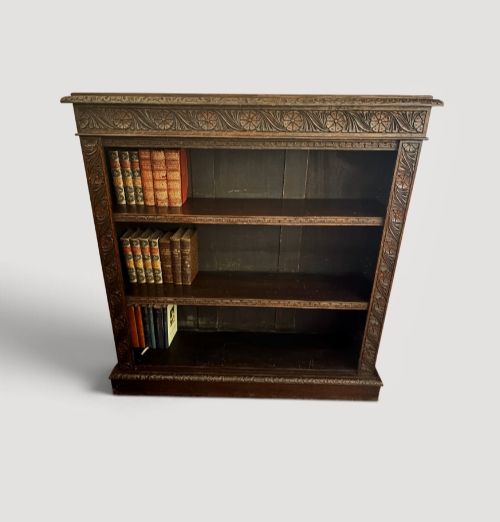
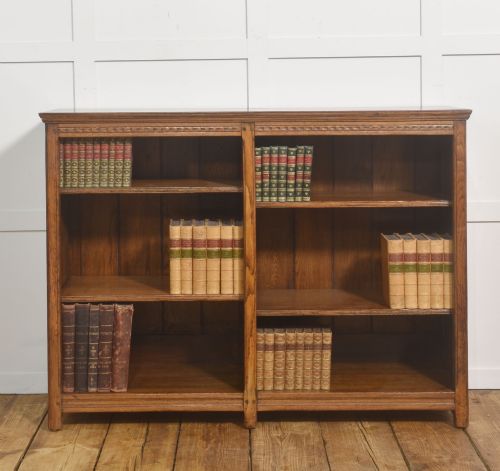
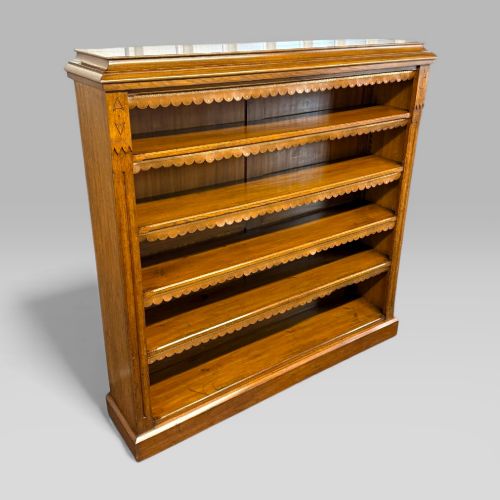
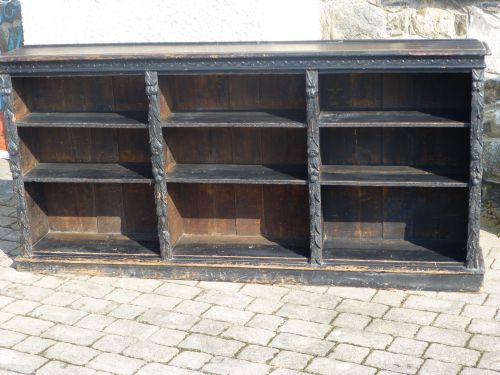
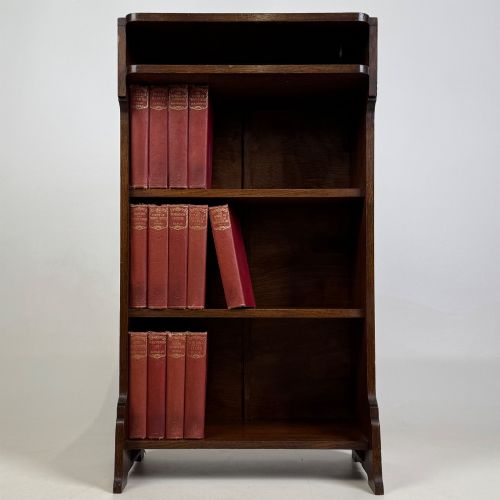
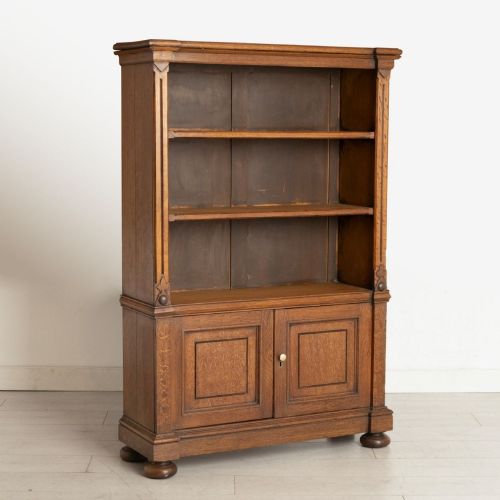
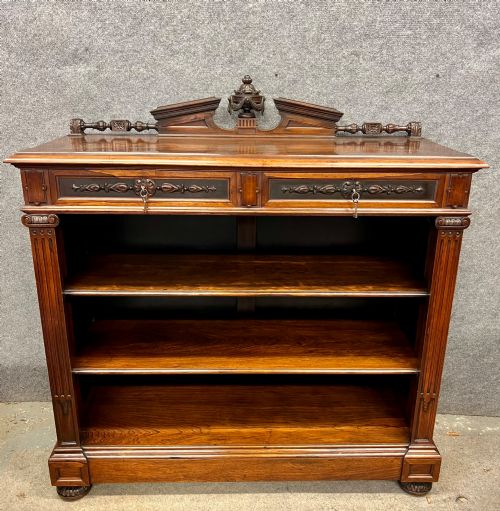
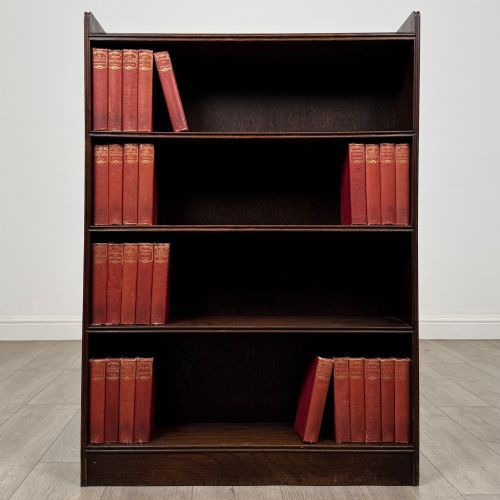




Carved Oak Library Shelves
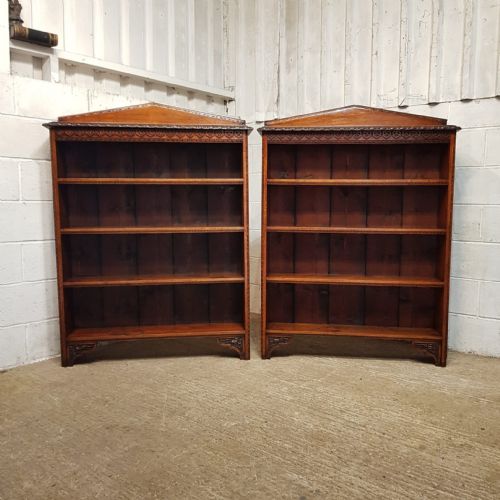
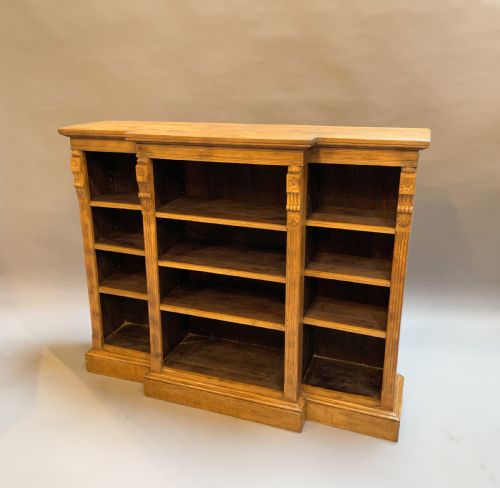
These carved oak library shelves bring heavy timber and deep historical styles straight into domestic studies.
Carved Oak Library Shelves
Carved oak library shelves appear mostly as open bookcases and open front bookcase furniture across this selection. Pieces span the eighteenth century, the nineteenth century, and the twentieth century, bringing substantial storage to domestic spaces.
The Victorian and Edwardian periods dominate the available forms, alongside specific revivals like Gothic, Jacobean, and Renaissance. Buyers frequently encounter low dwarf bookcases, tall breakfront units, and adjustable shelf arrangements designed for heavy volumes.
Makers and designers such as Gillows, Waring and Gillows, and Richard Bridgens occasionally emerge within the archive alongside country house pieces and French bleached oak examples. These items combine architectural presence with practical shelving for serious collections.
What varies in quality
The depth and crispness of the timber carving separate standard utility pieces from fine country house commissions. Finer items exhibit considered proportions, architectural breakfront forms, and integrated detailing like burr pollard oak panels.
The presence of adjustable shelving mechanisms and secondary timbers dictates the grade of construction. Superior examples maintain structural integrity across large spans while preserving clean lines and intact period finishes.
Watch out for hidden green men glaring from the foliage.
Waring and Gillows·Richard Bridgens·Gillows
The Carved Oak Library Shelves Glossary
- Breakfront
- A piece of furniture where the central section projects forward from the flanking wings. This architectural layout creates a strong shadow line and visual depth in large libraries.
- Open bookcase
- A shelving unit without doors, providing direct access to the contents. Most examples listed here utilise this practical format.
- Ebonised
- Timber treated with a dark stain or finish to imitate ebony. This technique highlights carved details through stark tonal contrast.
- Green man
- A sculptural face carved from foliage or branches, frequently found in nineteenth-century Gothic and Flemish revival woodwork. It represents rebirth and the spirit of nature.
- Adjustable shelves
- Shelving supported by pins, ratchets, or sliding tracks that allow the vertical intervals to change. This system accommodates books of varying heights.
Carved Oak Library Shelves: Frequently Asked Questions
How do I adjust the shelves?
Most period pieces use wooden support slips, brass peg systems, or notched uprights inside the cabinet walls. You simply lift the shelf and reposition the supports into adjacent slots.
Take care when moving heavy oak boards to avoid chipping the timber or damaging the interior lining.
Are these shelves deep enough for modern books?
Nineteenth-century library shelves were built to house standard octavo volumes, theological texts, and large leather-bound folios. They generally offer generous depth compared to modern flat-pack alternatives.
Measure your largest art books or oversized volumes before committing a specific bay to your collection.
How do I distinguish Gothic Revival from Renaissance Revival?
Gothic Revival pieces display pointed arches, trefoils, tracery, and heavy ecclesiastical carving drawn from medieval architecture. They lean towards vertical emphasis and solemn, shadowed surfaces.
Renaissance Revival woodwork draws on classical symmetry, cartouches, swags, and bolder sculptural reliefs that celebrate proportion and human form.
How do I care for antique oak?
Keep timber furniture away from direct heat sources and sudden humidity shifts to prevent the oak from splitting. Dust regularly with a dry cloth and apply occasional natural wax to feed the grain.
Avoid silicone-based sprays that build up a greasy residue over the carved recesses and dull the patina.