
Carved Oak Library Desk
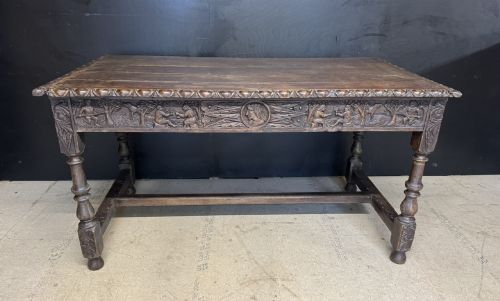
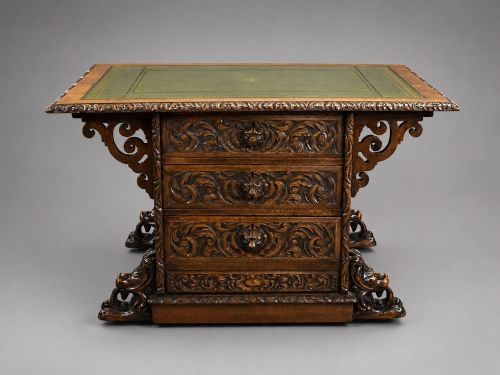
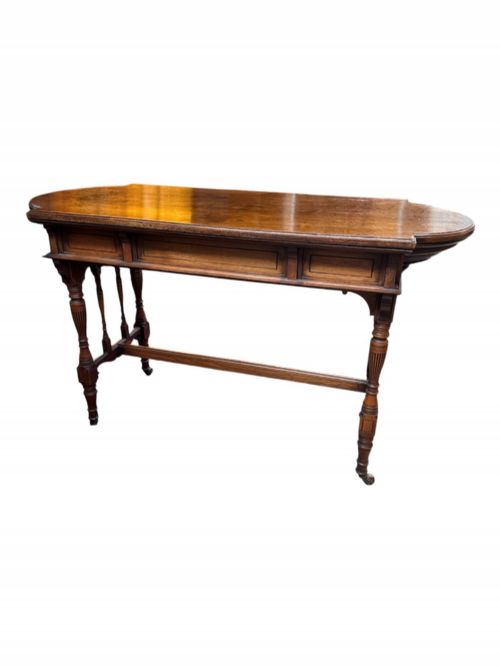
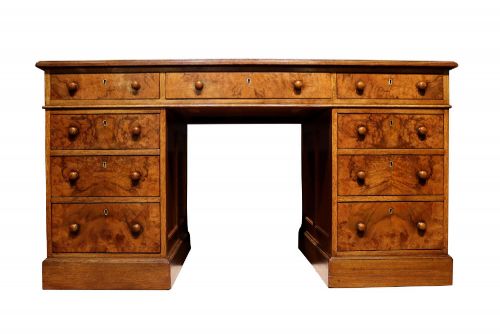
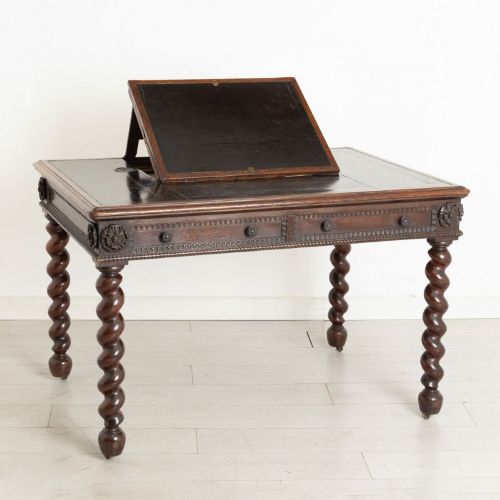
A carved oak library desk brings heavy timber grain, leather inserts, and nineteenth-century architectural carving directly into a room.
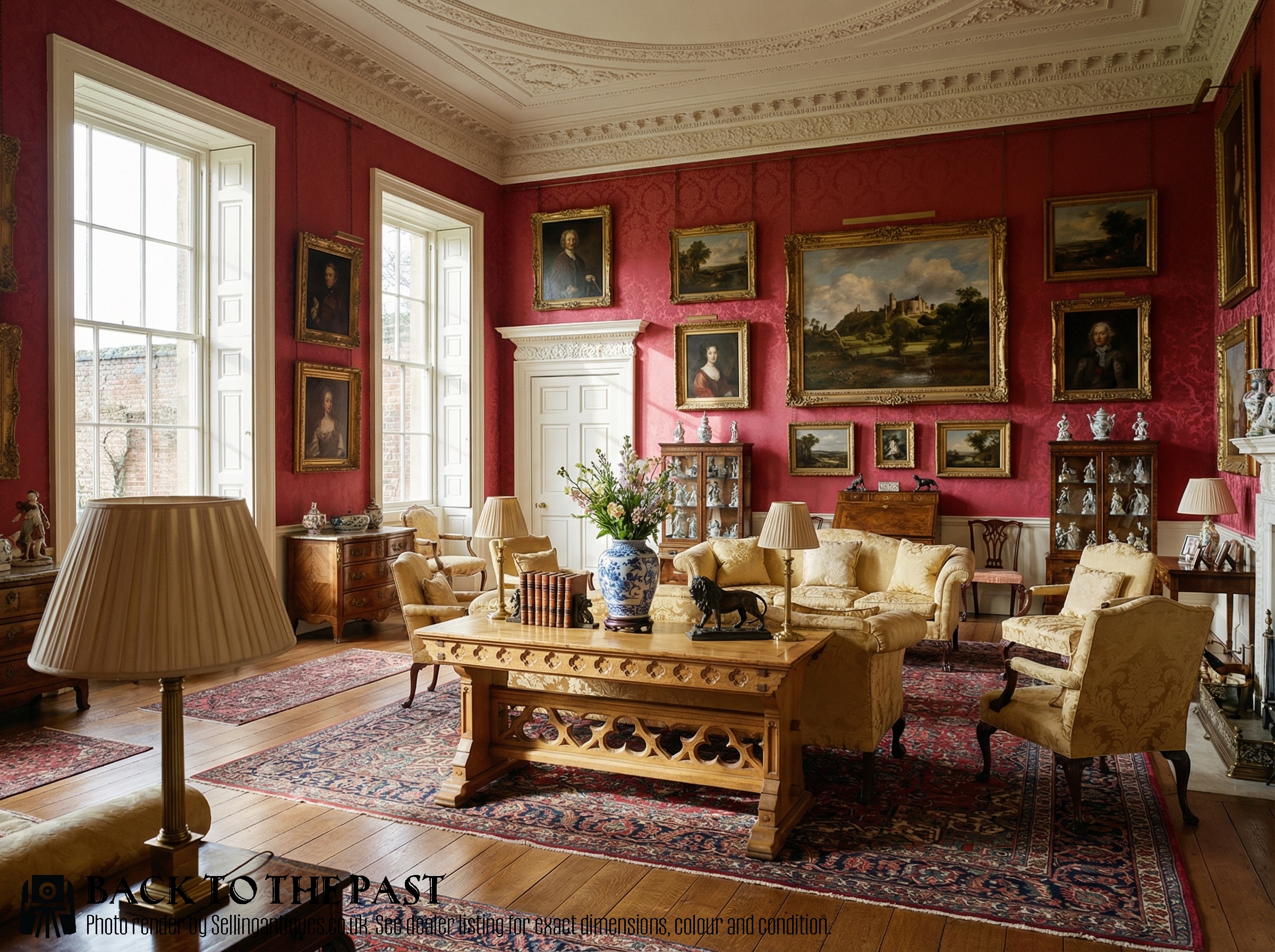
Carved Oak Library Desk
When you search for a carved oak library desk, you encounter substantial writing tables, partners desks, and freestanding centre pieces designed for nineteenth-century studies and institutional libraries. The common versions span the Victorian and Edwardian eras, incorporating heavy timber frames and dedicated writing surfaces.
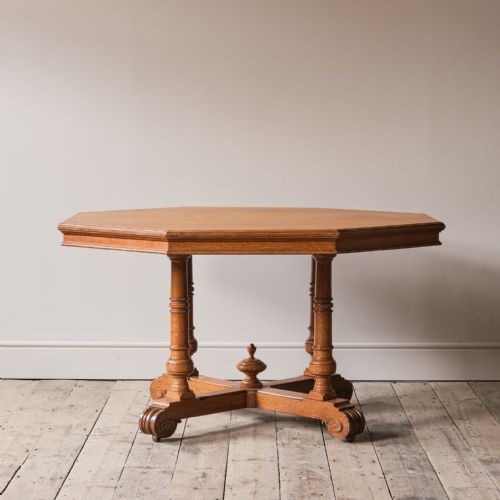
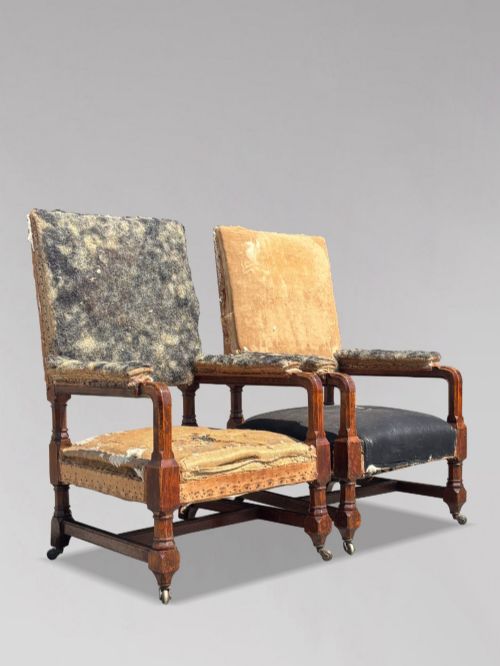
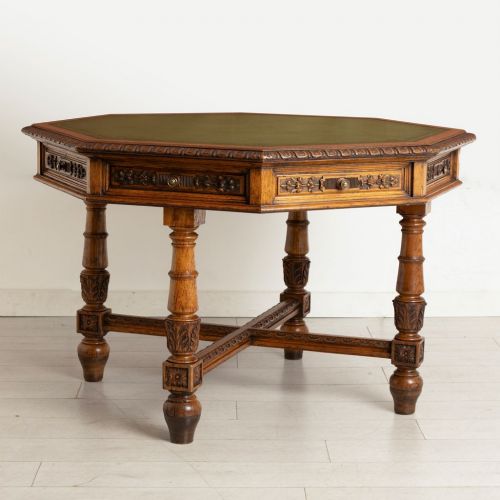
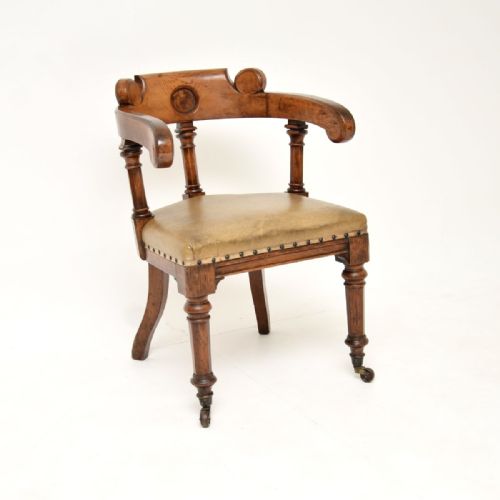
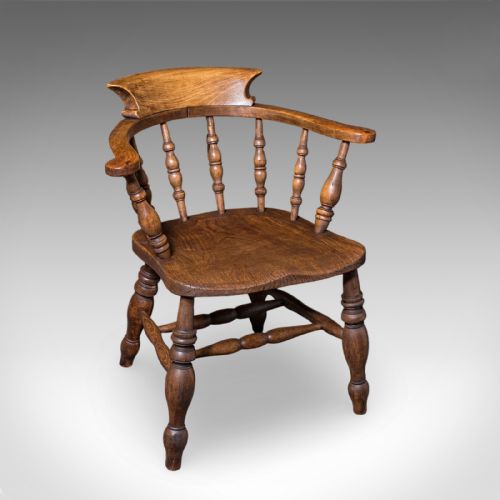
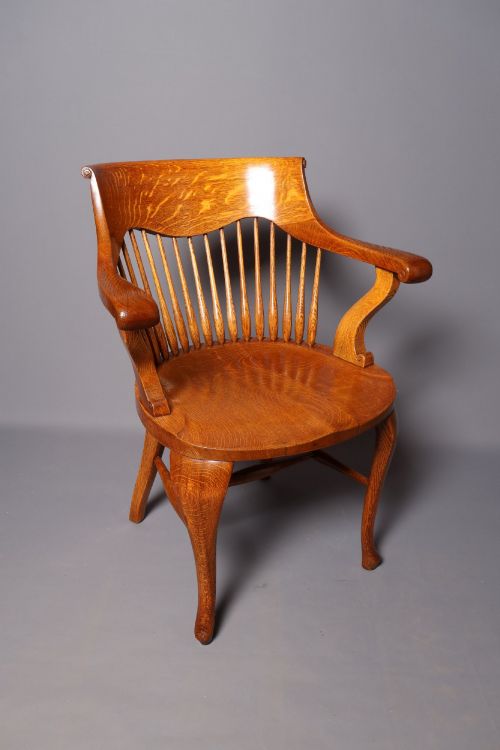
The material palette centres on solid oak, frequently paired with inset leather or fabric writing surfaces and brass hardware. Alongside standard desks, the listings include matching armchairs, captain's chairs, and octagonal library tables reflecting the same revivalist tastes.
Most pieces date from the nineteenth century, drawing heavily on Gothic Revival, Renaissance Revival, and Jacobean influences. Makers utilise burr oak, pollard oak, and turned supports to create the substantial silhouettes characteristic of the period.
How they were made
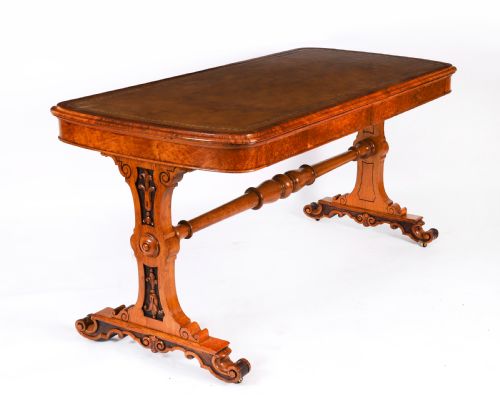
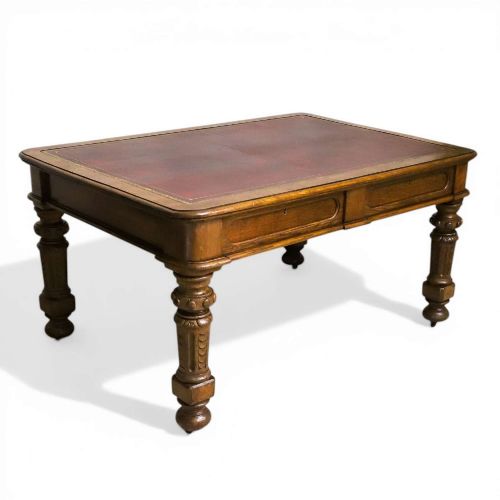
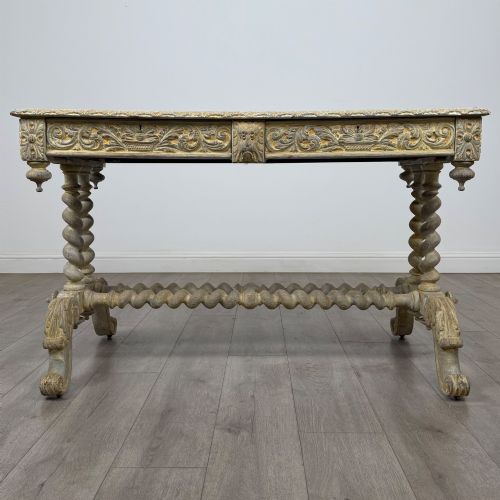
Joiners built these tables from solid oak timber, frequently selecting burr oak or pollard oak veneers for drawer fronts and top surfaces to display rich grain patterns. Structural stability relied on heavy framing, stretcher bases, and sturdy turned or carved legs, sometimes fitted with castors.
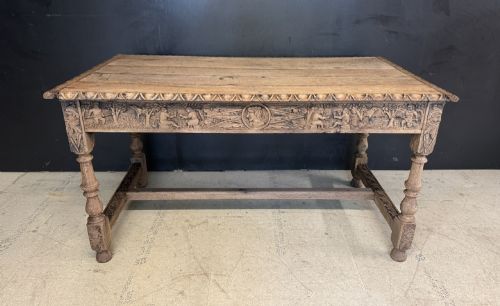
Writing surfaces typically incorporate tooled leather or fabric inserts set flush into the timber top, bordered by deep mouldings. Carved ornamentation, including linenfold, lion heads, and foliate motifs, was worked directly into the solid oak framework.
Carved Oak Library Desk Retail Price Guide 2026
Typical asking prices for carved oak library desk among the pieces listed under this phrase on Sellingantiques today, from the lower quarter to the upper quarter. They describe what is for sale here now, not the wider market.
Listings feature nineteenth-century oak library furniture incorporating leather writing surfaces, brass hardware, and Gothic Revival carving.
What varies in quality
The distinction between standard commercial pieces and exhibition items lies in the crispness of the timber carving and the selection of figured wood such as pollard or burr oak. Superior examples display deeply undercut ornamentation and fully finished backs for freestanding placement.
Hardware execution and secondary timbers also signal distinction, where original brass locks, working keys, and solid oak drawer linings indicate higher workshop standards. The integrity of the inset leather writing surface and the stability of the structural joints further separate fine examples from simpler utility pieces.
James Shoolbred And Co·Gillows·Bruce James Talbert·Thornton Smith Co·T Wilson
The Carved Oak Library Desk Glossary
- Partners desk
- A large double-sided writing table designed for two people to work opposite one another, featuring drawers on both long sides.
- Gothic Revival
- A nineteenth-century architectural and decorative style drawing on medieval ecclesiastical motifs, pointed arches, and heavy tracery.
- Pollard oak
- Timber taken from trees that were pollarded, resulting in a dense, highly figured grain pattern prized for decorative furniture panels.
- Drum table
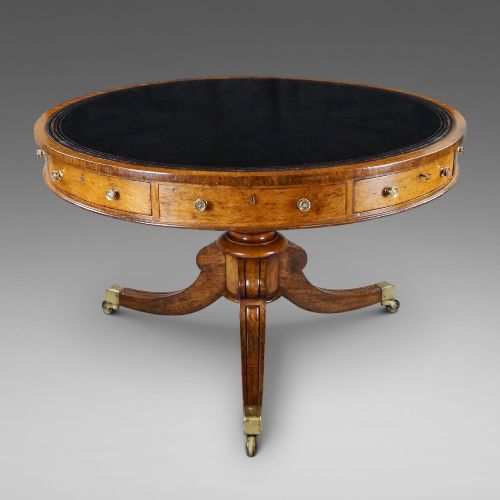
- A circular library table with a deep top containing a ring of drawers, often supported on a central pillar and tripod base.
- Centre table
- A freestanding piece finished on all sides so it can sit in the middle of a room rather than against a wall.
Carved Oak Library Desk: Frequently Asked Questions
How do I care for the leather top?
Clean leather writing inserts gently with a slightly damp cloth and nourish the surface periodically with a neutral leather balm. Avoid placing hot cups or excessive moisture directly on the hide to prevent staining.
Keep the desk away from direct heat sources and strong sunlight, which can dry out the leather and cause the timber framework to warp or crack over time.
Where should I place a partners desk?
Partners desks are designed to sit freestanding in the middle of a room rather than pushed against a wall. Because drawers and kneeholes appear on both sides, they require ample floor space to allow access from all directions.
Position the desk away from high-traffic thoroughfares to let the substantial proportions and carved panels serve as a focal point in a study or library.
What distinguishes Gothic Revival oak furniture?
Gothic Revival pieces incorporate medieval architectural elements such as pointed arches, quatrefoils, heavy chamfering, and deep linenfold carving. These details reflect nineteenth-century romanticism and a revival of craftsmanship.
The timber is typically dark, solid oak with robust joinery, giving the furniture an imposing, ecclesiastical presence that contrasts with lighter Regency styles.