





Carved Oak Leather Seats
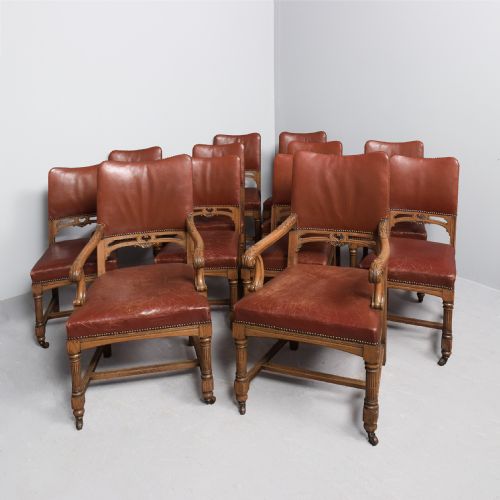
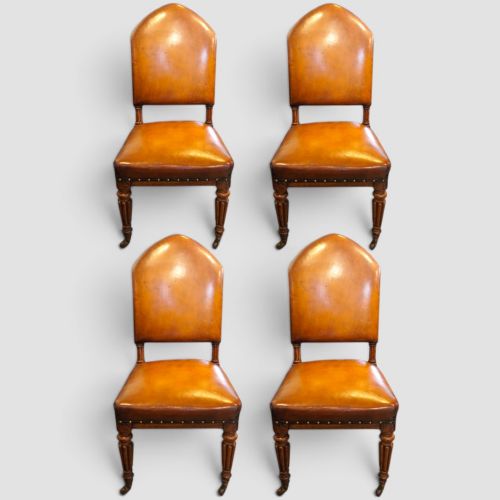
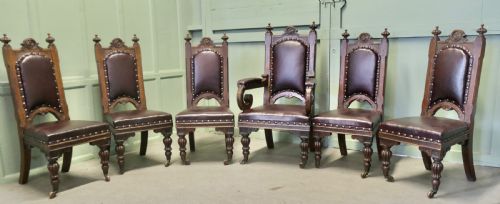
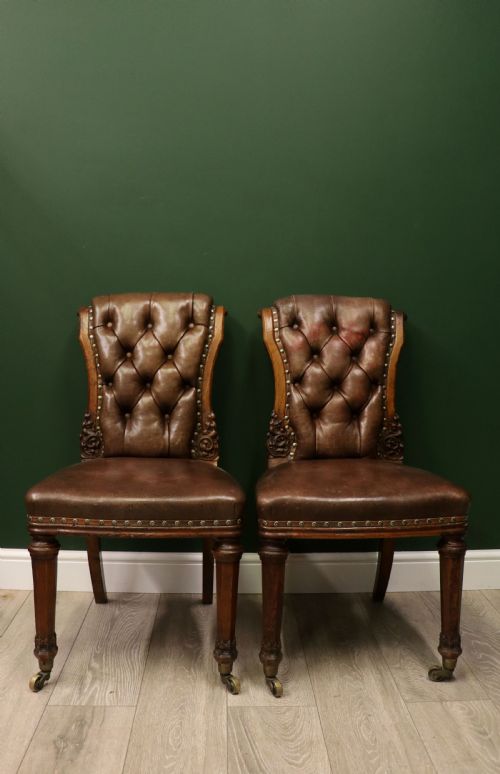
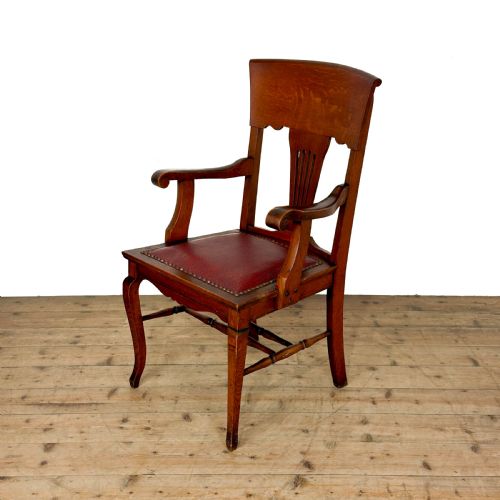
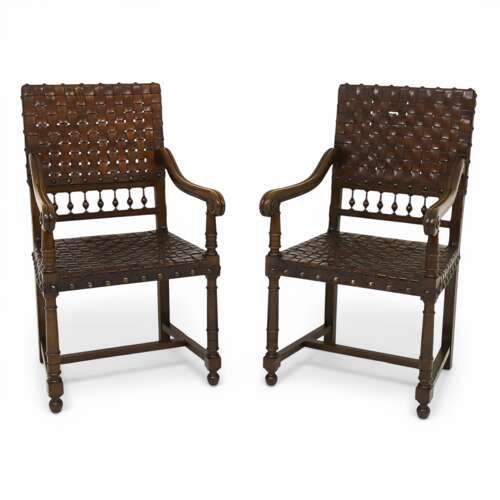
These carved oak leather seats bring heavy timber framing and tactile hides together in dining chairs, library armchairs and settles from the nineteenth and twentieth centuries.
Carved Oak Leather Seats
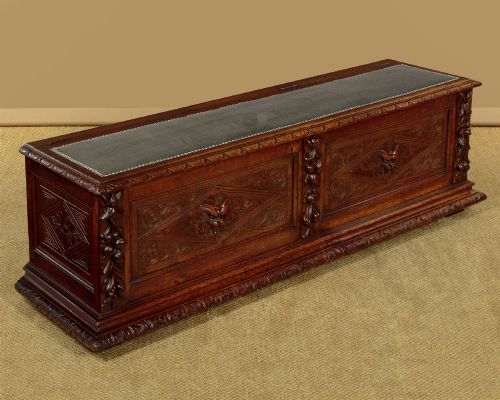
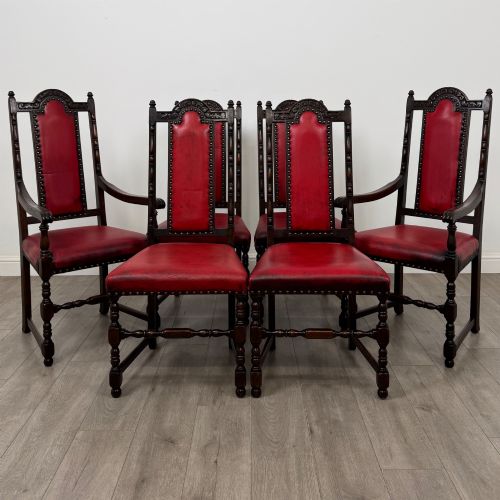
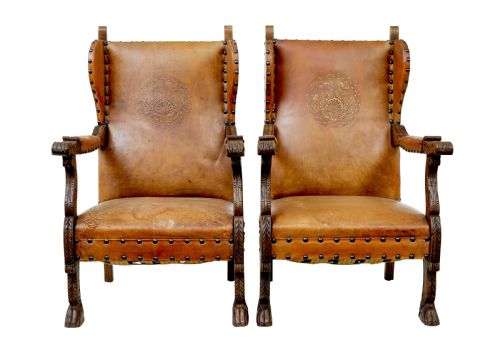
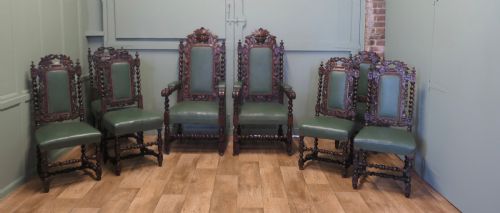
When you search for carved oak leather seats, you find robust seating built from durable hardwoods and finished with animal pelts. The pieces span the nineteenth century through the Edwardian era, taking the form of dining sets, library armchairs, hall benches and desk chairs.
Victorian Gothic Revival and Jacobean styles dominate the selection, bringing deep relief carving, turnings and studded upholstery. You will encounter single items alongside large sets of dining chairs intended for formal interiors.
Functional seating forms range from swivel desk chairs and ship's chairs to settle boxes and ottomans. Oak provides the structural frame while leather supplies the tactile seat and panel inserts.
Materials and Construction
Cabinetmakers used solid oak for the structural frames, often selecting golden or quarter-sawn boards to display the grain. Carvings were executed by hand, yielding deep relief motifs in Gothic, Jacobean and Renaissance styles.
Hides were secured using brass studs or embossed for decorative effect. Iron and cast iron brackets or swivels reinforced functional pieces such as desk chairs and adjustable seats.
Listings span the nineteenth and twentieth centuries, featuring periods from 1850 to 1920 alongside Victorian and Edwardian styles.
Assessing Quality
The depth and crispness of the timber carving separate standard production from superior craftsmanship. Heavy framing and solid joints indicate robust construction built to withstand decades of daily use.
The quality of the hide upholstery and the neatness of the studwork dictate the finish of the piece. Well-preserved embossed leather panels and stable, heavy timber frames represent the upper end of the scale.
Gillows·James Shoolbred
The Carved Oak Leather Seats Glossary
- Gothic Revival
- A nineteenth-century design movement drawing inspiration from medieval architecture. It uses pointed arches, tracery and heavy carved motifs.
- Bergere
- An enclosed upholstered armchair with wooden framing. Canane or leather panels frequently form the back and sides.
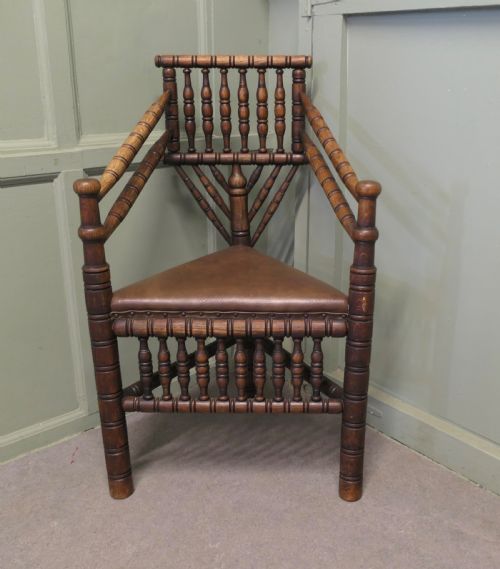
- Turners Chair
- A three-legged chair constructed entirely from turned wooden spindles. It is also known as a roundabout or Glastonbury chair.
- Settle
- A wooden bench with high back and arms, often incorporating a storage box beneath the seat. It was designed to keep out draughts in large halls.
Carved Oak Leather Seats: Frequently Asked Questions
How do I care for antique leather seats?
Clean the hide gently with a dry or slightly damp cloth to remove dust. Apply a suitable leather conditioner periodically to prevent drying and cracking.
Keep the timber frames away from direct heat sources and strong sunlight. Wax the oak surfaces occasionally to maintain the sheen of the grain.
Are these chairs suitable for daily dining?
Many of these pieces were built as robust dining sets intended for frequent use. Solid oak frames provide the stability required for regular seating.
Check the stability of the joints and the condition of the leather before daily deployment. Tighter frames handle regular weight better than looser antiques.
What is a Gothic revival oak armchair?
This form uses medieval architectural motifs carved into heavy timber frames. Pointed arches, tracery and linenfold panels frequently decorate the backrest.
Such armchairs were often placed in libraries, halls or studies. They provide generous proportions and substantial physical presence.
How do I distinguish Victorian from Edwardian pieces?
Victorian examples tend to display heavier proportions and deep Gothic or Renaissance carving. They often feature dark, heavily carved oak and prominent brass studding.
Edwardian pieces generally exhibit lighter framing and simpler lines. Swivel desk chairs and adjustable mechanisms appear more frequently in the later period.