
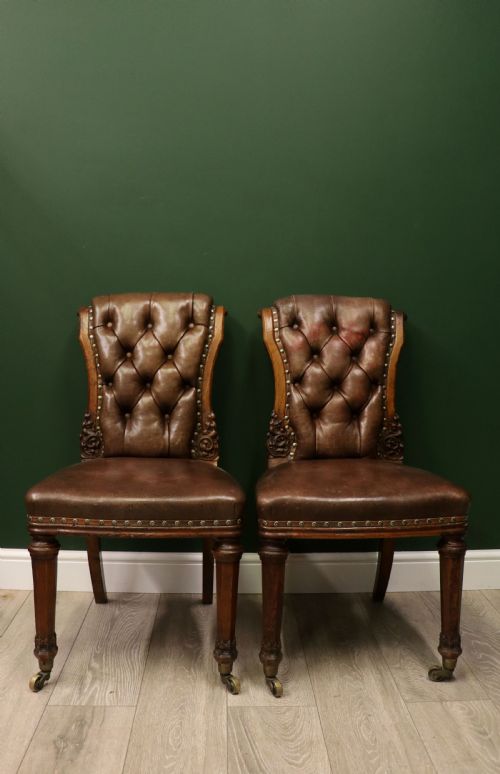


Leather Hall Chair
A leather hall chair brings sturdy presence and rich hides to an entranceway, combining practical seating with enduring historic craftsmanship.
Leather Hall Chair
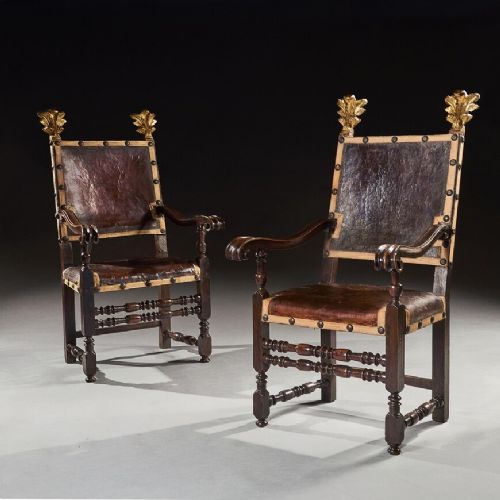
A leather hall chair serves as a functional and striking focal point in an entranceway, bridging domestic utility with formal reception areas. These seats appear in various configurations, from upright oak side chairs to high-backed porter designs intended to block draughts in grand corridors.
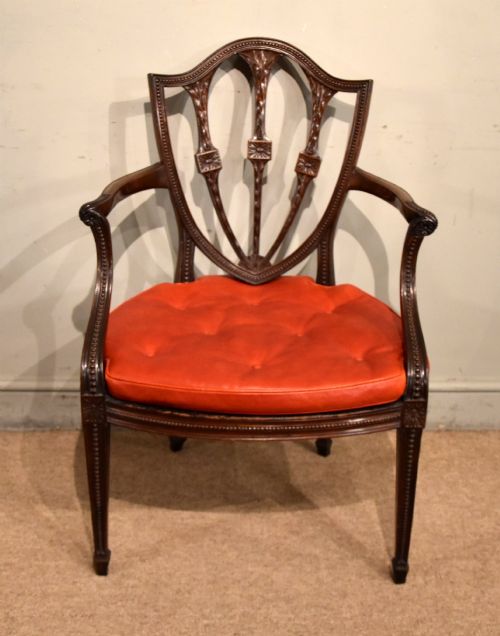
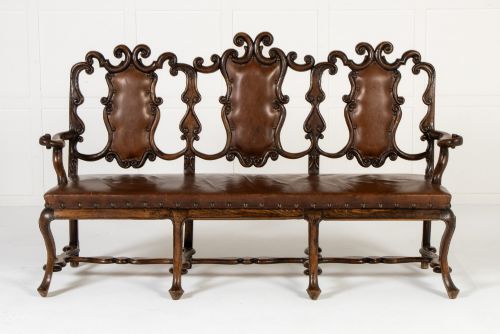
The selections recorded here span multiple centuries, heavily drawing upon nineteenth-century Victorian production alongside earlier eighteenth-century examples and revival pieces. Buyers encounter robust oak framing, rich mahogany supports, and walnut structures paired with supple cattle hide.
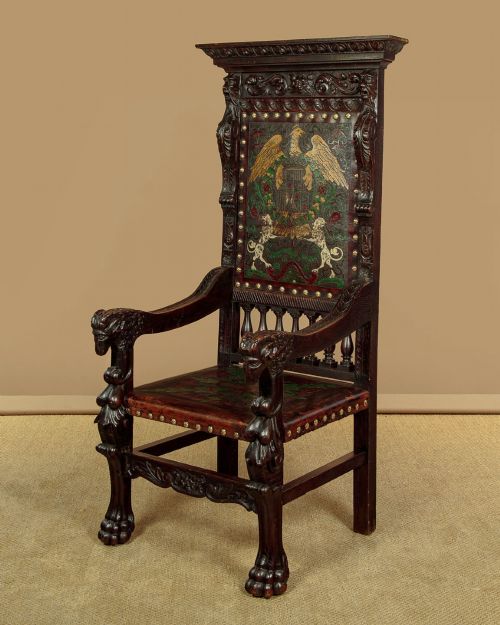
Many items reflect distinct historic revivals, notably Gothic Revival and Jacobean styles featuring carved ornamentation, panel detailing, and brass studwork. Simpler side chairs sit alongside grander throne models and deep-buttoned porter chairs designed for domestic halls.
Materials and construction methods
Makers relied on dense hardwoods, predominantly oak and mahogany alongside walnut, to form rigid chair frames capable of enduring heavy daily use in busy corridors. Artisans shaped these timbers using hand-carving techniques, turning legs and fashioning elaborate crest rails that often incorporated Gothic motifs or armorial details.
Hides were secured to the wooden frameworks using metal tacks or brass studs, sometimes incorporating buttoning to create padded backrests and seats. Workshops occasionally applied decorative finishes such as parcel-gilding or painted highlights to accentuate the carved woodwork and panel details.
Look closely for the dancing bear carved into the Black Forest manner chair back.
Distinctions in craftsmanship
Quality rests significantly in the depth and execution of the woodwork, separating standard production from pieces bearing intricate hand-carved detailing and well-balanced proportions. Superior examples display tight joinery and heavy hardwood frames that maintain structural integrity without excessive modern reinforcement.
The selection and treatment of the hide also dictate excellence, where thicker leather retains its character and suppleness over generations of use. Original studwork and well-preserved upholstery methods elevate a piece above later replacements or poorly executed restorations.
Mouseman
The Leather Hall Chair Glossary
- Porter's chair
- A high-backed hooded seat designed to keep out draughts in cold entrance halls. These often feature enclosed sides and a leather-upholstered interior.
- Gothic Revival
- An architectural and decorative style popular during the nineteenth century, drawing inspiration from medieval design. It frequently incorporates pointed arches, tracery, and heavy carved oak.
- Parcel-gilt
- A decorative technique where specific carved portions of a wooden object are highlighted with thin applications of gold leaf. This method accentuates intricate details against a dark timber background.
- Shield back
- A chair back design shaped in the outline of a heraldic shield, commonly associated with late eighteenth-century mahogany seating. The interior frame often contains pierced splats.
- Wainscot
- A heavy wooden chair type constructed with panelled sections, typically rooted in seventeenth-century vernacular furniture traditions. These sturdy seats usually feature solid wooden bases adapted later with leather cushions.
Leather Hall Chair: Frequently Asked Questions
Where should I place a hall chair?
These chairs suit entranceways, landings, and large hallways where their sculptural timber frames and leather panels can be viewed from multiple angles. They provide a practical spot for putting on shoes while establishing a formal tone for the home.
Because many historic designs feature high backs or enclosed hoods, placement near cold exterior doors or draughty corridors echoes their original architectural purpose.
How do I care for antique leather?
Historic hides require gentle maintenance to preserve their suppleness and prevent the natural material from drying out over decades. Regular dusting with a soft cloth keeps abrasive particles from settling into the grain and seams.
Applying a specialist leather conditioner periodically helps maintain the flexibility of the material without altering its historic patina or damaging the surrounding wood.
How do I identify a Victorian Gothic piece?
Victorian Gothic Revival seating typically displays characteristic architectural motifs such as pointed arches, quatrefoils, and heavy carved oak frames. These pieces often incorporate dark finishes and robust studded leather upholstery.
Makers working in this nineteenth-century style frequently drew inspiration from medieval ecclesiastical furniture, resulting in imposing proportions and solemn decorative schemes.
What is the difference between a side chair and a porter's chair?
A side chair is an open, lightweight seat designed without arms, making it easy to tuck against a hallway wall or move around a room. These pieces prioritise carved wooden frames and simple leather pads.
In contrast, a porter's chair is a large, enclosed seat featuring high sides and a curved hood intended to shelter the occupant from draughts. These substantial pieces dominate an entranceway and offer an entirely enclosed seating experience.