
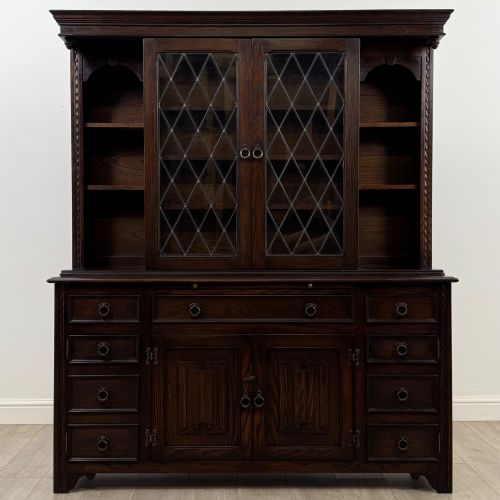
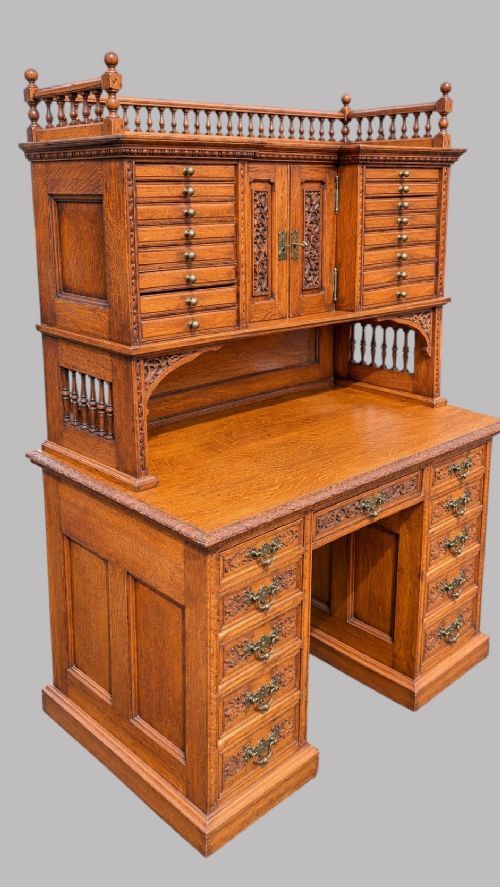
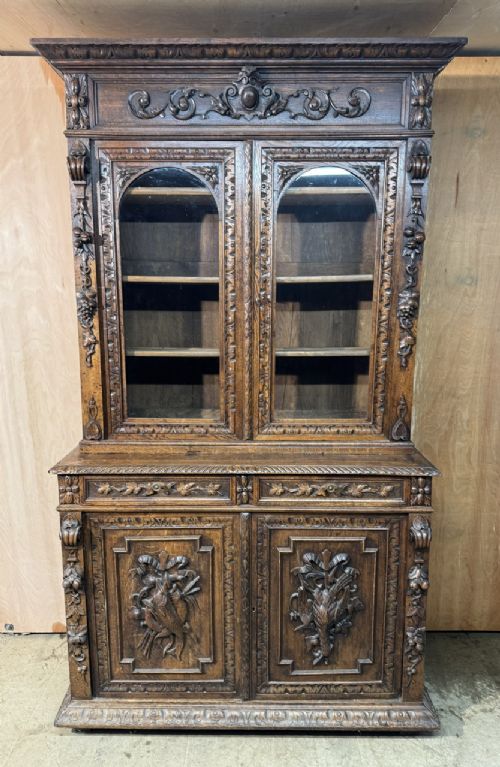
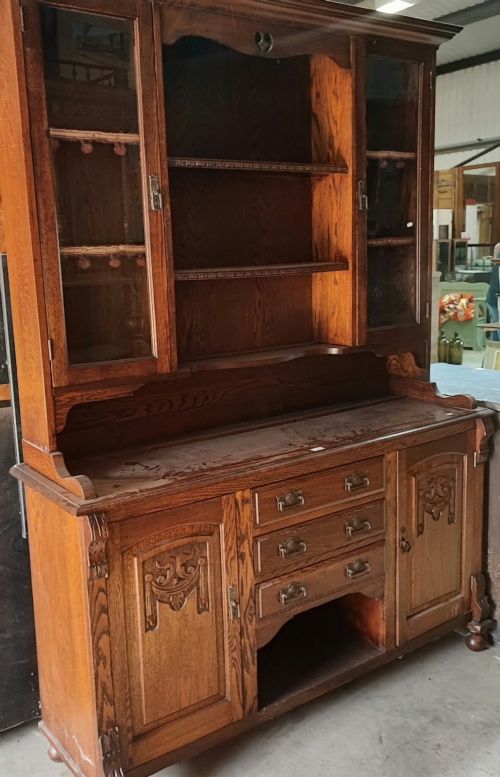
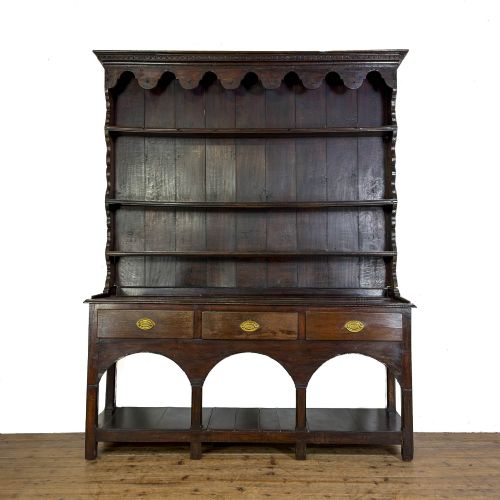

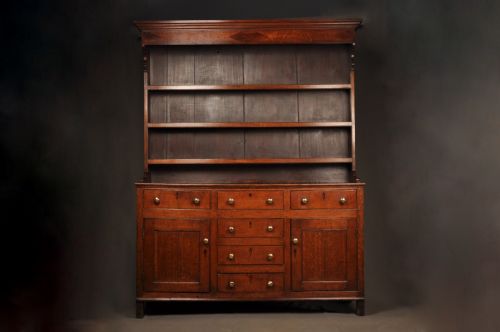


Carved Oak Hutch
Carved oak hutch furniture brings solid seventeenth-century proportion and rich regional character directly into a modern room.
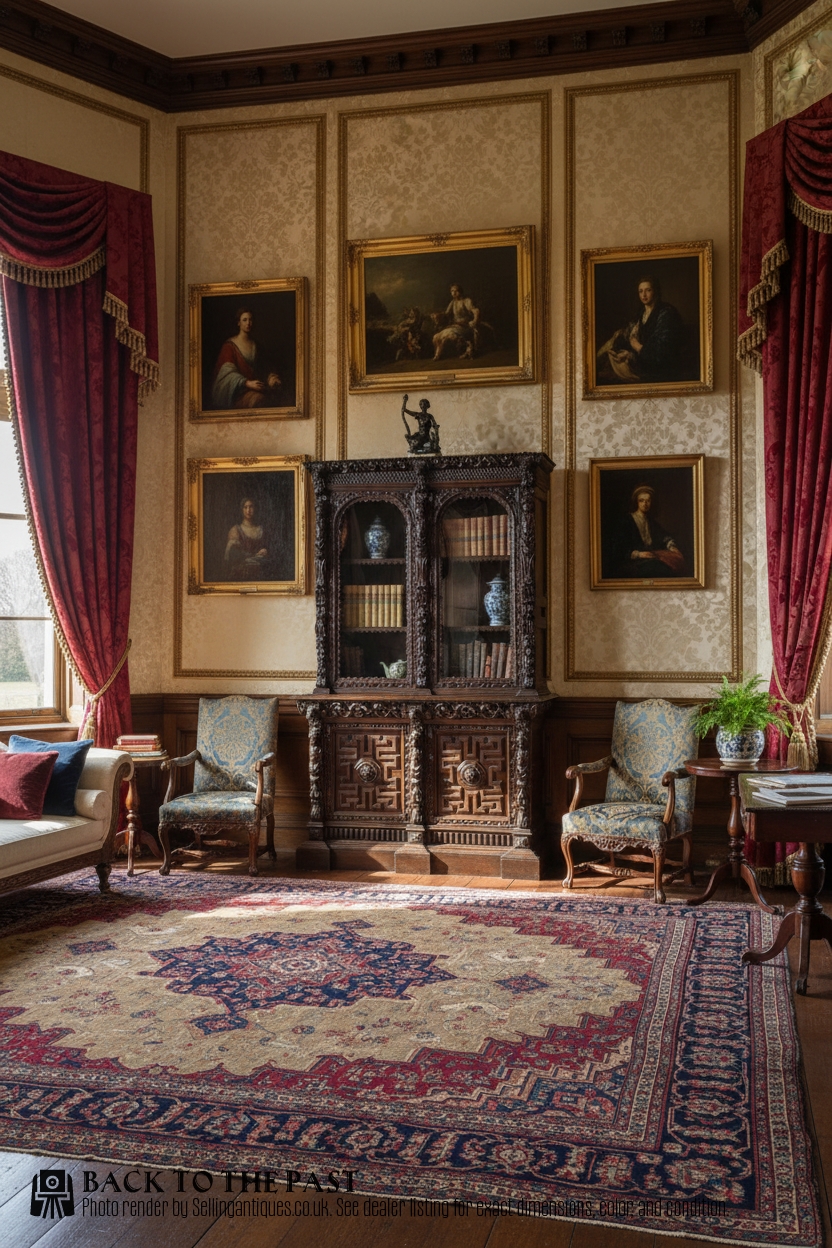
Carved Oak Hutch
When you search for carved oak hutch items, you encounter solid timber storage forms spanning from seventeenth-century provincial cupboards to later revival interpretations. The pieces you meet most often on this page combine enclosed cabinet space with sturdy oak construction characteristic of English country and Jacobean styles.
Makers utilised heavy timbers to build robust storage solutions designed for domestic utility and display. Surviving examples demonstrate how these utilitarian objects evolved through the eighteenth and nineteenth centuries while retaining their fundamental architectural presence.
Materials and construction
Craftsmen built these pieces primarily using solid oak timbers, occasionally incorporating walnut, brass, iron, or wrought metal hardware for hinges and handles. Panels were frequently joined using traditional framing techniques that allowed the dense wood to expand and contract with seasonal humidity changes.
Surface decoration relies heavily on hand chiselling, featuring geometric patterns or figurative motifs carved directly into the structural boards. Metal accents such as lead cames secure glass panels on later glazed doors, combining structural integrity with decorative display.
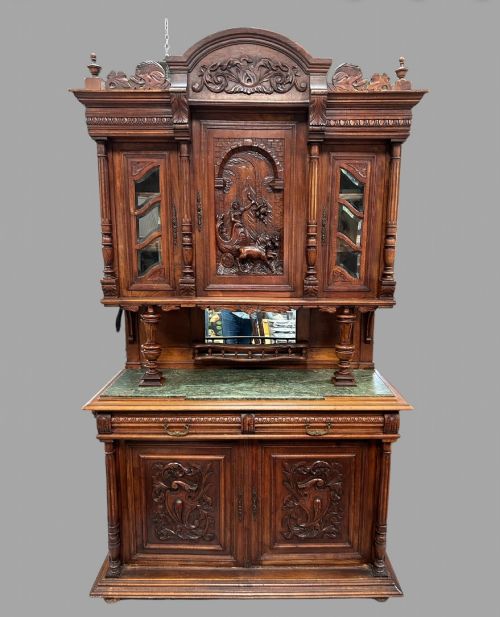
Green Man carvings peer out from nineteenth-century bowfront boards, watching over centuries of domestic storage.
Variations in quality
The distinction between ordinary utility items and exceptional pieces rests upon the depth and crispness of the hand carving. Early examples show deliberate tool marks and thoughtful proportions that elevate simple storage into notable craftsmanship.
Integrity of the timber grain and the survival of original brass or iron fittings define the upper tier of these pieces. Later revival versions range from mechanical factory production to faithful interpretations executed by skilled cabinet makers using seasoned oak.
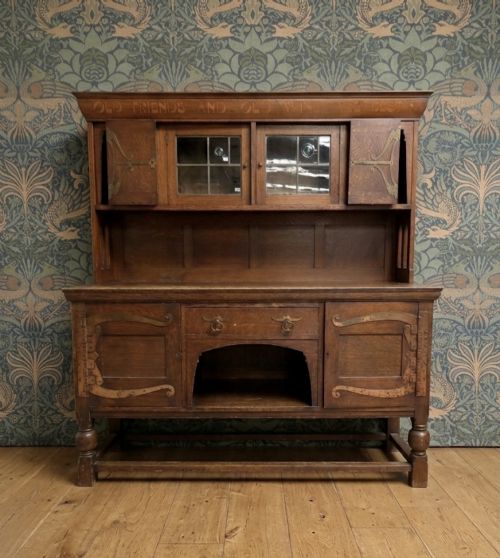
Ambrose Heal for Heal and Son·Heals of London
The Carved Oak Hutch Glossary
- Hutch
- An enclosed storage cupboard or cabinet raised on legs or resting on a base. These pieces typically feature panelled doors and carved ornamentation on the front frame.
- Jacobean Revival
- A nineteenth-century stylistic movement copying seventeenth-century motifs. Furniture from this period utilises heavy turnings, geometric mouldings, and dark patinated oak surfaces.
- Welsh Dresser
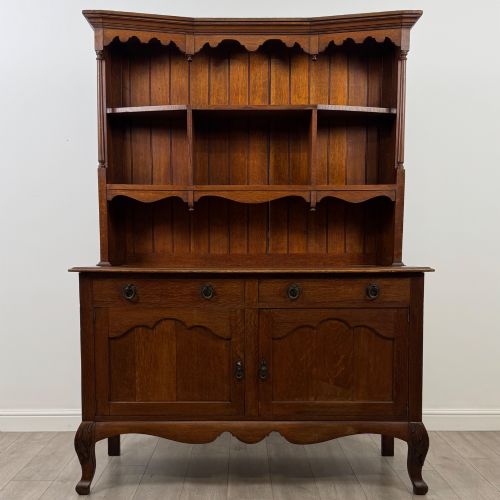
- A traditional kitchen form combining base cupboards with an open upper plate rack. Regional variations display specific moulding profiles and drawer arrangements.
- Fitted Cupboard
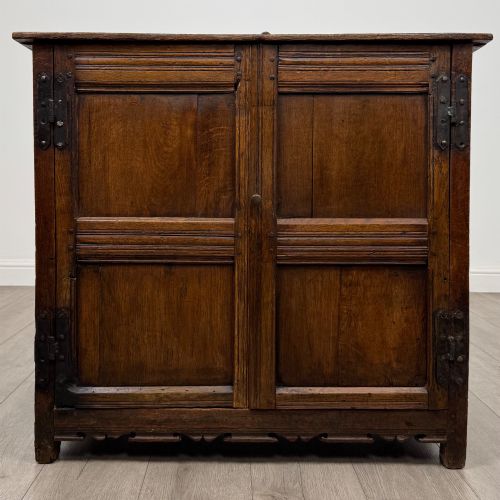
- A storage unit built with internal shelving or compartments tailored for domestic provisions. Surviving seventeenth-century examples often retain original hinges and lock plates.
Carved Oak Hutch: Frequently Asked Questions
How do I date a carved oak hutch?
Examine the construction joints, tool marks, and hardware fixings to determine the period of manufacture. Hand-cut pegs and uneven board widths typically indicate earlier seventeenth or eighteenth-century origin.
Revival pieces from the Victorian era often feature uniform machine sawing and standardised internal fittings. Comparing the carving style against known regional patterns helps confirm the approximate decade.
Where should I place a heavy oak hutch?
Position these substantial pieces against load-bearing walls away from direct heat sources such as radiators. Oak timbers react to extreme temperature fluctuations by drying out and splitting.
Ensure the floor surface is level so the heavy frame does not twist its tenon joints over time. Adequate clearance allows cabinet doors to swing open without binding against skirting boards.
How do I maintain oak cabinet surfaces?
Apply natural beeswax sparingly with a soft cloth to nourish the dry timber and protect the patina. Avoid silicone sprays or modern household polishes that build up sticky residues.
Gentle dusting with a dry lint-free cloth prevents grit from abrading the antique finish. Maintaining stable indoor humidity preserves both the wood and the traditional iron hardware.
What is the difference between a hutch and a dresser?
A hutch primarily provides enclosed cupboard storage behind panelled doors, whereas traditional dressers incorporate open shelving plate racks above base drawers. Both forms utilise solid oak construction.
Form follows domestic function, with hutches designed to secure provisions and dressers built to display tableware. Regional cabinet makers adapted these basic proportions to suit contemporary household needs.