

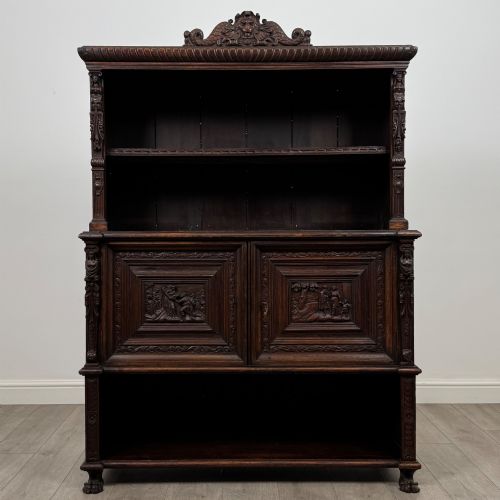


Heavy Oak Bookcase Cabinet
These heavy oak bookcase cabinet pieces bring substantive Victorian presence and library utility into a room.
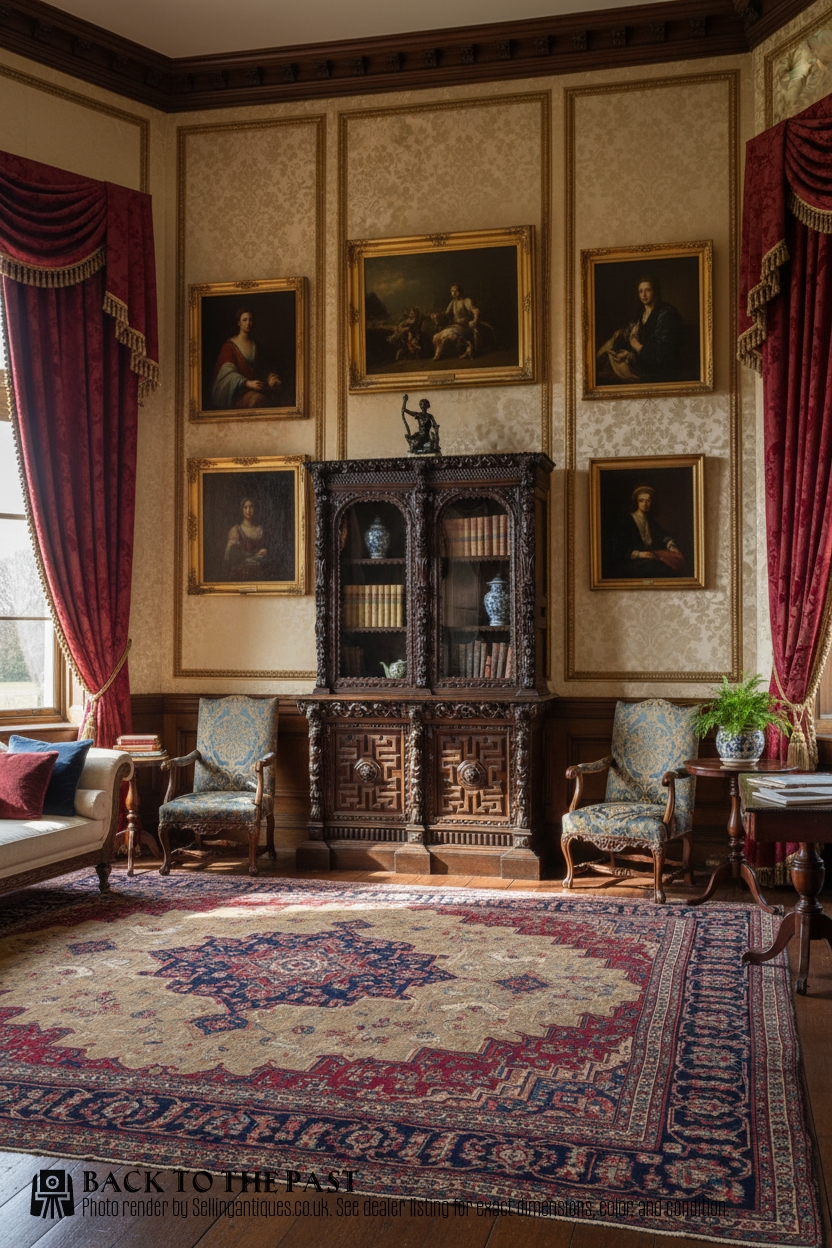
Heavy Oak Bookcase Cabinet
A heavy oak bookcase cabinet represents substantial nineteenth-century storage furniture built for domestic libraries and country houses. Pieces listed span the Victorian, 1870, 1880, and Edwardian periods, typically taking the form of tall library bookcases, breakfront designs, and double cabinets.
The most common formats found here combine open shelving with enclosed cupboard storage below or behind glazed doors. Construction originates primarily from the Victorian era and the turn of the twentieth century, displaying distinct architectural proportions.
Makers and workshops of the period utilised heavy timber to create monumental proportions suitable for substantial collections of books. Styles range from plain utility to elaborate revivalist expressions.
Materials and construction methods
Makers built these pieces using solid oak, frequently incorporating carved surface decoration, glass panel doors, and brass or lead details. The timber was selected for density and strength, capable of supporting significant weight across multiple shelves.
Carving techniques on these items include intricate relief work typical of Renaissance revival and Gothic revival aesthetics. Joinery relies on traditional nineteenth-century framing methods to manage the natural movement of dense timber.
Heavy Oak Bookcase Cabinet Retail Price Guide 2026
Typical asking prices for heavy oak bookcase cabinet among the pieces listed under this phrase on Sellingantiques today, from the lower quarter to the upper quarter. They describe what is for sale here now, not the wider market.
Renaissance Revival and Gothic Revival styles appear frequently among the nineteenth-century library pieces.
Distinguishing quality across examples
Quality in a heavy oak bookcase cabinet reveals itself through the depth and crispness of the carved details rather than simple surface ornament. Superior examples display thoughtful proportions and deliberate integration of architectural elements such as breakfront cornices.
The selection of the oak timber itself dictates much of the visual merit, with finer pieces exhibiting consistent grain patterns and robust constructional joinery that withstands heavy daily use.
The Heavy Oak Bookcase Cabinet Glossary
- Breakfront
- A cabinet design where the central section projects forward from the flanking wings. This configuration adds architectural depth to large library furniture.
- Renaissance revival
- A nineteenth-century design style drawing inspiration from sixteenth-century classical architecture and ornament. It manifests in these pieces through heavy carved panels and symmetrical arrangement.
- Gothic revival
- An architectural and decorative movement reviving medieval structural forms. In these bookcases, it appears via pointed arches, tracery, and robust mouldings.
- Open bookcase
- A shelving unit without doors, designed for easy access to volumes. Many nineteenth-century library pieces use this format for primary display.
Heavy Oak Bookcase Cabinet: Frequently Asked Questions
How do I date a heavy oak bookcase cabinet?
Dating relies on examining the construction methods, hardware, and stylistic revival motifs present on the timber frame. Pieces from the nineteenth century often show hand-finished joinery details alongside period-specific locks and hinges.
Changes in proportion and decorative carving styles also help differentiate mid-Victorian examples from later Edwardian iterations.
Are these cabinets suitable for modern homes?
These large pieces require careful measurement of ceiling height and floor load capacity due to their substantial timber construction. They provide exceptional storage for books and display objects in rooms with adequate scale.
Positioning them away from direct heat sources helps protect the dry oak timber and fitted glass panels over time.
How should I maintain oak library furniture?
Maintaining heavy oak furniture involves occasional dusting with a dry, soft cloth and avoiding silicone-based polishes. Keeping the room at a stable humidity level prevents the solid timber from warping or splitting.
Occasional application of traditional beeswax feeds the grain and preserves the historic finish.