
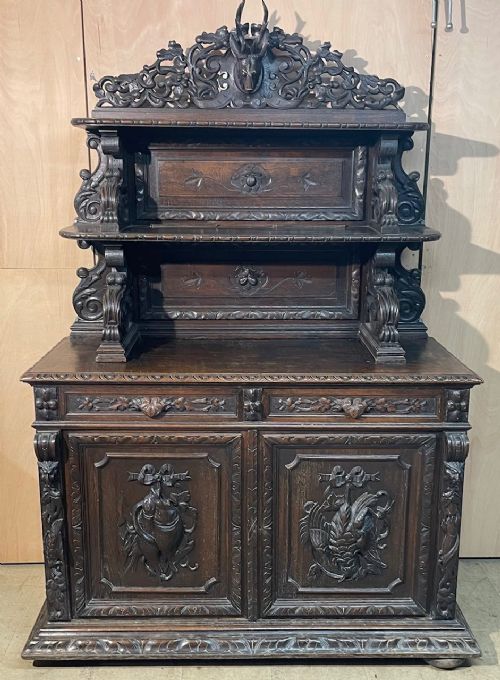
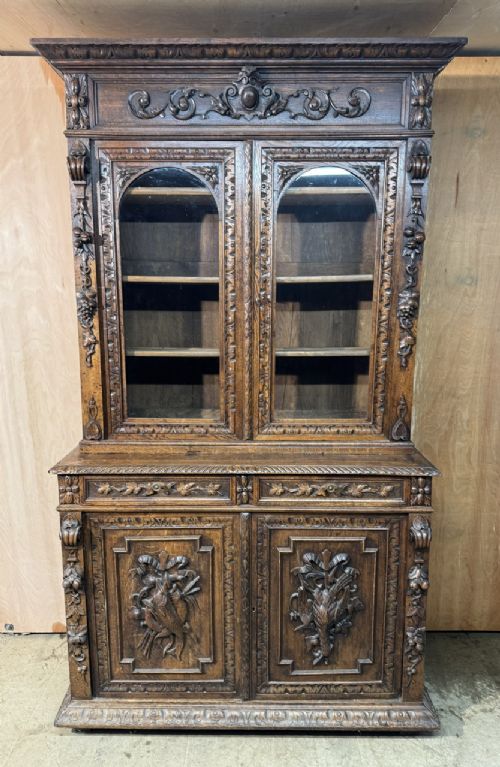
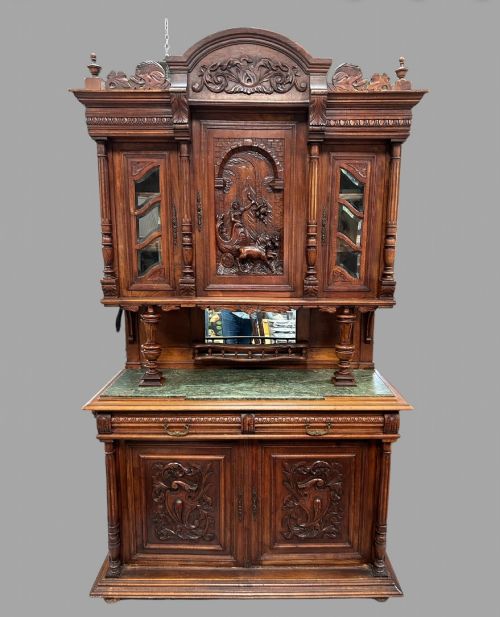
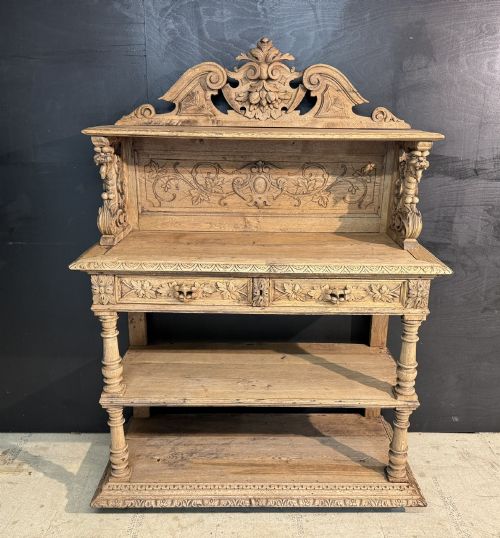
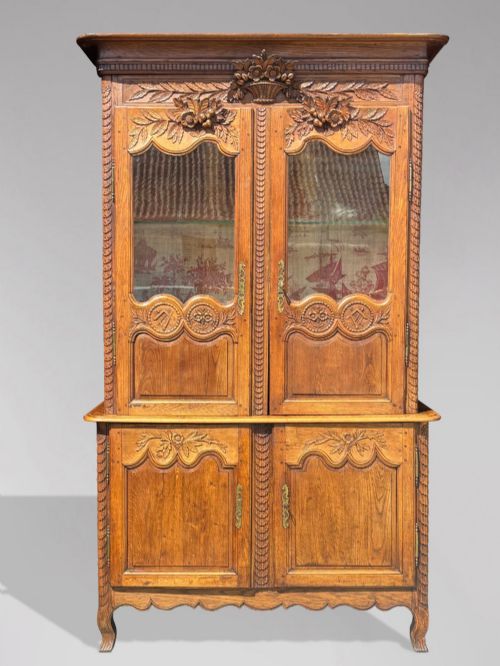
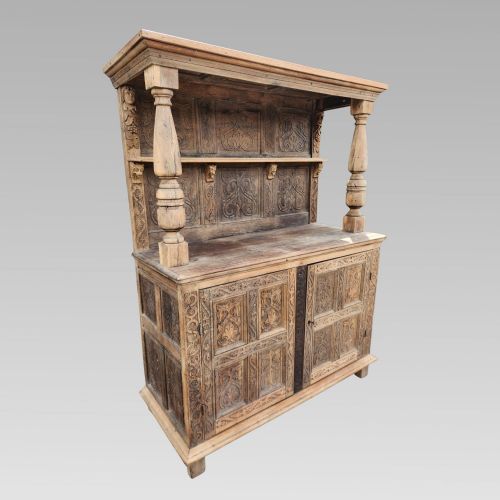


Carved Oak Buffet Deux Corps
These carved oak buffet deux corps are substantial two-tier storage pieces offering generous French provincial presence and practical double-body capacity.
Carved Oak Buffet Deux Corps
A carved oak buffet deux corps is a traditional two-body storage piece originating from France, featuring a lower cabinet section surmounted by a matching upper cupboard. When searching for a carved oak buffet deux corps, buyers encounter substantial timber constructions designed for kitchen or dining room utility.
The pieces appearing here span the eighteenth century and the nineteenth century, including specific dates such as seventeen-eighty and seventeen-seventy alongside Victorian examples from eighteen-eighty. Regional variations encompass French provincial, French Renaissance Revival, French Chateau, Louis XV, and Breton styles.
Forms range from tall housekeeper's cupboards and cabinet à deux corps to hunting sideboards and panelled dressers. Oak serves as the primary structural timber across these monumental storage items.
Materials and construction
Construction relies heavily on solid oak timber, frequently decorated with deep hand-carving across panelled doors and cornices. Additional materials such as glass, brass, iron, walnut, marble, fabric, and burr walnut appear in select components and mounts.
Joinery methods reflect traditional cabinet-making practices suited to large two-body furniture, utilising pegged mortise and tenon joints to support heavy upper and lower sections.
Materials recorded across these cabinets include solid oak, walnut, burr walnut, glass, brass, iron, marble, and fabric.
Quality and craftsmanship
Quality in a carved oak buffet deux corps is determined by the depth and crispness of the hand-carving on the oak panels and the architectural proportion between the upper and lower bodies. Finer examples display harmonious integration of decorative motifs such as provincial or Renaissance Revival details.
The integrity of the original oak timber and the retention of period brass or iron hardware distinguish superior items. Proportionate scaling and balanced door panels separate well-executed regional pieces from heavier, less refined alternatives.
The Carved Oak Buffet Deux Corps Glossary
- Buffet deux corps
- A two-body sideboard or cabinet featuring a lower cupboard section topped by a separate upper cupboard. This traditional French storage form provides substantial vertical display and shelving.
- Louis XV
- A decorative style characterised by asymmetric curves, naturalistic carving, and cabriole elements. It emerged in eighteenth-century France and influences the softer lines of certain cabinets.
- Breton
- A regional style originating from the northwest of France, noted for distinct figural carvings and traditional motifs. Pieces in this style often incorporate spinning scenes or local costume details into the woodwork.
- Panelled
- A method of construction where a central wooden board floats within a grooved frame to allow for natural wood movement. This technique prevents splitting in large oak doors and side panels.
Carved Oak Buffet Deux Corps: Frequently Asked Questions
What is a buffet deux corps?
A buffet deux corps is a traditional French storage furniture piece constructed in two distinct sections, with a lower cabinet supporting an upper cupboard. These tall units were designed for domestic utility and large-scale storage.
They typically feature panelled oak construction and substantial cornices, offering prominent architectural presence in a room.
How do I date an antique oak buffet?
Dating relies on examining construction techniques, joinery marks, hardware styles, and the specific characteristics of the oak timber. Eighteenth-century examples often display hand-cut pegs and simpler regional panelling.
Later nineteenth-century pieces, including those from eighteen-eighty or the Victorian era, frequently exhibit heavier Revival carving styles and machine-finished interior elements.
Where were these cabinets used?
These large storage pieces originated in French provincial settings, primarily serving kitchens, dining rooms, and hallways as functional pantries or linen stores. The double-body design allowed households to keep tableware in the lower section and dry goods or linens above.
Today, they function as statement storage units in modern dining rooms and spacious living areas.
What wood was used?
Oak is the predominant timber used in the construction of these cabinets, valued for its durability and suitability for deep carving. Secondary materials like walnut, burr walnut, glass, brass, and iron appear in mounts, panels, and hardware.
The grain and colour of the oak vary naturally across different regional workshops and centuries.