




Carved Oak High Back Bench
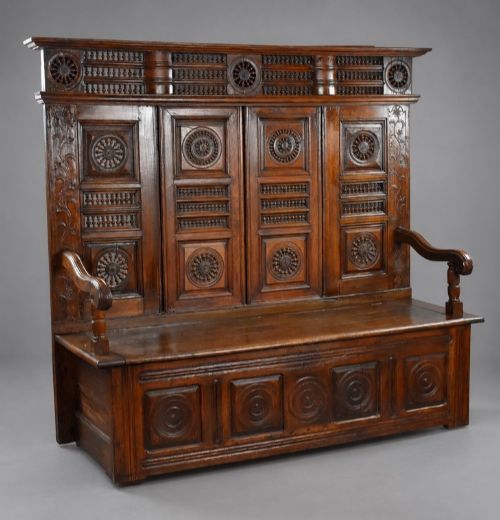
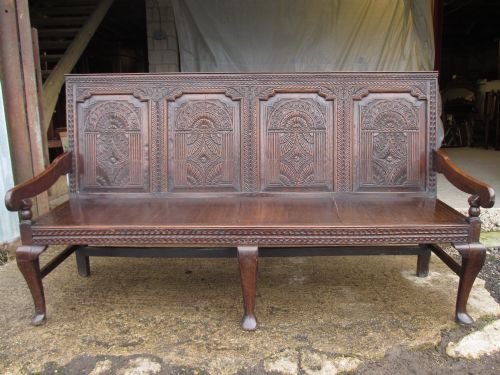
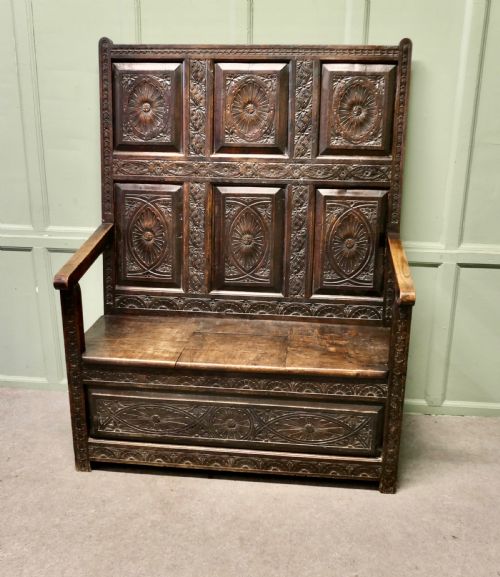
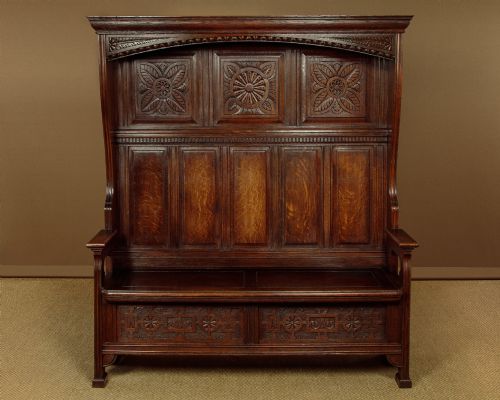
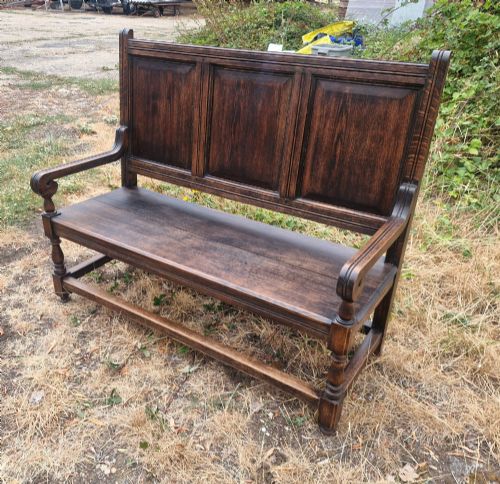
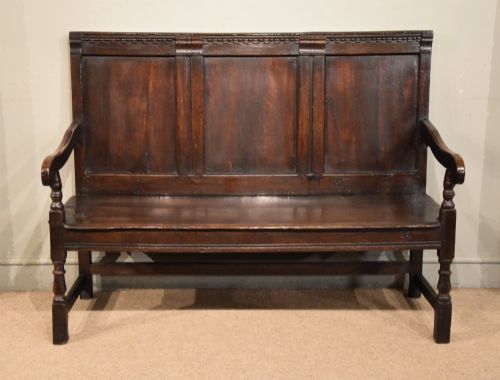
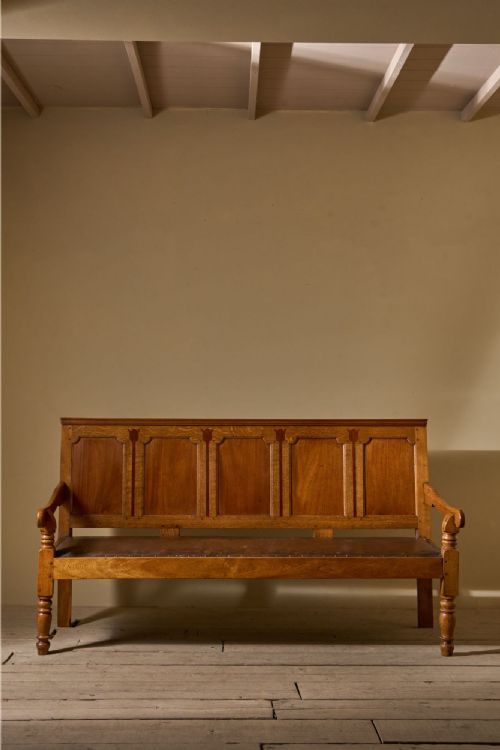
A carved oak high back bench offers substantial timber presence and high protective screens, bringing historic utility and grounded seating to a hallway or living space.
Carved Oak High Back Bench
A carved oak high back bench is a commanding seating form designed to block draughts and provide sturdy resting places in historic interiors. These pieces appear across multiple eras, ranging from seventeenth century wainscot examples to eighteenth century country variations and nineteenth century revival pieces.
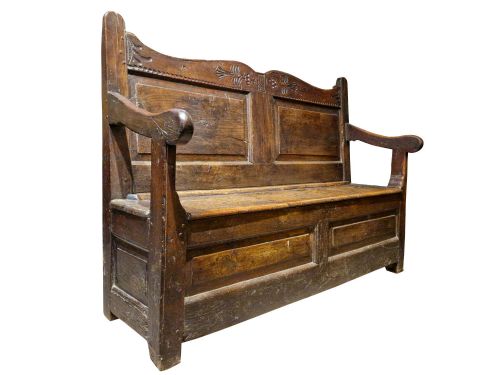
The versions most commonly met on this page include high back settles with panelled construction, box seats, and canopy tops. Formats vary from simple straight backs to heavily carved panels and decorative woodwork originating from English, French, Welsh, and Flemish workshops.
Makers and craftsmen utilised robust joinery to build these items for daily domestic life, frequently integrating storage compartments beneath the seat. Their survival through various centuries demonstrates the enduring practicality of heavy timber furniture.
Materials and construction methods
Construction relies primarily on solid oak timbers, joined using traditional mortise and tenon methods secured with wooden pegs. Selected examples incorporate walnut, fabric, leather, iron, and brass details alongside applied wood inlay or limed finishes.
Carving techniques applied to the timber include relief panels, geometric patterns, and figural motifs such as the green man. High back structures were engineered to shield occupants from cold air currents in large, unheated rooms.
Several examples incorporate hidden storage beneath the seat, perfect for stashing away items while keeping the hall tidy.
Factors determining quality
Quality rests in the integrity of the original timber framing and the depth of the hand carving executed across the panels. Pieces retain greater merit when the structural joinery remains unaltered and the oak has aged with a rich, natural surface patina.
Proportion and decorative restraint separate standard production items from masterworks. Finer examples display balanced proportions, crisp chisel work on the crest rails, and well-executed panel mouldings that reflect the period of their origin.
Hampton & Son's·Emma Grant
The Carved Oak High Back Bench Glossary
- Settle
- A wooden bench with a high back, solid arms, and frequently a box seat base designed to provide draught protection in older homes. This form serves as the primary structural archetype found within these listings.
- Wainscot
- A term describing seventeenth century furniture constructed with panelled woodwork that mirrors the wall panelling of the period. It indicates sturdy frame and panel assembly.
- Box settle
- A variant featuring a hinged seat lid that opens to reveal a storage compartment underneath. This design maximises domestic utility by combining seating with trunk storage.
- Green man
- A sculptural architectural ornament depicting a human face disgorged from foliage or surrounded by leaves. It appears frequently in nineteenth century revival carving.
- Panel
- A flat piece of timber framed within stiles and rails to allow for natural wood movement without splitting. Panel construction is fundamental to historic cabinet making.
Carved Oak High Back Bench: Frequently Asked Questions
How were settle benches used historically?
Historically, these benches were placed near fireplaces or in entrance halls to shield occupants from cold air currents. The high back and solid wooden sides created a microclimate that retained heat.
The enclosed box seat underneath provided secure storage for household goods, blankets, or boots, making the furniture piece a multifunctional item for daily domestic life.
How do I tell seventeenth century from Victorian pieces?
Seventeenth century pieces typically display pegged frame and panel joinery, simpler tool marks, and wood that has darkened naturally over centuries of use. The construction methods reflect the structural limitations and techniques of the period.
Victorian items often show revival styles such as Jacobean or Gothic influences, frequently accompanied by heavier, machine-assisted or deeply sculpted relief carving that mimics earlier aesthetics with greater symmetry.
How should I care for historic oak timber?
Historic oak requires stable indoor humidity levels away from direct heat sources and strong sunlight to prevent the timber from drying out or splitting. Maintaining consistent environmental conditions protects the structural integrity of the joints.
Application of appropriate wax polish helps nourish the surface and preserve the natural patina developed over generations of handling without harming the historic finish.