

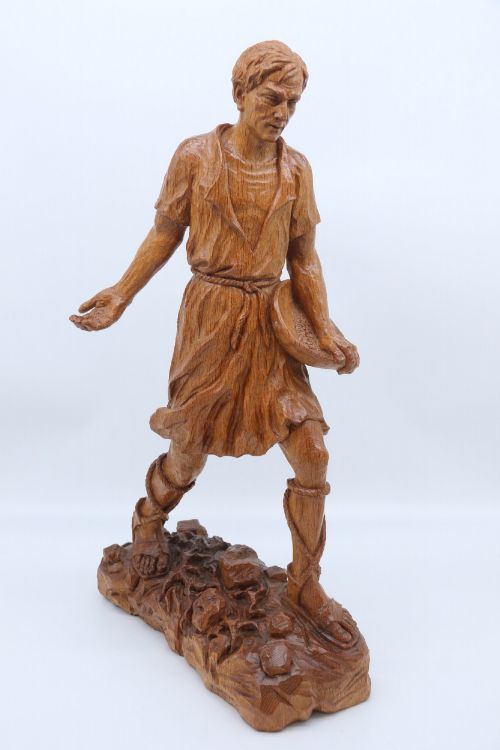
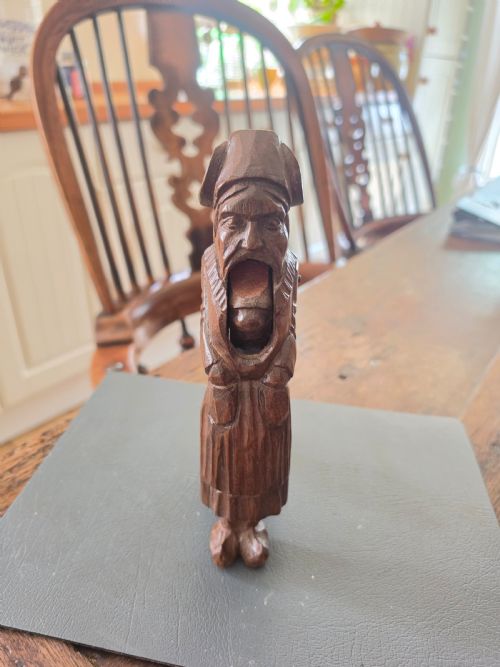


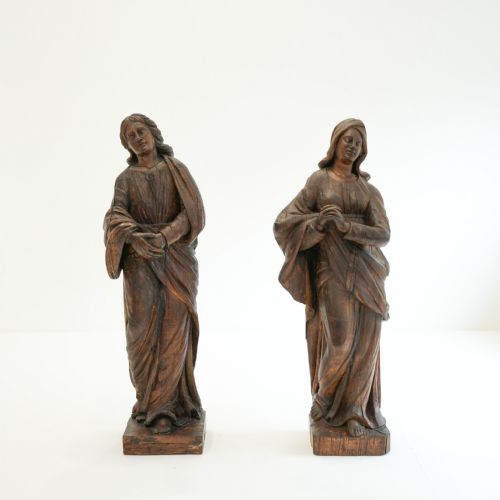
Carved Oak Figure Sculpture
Carved oak figure sculpture spans centuries of hands shaping timber into saints, animals, and classical forms.
Carved Oak Figure Sculpture
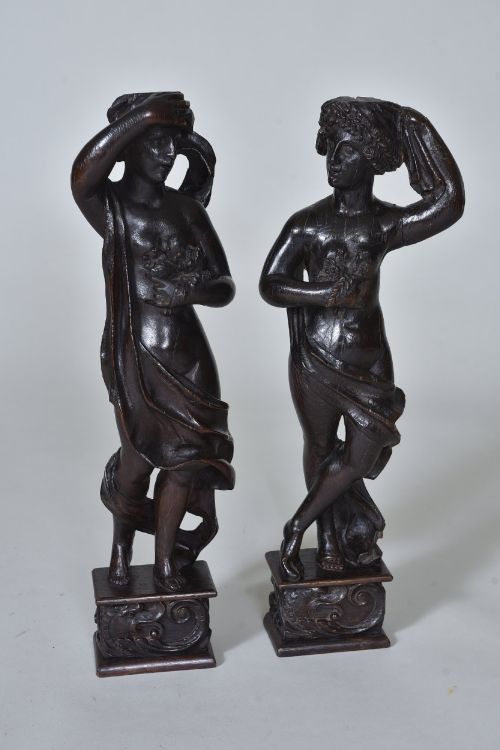
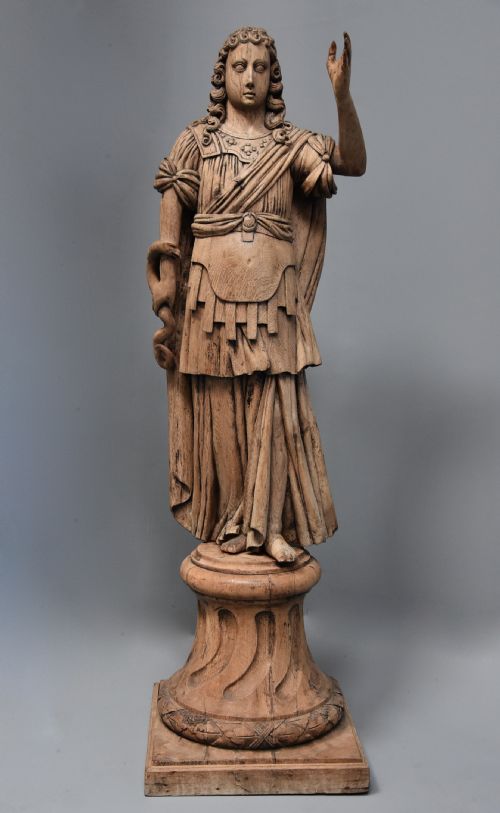
When you search for carved oak figure sculpture, you encounter a lineage of three-dimensional wood objects that stretches from medieval altarpieces to nineteenth-century decorative ornaments. The inventory ranges from substantial religious statues of saints and madonnas to domestic carvings, animal figures, and architectural fragments.
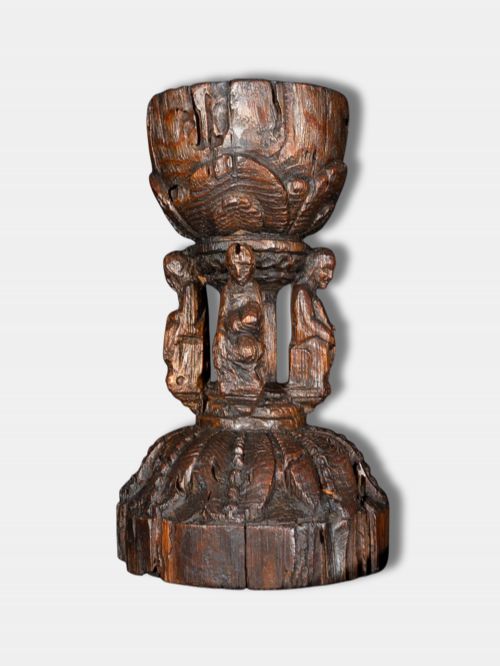
The objects most frequently met on this page originate from continental Europe and Britain, spanning sixteenth-century Gothic and Renaissance workshops up to later revival periods. They appear as single standing figures, paired saints, wall sculptures, and relief panels intended for both ecclesiastical settings and private homes.
How they were made
Carvers worked primarily in solid oak and hardwood timbers, utilising gouges and chisels to reduce seasoned wood into expressive forms. Grain direction dictated the depth of undercut details, while polychrome paint and gesso occasionally finished the surface.
Earlier pieces display the tool marks of medieval and Renaissance bench work, whereas later nineteenth-century examples often employ mechanical aids alongside hand finishing. Timber selection varied from dense heartwood to softer hardwoods depending on the regional tradition and the intended scale of the sculpture.
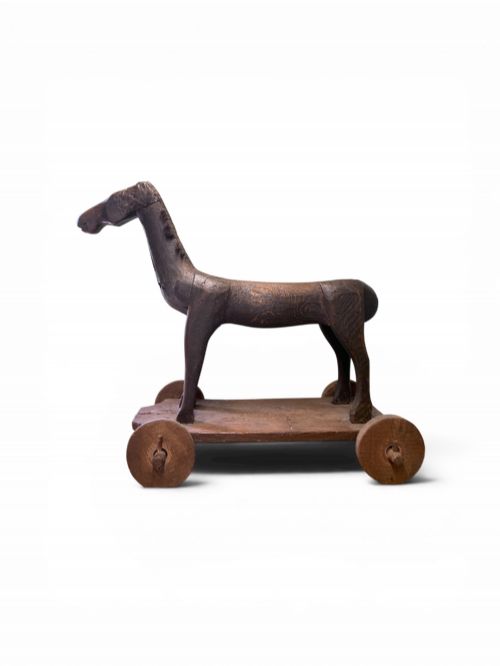
Among the solemn saints and classical figures, an eighteenth-century carved toy horse stands ready for duty.
What varies in quality
Quality rests in the anatomical confidence of the carving and the depth of the drapery folds, where skilled hands achieved natural movement in stubborn timber. Lesser pieces show stiff, generic proportions with flat surfaces and hurried tool work.
Franz Keller
The Carved Oak Figure Sculpture Glossary
- Polychrome paint
- Painted decoration applied directly to wood sculpture, often consisting of multiple coloured layers over a gesso ground. This technique was widely used in medieval and Renaissance workshops to bring realism to religious figures.
- Caryatid
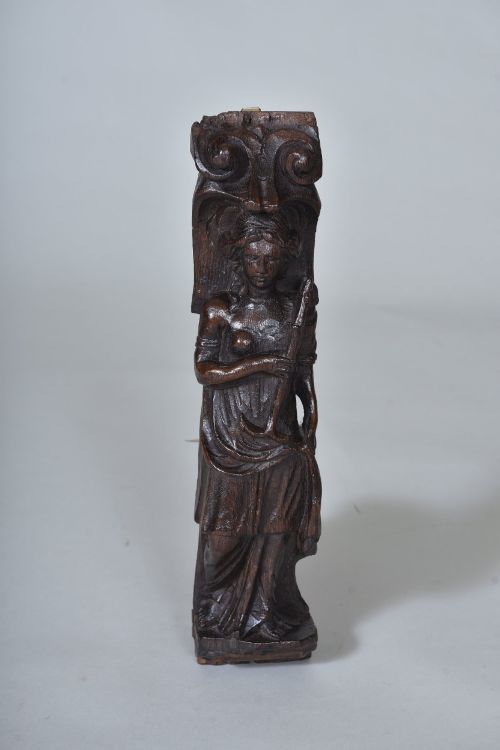
- A sculpted female figure serving as an architectural support in place of a column or pilaster. These architectural elements appear frequently in sixteenth and seventeenth-century Flemish and continental woodwork.
- Corpus Christi
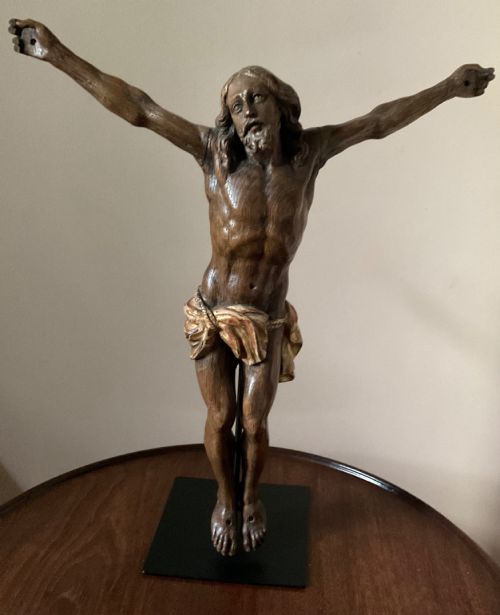
- A representation of the body of Jesus Christ on the cross, usually formed as a carved wooden figure detached from or mounted onto a crucifix. Such sculptures form a distinct category within ecclesiastical wood carving.
- Gothic
- A medieval art and architecture style prevalent from the twelfth to the sixteenth century, characterised by pointed arches and vertical emphasis. Carvings from this period display distinct religious iconography and austere emotional expression.
Carved Oak Figure Sculpture: Frequently Asked Questions
How do I identify a 16th century carved oak figure?
Sixteenth-century pieces typically exhibit deep undercutting, Gothic or Renaissance drapery styles, and dense timber with extensive age oxidation. Tool marks left by primitive gouges often remain visible on the unpolished reverses of these early sculptures.
Compare the facial carving and hand proportions against documented examples from Flemish or German workshops of the period to confirm authenticity.
Were these wooden sculptures originally painted?
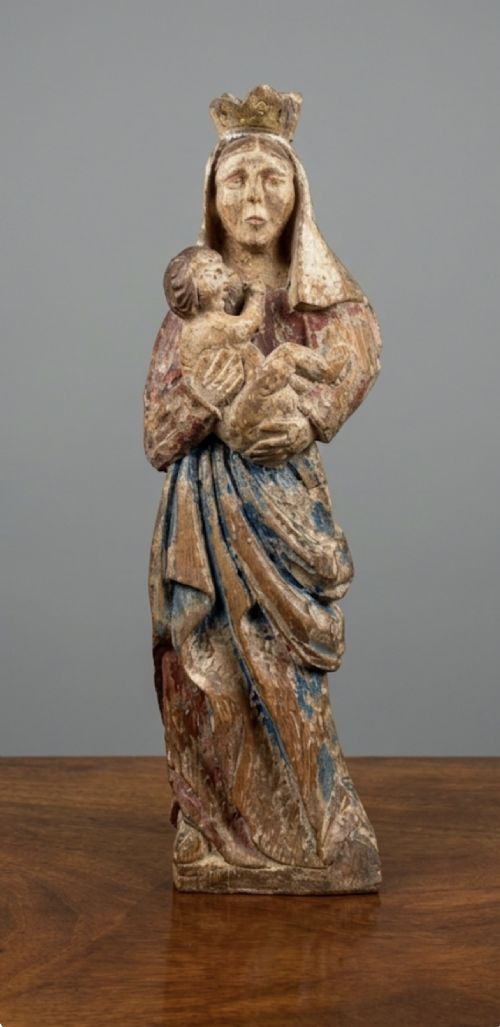
Many early religious sculptures and saints were finished with gesso and polychrome paint to enhance their visual impact in dim church interiors. Over the centuries, much of this pigment was stripped or worn away, leaving bare oak surfaces that collectors encounter today.
Traces of original colour nested within deep crevices indicate that a piece once carried a full painted scheme.
Where were these figures displayed originally?
Ecclesiastical carvings originated on church altars, rood screens, and architectural niches as devotional aids for religious worship. Domestic pieces and later nineteenth-century ornaments adorned private libraries, halls, and cabinet displays.
Wall sculptures and reliefs were integrated directly into interior wood panelling or mounted independently as focal points.
How should I care for antique oak sculpture?
Maintain stable humidity levels in your room to prevent the oak timber from drying out, cracking, or warping over time. Keep the sculpture away from direct sunlight and strong heat sources that damage old wood finishes and remaining paint.
Dust the surface gently with a dry, soft bristle brush rather than applying liquid polishes or modern cleaning agents.