



Early Wooden Religious Carving
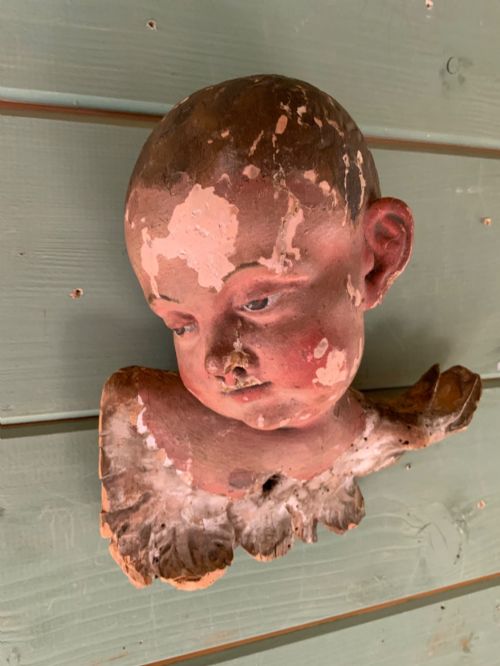
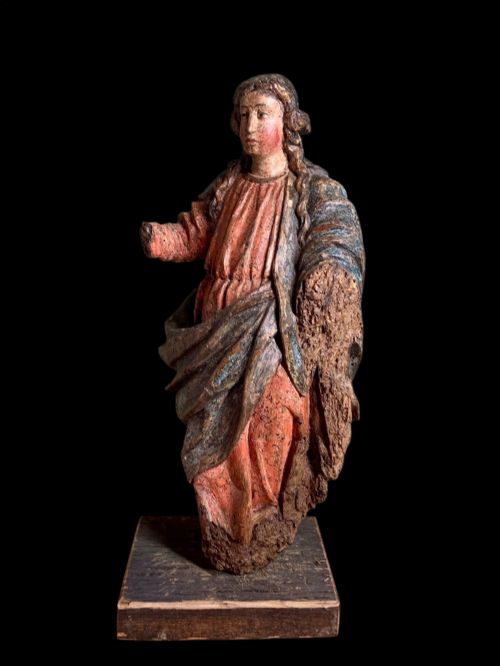
These early wooden religious carving pieces bring centuries of devotion into a room, offering tactile forms shaped from oak, lime wood and hardwood.
Early Wooden Religious Carving
An early wooden religious carving represents figures of saints, angels, madonnas and Christ forms spanning from the fifteenth century through to the nineteenth century. Buyers searching this phrase meet sculptures, decorative statues, wall panels and ecclesiastical figures that reflect centuries of sacred devotion.
The selections on this page draw predominantly from the sixteenth, seventeenth and eighteenth centuries, alongside nineteenth century interpretations and folk art pieces. Germanic, Flemish and Anglo-Indian origins appear across the listings, showing diverse regional hands at work on sacred subjects.
How they were made
Many surfaces received a layer of gesso followed by polychrome paint and gold leaf decoration, creating vibrant finishes that survived the centuries in varying states. The interaction between exposed timber and remaining pigment defines the physical presence of these historic sculptures.
Early Wooden Religious Carving Retail Price Guide 2026
Typical asking prices for early wooden religious carving among the pieces listed under this phrase on Sellingantiques today, from the lower quarter to the upper quarter. They describe what is for sale here now, not the wider market.
St John brings an eagle to the altar while angels share the timber stage.
What varies in quality
The sophistication of the hand carving separates finer theological figures from simpler vernacular works, evident in the natural fall of textile folds and the sensitivity of facial modelling. Master carvers from periods like the Flemish Renaissance achieved a depth of emotion and anatomical proportion that lesser workshops missed.
The survival of original surface treatments, such as early polychrome paint and parcel gilt accents, dictates the historic integrity of a piece. Later repainting or stripped timber alters the original visual balance intended by the maker.
Franz Keller
The Early Wooden Religious Carving Glossary
- Polychrome paint
- Decoration using multiple colours applied to wood sculpture, often over a gesso ground. This finish brought realism and symbolic colour to medieval and Renaissance figures.
- Gesso
- A plaster mixture applied to wood surfaces to provide a smooth base for gilding and painting. It helps bind the decorative layers to the carved timber underneath.
- Lime wood
- A pale, fine-grained timber favoured by European carvers for its even texture and lack of pronounced grain. It allows for extremely detailed undercut work without splitting.
- Corpus Christi
- The physical body of Christ depicted on a cross. These figures focus intensely on anatomical rendering and emotional expression.
- Santos figure
- A devotional statue representing a saint or divine figure, typically created for religious display or procession. These originate from various global traditions influenced by European trade and mission history.
Early Wooden Religious Carving: Frequently Asked Questions
How old are these wooden carvings?
The pieces span from pre-sixteenth century works up to the early twentieth century, with strong representation from the sixteenth, seventeenth and eighteenth centuries.
Specific datings rely on stylistic evidence, timber choice, and regional carving traditions documented by the makers and dealers.
What woods were used for these sculptures?
Makers utilised dense timbers like oak and lime wood, along with general hardwoods suited to detailed sculptural work.
The choice of timber often reflects the regional provenance of the workshop, such as Flemish or Germanic carving centres.
How should I display a religious carving?
These pieces suit stable indoor environments away from direct sunlight and sudden temperature shifts to protect old timber and gesso surfaces.
Wall panels work securely mounted on flat surfaces, while statues require firm brackets or flat surfaces commensurate with their weight.
What is polychrome paint on wood?
Polychrome refers to the application of multiple colours of paint, often combined with gold leaf over a gesso layer on the carved wood surface.
Surviving traces of original pigment provide vital evidence of the piece's aesthetic history and period context.