
Carved Oak Dresser Server
A carved oak dresser server is a heavy storage piece that anchors a dining room with rich grain and traditional craftsmanship.
Carved Oak Dresser Server
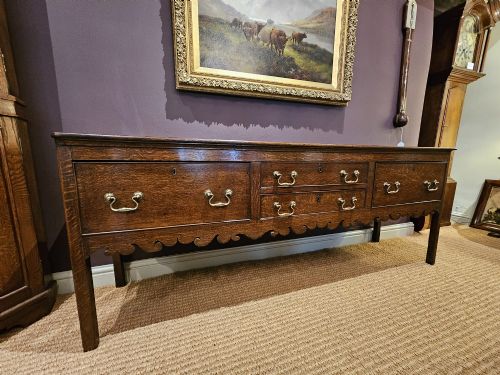
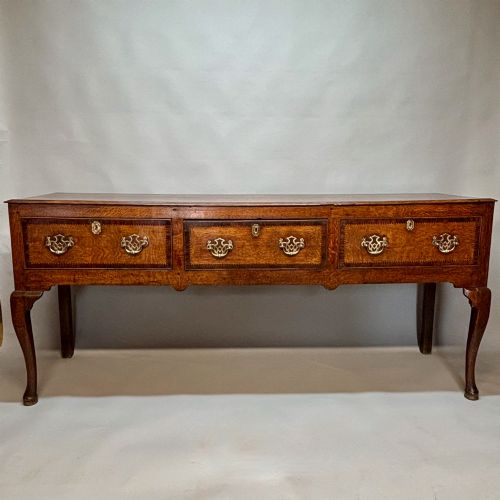
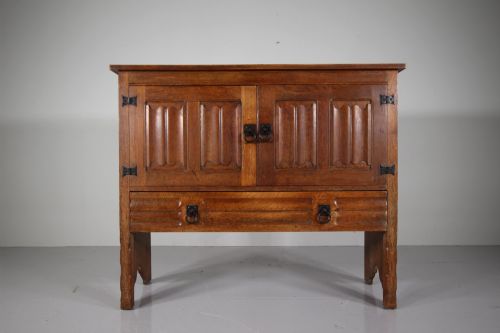
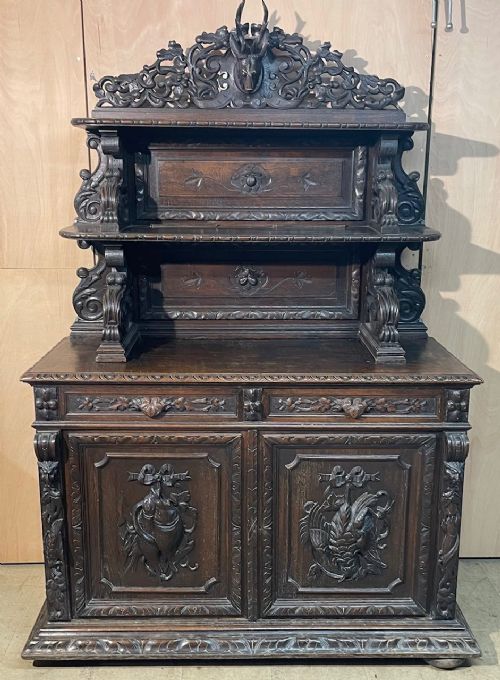
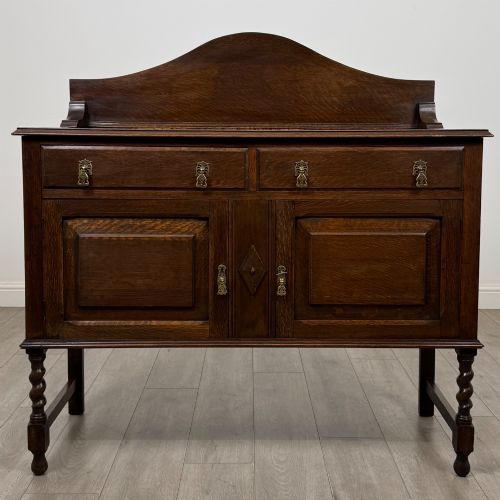
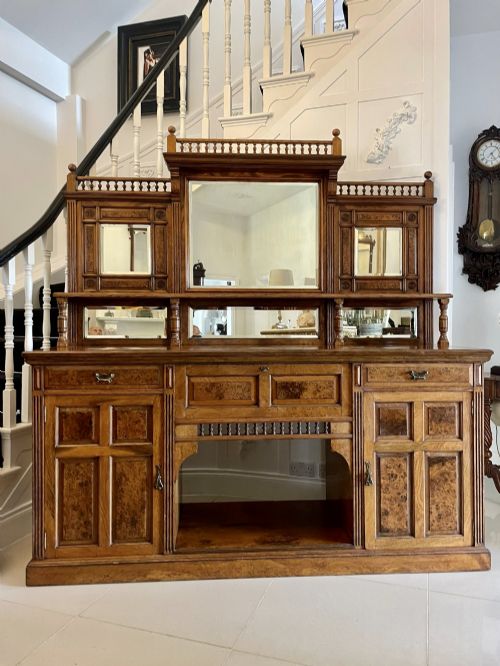
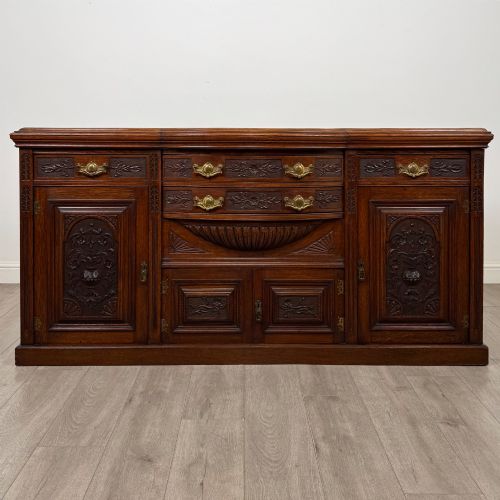
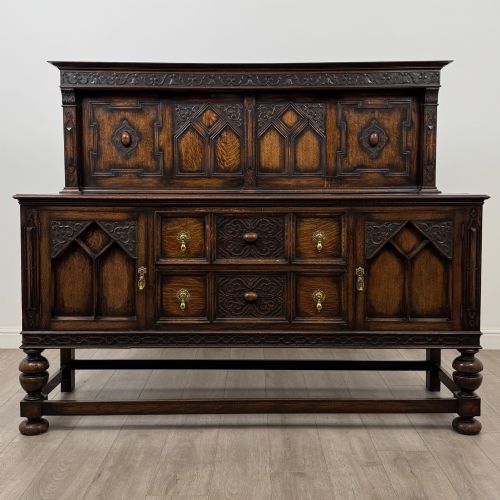
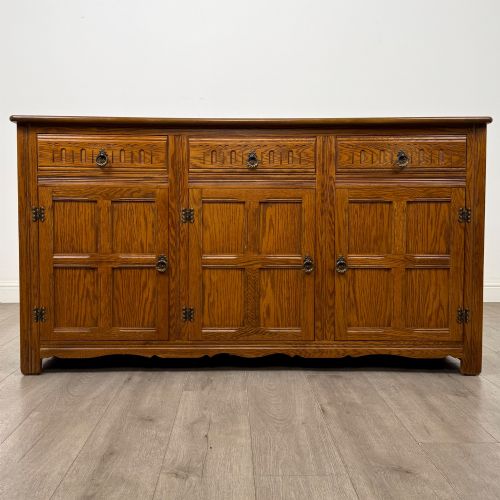
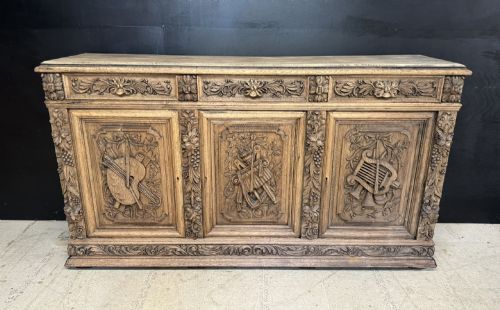
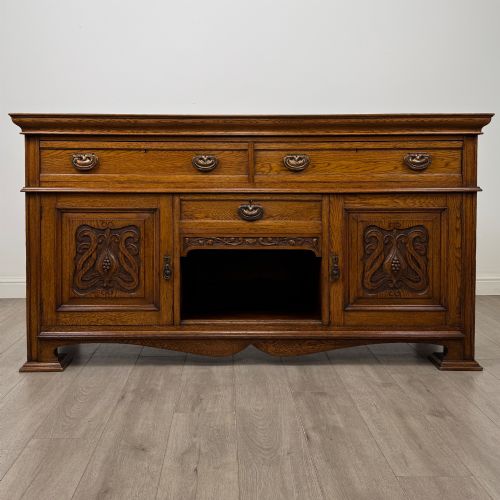
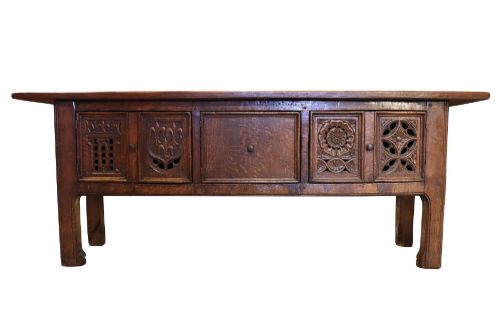
A carved oak dresser server combines robust timber construction with practical surface space for serving food and displaying tableware. These pieces appear across multiple eras, including the seventeenth, eighteenth, and nineteenth centuries, alongside Edwardian and later revivals.
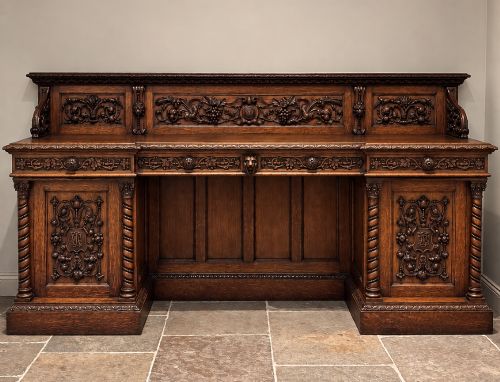
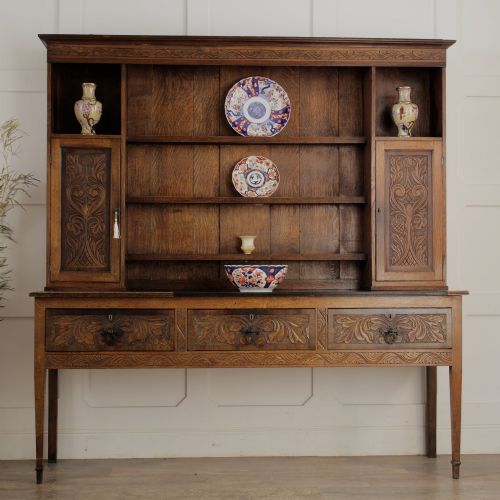
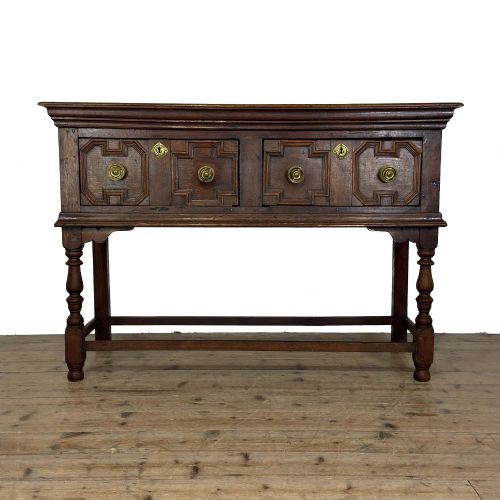
The most common form met on this page is the Victorian or Edwardian sideboard in oak, frequently displaying revival styles such as Jacobean or Gothic detailing. Simpler Georgian and earlier dresser bases also surface, offering clean lines and functional drawer arrangements.
Origins stretch from English workshops to French provincial regions, bringing distinct regional carving patterns and proportions to the domestic interior. Buyers encounter everything from narrow proportions designed for smaller rooms to wide serving tables with deep cupboards.
Depth of Workmanship
Quality rests upon the crispness of the hand-carving and the selection of timber grain, where high-grade quarter-sawn oak displays striking medullary rays. The finest examples show meticulous attention to drawer linings, dovetail joints, and original hardware.
Heavy, uniform machine stamping in later revival pieces contrasts with the varied, confident chisel marks found on earlier centuries of cabinet work. Proportions and structural integrity dictate whether a piece holds its presence in a modern dining room.
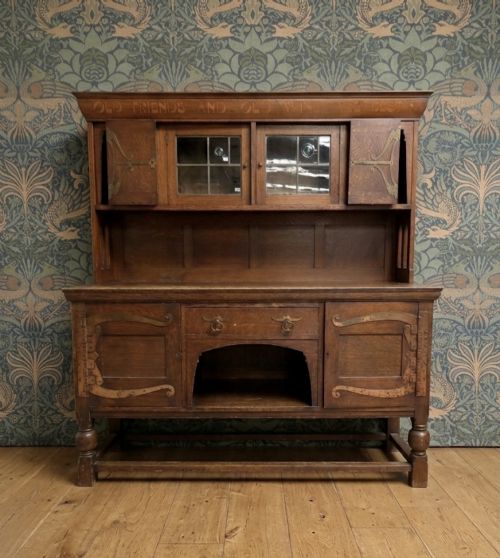
Listings span multiple construction styles, uniting seventeenth century vernacular forms with nineteenth century Gothic Revival and Arts and Crafts interpretations.
Ambrose Heal
The Carved Oak Dresser Server Glossary
- Dresser base
- A low wooden storage unit featuring drawers and cupboards beneath a flat top surface, historically used for food preparation and serving. It stands without the upper plate rack of a traditional kitchen dresser.
- Jacobean revival
- A nineteenth and twentieth century decorative style imitating seventeenth century English furniture design. It typically incorporates heavy geometric panel relief, strapwork, and dark polished timber finishes.
- Barley twist
- A turned wooden furniture leg or support resembling a spiral rope. This decorative technique appears frequently on nineteenth and Edwardian oak sideboards.
- Linenfold
- A carved wood panel motif resembling folded cloth or parchment. This design is commonly found on the cupboard doors of fifteenth to twentieth century oak cabinets.
- Pollard oak
- Timber taken from trees that have been pollarded, producing a heavily knotted and highly figured wood grain. Cabinetmakers utilised these decorative veneers on prominent panels of Victorian furniture.
Carved Oak Dresser Server: Frequently Asked Questions
How do I clean a carved oak sideboard?
Dust the deep carvings regularly with a soft, dry brush to prevent dirt accumulation in the recesses. Apply a traditional beeswax sparingly to nourish the oak grain without leaving a heavy, sticky residue.
Avoid modern liquid polishes containing silicone, which can penetrate open grain and dull the natural patina over time. Gentle care preserves the historical finish developed across centuries of use.
Can I use a dresser server in a modern kitchen?
A sturdy oak server provides excellent workspace and generous cupboard storage for modern kitchenware and dining accessories. The deep top surface functions well as a coffee station or a buffet area during gatherings.
Ensure the room maintains stable humidity levels to protect the solid timber construction from excessive seasonal movement. Placing the unit away from direct heat sources prevents the oak from drying out and cracking.
How do I distinguish eighteenth century from revival pieces?
Examine the construction marks inside the drawers and at the back of the carcass for signs of hand tools like pit saws and adzes. Eighteenth century pieces often feature irregular hand-cut dovetails and pegged joints rather than uniform modern screws.
Revival furniture from the Victorian or Edwardian periods usually carries machine-sawn timber and standardised hardware fixings. Look closely at the wear patterns, as genuine age produces a soft, undulating patina that factory distressing cannot replicate.
What is the difference between a sideboard and a dresser base?
A dresser base typically originates from earlier vernacular traditions, featuring deep drawers and simpler cupboard arrangements intended for daily domestic use. Sideboards evolved through the nineteenth century with more formal architectural styling and fitted cellarette drawers.
Both forms serve the same practical function of hosting dining room storage and surface display. Regional variations in Britain often dictate whether a piece received the designation of dresser base or serving table.