
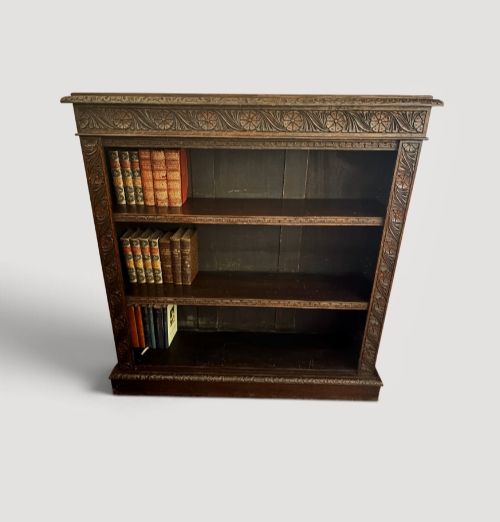
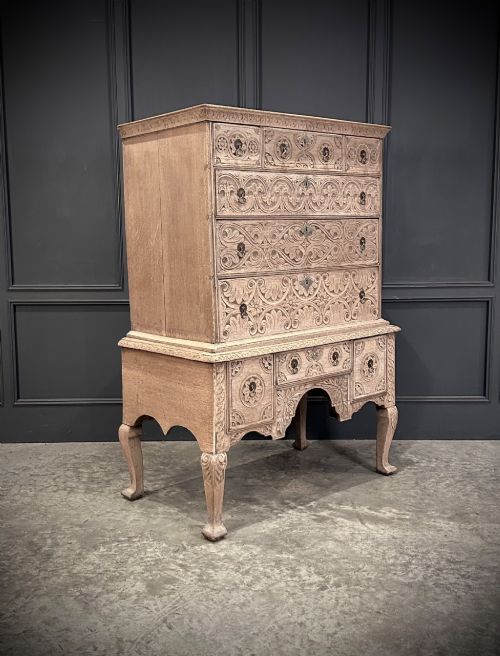
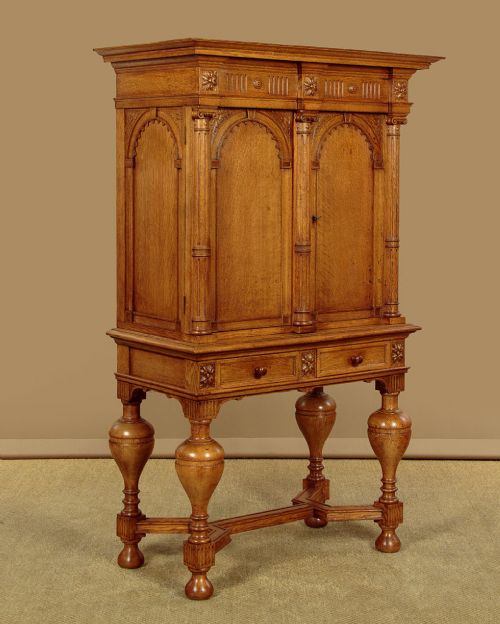
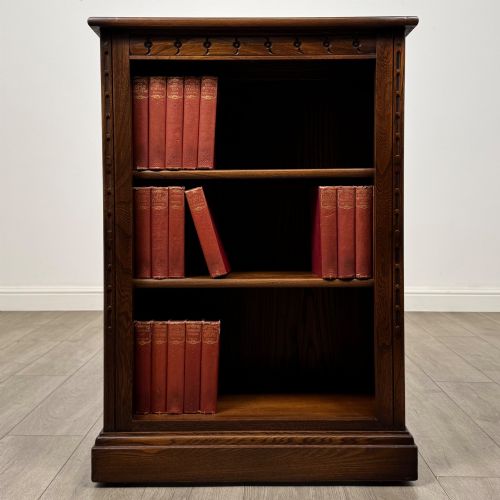
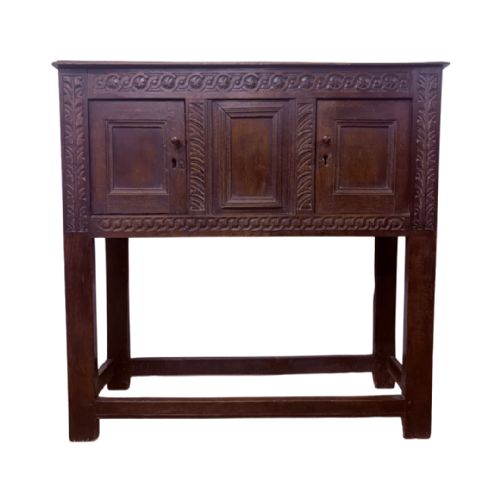
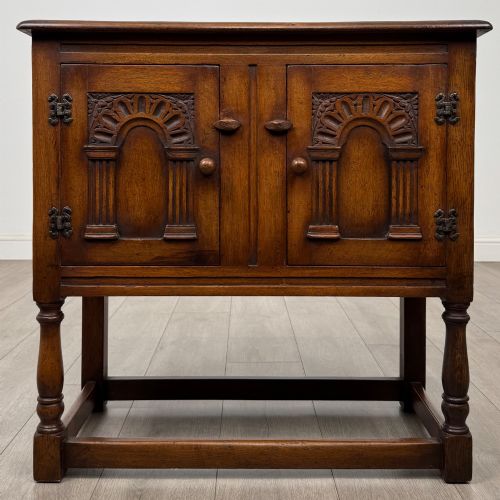

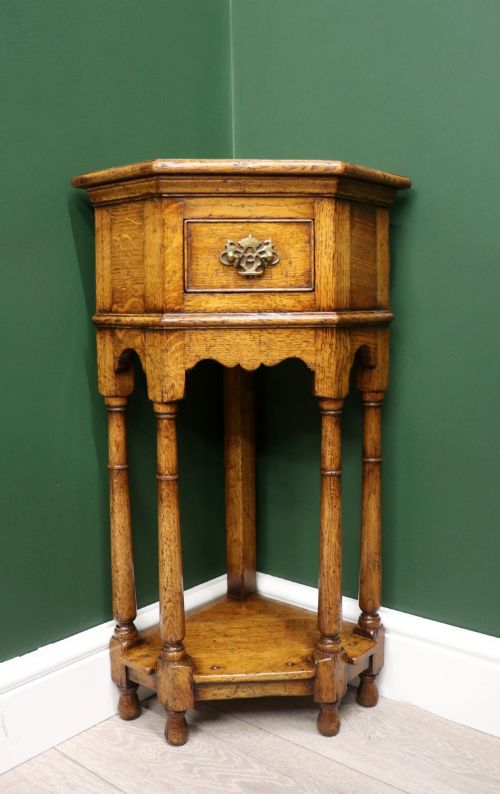
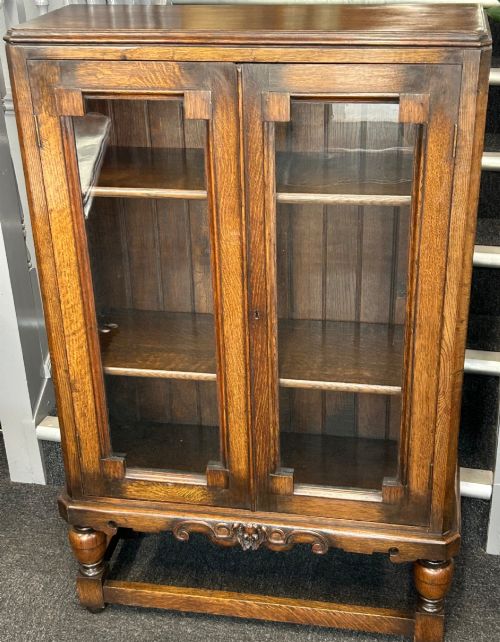
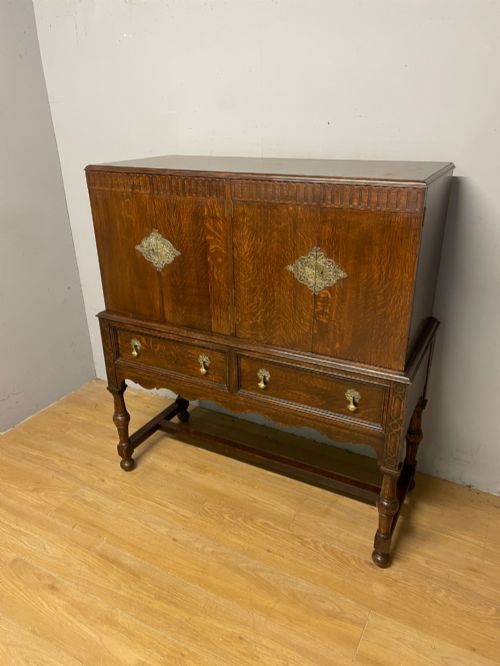

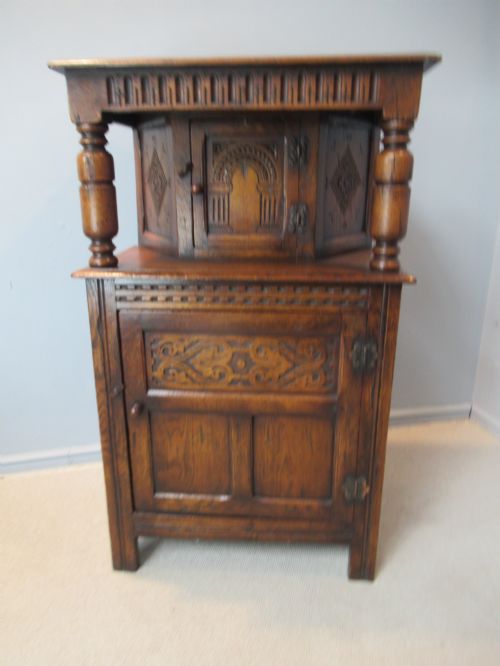
Carved Oak Cabinet on Stand
A carved oak cabinet on stand brings together solid timber and elevated storage, offering both heavy presence and practical interior organisation for the home.
Carved Oak Cabinet on Stand
When buyers search for a carved oak cabinet on stand, they are looking for a dual-section storage piece that combines an upper cupboard or chest with a distinct supporting base. These items range from seventeenth-century joined examples to nineteenth-century revival interpretations.
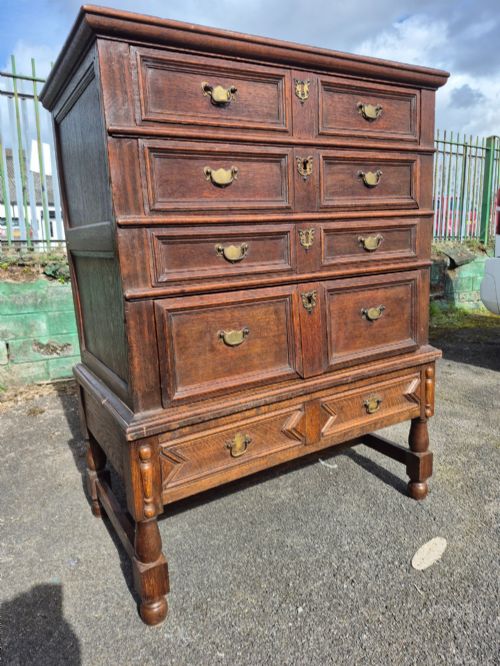
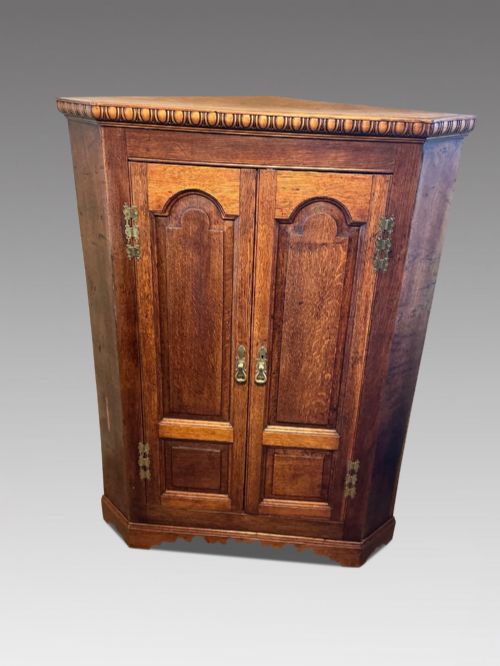
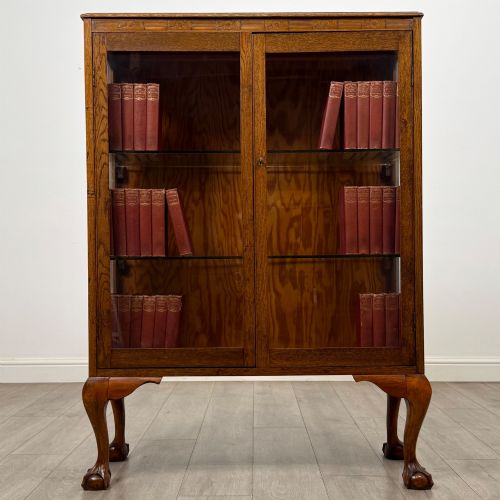
The versions most commonly met on this page span several centuries, including seventeenth-century pieces, eighteenth-century chest on stand forms, and later revival styles. Alongside these, related forms such as court cupboards and side cabinets appear frequently within the listings.
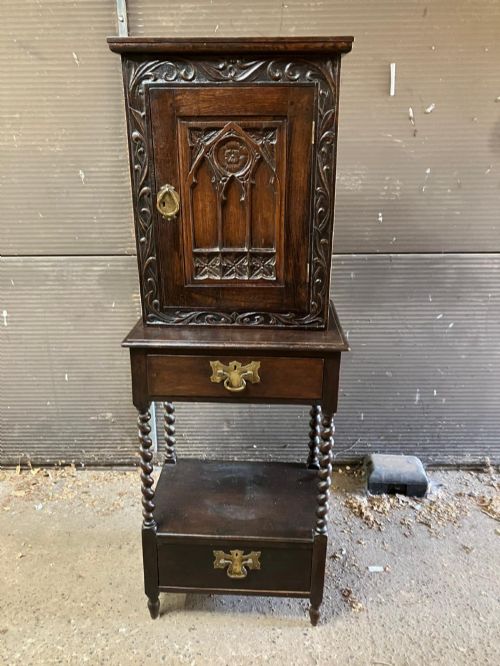
Origin and period heavily dictate the overall silhouette, with earlier pieces showing traditional joinery while nineteenth-century variations often incorporate heavier carved ornamentation, such as lion masks or Gothic tracery.
Materials and construction
These items are constructed primarily from English oak and general oak timber, selected for its durability and strong grain pattern. Carpenters utilised traditional joining methods, building sturdy frames that support heavy upper storage sections.
Hardware details typically involve wrought iron or brass for hinges, locks, and handles, providing functional security while complementing the dark or bleached tones of the timber.
Surface decoration relies on hand carving directly into the oak panels, producing geometric patterns, floral motifs, or figurative elements depending on the period and style.
The listings on this page span several periods, featuring oak, brass, and wrought iron across Jacobean Revival, Gothic, and Georgian styles.
Distinctions in quality
Quality in these pieces rests upon the integrity of the original timber and the crispness of the hand-carved ornamentation. Pieces retain distinction when the joinery remains tight and the structural relationship between the upper cabinet and the lower stand is balanced.
The presence of original fittings, such as blacksmith-made iron locks and hinges, elevates an example above those altered or repaired with later replacement hardware. Surface patination, achieved through decades of handling and wax polishing, marks the difference between a dry, stripped surface and a rich, historically intact skin.
U Phone of Leeds
The Carved Oak Cabinet on Stand Glossary
- Chest on stand
- A two-part storage furniture item consisting of a drawer-bearing chest elevated on an open leg base. This form evolved to keep contents away from damp floors.
- Court cupboard
- A traditional open or enclosed storage unit used for displaying plate or storing provisions. These pieces often feature tiered shelving and heavy carved supports.
- Joined oak
- Furniture constructed using mortise and tenon joints secured by wooden pegs rather than metal nails. This technique defines seventeenth-century cabinet making.
- Bleached oak
- Timber that has been chemically or naturally lightened in tone. This treatment alters the dark appearance typical of older oak pieces.
- Jacobean Revival
- A nineteenth-century stylistic movement copying seventeenth-century decorative motifs. Pieces in this style often display exaggerated geometric mouldings and dark finishes.
Carved Oak Cabinet on Stand: Frequently Asked Questions
What is a cabinet on stand?
A cabinet on stand is a two-part furniture item comprising an enclosed upper storage section resting upon a distinct supporting frame or base. This configuration lifts the main body off the floor.
Historically, this design kept textiles and valuables away from cold, damp flagstone floors while providing comfortable access to stored contents.
How do I date an oak cabinet?
Dating relies on observing construction methods, timber preparation marks, and decorative styles. Hand-split boards and pegged mortise and tenon joints point to earlier periods.
Revival pieces from the nineteenth and twentieth centuries often combine older stylistic motifs with modern mechanical fixings or machine-sawn timber elements.
Were these used for clothes?
Many early versions served multiple domestic functions, including storing linen, dry goods, or household valuables rather than hanging garments.
Over subsequent centuries, the internal configuration adapted to changing storage needs, transitioning from open shelving to specialised compartment layouts.
How should I clean oak furniture?
Maintenance requires gentle dusting with a dry, soft cloth to prevent particulate build-up on the carved surfaces. Avoid modern silicone sprays.
Applying a traditional beeswax periodically nourishes the timber and preserves the historic finish without damaging the natural grain.