






Carved Oak Box with Drawer
A carved oak box with drawer brings dependable domestic storage and centuries of craft into a room, combining lidded compartments with integrated lower drawers.
Carved Oak Box with Drawer
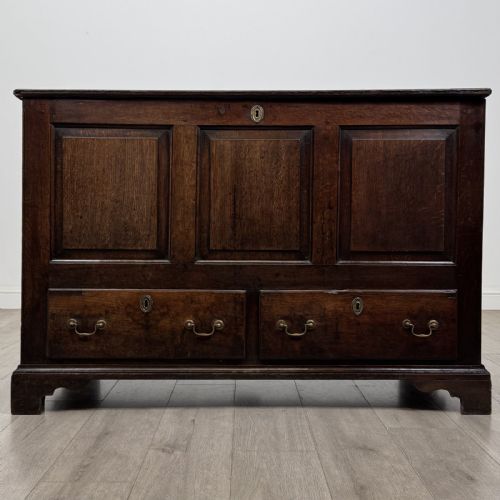
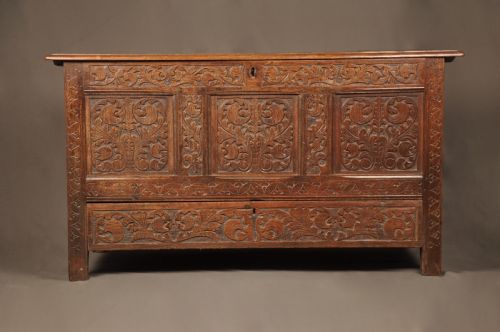
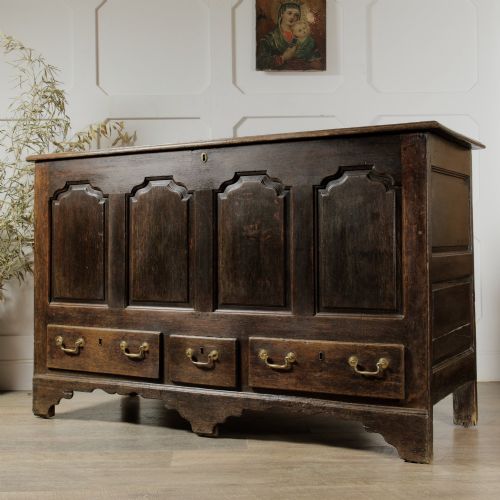
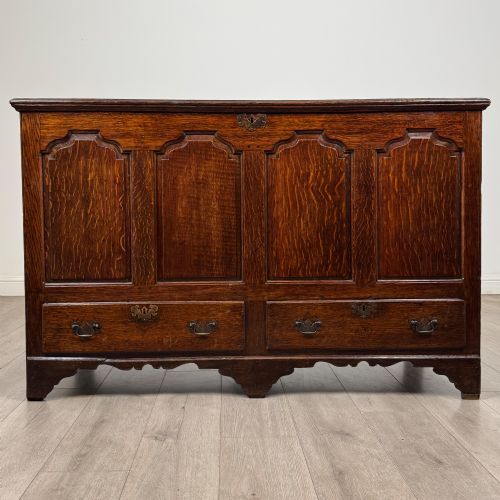
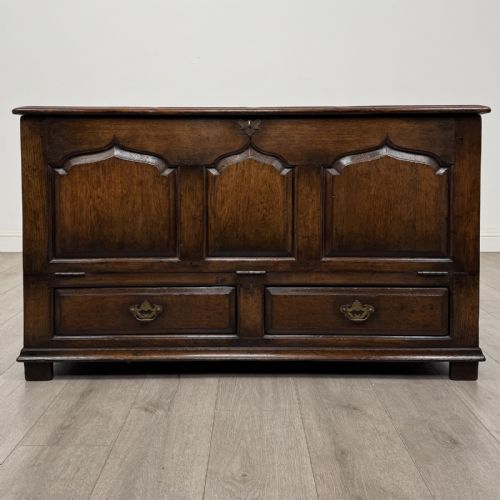
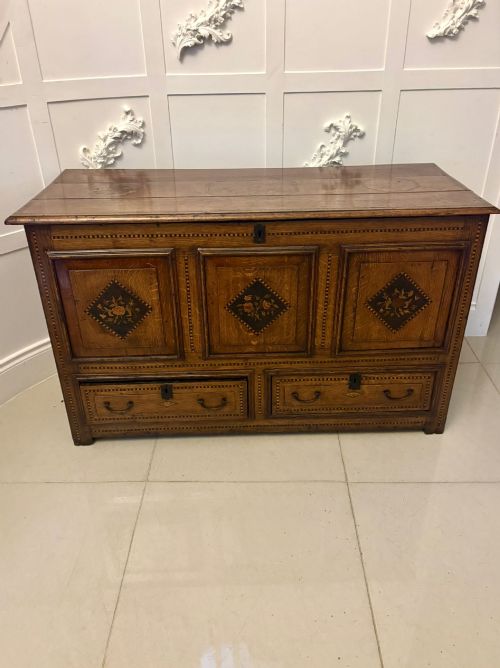
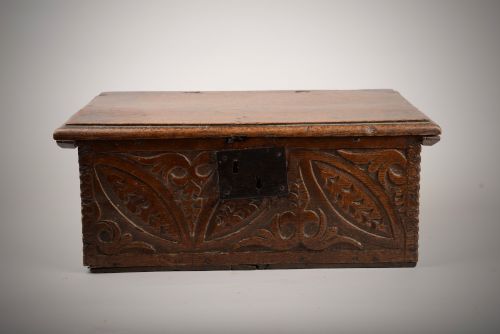
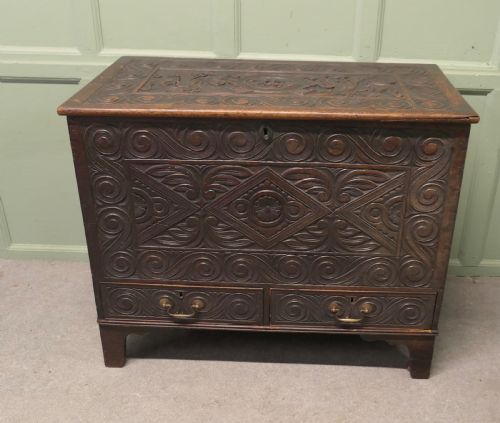
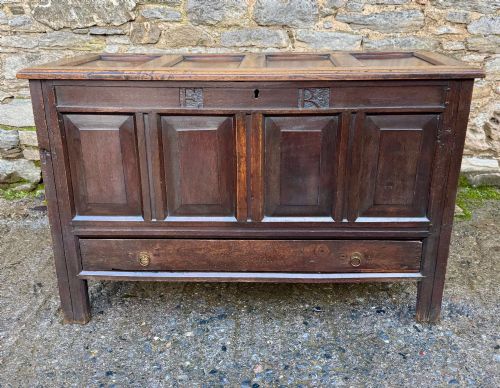
A carved oak box with drawer typically manifests as a mule chest, coffer, or table box originating from the seventeenth and eighteenth centuries. These utilitarian items served households for linen and document storage, uniting a primary top-access compartment with one or more lower drawers.
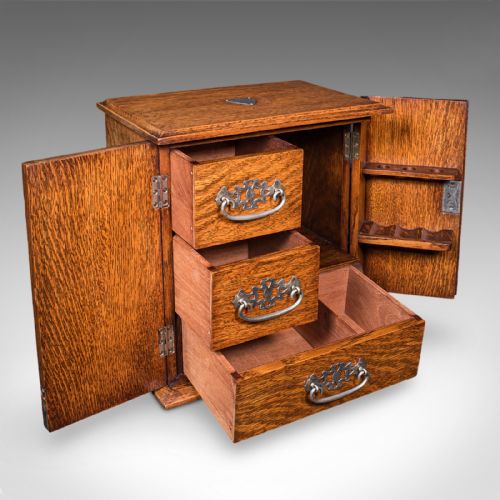
The versions most frequently met on this page span the Georgian and seventeenth-century periods, showcasing regional English and Welsh vernacular styles. Pieces range from large panelled blanket chests down to compact table boxes and miniature coffor bach designs.
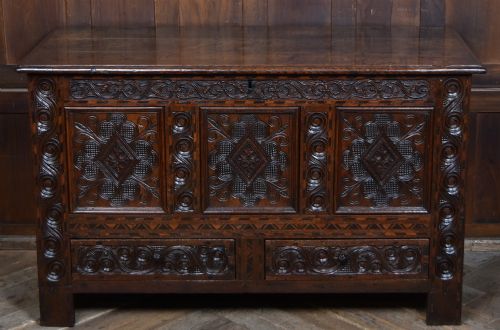
Makers utilised solid timber construction, incorporating carved friezes, panelled fronts, and internal drawers. Structural variations include examples raised on stands or fitted with hidden storage compartments beneath the main deck.
Assessing build and artistic execution
Quality rests in the crispness of the hand-carved details and the structural integrity of the primary oak timber. Superior examples display thoughtful proportions, balanced panel layouts, and well-integrated drawer assemblies that operate smoothly within the carcase.
The choice of secondary woods and decorative veneers, such as burr elm panels or intricate marquetry inlay, elevates certain pieces above standard vernacular furniture. Depth of colour and undisturbed surface patination further distinguish finer seventeenth and eighteenth-century examples.
Carved Oak Box with Drawer Retail Price Guide 2026
Typical asking prices for carved oak box with drawer among the pieces listed under this phrase on Sellingantiques today, from the lower quarter to the upper quarter. They describe what is for sale here now, not the wider market.
Current listings span the seventeenth, eighteenth, and nineteenth centuries, featuring solid oak, burr elm, brass, and iron elements.
The Carved Oak Box with Drawer Glossary
- Mule chest
- A storage chest featuring one or more drawers built into the base beneath the main lidded compartment. This form bridges the traditional coffer and the modern chest of drawers.
- Coffer bach
- A Welsh miniature coffer used historically for holding valuables or as a bridal gift. These diminutive pieces mirror the construction of larger blanket chests.
- Marquetry inlay
- Decorative patterns formed by fitting contrasting veneers into prepared recesses within the solid timber surface. This technique adds pictorial or geometric enrichment to the piece.
- Panelled construction
- A method of framing thin central panels within grooved stiles and rails to prevent warping. It defines the structural walls of traditional seventeenth and eighteenth-century chests.
Carved Oak Box with Drawer: Frequently Asked Questions
What is a mule chest?
A mule chest is a storage chest that combines a lidded top compartment with one or more drawers integrated into the base. This hybrid design emerged as households required easier access to stored textiles without disturbing items piled on top.
Most examples seen here date from the Georgian and seventeenth-century periods, constructed in solid oak by regional English and Welsh makers.
How were these boxes used?
These pieces served practical domestic storage functions for household linens, blankets, clothing, and important documents. Table boxes and smaller formats often held Bibles, letters, or valuables.
The inclusion of internal drawers allowed smaller items to be organised separately from the main bulk storage space.
How do I date an oak chest?
Dating relies on observing construction methods, hardware types, joinery styles, and decorative motifs. Seventeenth-century pieces often display heavier framing, geometric mouldings, and distinct chip-carving.
Eighteenth-century Georgian and provincial items generally show lighter panel proportions, smoother drawer linings, and occasionally mahogany accents or marquetry inlay.
Where should I place a coffer?
A coffer functions effectively as a blanket box at the foot of a bed, a hall storage bench, or a living room focal point supporting decorative objects. Ensure the top lid has adequate clearance to open fully without striking walls or pictures.
Keep wooden items away from direct heat sources and dramatic humidity fluctuations to protect the antique oak.