


Carved Oak Box Seat
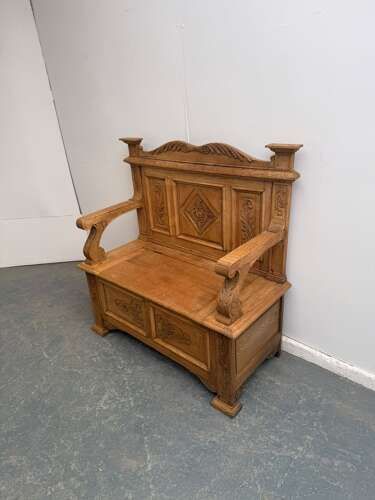
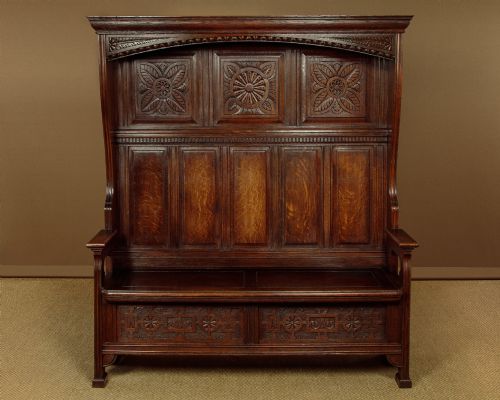
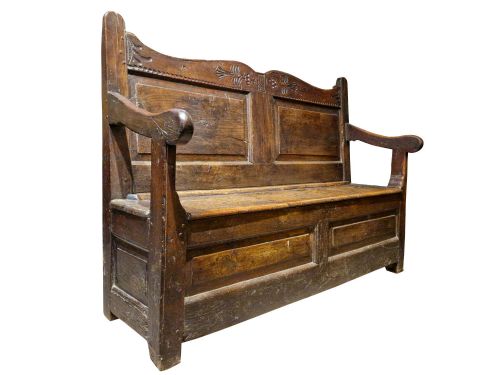
A carved oak box seat brings dual purpose to a hallway, offering timber storage beneath a timber bench.
Carved Oak Box Seat
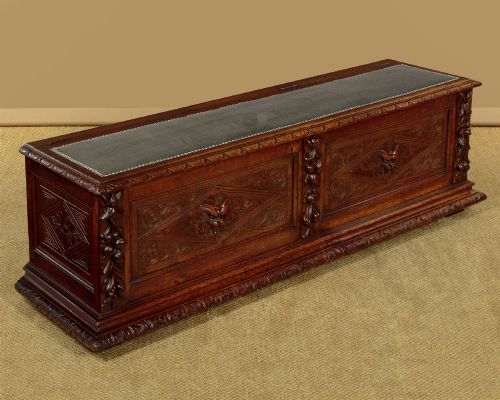
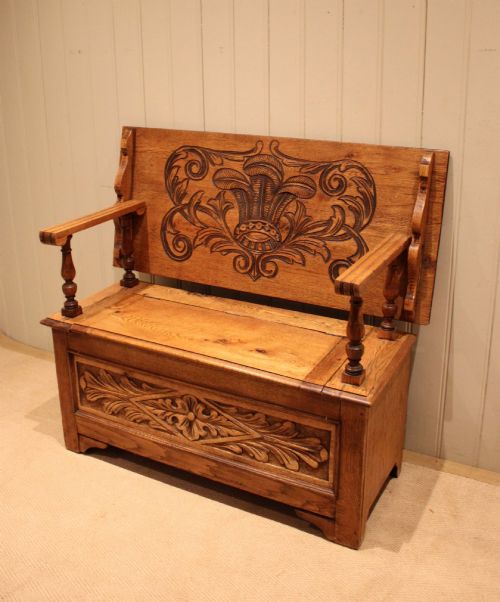
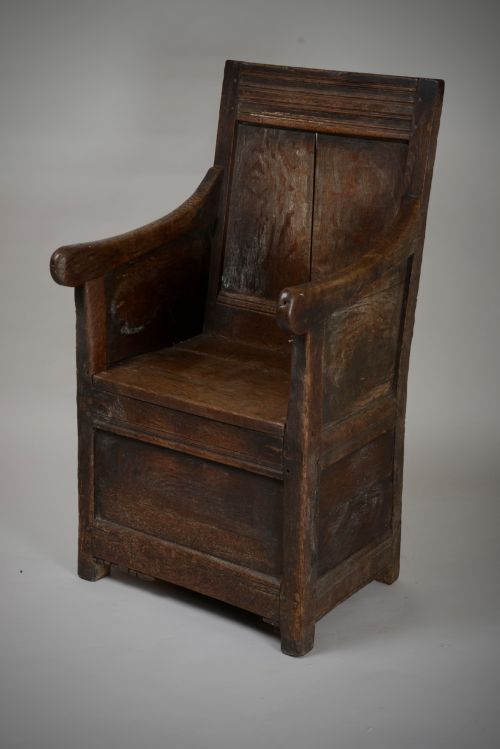
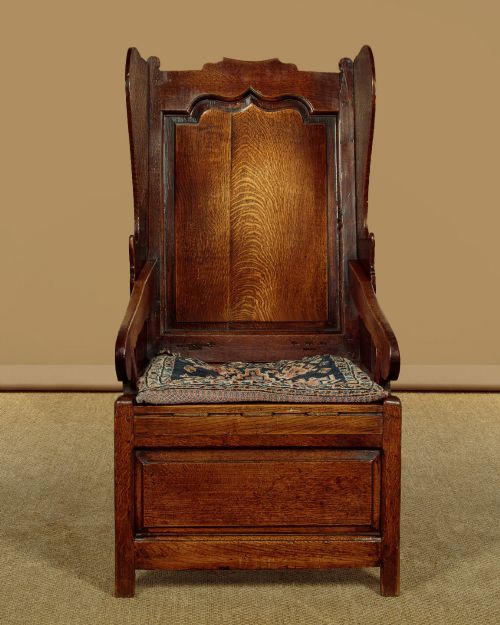
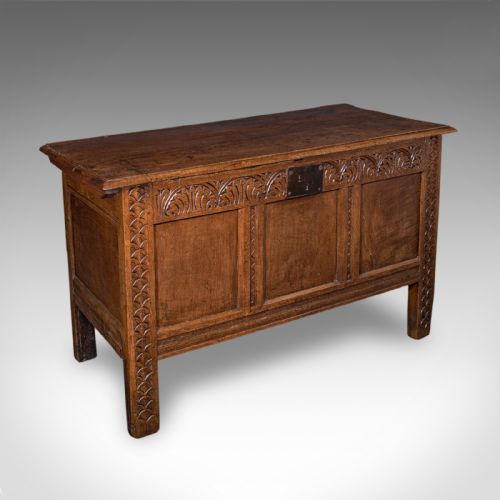
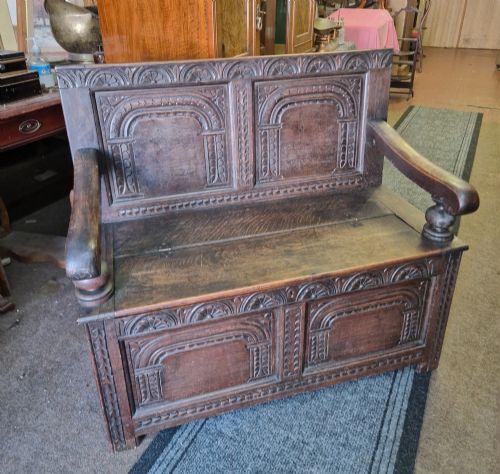
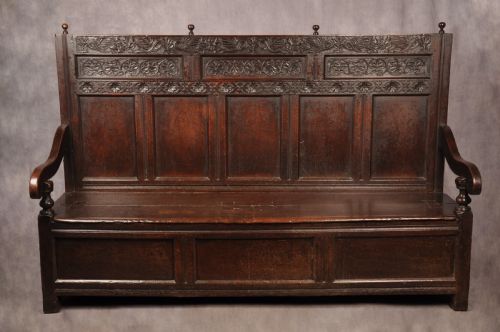
A carved oak box seat spans forms such as settles, hall benches, monks benches, lambing chairs, and coffers adapted for seating. These pieces emerge in periods ranging from the 17th century through the Georgian and Victorian eras up to the 1920s.
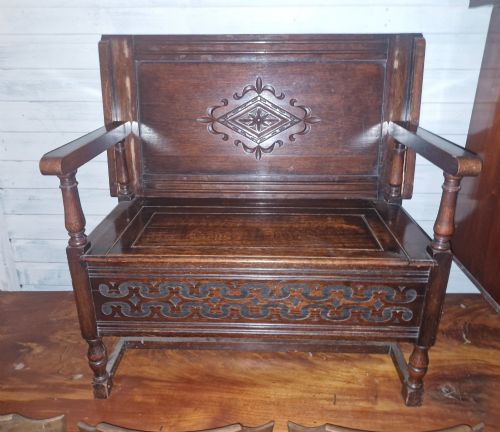
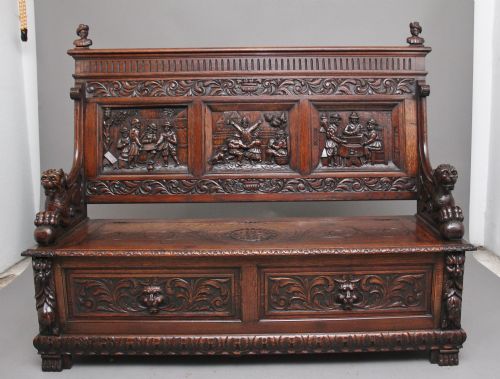
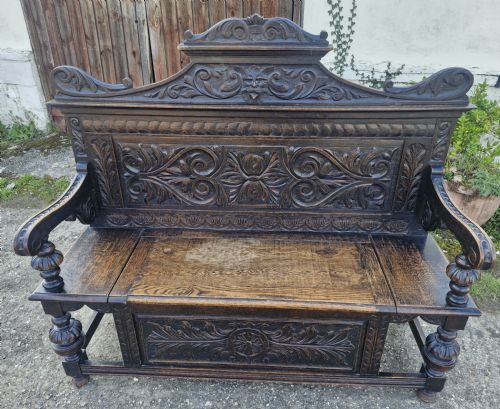
The version most commonly met on this page is the Victorian or 1920s hall box settle or monks bench, often exhibiting revival styles such as Jacobean and Gothic.
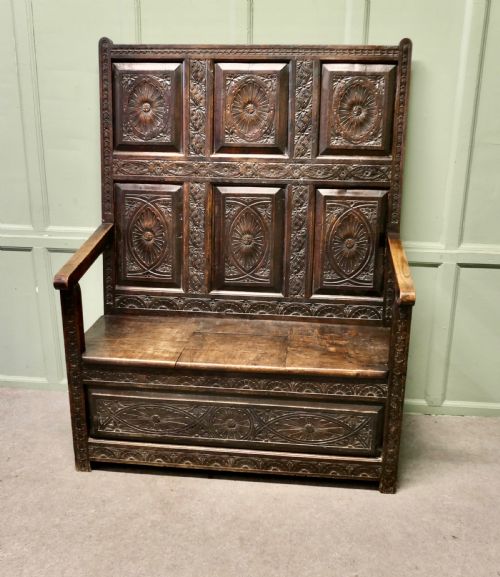
Earlier examples from the 17th and 18th centuries appear less frequently, providing high backs, enclosed arms, and lift-up lids for storing household goods.
Assessing the pieces
Quality rests in the depth and crispness of the hand carving, the integration of the storage box with the seat structure, and the proportion of the timber.
Early 17th and 18th century examples derive distinction from regional build traditions and untouched patina, whereas later revival pieces rely on the weight of the solid oak and the execution of panel details.
Stumble upon a Green Man carved into the timber, watching silently over your hallway boots.
The Carved Oak Box Seat Glossary
- Box settle
- A high-backed wooden bench featuring a concealed storage compartment beneath the lift-up seat. This design kept occupants away from cold draughts in older homes.
- Monks bench
- A multifunctional seat with a hinged back that folds down to form a table top over the box base. It suited smaller rooms where furniture needed dual utility.
- Coffer
- A heavy wooden chest with a lid, utilised for storing linen and valuables. Many double as window seats or hallway benches in the evidence.
- Lambing chair
- An enclosed wooden armchair with wings designed to block wind, often incorporating a small storage box beneath the seat. They originated in rural domestic settings.
- Green Man
- A sculptural motif representing a human face surrounded by or sprouting foliage. It appears frequently in Victorian revival carvings on these seats.
Carved Oak Box Seat: Frequently Asked Questions
What is a carved oak box seat used for?
These pieces served practical domestic roles in hallways, living spaces, and bedrooms. The enclosed base provided secure storage for items like blankets, coats, and boots.
Simultaneously, the upper portion offered seating for family members or visitors near firesides and entryways.
How do I tell a 17th century box seat from a Victorian revival piece?
Seventeenth-century examples display structural wear, pegged joinery, and simpler, deeper patination formed through centuries of handling. Timber movement and tool marks reveal the age of the wood.
Victorian revival pieces often feature crisper, heavier machine-assisted cutting, brighter wax finishes, and stylised motifs that imitate earlier eras.
Can I use a box seat in a modern hallway?
These sturdy oak benches fit well in contemporary entrances by offering hidden storage for shoes and everyday clutter. The durable hardwood withstands daily use in busy household areas.
Measuring the depth and height ensures the piece clears doorways and matches the proportions of the hallway space.
What maintenance does solid oak require?
Solid oak furniture benefits from occasional application of quality wax to nourish the timber and preserve the finish. Avoiding direct heat sources prevents the wood from drying out or splitting.
Dusting with a dry cloth keeps the carved details clear without introducing moisture to older joints.