
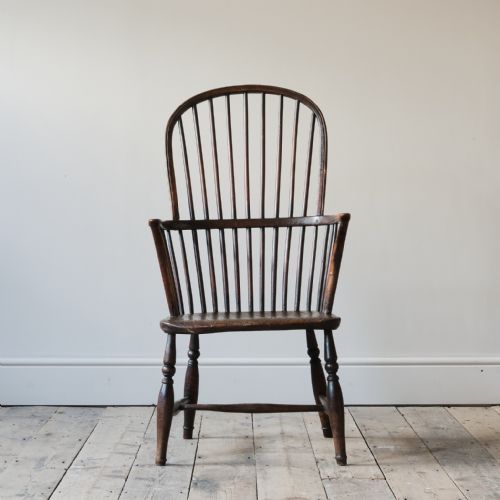


Early English Oak Armchair
An early english oak armchair brings tangible seventeenth-century craftsmanship into a modern room through sturdy joinery and honest timber.
Early English Oak Armchair
When you search for an early english oak armchair, you encounter heavy seating built to last centuries using indigenous hardwoods. The examples on this page span several significant periods, including the sixteenth, seventeenth, and eighteenth centuries.
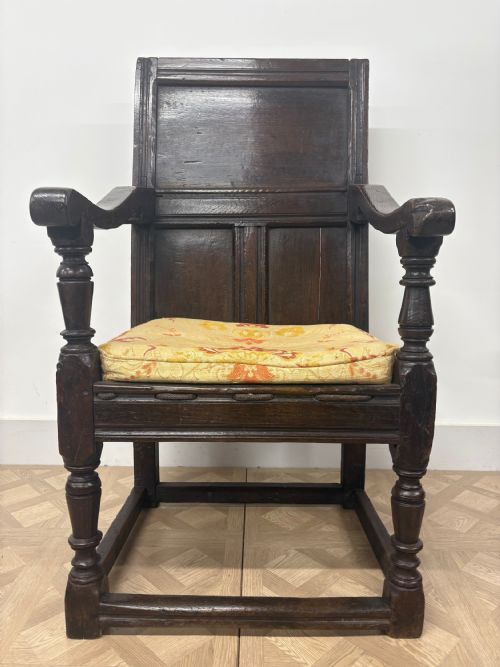
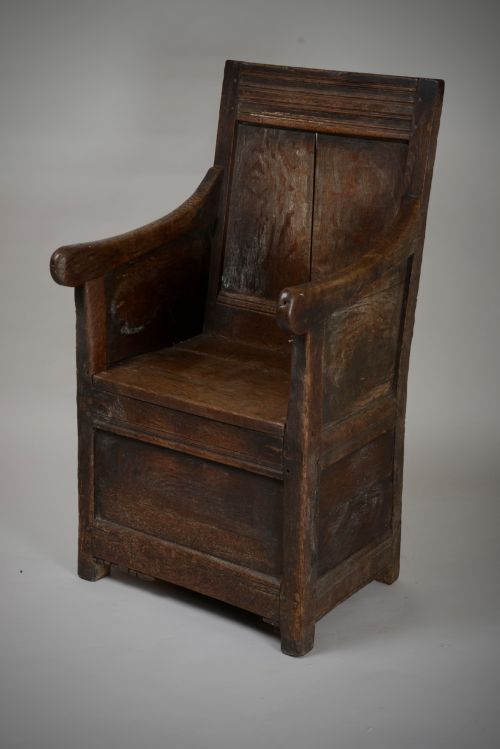
The wainscot chair dominates these listings, representing the panelled wooden seating typical of early English households. Regional variations such as pieces from Lancashire or Cheshire appear alongside Yorkshire examples and vernacular country seating.
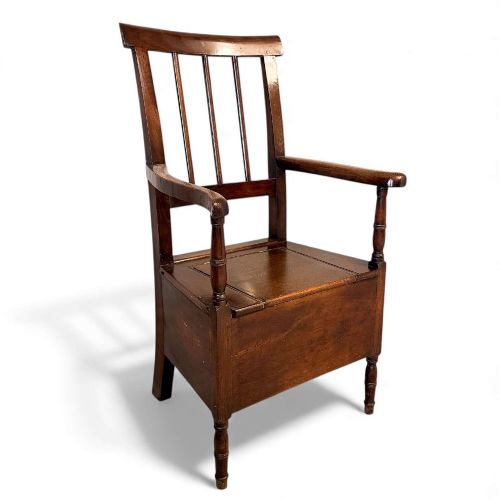
Forms extend beyond panelled backs to include commode chairs, rocking chairs, and hoop-back Windsor designs in solid oak, elm, walnut, ash, and yew. These sturdy seats served high-status rooms and everyday domestic spaces alike across generations.
Materials and construction methods
Construction relies heavily on solid oak timber supplemented by secondary woods like elm, walnut, ash, and yew. Joiners utilised traditional mortise and tenon joints secured with wooden pegs to build frames capable of withstanding daily use.
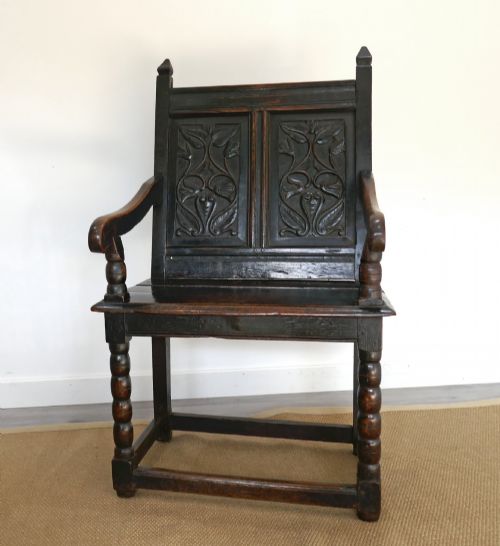
Panelling forms the structural backbone of wainscot types, often decorated with carved ornamentation, moulding, or simpler framed construction. Surviving examples occasionally retain older fabric or velvet upholstery applied during later periods of use.
Early joiners occasionally reused scrap panels, leaving mysterious ghost mortises that hint at earlier household furniture long since forgotten.
Judging quality in early seating
Quality rests on the integrity of the original timber and the degree of survival in the frame. Pieces that retain their primary form without extensive timber replacement stand apart from heavily restored alternatives.
The crispness of carved details on panelled backs and the proportions of the arm supports indicate the skill of the original maker. Regional character and untouched surface patination distinguish superior vernacular pieces from lesser items.
The Early English Oak Armchair Glossary
- Wainscot
- A wooden panelled chair of heavy construction typical of the sixteenth and seventeenth centuries. This form represents the primary style of armchair found in early domestic interiors.
- Joined chair
- Furniture constructed using interlocking mortise and tenon joints rather than simpler pegged or nailed assemblies. This technique provides the structural rigidity seen in early oak pieces.
- Hoop back
- A continuous curved backrest framing found on vernacular seating like Windsor chairs. This design distributes weight efficiently across a steam-bent wooden bow.
- Commode chair
- A specialised seat fitted with an enclosed base for a chamber pot. Early examples combine functional cabinetry with standard chair forms.
- Vernacular
- Furniture made by local regional craftsmen using traditional regional styles and available woods. These pieces reflect local building traditions rather than metropolitan fashions.
Early English Oak Armchair: Frequently Asked Questions
How do I date an early english oak armchair?
Dating relies on construction methods, joinery style, and the evolution of decorative carving across the sixteenth through eighteenth centuries. Early pieces utilise pegged frame construction and heavy panelled backs.
Later vernacular forms incorporate steam-bent wood and altered proportions. Comparing timber patination and regional design traits helps narrow the period of manufacture.
What is a wainscot chair?
A wainscot chair is a heavy wooden armchair constructed with panelled framing, most commonly associated with the seventeenth century. The term originally referred to fine imported oak boards used for panelling.
These seats feature solid wooden seats, armrests, and high panelled backs that often display carved details. They served as important household items in early domestic interiors.
Where were these armchairs made?
These chairs originated across various English regions, with specific styles linked to localities like Lancashire, Cheshire, and Yorkshire. Local joiners utilised native timber available in their immediate surroundings.
Regional workshops developed distinct carving patterns and construction habits. This geographic variation allows specialists to attribute unprovable pieces to particular areas.
How should I care for antique oak furniture?
Maintain stable humidity levels in your home to prevent the solid oak timber from drying out or splitting. Avoid placing antique seating near direct heat sources or strong sunlight.
Apply gentle wax polish occasionally to nourish the surface and preserve the patination. Regular dusting with a soft cloth protects the historical finish.