

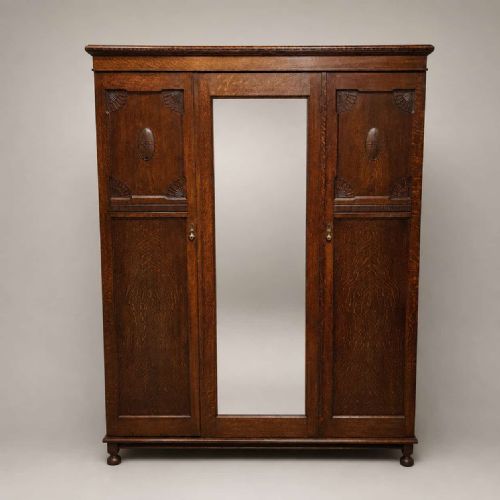
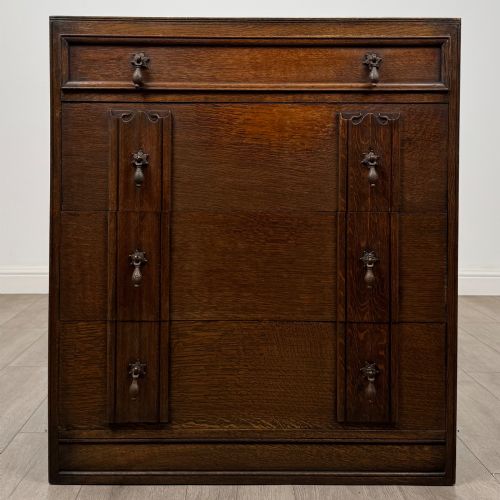
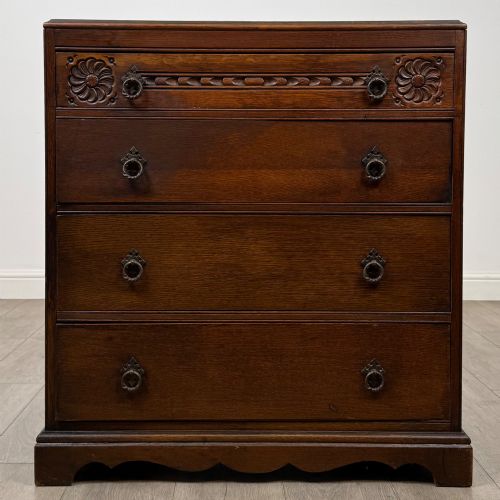
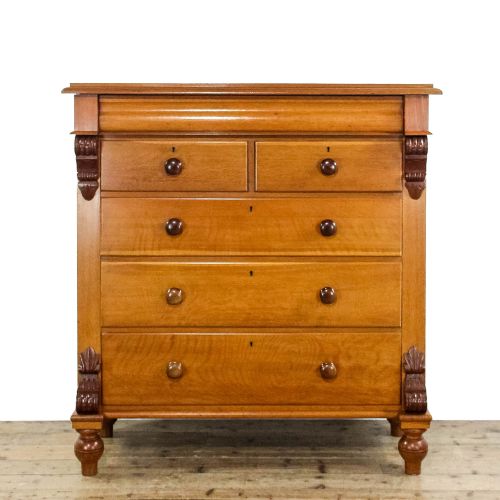
Carved Oak Bedroom Storage
Carved oak bedroom storage brings solidity and rich grain to sleeping quarters through centuries of chests, wardrobes, and commodes.
Carved Oak Bedroom Storage
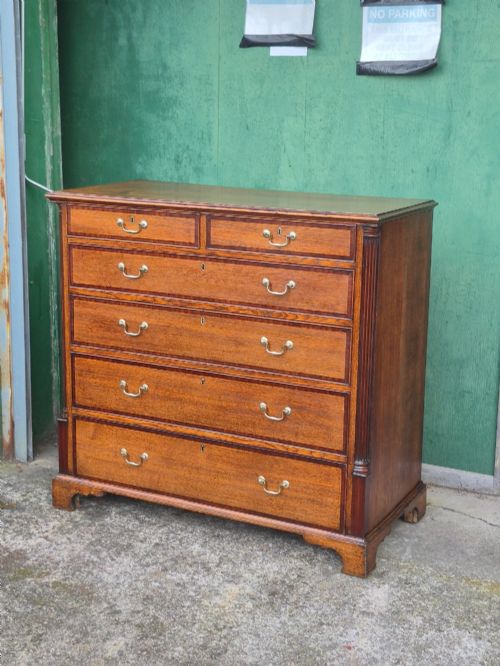
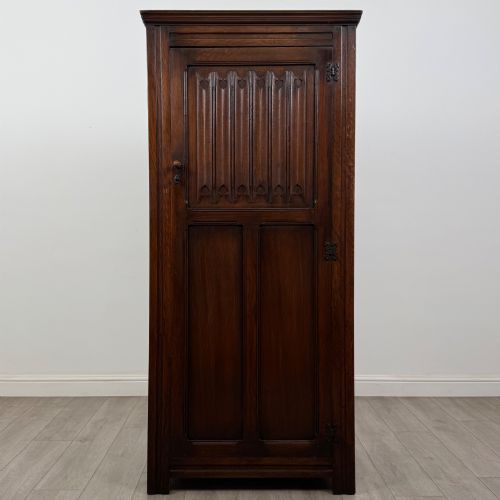
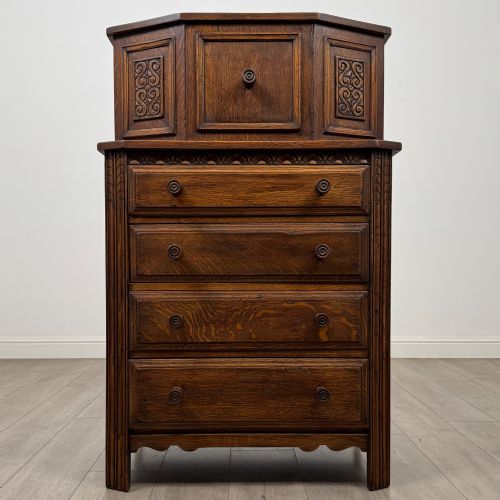
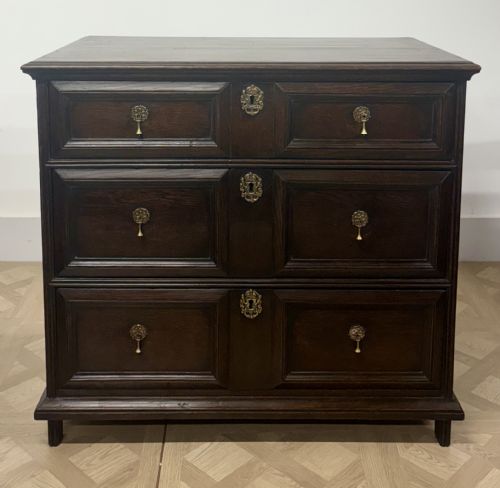
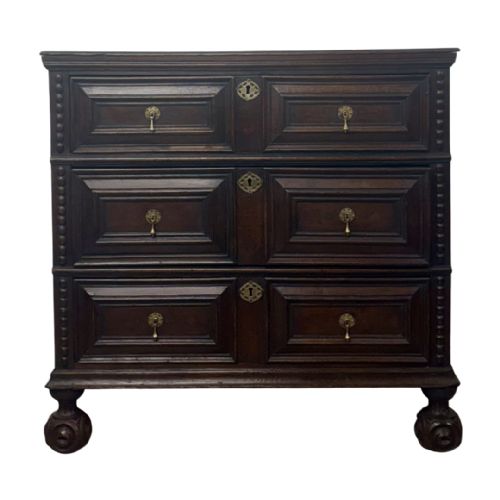
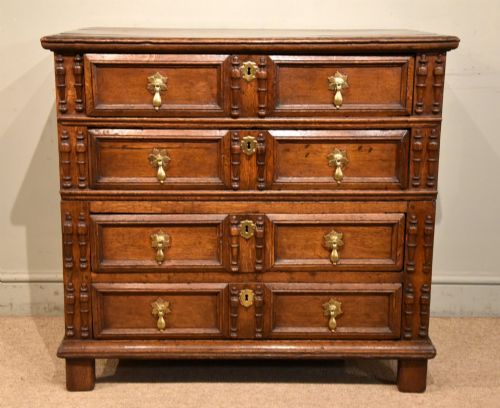
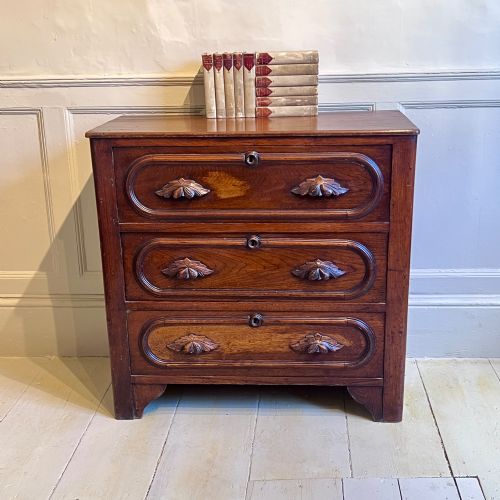
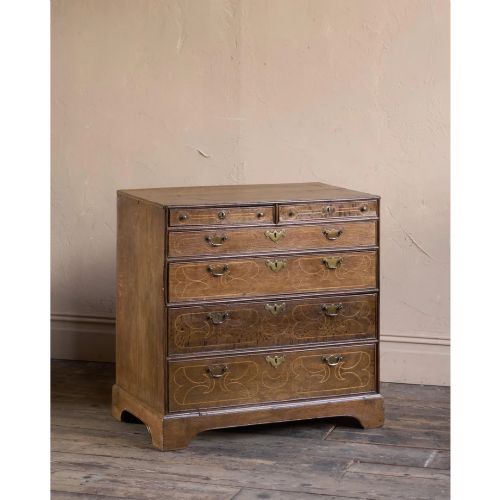
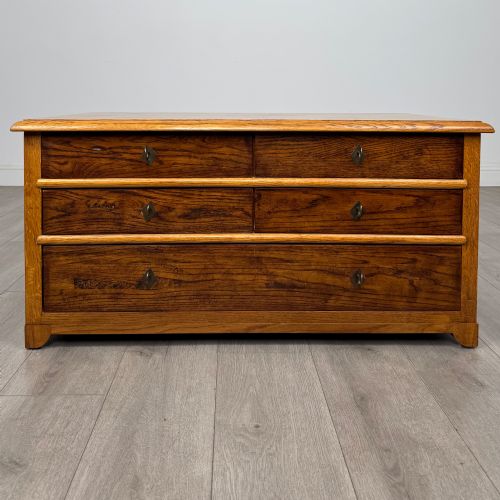
Carved oak bedroom storage spans utilitarian chests and grand wardrobes originating across the seventeenth, eighteenth, nineteenth, and twentieth centuries. Pieces range from early Jacobean geometric drawer units and Charles II coffers to Edwardian linenfold cupboards and Arts and Crafts limed cabinets.
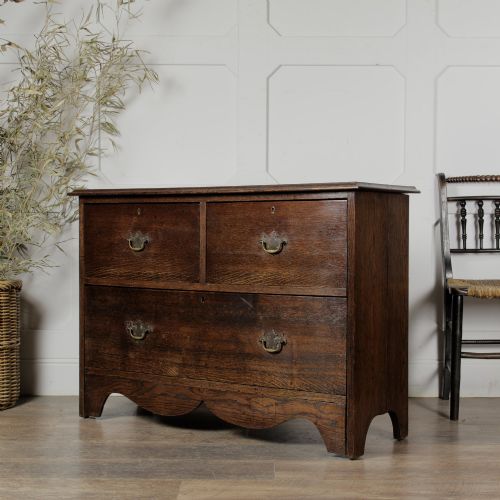
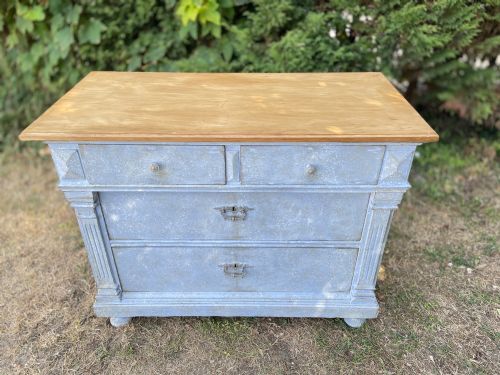
Chest of drawers and wardrobe forms dominate the selection, alongside linen presses, bedside tables, and dressing chests. Construction encompasses British workshops, French provincial origins, and Anglo-Indian regional production using solid timber frameworks.
Materials and construction
Makers utilised solid oak alongside supporting elements of brass, iron, glass, and pine within internal linings or backing boards. Surface work relies on hand-carved panels, geometric mouldings, and linenfold detailing applied directly to the timber.
Hardware frequently incorporates original brass drop handles, escutcheons, and metal drawer pulls secured to panelled carcases. Secondary woods like pine appear in drawer bases and carcase backs, while surface treatments range from ebonising and bleaching to liming.
The listings span eight distinct historical periods, stretching from the seventeenth century through to 1930.
Assessing standard
Quality separates through the crispness of hand-carved detail and the integrity of the original timber joints. Heavy geometric moulding and deeply carved panels signify higher workshops, whereas soft or worn carving indicates secondary production.
The presence of original brasses, undisturbed surface patination, and uncompromised internal drawer linings separate superior examples from heavily restored or later altered pieces.
Maple and Co
The Carved Oak Bedroom Storage Glossary
- Linenfold
- A carved wooden panel motif imitating folded cloth, popular on Edwardian and earlier cupboards. This technique adds texture to flat cupboard doors.
- Commode
- A low French chest of drawers or cabinet. These often feature decorative hardware and stylistic influences such as Louis XVI or Gustavian design.
- Coffer
- A large wooden chest used historically for storage. Early examples display heavy hand-carved panels and solid lid construction.
- Bombe
- A swollen or convex shape found on eighteenth-century commodes. The curved profile demands advanced cabinet-making skill.
- Geometric
- Surface decoration formed by applied mouldings in repeating angular patterns. This style is characteristic of seventeenth-century Jacobean carcases.
Carved Oak Bedroom Storage: Frequently Asked Questions
How do I date an oak chest?
Dating relies on construction methods, handle hardware, and the style of the carved decoration. Seventeenth-century pieces display pegged frame-and-panel joints and hand-cut mouldings.
Later Edwardian and twentieth-century pieces often use machine-sawn timber, standardised drawer runners, and lighter brass fittings.
Are these pieces suitable for modern bedrooms?
Solid timber storage offers robust construction and generous internal dimensions suited for daily clothing organisation. Wardrobes and multi-drawer chests provide practical capacities for modern domestic use.
Care involves maintaining stable room humidity to protect the antique oak from excessive drying or moisture.
What is a linen press?
A linen press is a tall storage item combining sliding interior trays with lower drawers or cupboard space. Historically, these held household linens flat before modern hanging wardrobes became common.
Today, the upper sliding trays adapt well to folded garments and knitwear.
How do I care for antique oak?
Maintenance requires avoiding direct sunlight and maintaining consistent indoor temperatures to prevent wood splitting. Natural wax polishing helps preserve the surface sheen without building up heavy chemical residues.
Lifting rather than dragging prevents structural stress on the joints of heavy chests and wardrobes.