
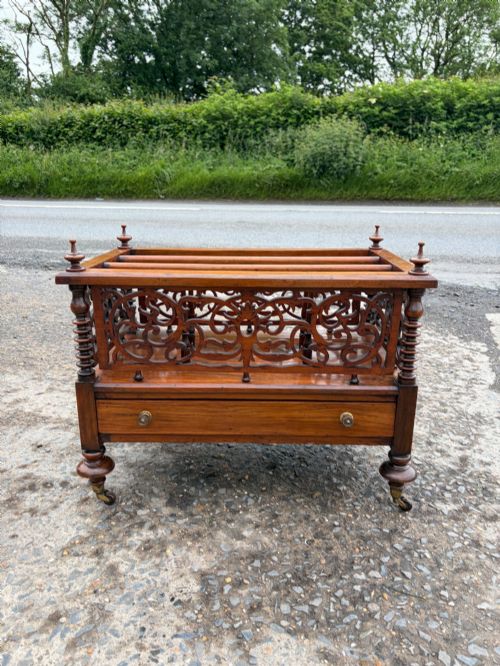
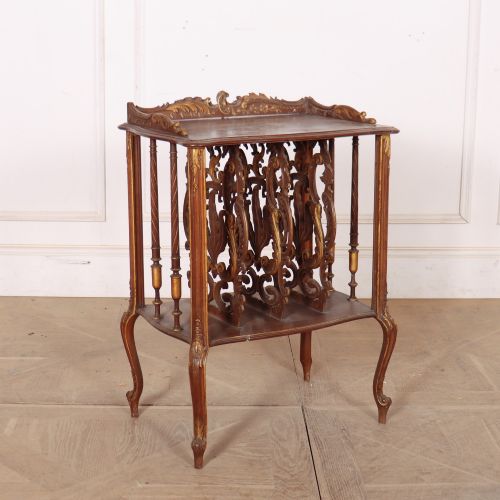


Carved Music Canterbury Stand
A carved music canterbury stand holds scores and papers close at hand, combining practical storage with handsome timber design for the Victorian home.
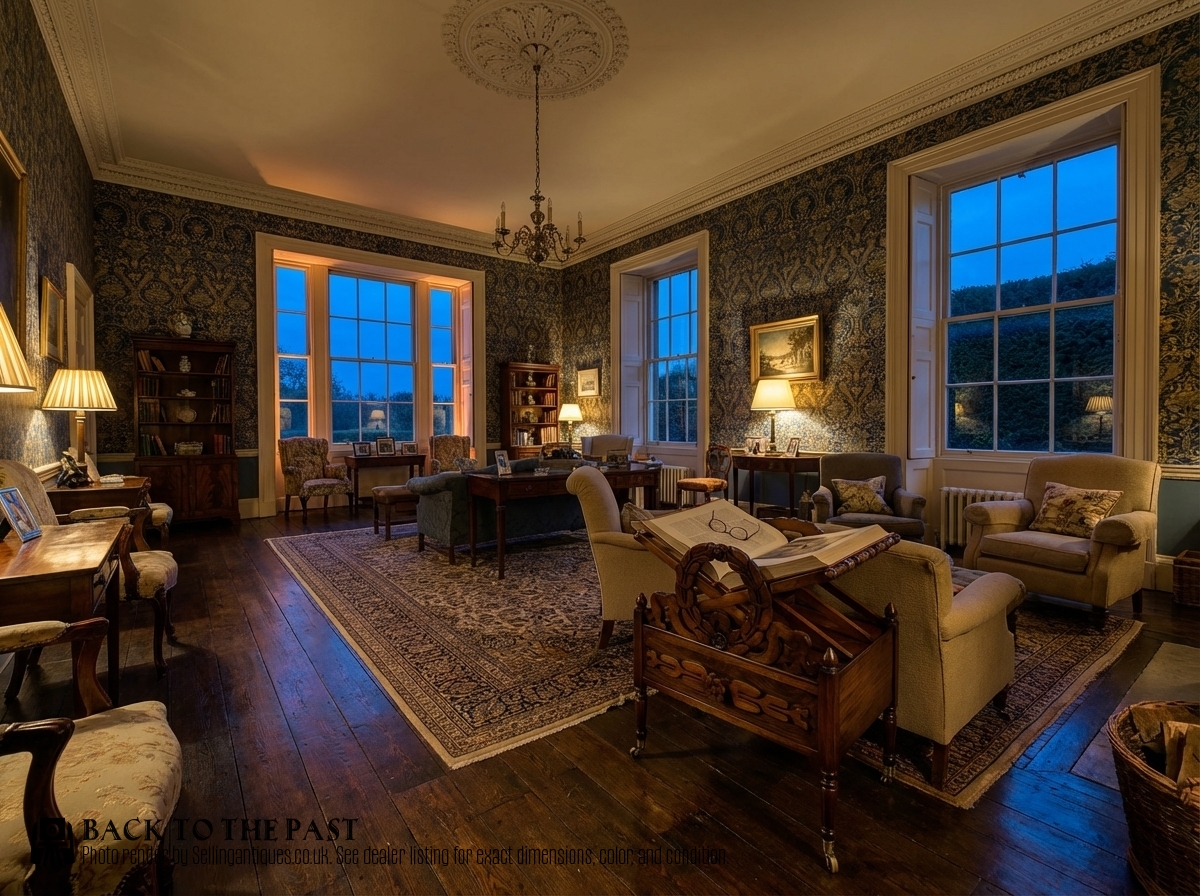
Carved Music Canterbury Stand
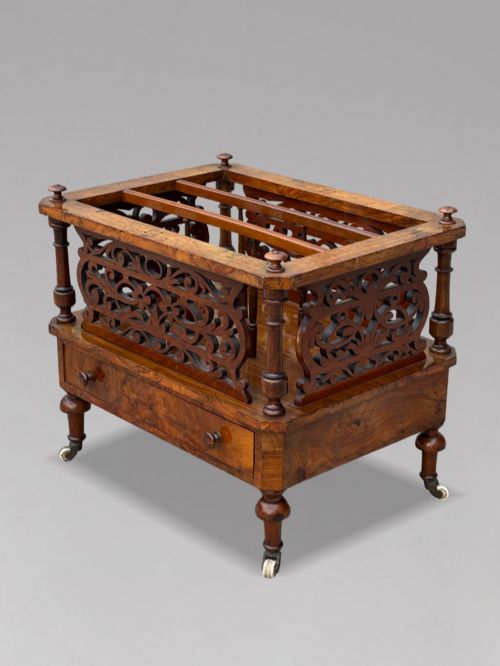
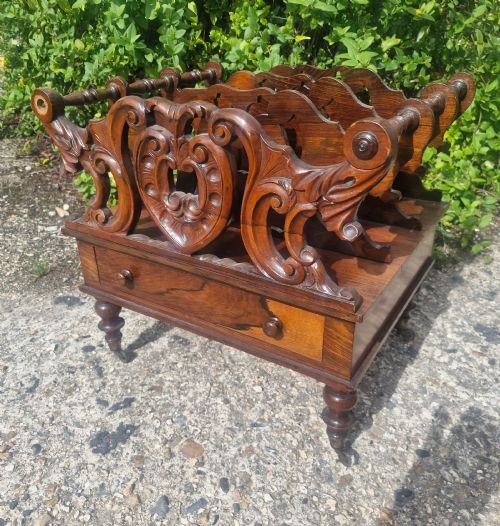
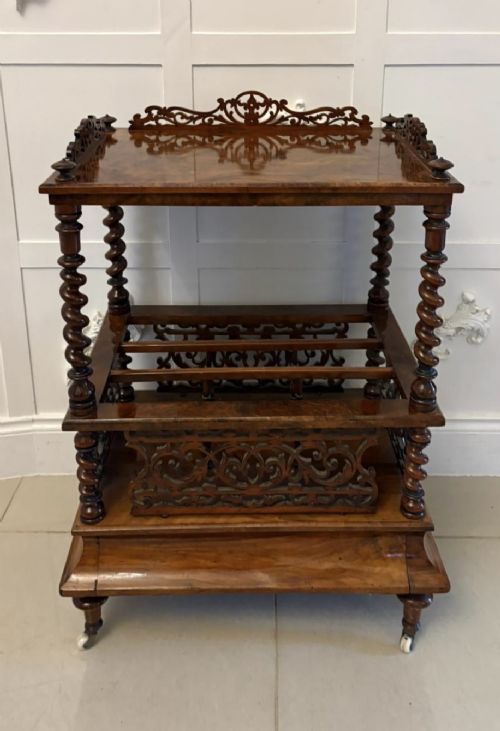
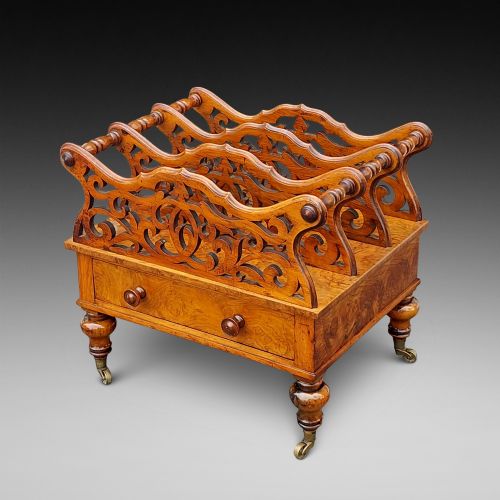
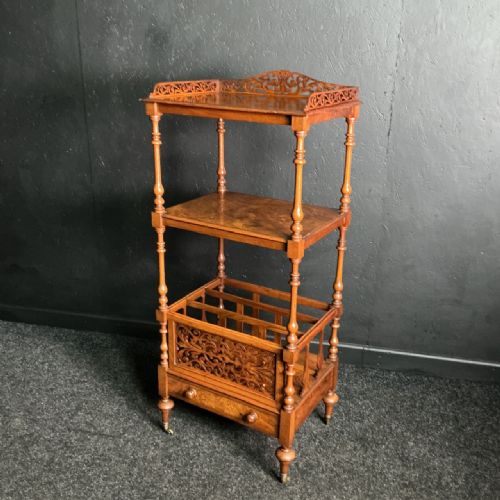
A carved music canterbury stand is a compartmented rack designed specifically to hold sheet music, periodicals, and newspapers in the nineteenth-century parlour or drawing room. These pieces appear most frequently in Victorian and Regency iterations, taking the form of low open-slat stands, occasional tables with magazine racks, and taller music cabinets.
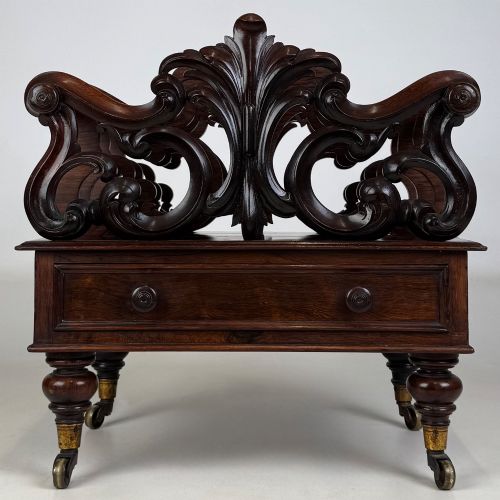
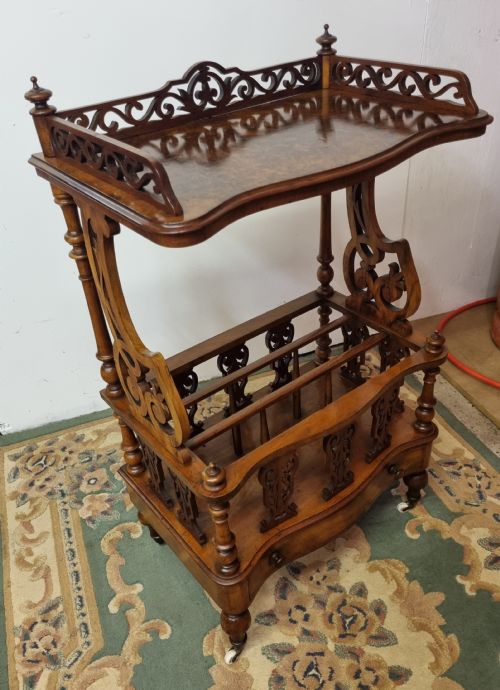
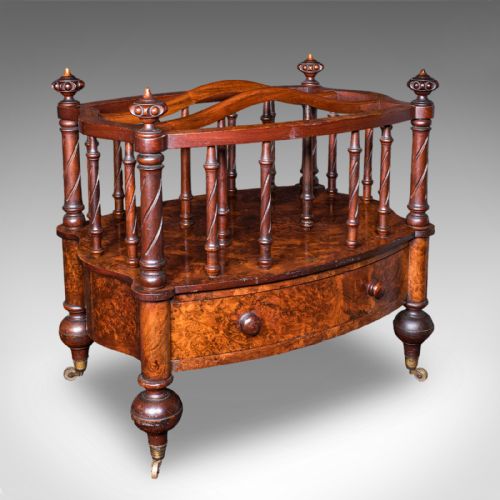
Makers produced these stands across the nineteenth century, utilising rich timbers such as walnut, burr walnut, rosewood, and mahogany. Many examples incorporate lower drawers, turned supports, and integrated tabletop surfaces that allow the stand to function simultaneously as a lamp table or small whatnot.
Buyers seeking a carved music canterbury stand will encounter variations ranging from simple mahogany racks to highly ornate French Rococo Revival, Gothic Revival, and Aesthetic Movement designs. These pieces suit modern living spaces by providing compact vertical storage for contemporary journals and vinyl records alongside traditional scores.
How they were made
Cabinet makers constructed these stands predominantly from dense hardwoods, selecting figured walnut, burr walnut, and rosewood for their striking grain patterns and warm colour. Mahogany and satinwood also appear frequently, often shaped into serpentine forms or accented with delicate inlay.
Craftsmen incorporated turned wooden spindles, brass castors for mobility, and ceramic elements in the finer examples. Structural joinery supported partitioned vertical slots for paper organisation, frequently paired with dovetailed drawers situated beneath the main rack.
The evidence shows these pieces merging with other furniture forms, appearing variously as music cabinets, occasional tables, and whatnots.
What varies in quality
The degree of craftsmanship separates standard utility pieces from exceptional cabinet work, visible in the selection of burr veneers and the crispness of hand-carved detailing. Superior examples exhibit careful matching of timber grains across expansive surfaces, integrated marquetry, and robust structural joinery that maintains rigidity in the vertical partitions.
Proportion and stylistic cohesion dictate the distinction between workshops, where notable makers integrated brass fittings, porcelain accents, and specialised fall-front mechanisms with precision. The presence of secondary timbers and the complexity of the turning on legs and spindles further indicate the original tier of production.
Henry Ogden & Son
The Carved Music Canterbury Stand Glossary
- Canterbury
- A low stand with partitioned vertical compartments designed for holding music sheets and newspapers. Originating in the late eighteenth century, the form quickly became a staple of nineteenth-century domestic interiors.
- Burr Walnut
- A specialised timber cut from the gnarled growths of a walnut tree, prized for its swirling, highly decorative grain pattern. Cabinet makers used burr veneers on the primary display surfaces of high-status furniture.
- Whatnot
- An open set of multi-tiered shelves used for displaying ornaments and small objects. These often appeared combined with canterbury bases in the Victorian period.
- Fall Front
- A hinged panel that drops forward to reveal interior compartments and shelving in a cabinet. This mechanism provides concealed storage while maintaining a clean exterior profile.
- Aesthetic Movement
- A late nineteenth-century design style that emphasised artistic visual qualities and craftsmanship over heavy historicism. Pieces from this movement often display refined linear forms and subtle decorative elements.
Carved Music Canterbury Stand: Frequently Asked Questions
What is a music canterbury used for?
A music canterbury served primarily to store and organise sheet music, unbound scores, and daily newspapers within easy reach of a piano or seating area. The vertical partitions kept paper goods upright and sorted.
Over time, these versatile stands evolved to incorporate drawers for smaller accessories like tuning keys, and flat tabletops that doubled as surfaces for lamps or decorative objects.
How do I date a Victorian canterbury?
Dating relies on observing the prevailing timber choices, hardware, and decorative styles recorded across the nineteenth century. Regency and early Victorian pieces frequently feature rosewood and classical turned legs.
Later Victorian examples from the 1860s and 1870s tend to utilise burr walnut with serpentine shapes and richer inlays, while Edwardian versions present more restrained cabinet designs.
Are music canterburys suitable for modern magazines?
The vertical slots designed for nineteenth-century sheet music and broadsheet newspapers accommodate modern weekly and monthly magazines with ease. Their slim profile allows them to sit neatly beside contemporary sofas.
They also provide functional storage for modern vinyl record collections, offering a sturdy timber housing that keeps albums upright and accessible.