
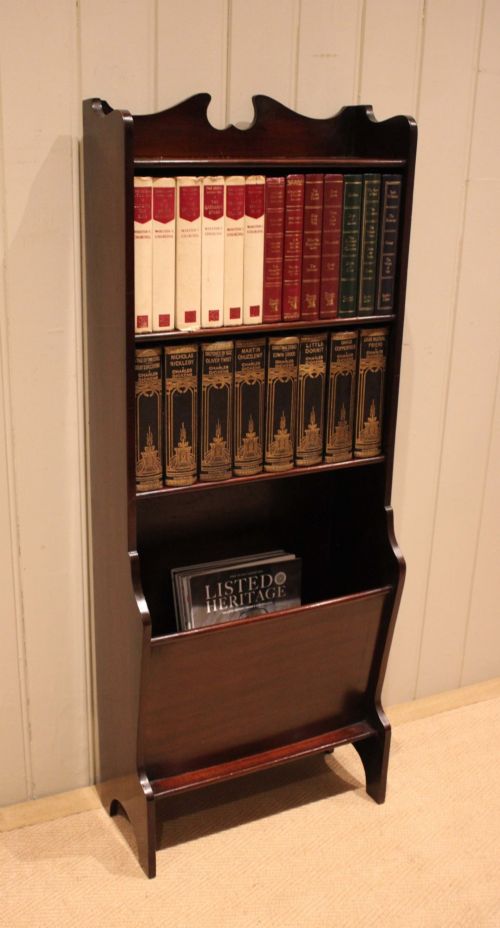
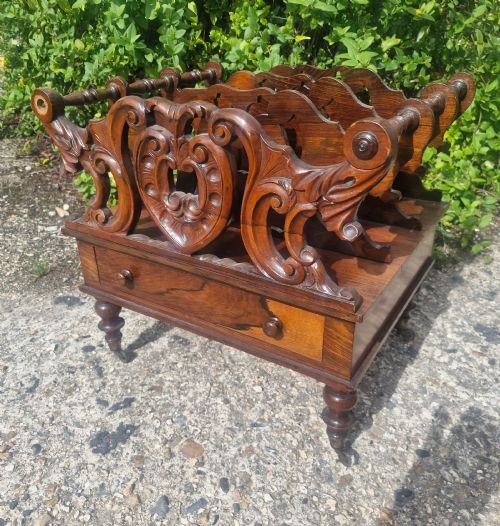
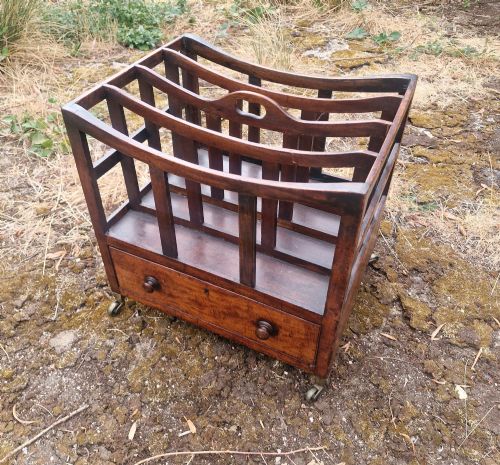
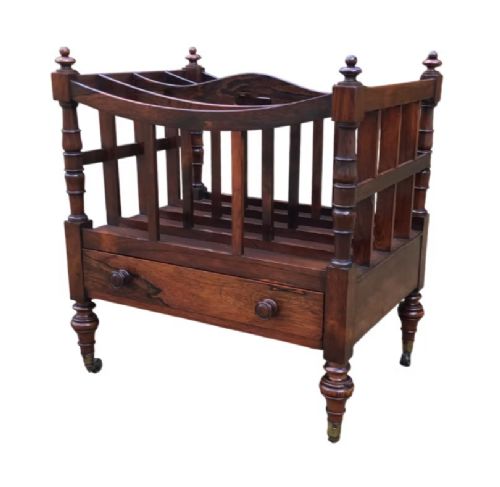
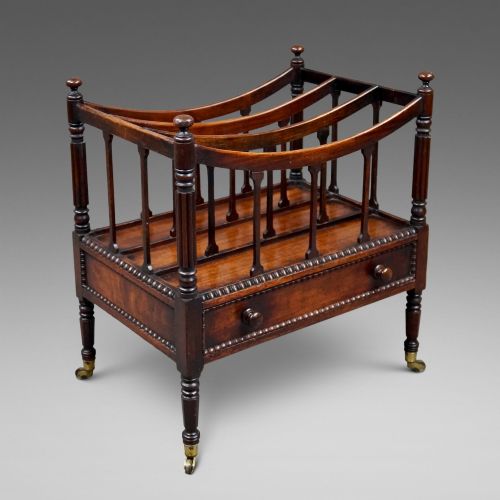


Dark Wood Magazine Stand
A dark wood magazine stand brings order to papers and sheets, offering classic proportions and rich timber tones to a room.
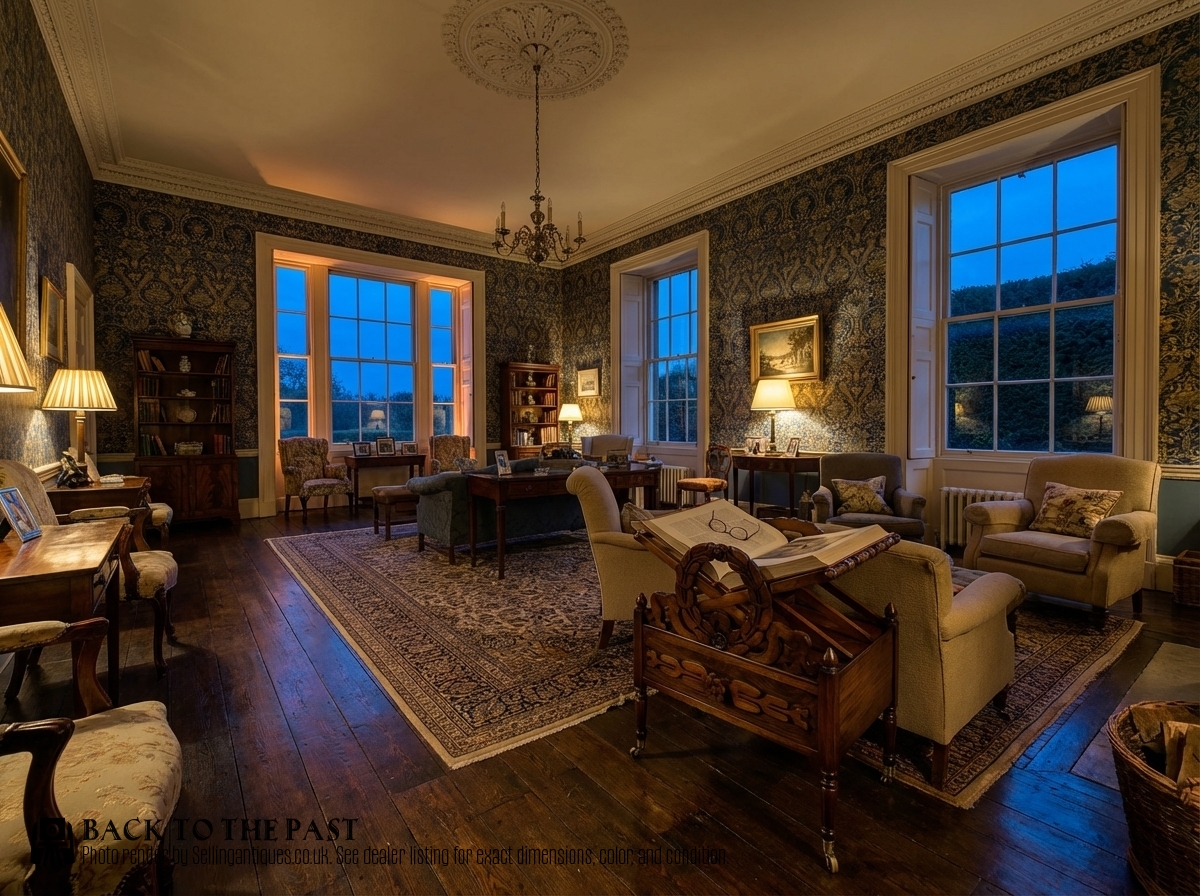
Dark Wood Magazine Stand
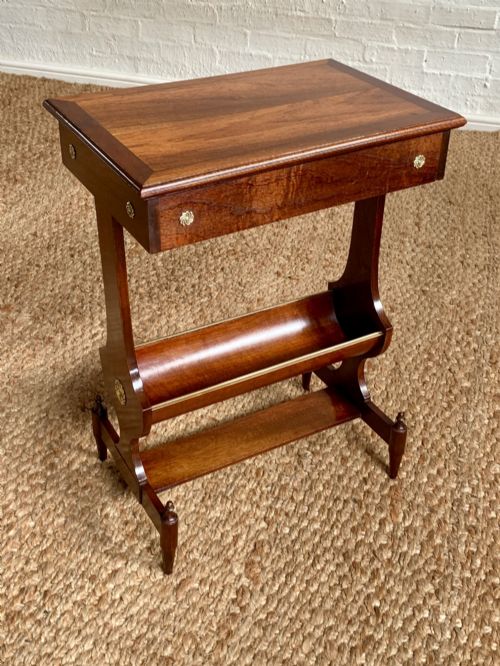
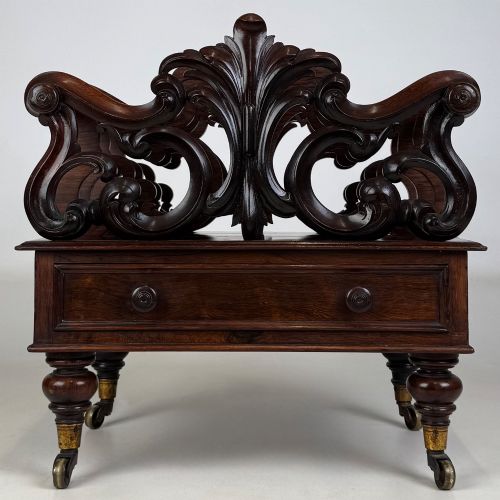
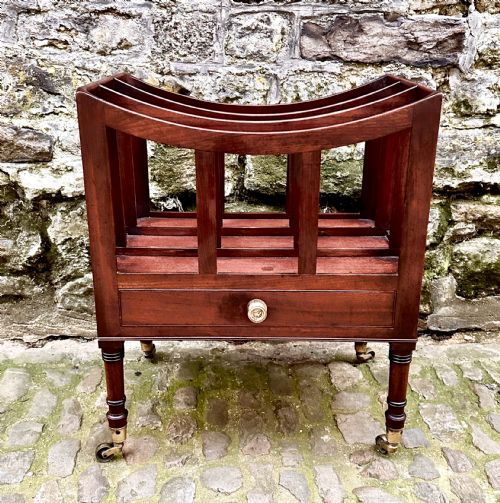
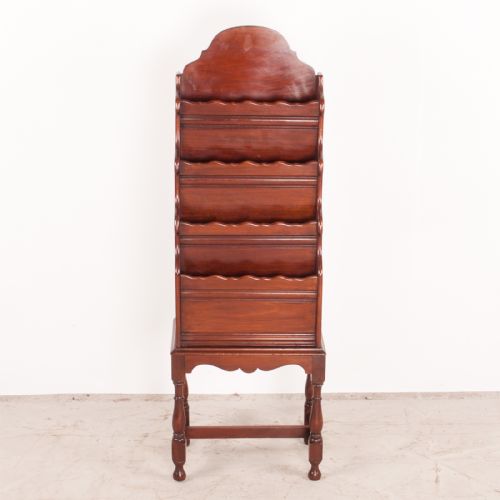
A dark wood magazine stand gathers periodicals, newspapers and folios within open compartments or structured dividers. The pieces found on this page span several forms, including traditional canterburys, revolving book stands, folio stands and music racks.
Most examples meet the eye in rich timbers such as mahogany and rosewood. These items often originate from the Georgian, Regency, Victorian and Edwardian periods, alongside later twentieth-century iterations.
Makers designed these items for domestic use in libraries, drawing rooms and studies. Their structures frequently combine compartments for reading material with lower drawers, slender spindles and turned supports.
How they were made
Craftsmen utilised dense tropical hardwoods, notably mahogany and rosewood, sometimes selecting flame veneers for figured surfaces. Workshops built the framework using solid timbers for structural uprights and dividers.
Makers embellished the dark wood surfaces with brass castors, ebony banding and mother of pearl inlay. Carved details such as Prince of Wales feathers or turned spindles added decorative refinement to the divisions.
The listings on this page span the Georgian, Regency, Victorian and Edwardian periods, utilising mahogany and rosewood.
What varies in quality
The degree of refinement in the timber figure and the crispness of the carving distinguish standard pieces from superior examples. Dense flame mahogany and well-figured rosewood denote a higher grade of manufacture.
Construction methods also set pieces apart, seen in the joinery of the dividers and the presence of integrated drawers with fine dovetails. Original brass castors and delicate inlay work indicate workshop attention to detail.
Gillow s
The Dark Wood Magazine Stand Glossary
- Canterbury
- A low stand with partitioned uprights designed to hold sheet music, newspapers or magazines. It often rests on castors and may incorporate a drawer below.
- Folio stand
- A piece of furniture featuring adjustable or fixed upright frames designed for large books, prints and folios. These stands often date from the Regency and Georgian eras.
- Flame mahogany
- A timber veneer exhibiting a wavy, flame-like grain pattern. Cabinet makers selected these figured boards for prominent surfaces.
- Inlay
- A decorative technique where materials such as mother of pearl or contrasting woods are set into recesses flush with the surface. This method enhances the visual depth of the timber.
- Revolving book stand
- A compact table-height stand mounted on a pivot allowing it to turn freely. These pieces hold small collections of books or periodicals.
Dark Wood Magazine Stand: Frequently Asked Questions
What is a canterbury?
A canterbury is a low, partitioned stand originally made for holding music sheets and newspapers. Nineteenth-century examples often feature three or four wooden divisions above a small drawer.
Over time, these versatile stands were adopted for modern magazines and journals while retaining their traditional timber frames and castors.
How do I identify a Regency canterbury?
Regency pieces typically display dark rosewood or mahogany timbers with restrained classical lines. Look for slender turned supports, brass castors and boat-shaped frames.
Many of these stands also incorporate lyre-shaped partitions or fine brass inlay typical of the early nineteenth century.
Where should I place a folio stand?
A folio stand suits studies, libraries or large living spaces where it can sit freestanding. Its open architecture works well near seating areas for holding large books and art folios.
Because these stands are accessible from multiple sides, they function effectively in the centre of a room or beside a desk.
What woods were used for these stands?
The listings show a strong preference for dark hardwoods such as mahogany and rosewood. Craftsmen utilised these durable timbers for both solid frames and decorative veneers.
Additional materials like flame mahogany and mother of pearl appear on more decorative pieces from the Victorian and Edwardian periods.