

Antique Magazine Rack Wood
An antique magazine rack wood piece organises reading material with period craftsmanship, offering a practical touch of historical elegance to any room.
Antique Magazine Rack Wood
When you search for an antique magazine rack wood item, you encounter pieces designed to hold periodicals, newspapers, and sheet music. These objects originate from periods spanning the Georgian, Regency, William IV, Victorian, and Edwardian eras.
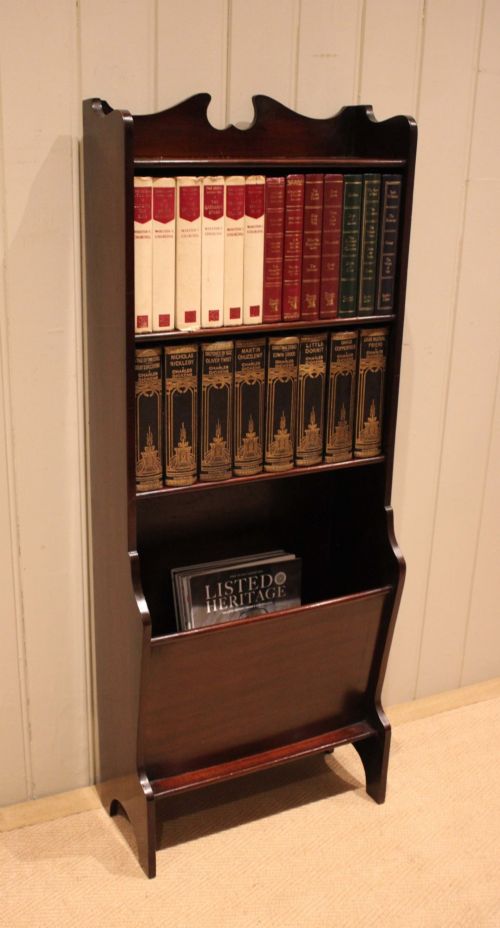
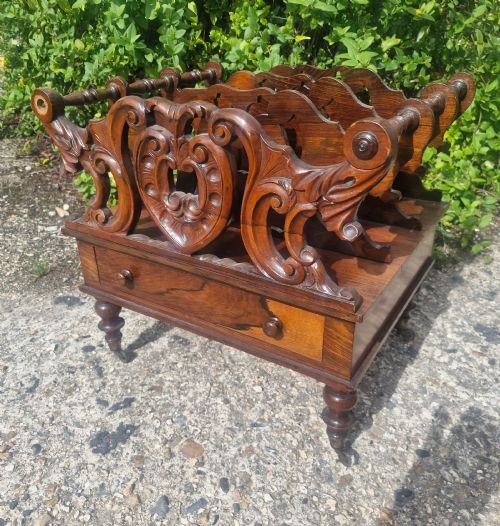
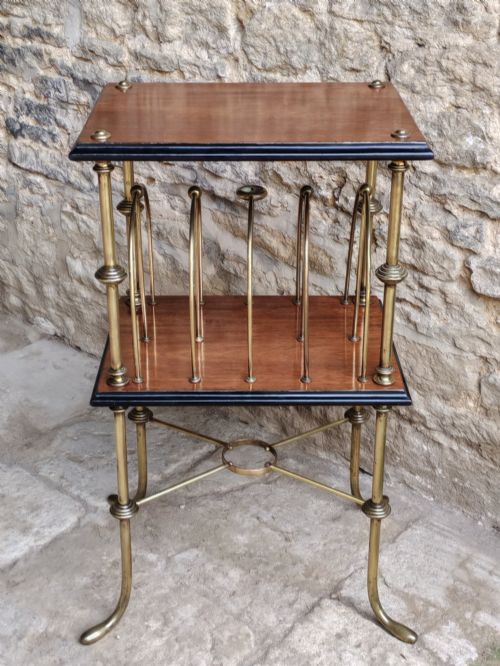
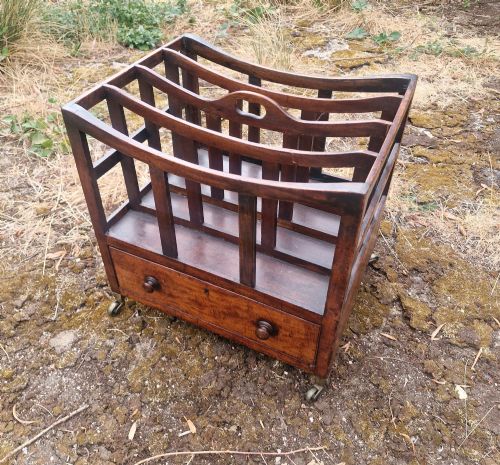
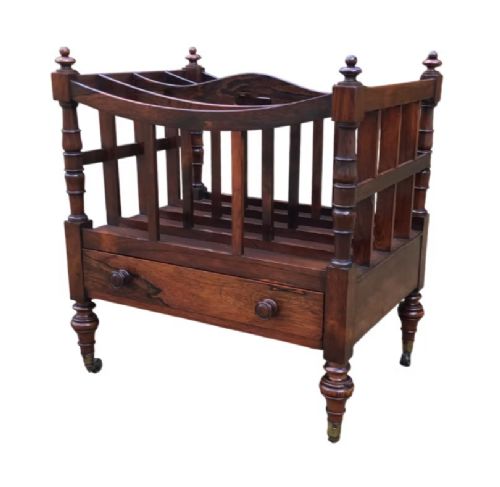
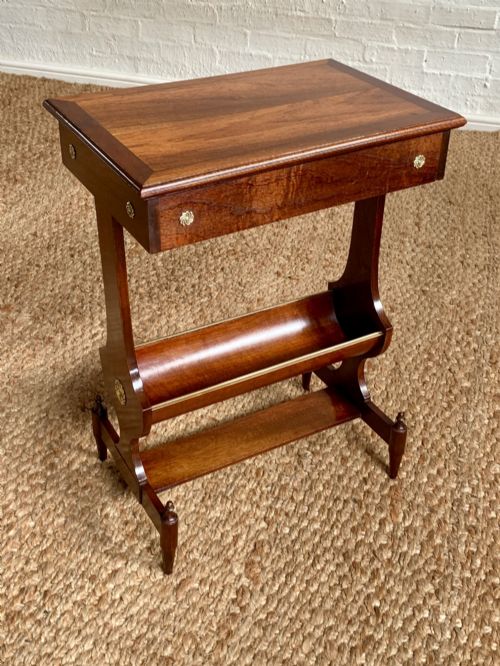
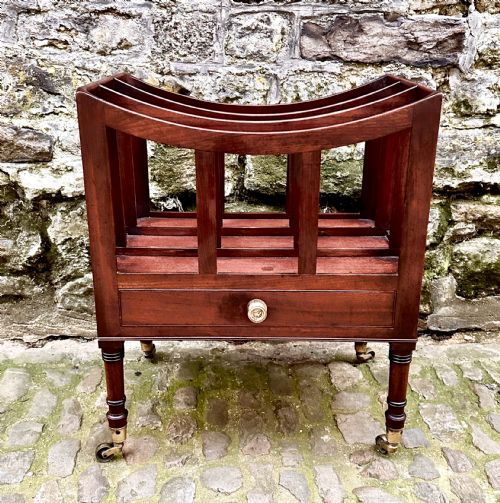
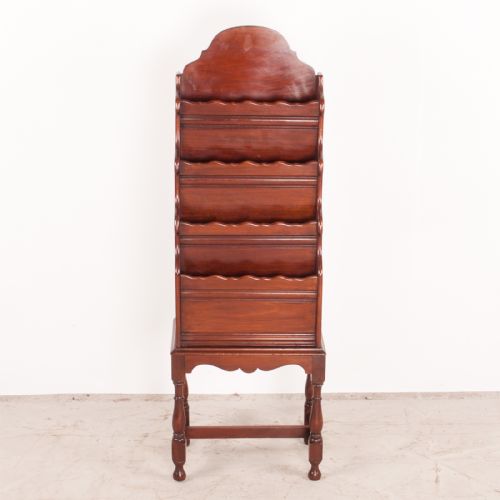
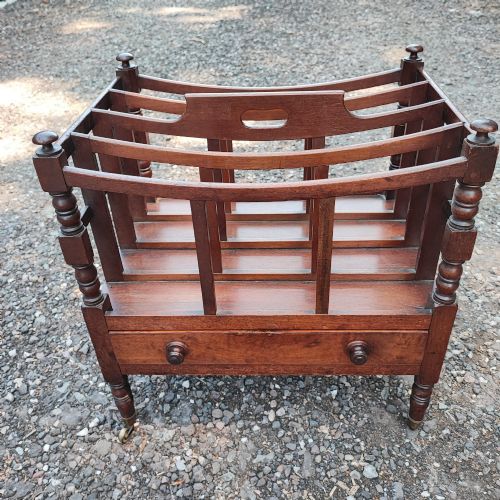
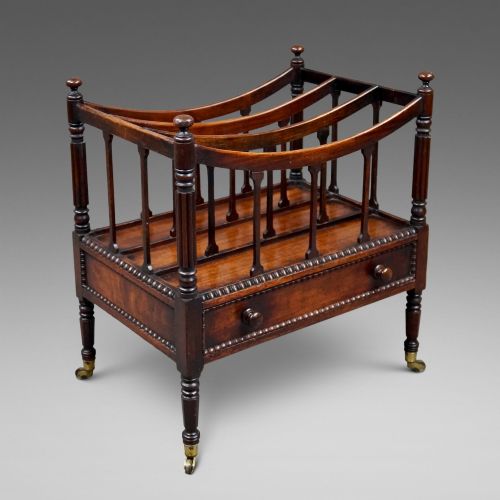
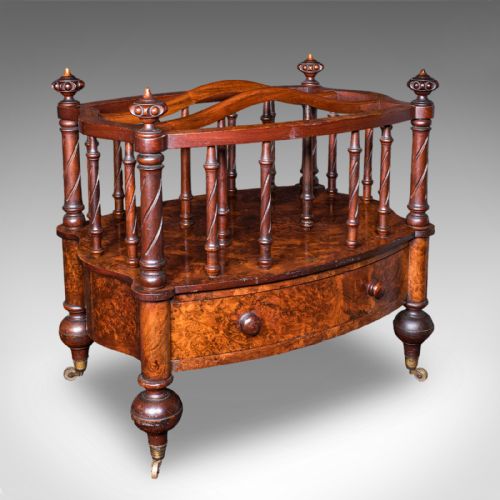
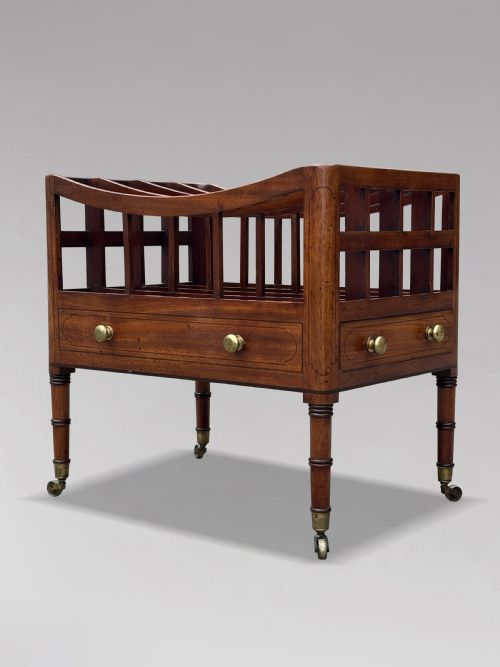
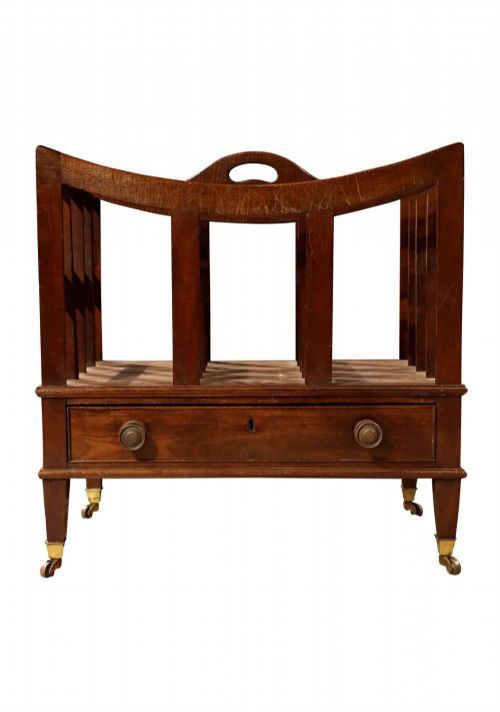
The most common form on this page is the Canterbury, a low stand featuring partitioned sections for holding papers, often incorporating a drawer below. Alongside Canterburys, you find music stands, book troughs, occasional tables, and side tables adapted for storage.
These items emerge from various centuries, with pieces recorded from the eighteenth, nineteenth, and early twentieth centuries. The selection demonstrates how domestic storage evolved to keep reading material accessible in sitting rooms and libraries.
Materials and construction methods
Cabinetmakers constructed these pieces primarily from solid hardwoods and decorative veneers, utilising mahogany, rosewood, walnut, and burr walnut. These timbers provided the structural strength needed for partitioned frames while offering rich grain patterns.
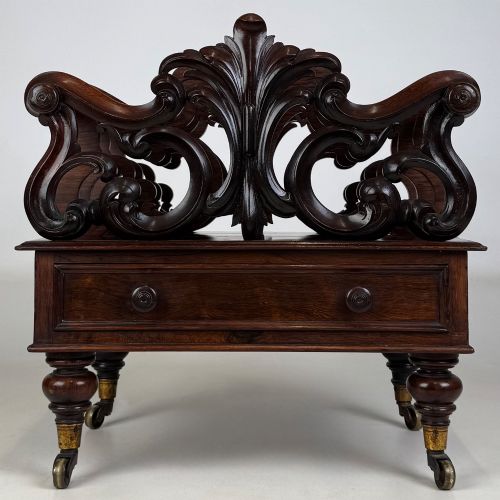
Craftsmen incorporated secondary materials such as brass for castors and handles, ceramic components, and mother of pearl inlay for surface decoration. Joinery techniques included turned spindles, fretwork, and carved details such as Prince of Wales feathers.
Makers shaped the wood through bending, as seen in bentwood designs, or built freestanding compartmented frames with slatted divisions. Drawers incorporated hand-cut dovetailing, while finishes highlighted the natural tone of the timber.
Several items retain their original brass castors, built to roll smoothly across carpets when someone needed their newspaper moved closer to the fireplace.
Distinctions in construction and finish
The distinction between standard items and superior examples lies in the selection of timber and the precision of the joinery. Finely figured flame mahogany or richly grained rosewood indicates careful material choice by the maker.
Detailing separates finer pieces, observable in hand-carved elements, crisp fretwork, and inlaid mother of pearl rather than plain surfaces. The integration of turned spindles and functional lower drawers demonstrates higher workshop standards.
Proportion and stability determine the success of the form, with superior items maintaining balanced lines across boat-shaped frames or multi-tiered structures. Original brass castors and uncompromised internal dividers preserve the integrity of the piece.
The Antique Magazine Rack Wood Glossary
- Canterbury
- A low, freestanding stand with partitioned sections designed to hold newspapers, magazines, and sheet music. This form frequently includes a single drawer beneath the main compartment and sits on small castors.
- Book trough
- An open-topped wooden receptacle designed to hold books upright on a table or floor. These pieces often feature sloped sides and sectioned interiors.
- Whatnot
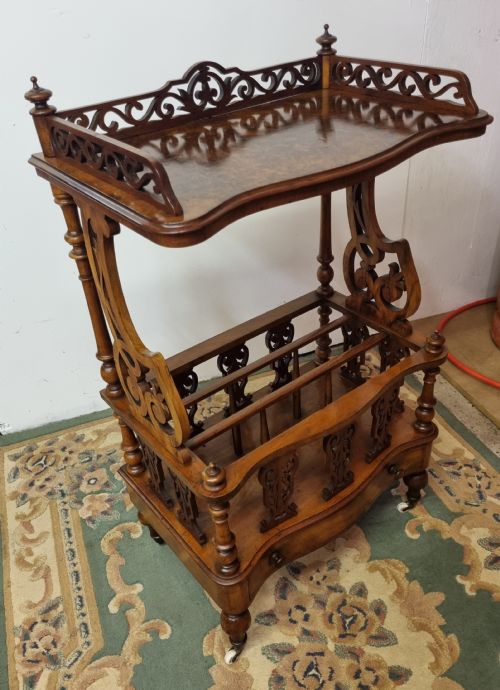
- A piece of furniture consisting of several open shelves used for displaying or storing objects. In the context of magazine storage, these combine shelving with partitioned lower sections.
- Serpentine
- A shape characterised by a line of furniture that curves outward and then inward in a wave-like motion. This contour appears on the edges and bases of higher-status pieces.
- Fretwork
- Ornamental work consisting of interlaced or perforated patterns cut into wood. This technique adds decorative surface texture to panels and partitions.
Antique Magazine Rack Wood: Frequently Asked Questions
What is a Canterbury used for?
A Canterbury functions as a portable stand for holding current reading materials, newspapers, and sheet music near seating areas. The partitioned upper section keeps papers upright and sorted.
Many examples include a small drawer underneath for storing smaller writing accessories or reading paraphernalia. This combination of open storage and enclosed drawer space made them versatile items in period drawing rooms.
How do I identify a Regency period piece?
Regency items often feature dark timbers like mahogany and rosewood, sometimes accented with brass inlay or mounted on saber legs with brass castors. Boat-shaped frames and clean architectural lines are characteristic of this era.
Makers during this time focused on classical proportions and structural clarity. Examining the turnings and the weight of the timber helps confirm the period.
What woods were used for these racks?
Makers relied heavily on dense hardwoods that could support compartmented frames without warping. Mahogany and rosewood appear frequently across the periods represented.
Burr walnut and walnut also feature prominently, offering distinctive grain patterns that elevate the visual appeal of the piece. Secondary woods were used for internal framing and drawer linings.
Are these pieces suitable for modern homes?
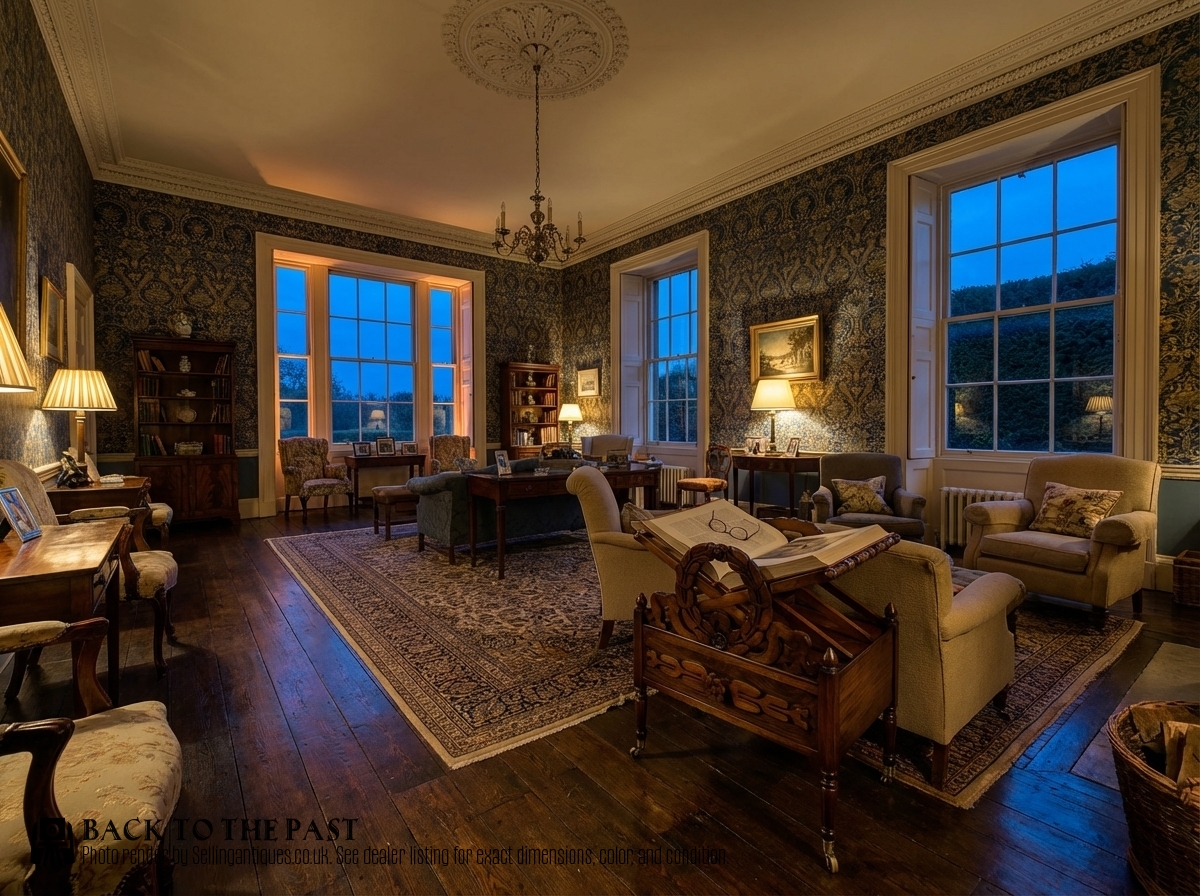
These items integrate easily into contemporary rooms by providing compact storage for current magazines, tablets, or books. Their low profile allows them to sit beside sofas or desks without dominating the floor space.
The durable construction of solid timber ensures they withstand daily use while adding historical character to an interior.
How do Victorian pieces differ from Georgian ones?
Georgian items tend to display restrained classical lines with straightforward mahogany construction and minimal ornamentation. The focus rested on proportion and solid timber quality.
Victorian pieces often introduce more ornate decoration, including fretwork, mother of pearl inlay, and burr walnut veneers. They also embrace diverse forms such as the Canterbury whatnot and varied spindle turnings.