


Regency Magazine Holder
A regency magazine holder is an elegant timber or metal stand designed to keep daily papers and journals tidy.
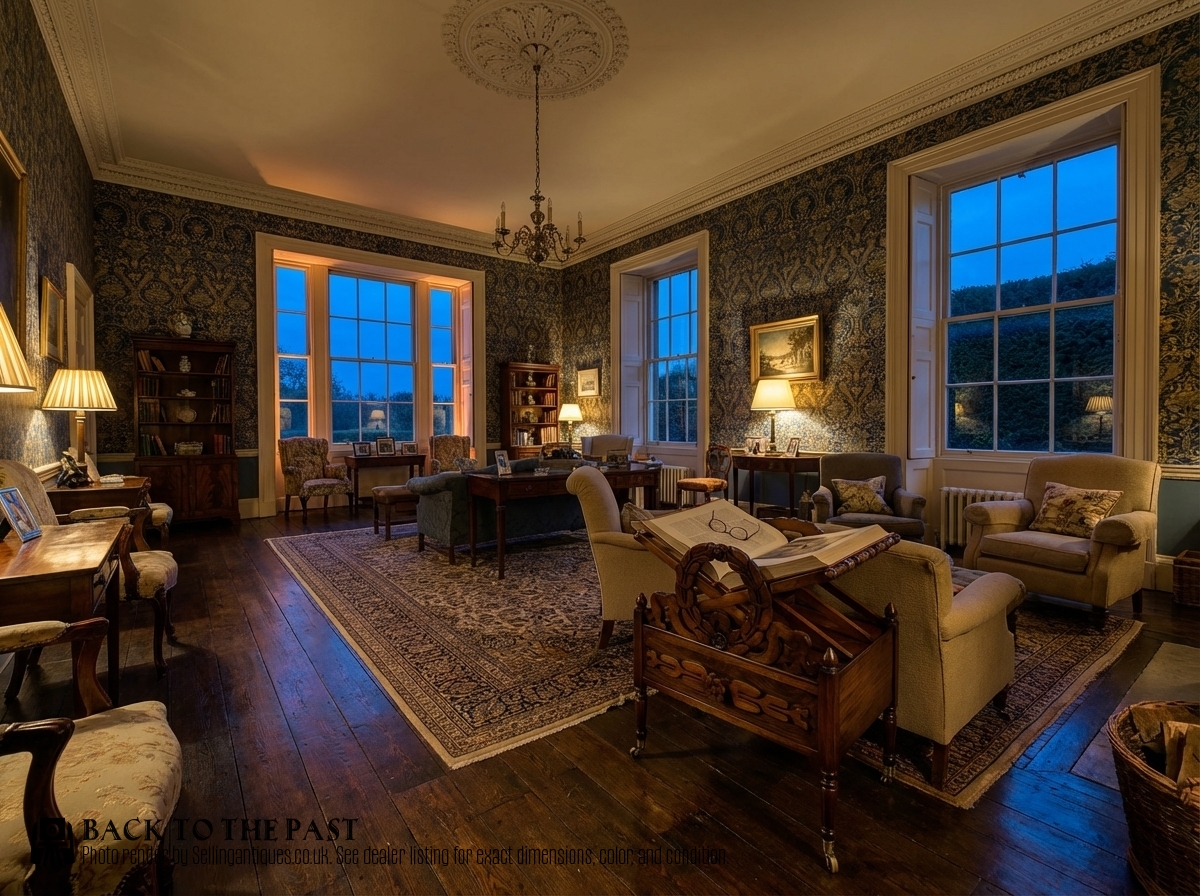
Regency Magazine Holder
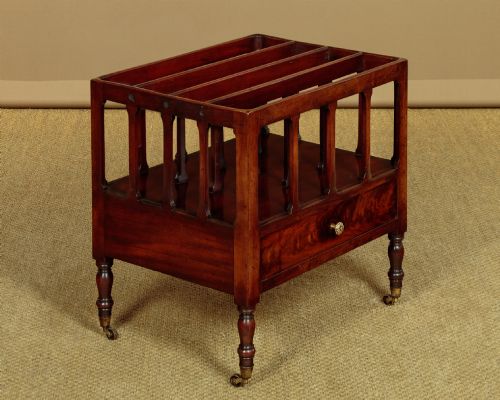
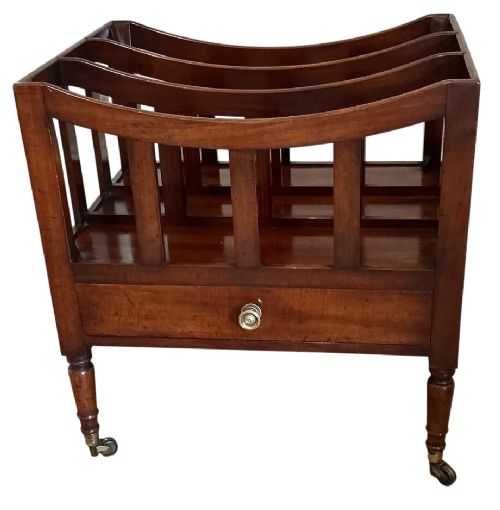
When you search for a regency magazine holder, you encounter pieces primarily known in period terms as canterburys or folio stands. These domestic furnishings originated to hold sheets of music, newspapers, and periodicals in the principal rooms of the house.
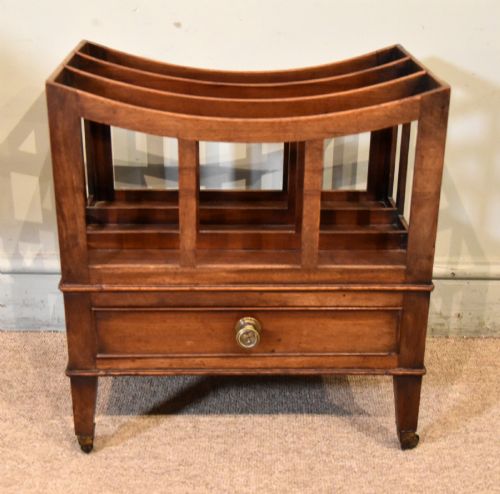
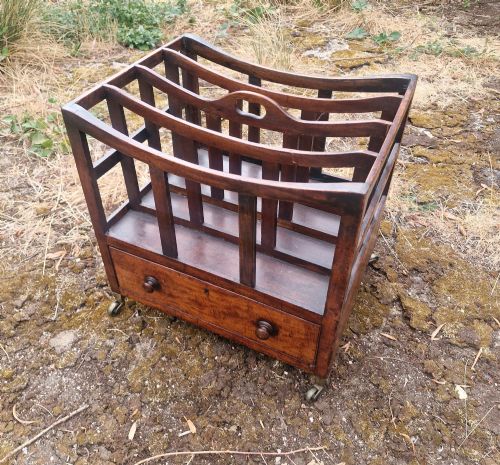
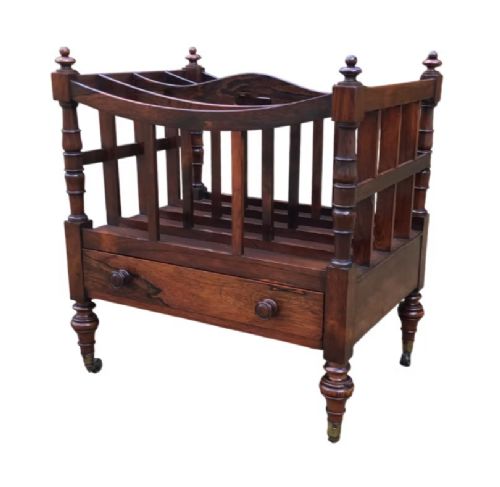
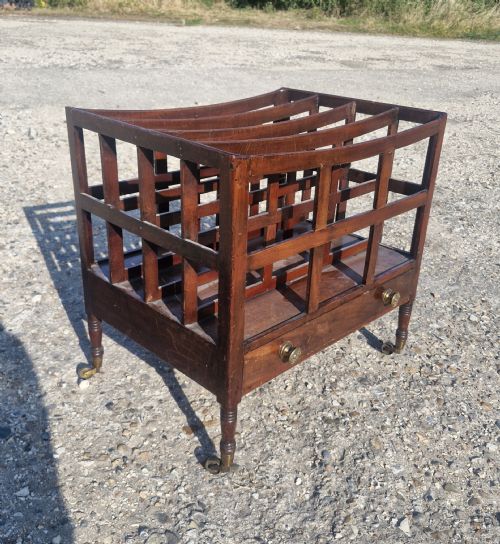
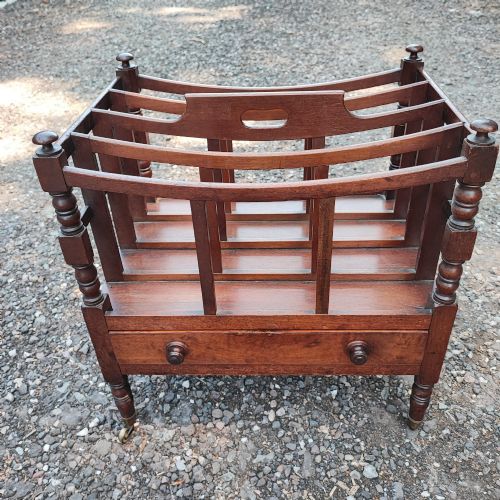
The version you are most likely to meet on this page is the mahogany or rosewood canterbury, frequently divided into multiple sections above a low drawer, standing on castors. These pieces span the Regency, George III, and William IV eras, alongside later revivals such as Hollywood Regency brass examples.
Makers designed these items for freestanding use beside seating areas, constructing them with slatted or pierced divisions to keep folios upright. Variations range from boat-shaped timber bodies to grand scale folio stands and occasional brass music racks.
Materials and construction
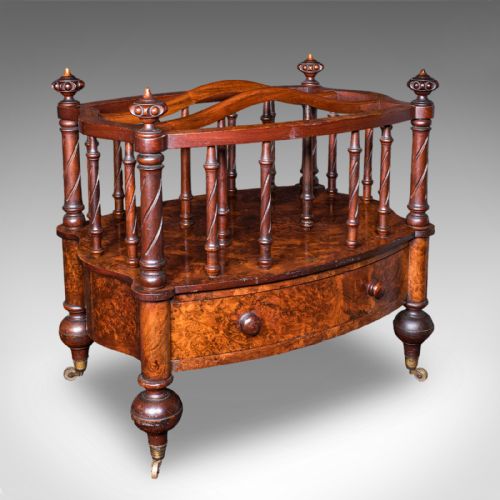
Cabinet makers utilised dense native and imported timbers, notably mahogany, Cuban mahogany, burr walnut, and rosewood, sometimes accented with ebony banding. These woods were chosen for their rich grain and ability to hold fine carved details such as Prince of Wales feathers.
Metal components appear in brass fittings, castors, and occasionally in the entire structure of later brass swan magazine racks. Joinery methods included turned legs, delicate spindle dividers, and dovetailed drawers integrated beneath the main compartment.
Materials recorded across the inventory include mahogany, Cuban mahogany, rosewood, burr walnut, ebony, brass, and copper.
Distinctions in quality
The standard of a piece depends heavily on timber selection and the crispness of its turning and carving. Dense rosewood figures and well-figured Cuban mahogany elevate an example far above plain utility timber.
Structural refinement also dictates worth, seen in the proportion of the divisions, the elegance of turned legs, and the presence of original brass castors. Pieces bearing distinct attributions to makers like Gillou's or specific design sources demonstrate superior workshop execution.
Maison Jansen
The Regency Magazine Holder Glossary
- Canterbury
- A low stand with vertical divisions used for holding music sheets, newspapers, and magazines. It often incorporates a single drawer at the base.
- Folio Stand
- A large adjustable or fixed stand designed to hold large books, prints, and paper folios flat or upright.
- Boat Shaped
- A curved hull-like profile characteristic of certain Regency canterbury bodies. This contour softens the rectangular lines of the furniture.
- Ebony Banded
- Inlaid with narrow strips of contrasting dark wood along edges or panels. This technique frames the primary mahogany or rosewood surfaces.
- Castors
- Small wheel attachments fitted to the base of legs for ease of movement. They are commonly made of brass in this period.
Regency Magazine Holder: Frequently Asked Questions
What is a regency magazine holder called?
Period pieces of this type are most frequently designated as canterburys or folio stands in contemporary records. Dealers and collectors also refer to them simply as newspaper or music racks.
While the modern search phrase emphasises magazine storage, original Georgian and Regency makers built these stands primarily for sheet music and daily journals.
How do I use a canterbury today?
These stands function well beside sofas and armchairs to organise current periodicals, books, and daily newspapers. Their vertical partitions keep reading material upright and accessible.
Larger folio stands suit larger living spaces for displaying art books or holding current reading matter near a desk.
How do I date a mahogany canterbury?
Dating relies on timber choice, leg turning style, and overall proportions relative to known design periods. Pieces from the Regency and George III eras display specific classical turnings and dense timber grains.
Later Victorian and mid-century interpretations introduce alternative metals or broader proportions while maintaining the fundamental divided rack format.
Are rosewood models authentic to the Regency?
Rosewood was a favoured exotic timber during the Regency and William IV periods, often utilised for high-status domestic furniture. Cabinet makers prized its dark grain and polished finish for drawing room pieces.
Surviving examples in rosewood frequently exhibit finer decorative details, such as carved carrying handles or inlaid brass work.