

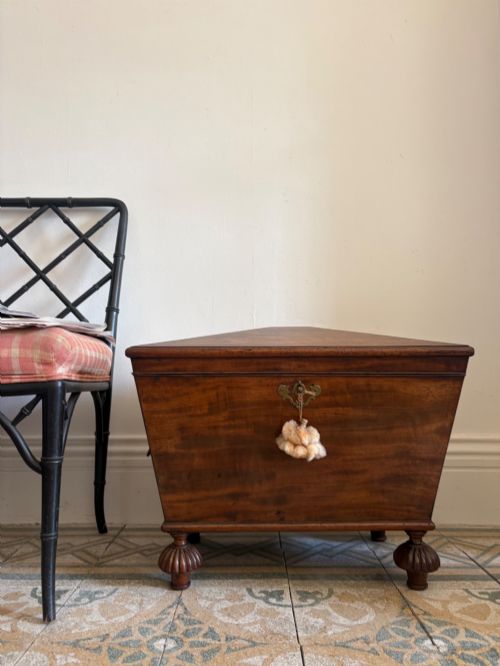


Carved Mahogany Wine Cooler
A carved mahogany wine cooler brings period dining tradition to a room, holding bottles with heavy timber and classic proportion.
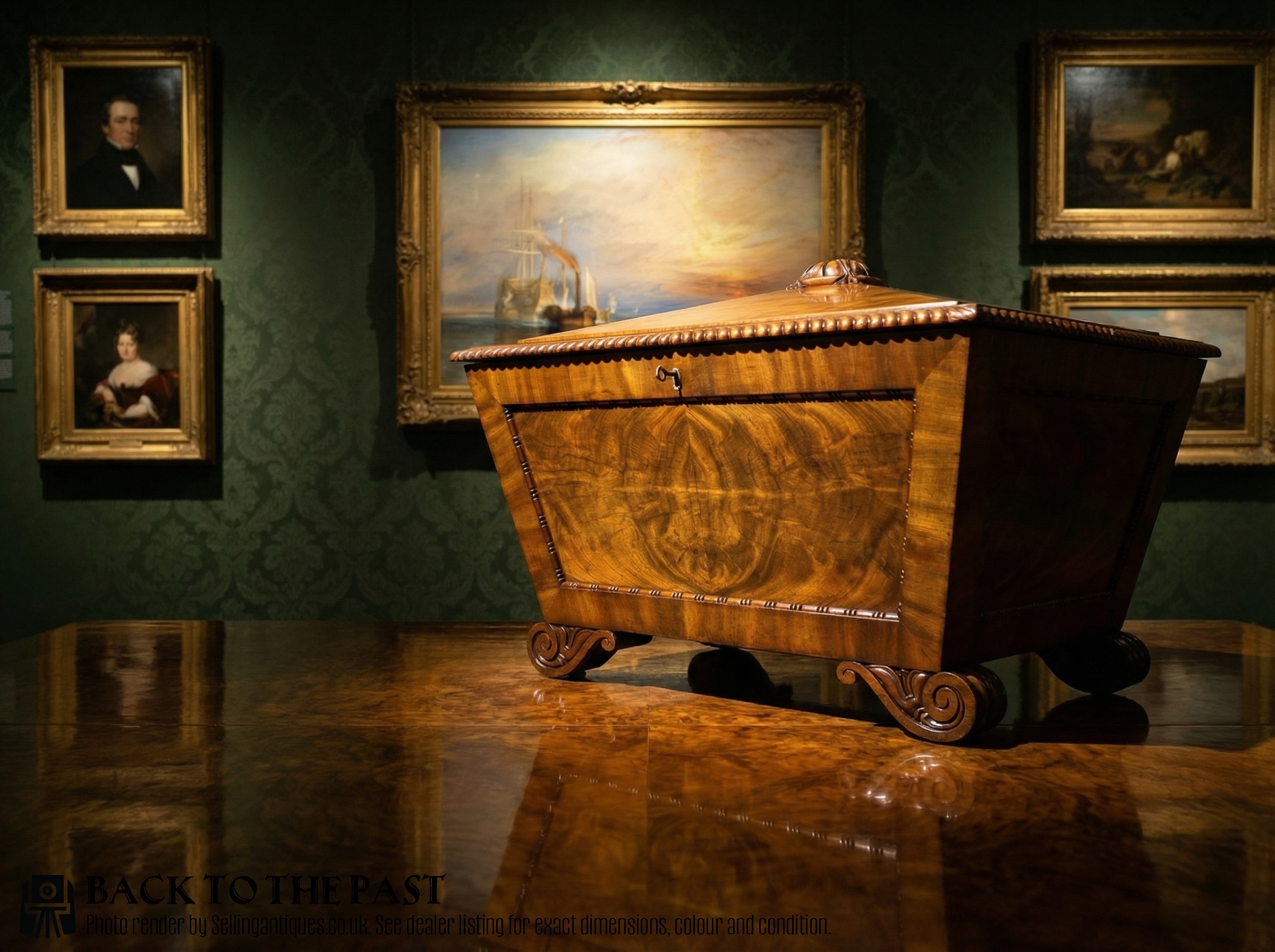
Carved Mahogany Wine Cooler
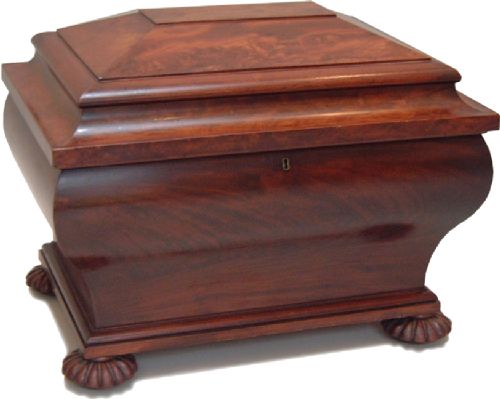
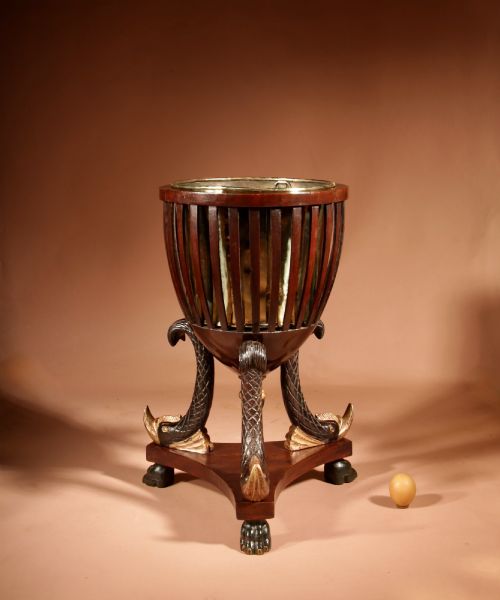
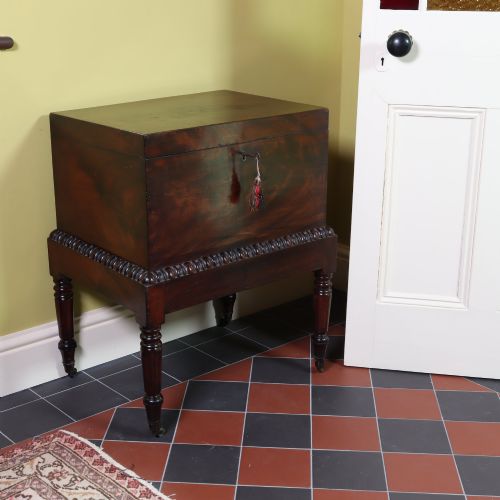
A carved mahogany wine cooler is a formal dining room container designed to chill bottles in ice during meals. The pieces listed carry names like cellarette, jardiniere, and wine bottle stand across periods from the Georgian and Regency eras through the Victorian age.
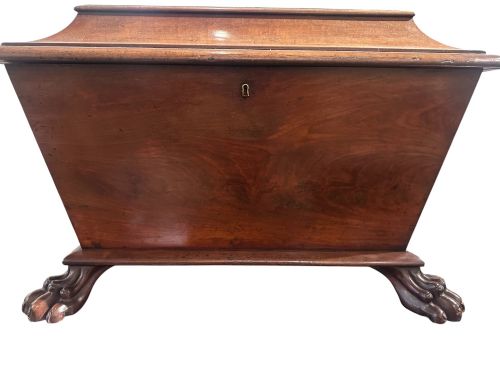
Most examples take the sarcophagus shape, featuring heavy timber bodies raised on paw feet or plinths. Makers also produced oval, fluted, and serpentine forms in mahogany, walnut, and flame mahogany veneer, occasionally drawing on French or Dutch Empire design.
Originating in grand English and Irish dining rooms, these vessels served the wealthy during extended dinners. Today they function as freestanding side table pieces or plant holders in period interiors.
Judging Quality
Quality rests in the timber selection and the restraint of the carver's hand. High-grade examples display striking flame mahogany grain and crisp, deep carving on paw feet and lion-mask handles rather than flat or mechanical decoration.
Original internal linings and working brass taps at the base elevate an example significantly. The structural joinery of the sarcophagus body and the retention of original castors also separate standard production from master workshop output.
Carved Mahogany Wine Cooler Retail Price Guide 2026
Typical asking prices for carved mahogany wine cooler among the pieces listed under this phrase on Sellingantiques today, from the lower quarter to the upper quarter. They describe what is for sale here now, not the wider market.
Periods represented span from Georgian and Regency eras through the Victorian age into the early twentieth century.
Freemans of Norwich·T.Feetham·Maples and Co·Robert Strahan and Co·Gillows
The Carved Mahogany Wine Cooler Glossary
- Cellarette
- A lockable container used for storing and cooling wine in the dining room. These timber vessels stood beneath sideboards or beside dining tables.
- Sarcophagus form
- A heavy, tomb-like container shape with a peaked lid popular during the Regency and Georgian periods. This silhouette allowed for deep internal storage compartments.
- Flame mahogany veneer
- A thin slice of timber cut from where branches join the main trunk, creating a distinct flickering flame pattern. Cabinet makers applied this veneer to primary display surfaces.
- Lead liner
- A fitted internal trough made of soft metal designed to hold ice and water without leaking into the surrounding timber structure. Many original liners include internal dividers.
- Paw foot
- A carved furniture foot shaped like the paw of a lion or beast, frequently seen on Regency and William IV supports. These carved elements lift the heavy body off the floor.
Carved Mahogany Wine Cooler: Frequently Asked Questions
What is the difference between a cellarette and a wine cooler?
The terms are largely interchangeable in historical records, though cellarette often implies a lockable interior for spirits. Both served the primary function of holding bottles at the dining table.
Larger sarcophagus forms were generally termed wine coolers, while smaller lidded boxes with internal bottle divisions received the cellarette designation.
How were these coolers used during meals?
Servants filled the internal metal liner with ice and placed wine bottles inside before dinner commenced. The melted ice water drained through a tap at the base into a concealed bucket.
After dining, the lockable lids on certain cellarettes secured expensive wines and spirits away from household staff.
How do I date a mahogany wine cooler?
Dating relies on stylistic shifts from Georgian straight lines to Regency classical revival forms and heavy Victorian proportions. Mahogany grain treatment and carving motifs offer further chronological clues.
Earlier eighteenth-century pieces favour simpler geometric lines, while 1820s Regency examples introduce bold paw feet and sarcophagus lids.
Can I use an antique wine cooler for plants?
Many examples function well as indoor plant holders or jardinieres, a secondary use recorded in period records. The waterproof lead or zinc liners protect the timber from moisture.
Care must be taken to ensure drainage does not compromise the internal metal lining over time.