
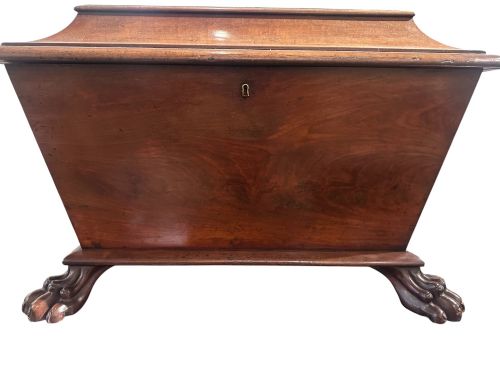
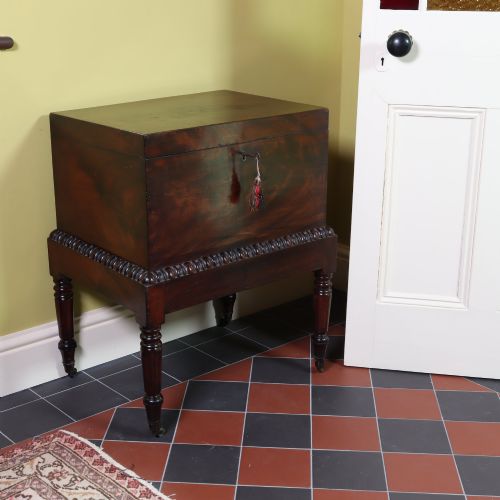

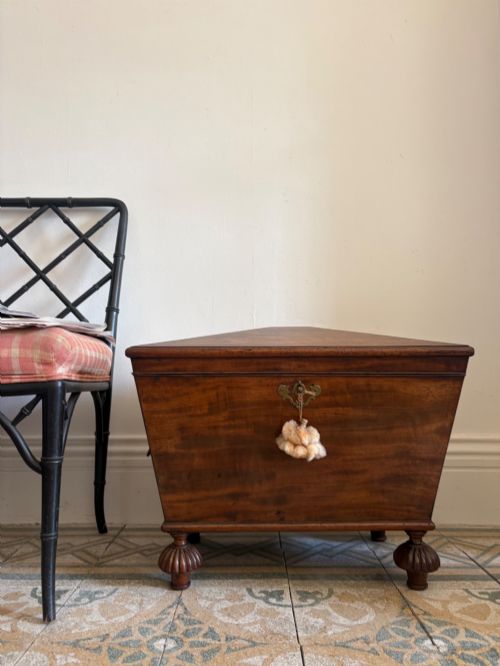


Carved Mahogany Wine Chest
A carved mahogany wine chest is a robust period container built to chill and house bottles, bringing sculptural dignity to any dining room.
Carved Mahogany Wine Chest
A carved mahogany wine chest appears primarily in robust sarcophagus, oval, and serpentine shapes designed to sit beneath sideboards or stand freely in the dining room. These pieces emerge predominantly across the Georgian, Regency, and Victorian eras, carrying heavy architectural presence.
The buyer meets many examples bearing classical proportions, frequently termed wine coolers or cellarettes, executed in rich timber with distinctive carved details. These vessels served the practical domestic function of storing and chilling bottles for the dining table before modern refrigeration took hold.
Materials and construction
Makers utilised solid mahogany and figured mahogany veneers, often mounted with heavy brass carrying handles, lion paw feet, or decorative escutcheons. The interiors typically house lead liners designed to hold ice and water safely without leaking into the surrounding timber frame.
Joinery involved substantial carcases built to withstand the heavy weight of wet ice and glass bottles, frequently enriched with carved gadrooning, reeded moulding, or classical paw feet. Secondary timbers support the primary mahogany structure, while metal fittings provide functional reinforcement and secure mobility.
Some nineteenth-century cellarettes still carry the faint, lingering scent of old oak, lead, and vintage cellar damp after two centuries.
Judging execution and preservation
The division between ordinary and exceptional pieces rests upon the crispness of the timber carving, the choice of figured grain, and the presence of original interior lead linings. Superior examples exhibit bold architectural massing, such as well-proportioned sarcophagus lids and intact brass mounts that match the period style accurately.
Construction integrity and timber selection dictate long-term durability, with finer boxes maintaining tight joinery and unwarped lids despite decades of interior moisture exposure. The presence of maker stamps or attribution to notable cabinet makers elevates the historical interest of an individual piece.
Freemans of Norwich·T Feetham·Maples and Co·Robert Strahan and Co
The Carved Mahogany Wine Chest Glossary
- Cellarette
- A lockable container used for storing wine bottles in the dining room. These boxes were frequently kept beneath the sideboard during dinner parties.
- Sarcophagus
- A monumental coffin-shaped chest form popular during the Regency period. This architectural profile gave wine coolers significant visual weight.
- Lead liner
- A protective metal insert fitted inside the chest to hold ice for chilling bottles. Surviving original liners are a mark of authentic preservation.
- Gadroon
- A decorative carved moulding featuring convex curves or reed patterns. Craftsmen applied this ornamental band along the rims and bases of fine chests.
- Paw foot
- A carved furniture support shaped like the foot of a beast. Such feet often terminate the corners of grand nineteenth-century pieces.
Carved Mahogany Wine Chest: Frequently Asked Questions
What is a wine chest used for?
A carved mahogany wine chest served historically to store bottled wine close to the dining table while keeping the contents chilled on ice. The heavy lead lining inside the box contained melting ice safely away from the timber structure.
In modern interiors, these substantial chests function well as storage cabinets for bottles, glassware, or living room accessories while adding period character to the space.
How do I date a mahogany wine cooler?
Dating relies on examining the overall silhouette, carved motifs, and secondary construction timbers. Earlier Georgian and Regency models often display architectural sarcophagus forms with classical paw feet and brass ring handles.
Later Victorian and Edwardian examples may adopt heavier proportions or revival styles that emulate earlier Regency designs. Checking the interior lead lining and joinery methods helps confirm the manufacturing era.
Where should I place a wine chest?
These imposing chests suit dining rooms, grand hallways, or living spaces where their architectural presence can be appreciated as freestanding furniture. Placing them away from direct heat sources protects the antique mahogany timber and historical veneer.
Because many pieces are designed to be viewed from all sides, positioning them where light catches the figured wood grain highlights their sculptural qualities.
Are original liners important?
Original lead liners provide historical completeness and demonstrate that the interior has survived unaltered since its manufacture. They reveal the practical method once used to chill bottles for grand dining occasions.
While many pieces retain their original metal inserts, others have lost them over time without diminishing the exterior decorative value of the timber case.