
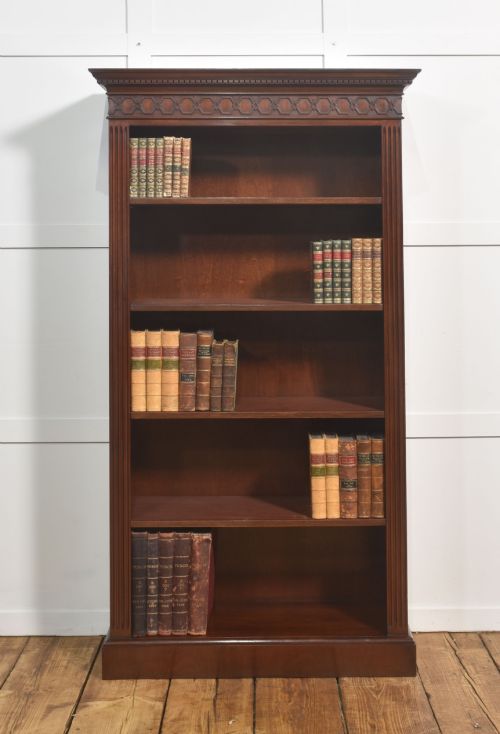
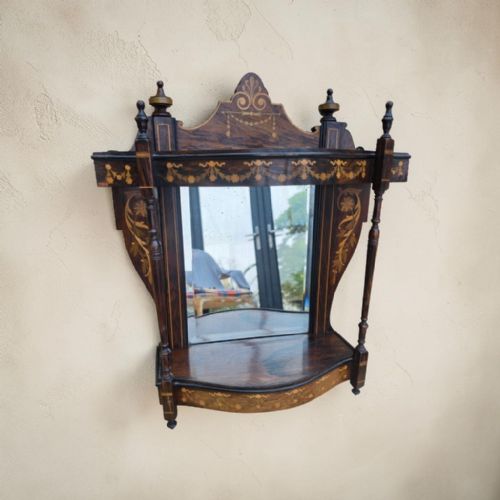
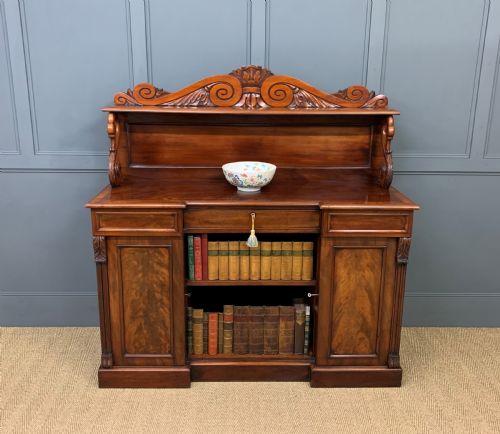
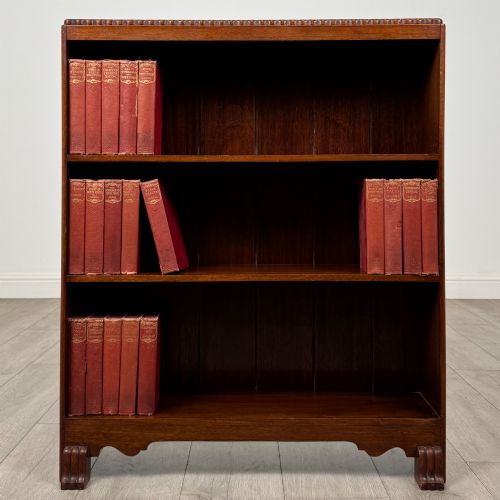
Carved Mahogany Shelves
Carved mahogany shelves are timber storage tiers built in Victorian, Edwardian, and Regency workshops to hold books and ornaments with distinction.
Carved Mahogany Shelves
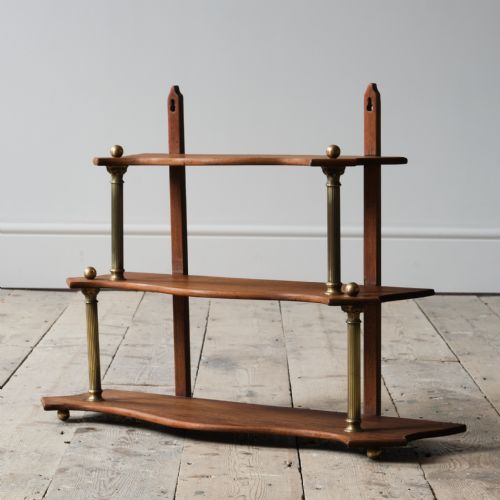
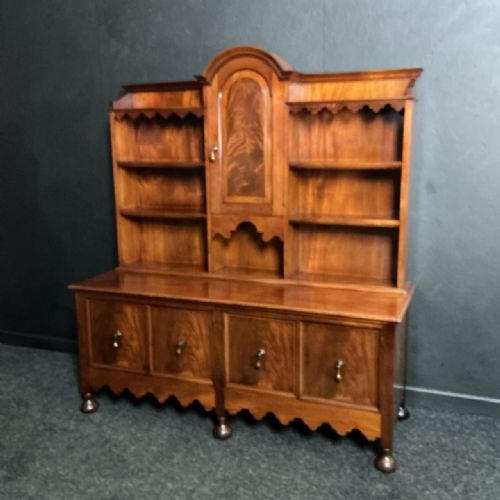
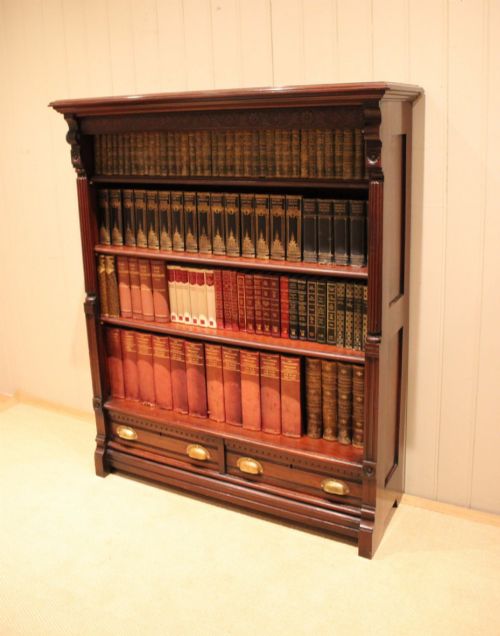
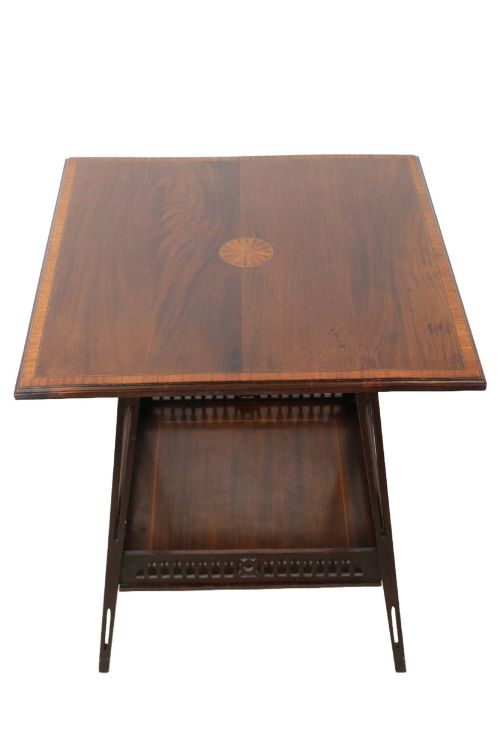
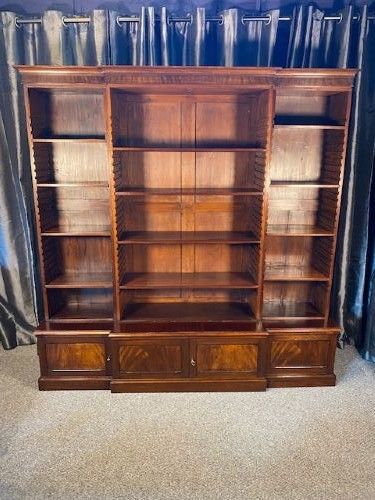
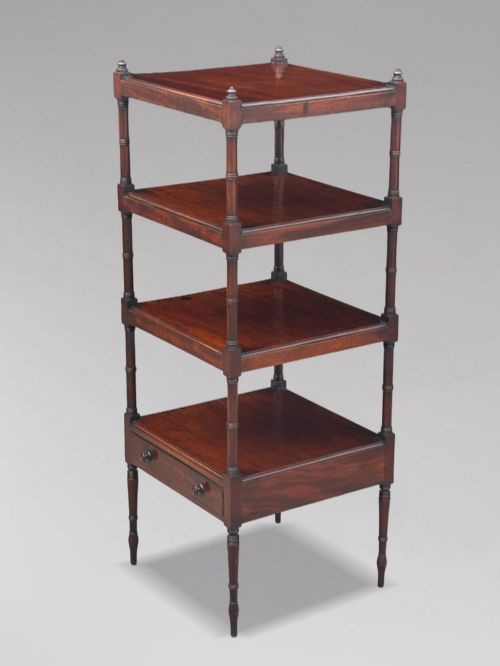
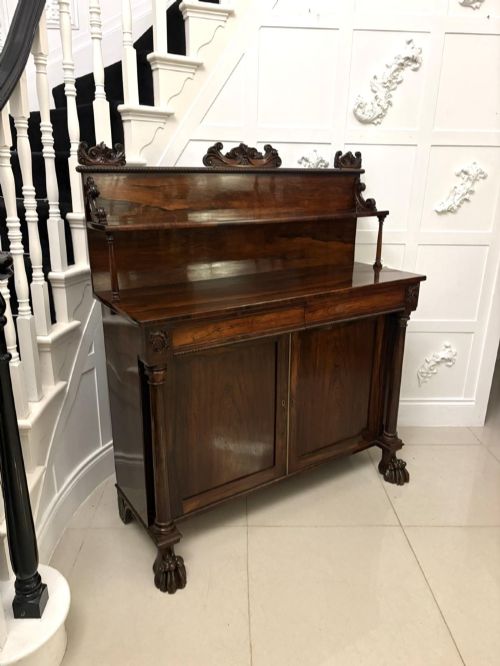
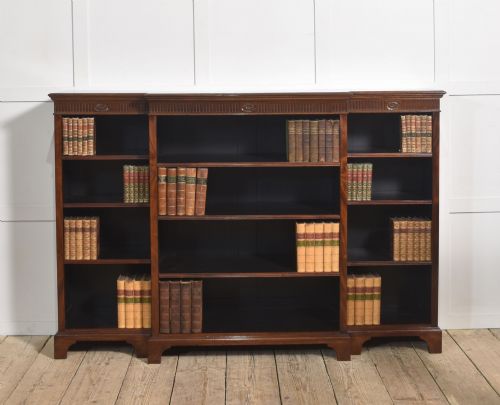
Makers produced these tiered items in various formats, including narrow upright bookcases, chiffoniers with shelving, and intricate wall brackets. You will find that Victorian and Edwardian examples dominate the offerings, often incorporating adjustable shelves or delicate fretwork.
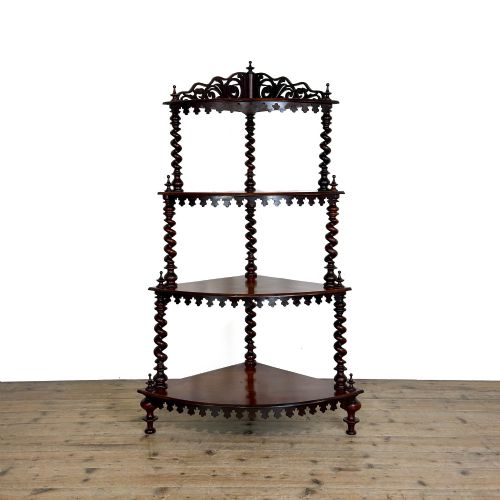
The objects serve both practical storage and display functions within domestic interiors. Pieces range from simple wall-hung units to large library bookcases and multi-tiered corner whatnots.
How they were made
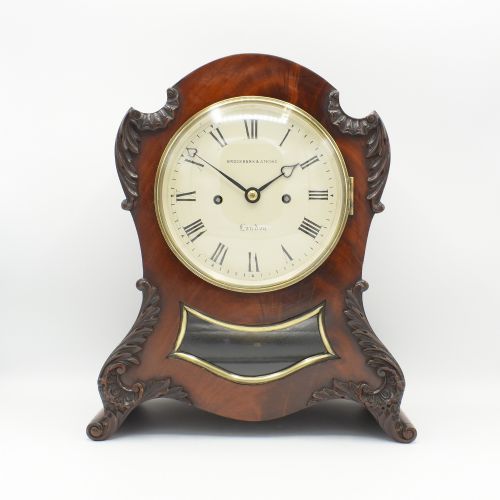
Cabinet makers relied primarily on solid mahogany and flame mahogany veneer, occasionally introducing satinwood, walnut, or pine for secondary timbers or inlay work. Brass fittings, glass panels, and ormolu mounts added functional and decorative accents to the wooden structures.
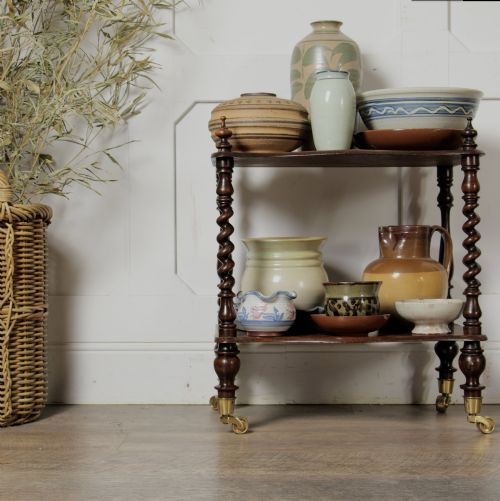
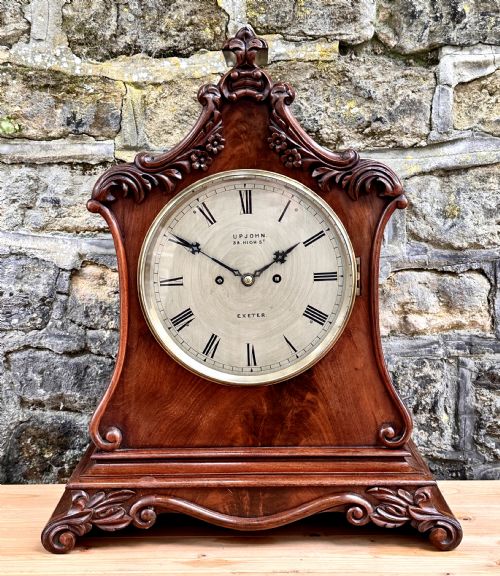
Construction techniques combined traditional joinery with decorative carving, turning, and pierced fretwork. Workshops utilised barley twist supports, turned columns, and inlaid banding to elevate the visual appeal of the shelves and bookcases.
The listings span the nineteenth and early twentieth centuries, featuring mahogany, flame veneer, brass, and glass across various bookcase and whatnot forms.
What varies in quality
The standard of a piece rests upon the selection of the timber, particularly the depth of grain in flame mahogany veneers and the crispness of the hand-carved details. Superior examples exhibit precise joinery, well-matched wood grains, and balanced proportions across the tiers or shelving bays.
Refinement in secondary details, such as finely turned barley twist columns, delicate fretwork panels, and intact brass hardware, distinguishes standard production items from workshop pieces of exceptional merit.
Trevor Page & Co·Brockbanks & Atkins·Edwards & Roberts
The Carved Mahogany Shelves Glossary
- Whatnot
- A multi-tiered piece of freestanding furniture designed for displaying ornaments or books. These units typically feature three or four open shelves supported by turned columns.
- Chiffonier
- A low cabinet, popular during the nineteenth century, often surmounted by shelving. They combine enclosed storage with open display space for books and decorative objects.
- Flame mahogany
- A veneer cut from timber where the branch joins the main trunk, producing a distinctive flickering flame-like grain pattern. Cabinet makers used this figure on prominent surfaces.
- Fretwork
- Ornamental perforated wood design created by cutting intricate patterns through thin boards. This technique appears on the sides and galleries of wall hanging shelves.
Carved Mahogany Shelves: Frequently Asked Questions
What rooms suit wall hanging shelves?
Wall hanging shelves suit smaller spaces like hallways, bedrooms, or studies where floor area remains at a premium. They provide a practical surface for displaying small ornaments or holding daily volumes without crowding the room.
Securing these pieces to solid wall fixings ensures they safely bear the weight of books and ceramics accumulated over time.
How do I identify a Victorian whatnot?
Victorian whatnots typically feature multiple open tiers supported by turned columns or barley twist uprights, designed for corner or freestanding placement. The timber is predominantly dark mahogany, sometimes paired with fretwork galleries.
Examining the construction methods underneath and behind the tiers helps confirm the nineteenth-century origin of the piece.
Are these shelves suitable for heavy books?
Many nineteenth-century open bookcases and library units feature adjustable wooden shelves engineered to support substantial volumes. Solid mahogany construction provides the structural integrity required for heavy loads.
Checking the thickness of the timber and the support brackets ensures the shelves remain level under sustained weight.
What is flame mahogany?
Flame mahogany is a highly figured wood veneer derived from the intersection where a branch meets the tree trunk. The grain creates a dramatic, rolling pattern that resembles flickering flames.
Cabinet makers reserved this striking veneer for the primary display surfaces of high-status bookcases and chiffoniers.