


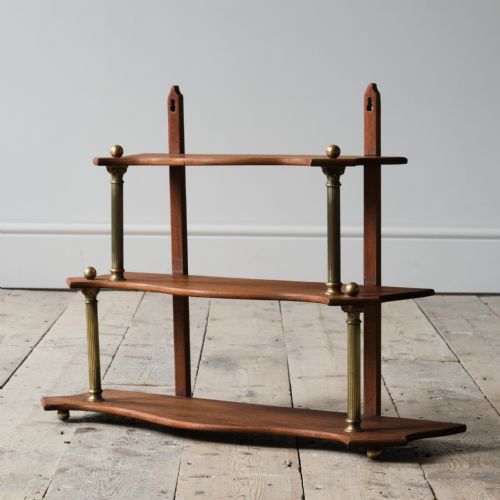


Regency Hanging Shelves
Regency hanging shelves are functional wall furniture that brings refined timber tiers to any room.
Regency Hanging Shelves
Regency hanging shelves are wall-mounted tiers designed for books and display, appearing across the Regency, Georgian, and Victorian periods. Most examples found on this page take the form of mahogany or rosewood open shelves, often constructed with brass supports or mirrored backs.
You will frequently encounter corner units alongside flat wall-mounted sets, reflecting the domestic needs of period interiors. These pieces utilise sturdy timbers like mahogany, yew wood, and rosewood to support books or ornaments without taking up floor space.
How they were made
Cabinetmakers built these shelves using dense hardwoods such as mahogany and rosewood, frequently incorporating brass rods or mounts for structural and decorative contrast. Selected pieces also integrate glass mirrors and delicate tulipwood or ormolu details.
Construction methods focus on wall suspension, utilising secure brackets and framing to hold multiple tiers of timber safely. Woods are finished to highlight natural grain patterns, particularly in mahogany, yew, and rosewood variations.
Regency Hanging Shelves Retail Price Guide 2026
Typical asking prices for regency hanging shelves among the pieces listed under this phrase on Sellingantiques today, from the lower quarter to the upper quarter. They describe what is for sale here now, not the wider market.
Some portable bookshelves were designed to travel, ensuring your favourite volumes could follow you from drawing room to carriage.
What varies in quality
Quality rests in the choice of timber and the sophistication of secondary materials like brass or ormolu. Finer examples display carefully figured mahogany or rosewood grains alongside robust hanging fixtures that integrate smoothly into the design.
Proportion and cabinetwork distinguish standard utilitarian shelves from finer decorative commissions. The integration of curved bow fronts, mirrored backs, or specialised woods such as yew elevates the visual weight of the piece.
Town and Emanuel
The Regency Hanging Shelves Glossary
- Regency
- A stylistic period spanning the early nineteenth century characterised by classical restraint and architectural influence. Pieces from this era often draw on Greek and Roman design motifs.
- Bow front
- A convex, curved front elevation commonly seen on corner shelves and cabinets. This shape softens room angles and adds visual depth to wall-mounted furniture.
- Ormolu
- Gilded bronze applied as a decorative mount on furniture. It provides a bright metallic contrast against dark hardwoods like mahogany and rosewood.
- Yew
- A dense, highly figured British timber utilised for specialised cabinetwork. Its distinct grain patterns make it a prized material for decorative wall shelves.
Regency Hanging Shelves: Frequently Asked Questions
How were hanging shelves used?
These shelves were mounted on walls to hold books, small ceramics, and decorative ornaments in parlours and studies.
They provided accessible storage while keeping floor space clear in smaller period rooms.
Can these shelves hold heavy books?
While portable bookshelves and multi-tier units were built to carry volumes, their wall fixings require careful assessment.
Heavier sets need secure wall anchors to support the combined weight of dense timbers and contents safely.
What woods are most common?
Mahogany is the primary timber found across these listings, appearing in both simple open sets and elaborate glazed cabinets.
Rosewood and yew also appear, offering darker tones or striking grain patterns for more formal spaces.
How do I identify a Regency piece?
Regency pieces often feature clean architectural lines, classical proportions, and restrained brass detailing.
They bridge late Georgian traditions and early nineteenth-century revival styles through the use of native and imported hardwoods.