




Carved Mahogany Pedestal Credenza
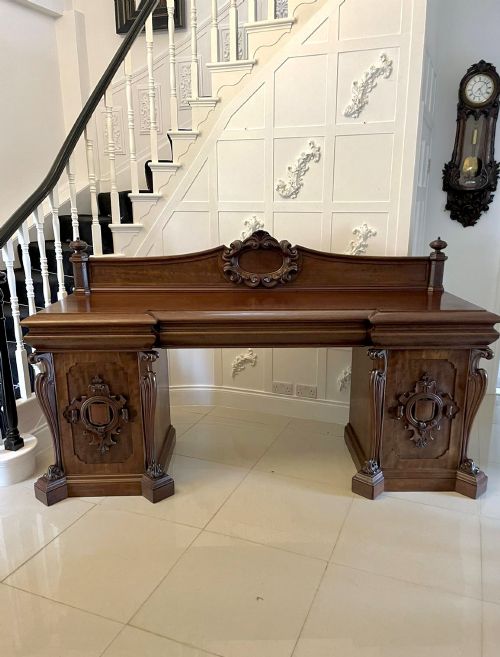
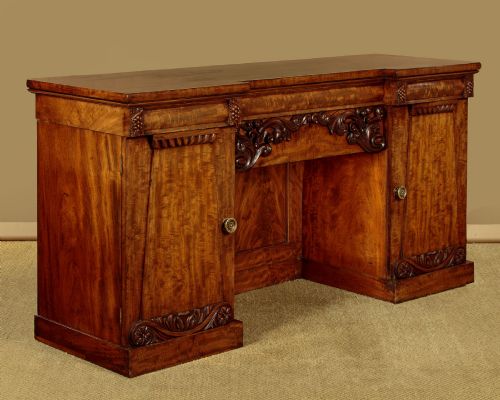
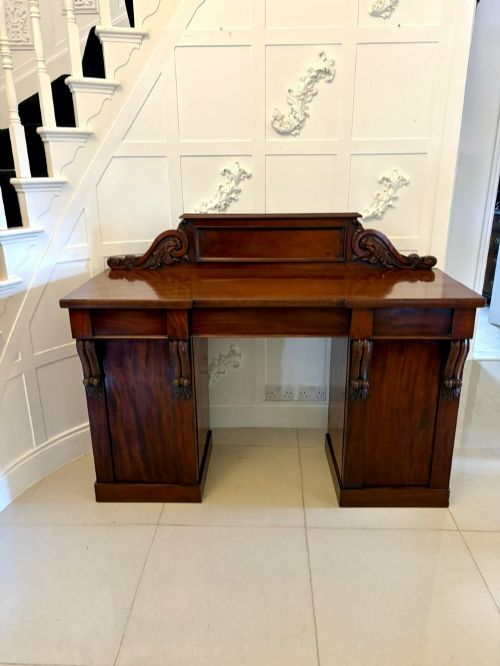
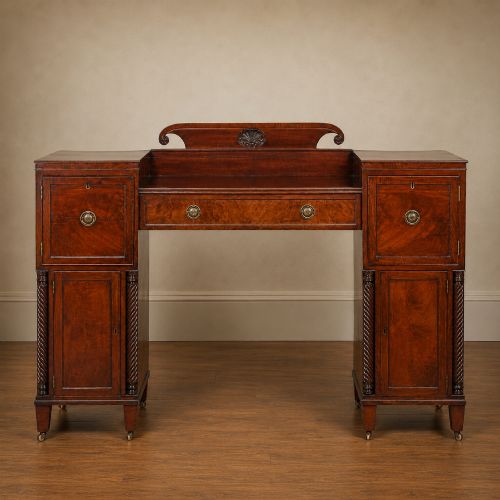
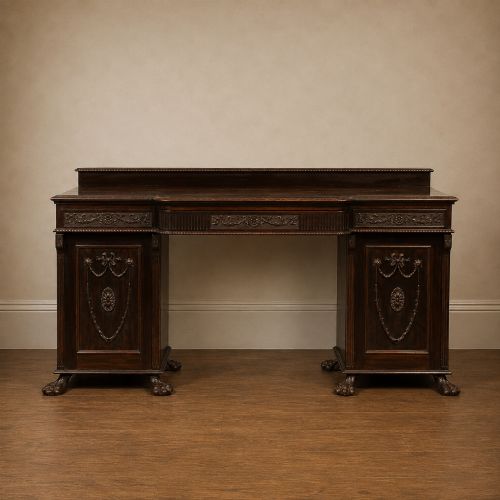
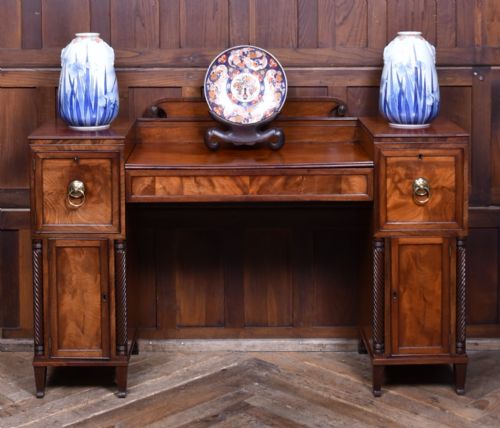
A carved mahogany pedestal credenza brings robust timber and architectural weight to a dining room, offering substantial storage behind panelled doors.
Carved Mahogany Pedestal Credenza
Buyers seeking a carved mahogany pedestal credenza encounter substantial dining furniture designed to anchor a formal interior. These pieces function as service units and storage cabinets, appearing primarily across Regency, William IV, and Victorian periods.
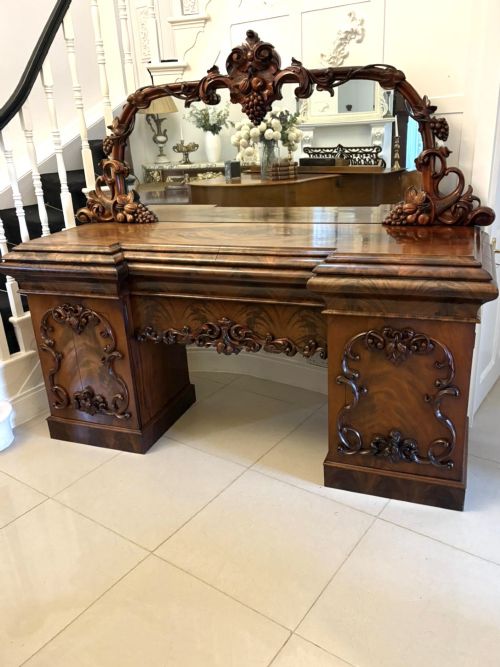
The selections on this page span the nineteenth century, incorporating related forms such as sideboards, chiffoniers, and breakfront cabinets. Makers of the period utilised pedestals at either end to support heavy timber carcases, often incorporating mirror backs or raised splashbacks.
Originating in the Georgian era and evolving through the high Victorian epoch, these items remain heavy, permanent fixtures for the home. They combine cupboard storage with central serving space, built to stand against a primary dining room wall.
Materials and construction methods
Cabinetmakers constructed these forms using solid mahogany and supportive secondary timbers such as pine, applying flame mahogany veneer to prominent surfaces to create dramatic grain patterns. Figured timber was selected deliberately for drawer fronts and door panels to catch the light.
Carved details such as scrollwork, fruit motifs, and paw feet were worked directly into solid mahogany mouldings by hand. Brass hardware and plate glass components appeared frequently in later Victorian examples, particularly those featuring mirror backs.
Some pedestals conceal built-in cellarettes originally designed to keep wine bottles cool near the dining table floor.
Distinctions in craftsmanship
Quality rests in the selection of the timber and the depth of the carving. Superior examples display symmetrical flame mahogany veneers across matching doors and drawers, whilst lesser pieces rely on plain, unfigured boards.
Joinery standards dictate the longevity of these heavy pieces, visible in the precision of the pedestal construction and the crispness of the hand-carved ornamentation. Finer examples retain original brass fittings and substantial weight in the primary timber.
The Carved Mahogany Pedestal Credenza Glossary
- Pedestal
- A structural pillar or column base supporting the main cupboards at either side of the credenza. These units often contain cellarettes or shelved storage.
- Flame mahogany
- A veneer cut from timber where the branch meets the trunk, producing a distinctive flickering flame pattern. This material was reserved for the most prominent exterior surfaces.
- Chiffonier
- A compact sideboard or low cabinet equipped with shelves or enclosed storage. This form frequently incorporates a mirror top or superstructure.
- Breakfront
- A cabinet design where the central section projects forward from the flanking pedestals. This architectural arrangement creates depth and visual rhythm across the facade.
- William IV
- A transitional design period spanning the 1830s characterised by heavy scrolling, robust proportions, and dark figured mahogany. Pieces from this era show bold architectural confidence.
Carved Mahogany Pedestal Credenza: Frequently Asked Questions
How are pedestal credenzas used today?
These large cabinets serve as functional sideboards in modern dining spaces, holding tableware, glassware, and serving platters behind heavy panelled doors.
The flat top surface functions as a practical area for serving food or displaying decorative objects during gatherings.
What periods do these pieces represent?
The selection spans the nineteenth century, encompassing Regency, William IV, and various Victorian phases from 1800 onwards.
Early examples display restrained classical lines, while mid-century pieces favour heavier scrolling and mirror backs.
Are pedestal credenzas difficult to position?
These items are exceptionally heavy and require substantial wall space in a room due to their pedestal design and deep carcase.
Measuring the access points and floor area carefully ensures the piece fits comfortably without dominating the interior.