
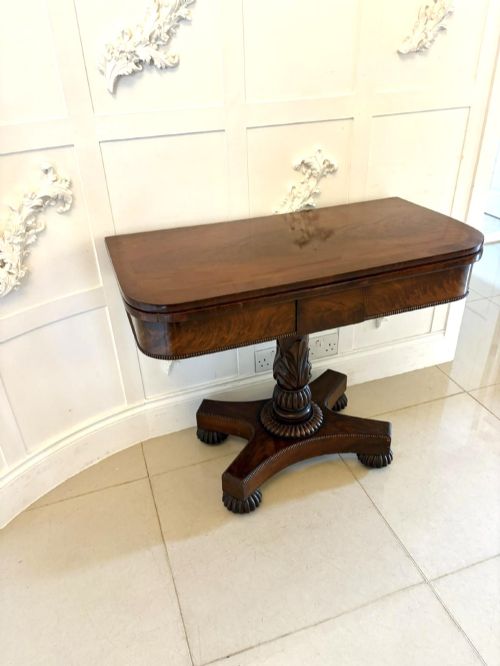
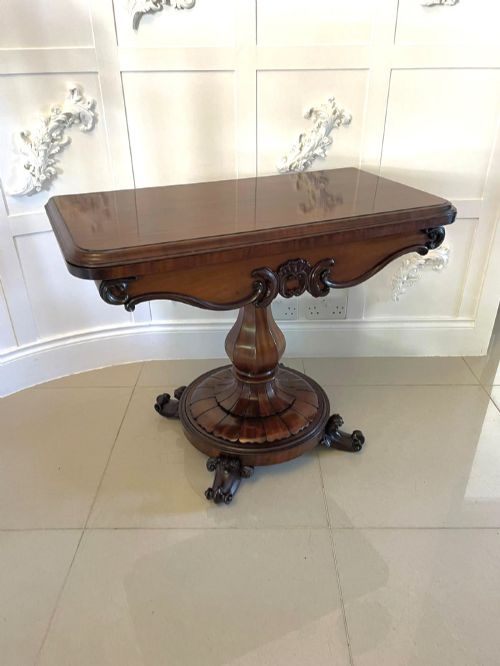
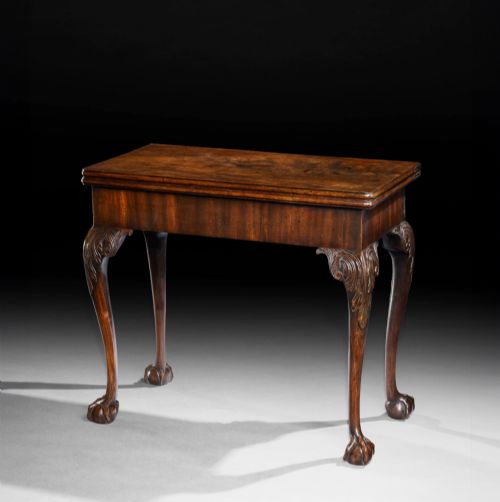
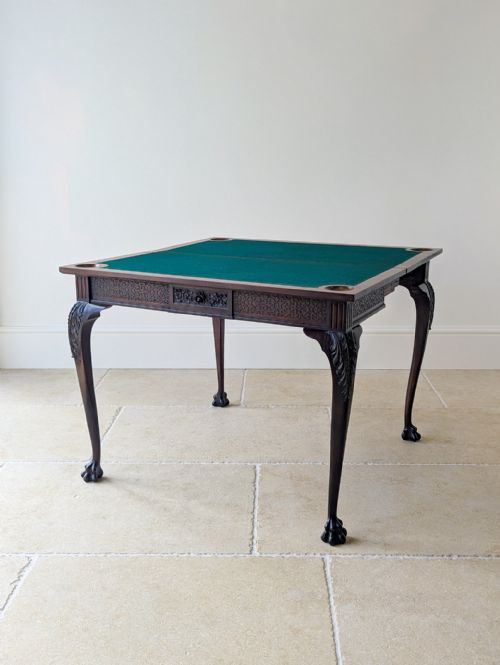
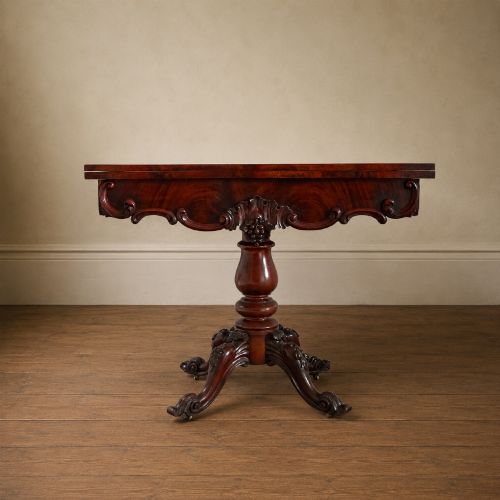
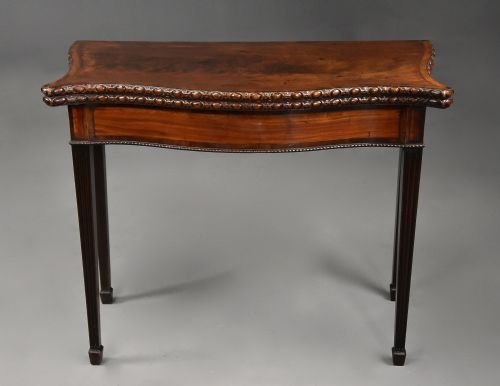
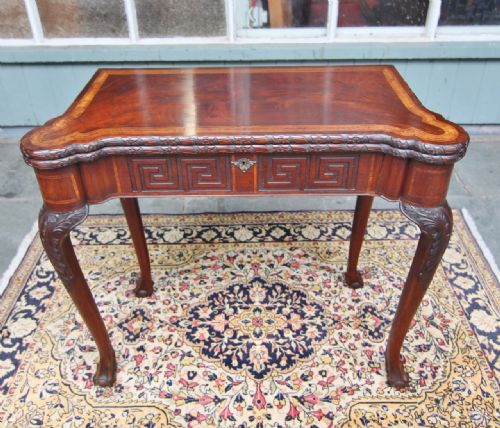
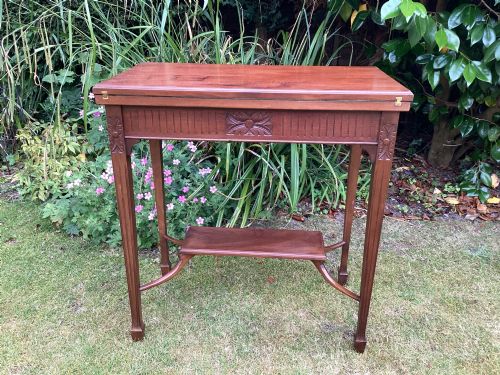
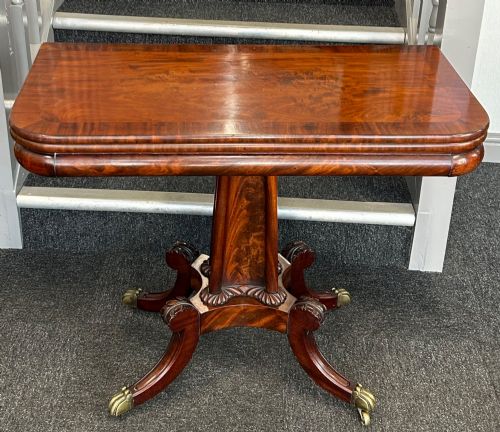
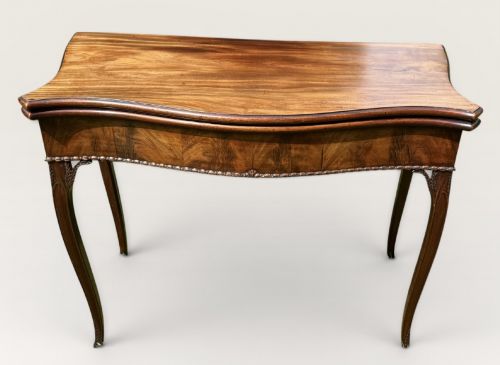
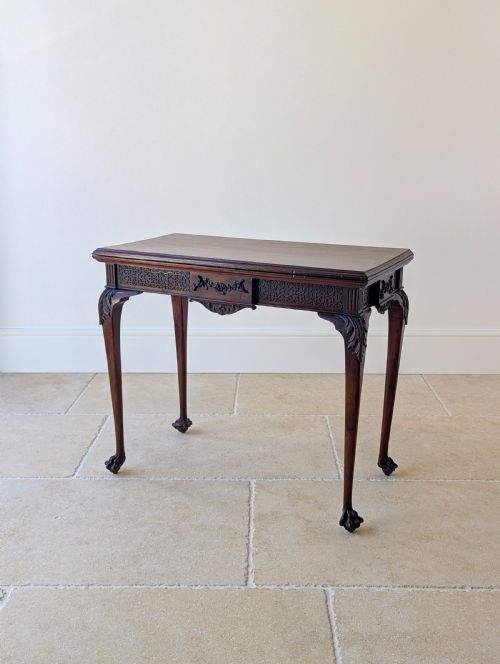

Carved Mahogany Games Table
A carved mahogany games table brings centuries of social pastimes into a room, offering a clever folding surface that transforms from a side console to a dedicated playing area.
Materials and construction
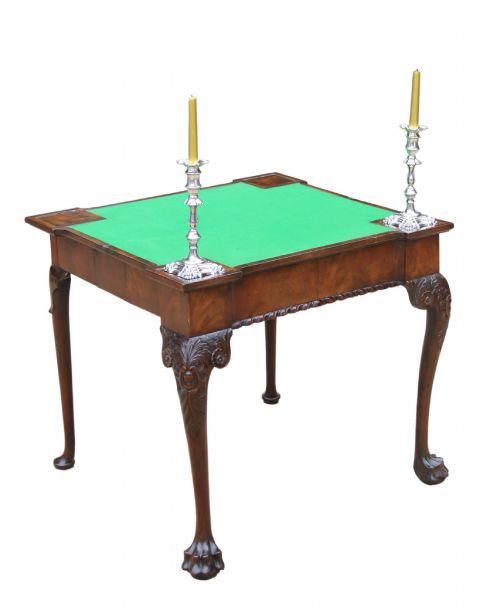
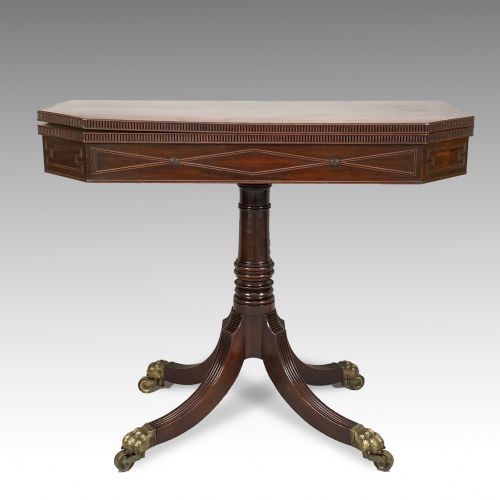
Craftsmen utilised solid mahogany and figured mahogany veneers, often enhanced with contrasting satinwood inlay and supported by brass hardware.
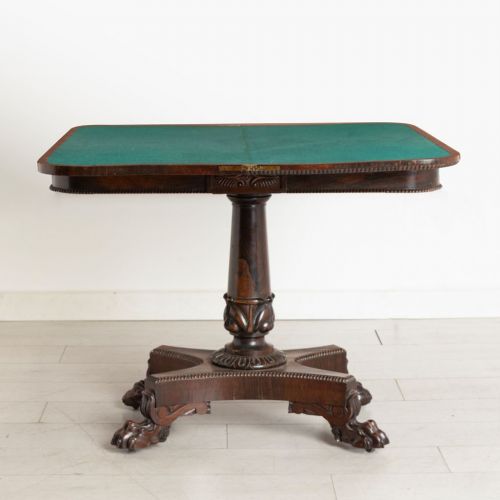
Internal playing surfaces are lined with wool baize or green cloth, providing a tactile counterpoint to the dense hardwood frames.
Structural complexity varies from simple pedestal bases to sophisticated concertina actions that expand to support the opened leaves.
Indicators of refinement
Quality rests in the depth and crispness of the carved ornamentation, particularly on friezes and cabriole legs, alongside the figuring of the mahogany grain.
Engineering precision distinguishes superior examples, such as smoothly operating concertina actions and tightly fitted turnover leaves that sit flush when closed.
Original surface patination and intact secondary timbers contribute significantly to the standing of an individual piece.
Carved Mahogany Games Table Retail Price Guide 2026
Typical asking prices for carved mahogany games table among the pieces listed under this phrase on Sellingantiques today, from the lower quarter to the upper quarter. They describe what is for sale here now, not the wider market.
The documented forms range from tea and console tables to specialised chess and envelope gaming furniture.
Giles Grendey·James Shoolbred and Co
The Carved Mahogany Games Table Glossary
- Concertina action
- An expanding frame mechanism that pulls outward when a table is unfolded, providing four supporting legs beneath the opened leaf rather than two.
- Baize
- A coarse woollen fabric used to line the playing surfaces of card and gaming tables.
- Turnover top
- A hinged table top design that folds open to double the surface area, often revealing a well or compartment underneath.
- Demi-lune
- A half-moon shape characteristic of certain eighteenth-century card tables designed to sit flat against a wall when closed.
- Figured mahogany
- Timber exhibiting distinctive grain patterns such as flame or fiddleback, prized for decorative impact.
Carved Mahogany Games Table: Frequently Asked Questions
How do I open a folding games table?
Most turnover top tables lift and rotate on a pivot before resting flat upon the extended frame. Models with concertina actions pull directly outward from the rails to support the additional weight.
Care must be taken to support the hinges evenly during this movement to avoid straining historical joints.
What games were played on these tables?
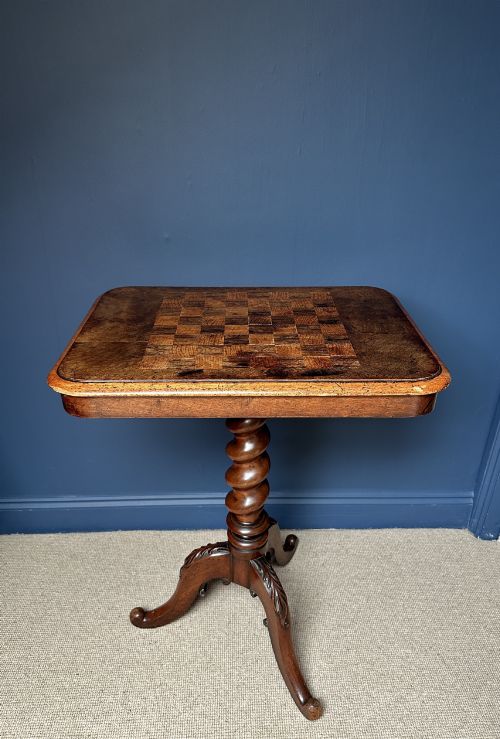
These pieces accommodated card games like whist and ombre, alongside board pastimes such as chess and checkers. Specific tables feature inlaid boards directly onto the wood or incorporate specialised compartments for counters.
The baize-lined surfaces provided a soft, quiet area that kept pieces from sliding during play.
How do I care for the baize surface?
Wool baize requires gentle brushing with a soft bristled brush to remove dust and debris. Avoid using liquid cleaners or excessive moisture, which can warp the underlying timber.
Keeping the table away from direct sunlight preserves the rich colour of both the fabric and the surrounding mahogany.
How do I identify the period of a table?
Dating relies on stylistic clues such as leg profiles, carving motifs, and construction methods. Chippendale influences suggest the eighteenth century, while pedestal bases often point toward Regency or William IV eras.
Examining secondary timbers and hinge types helps confirm the era of manufacture.