
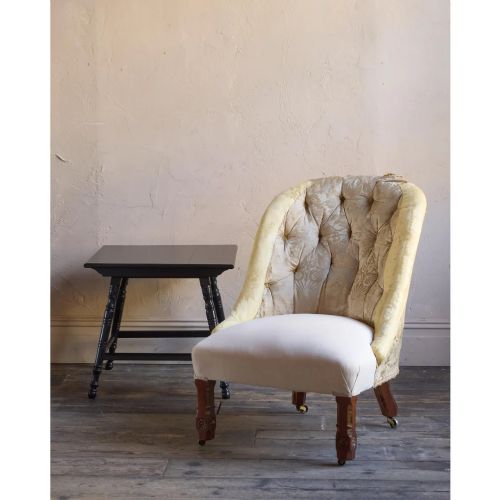
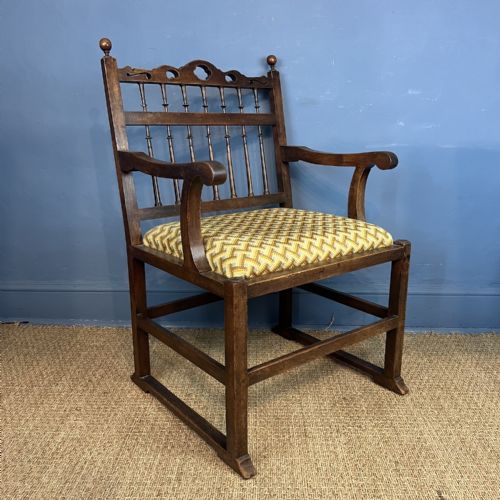
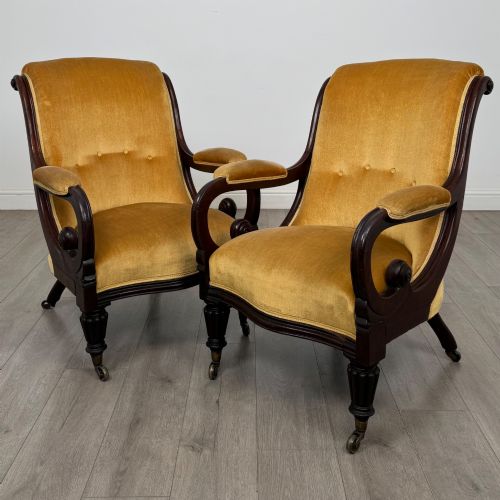
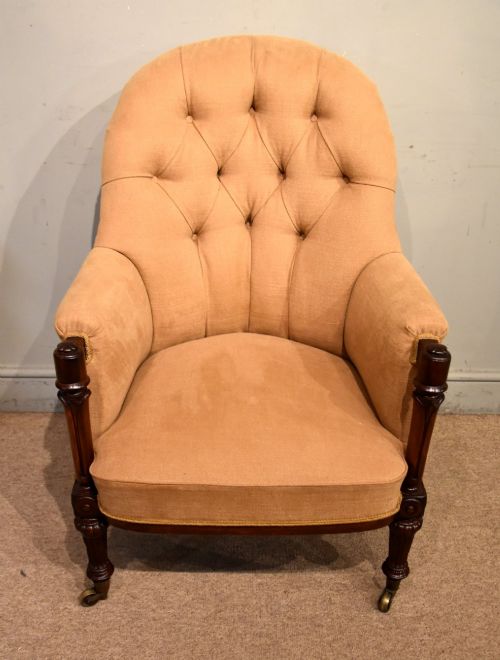
Carved Mahogany Fireside Chair
A carved mahogany fireside chair brings nineteenth-century timber framing and deep upholstery together by the hearth.
Carved Mahogany Fireside Chair
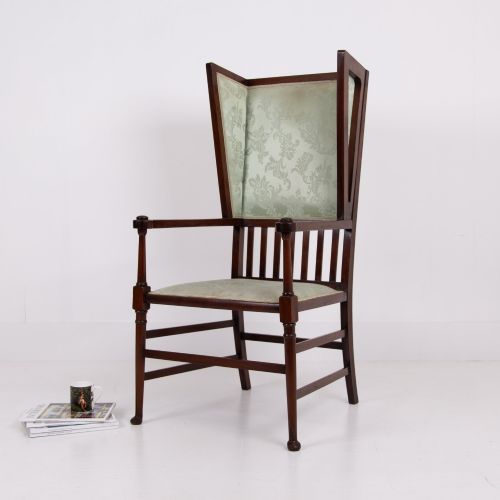
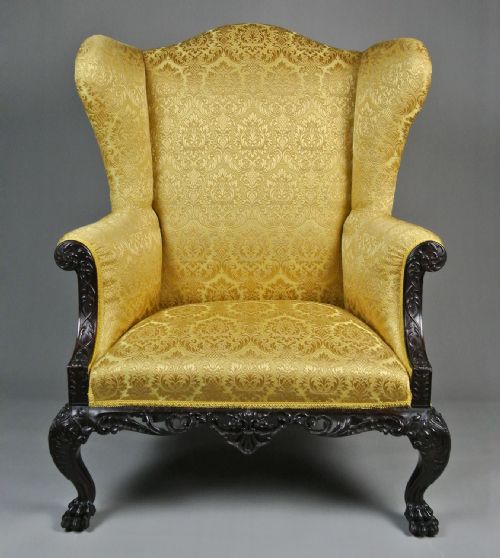
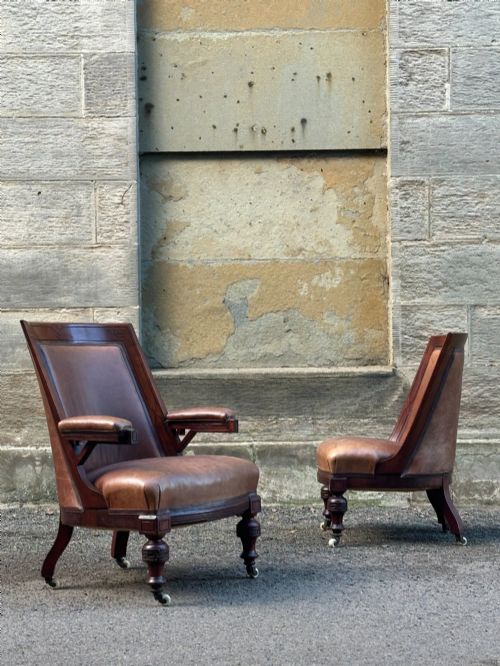
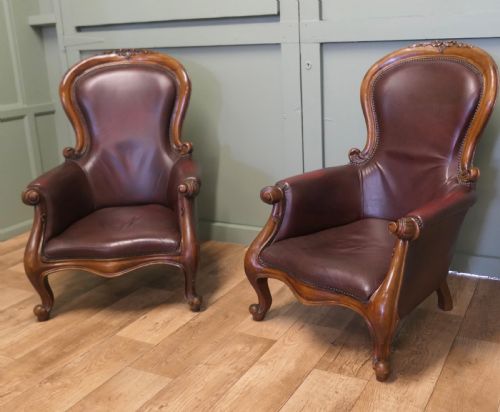
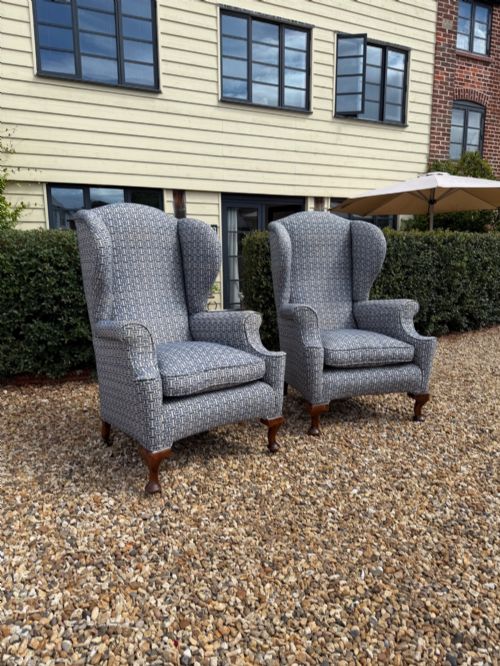
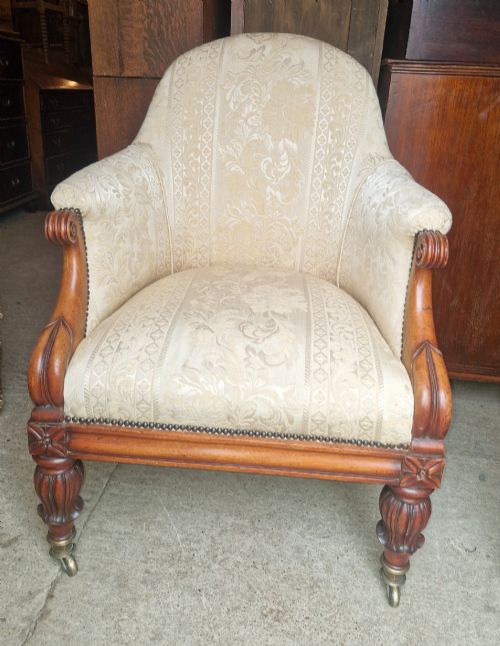
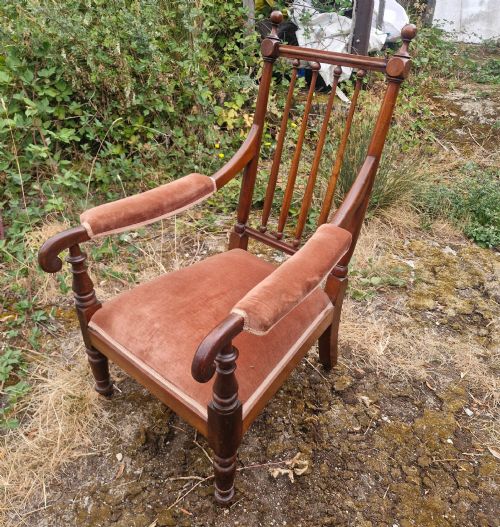
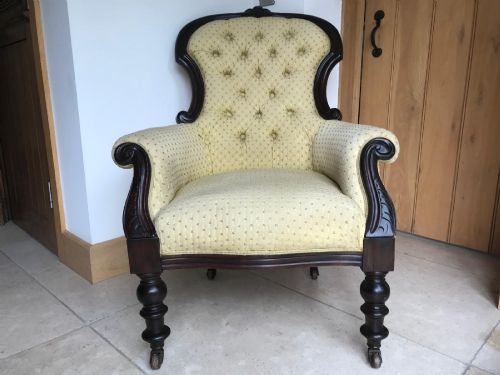
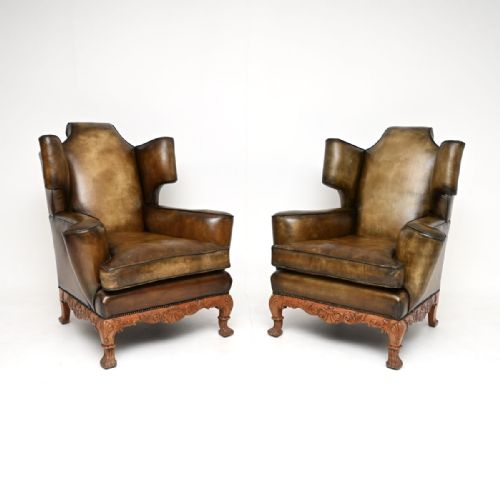
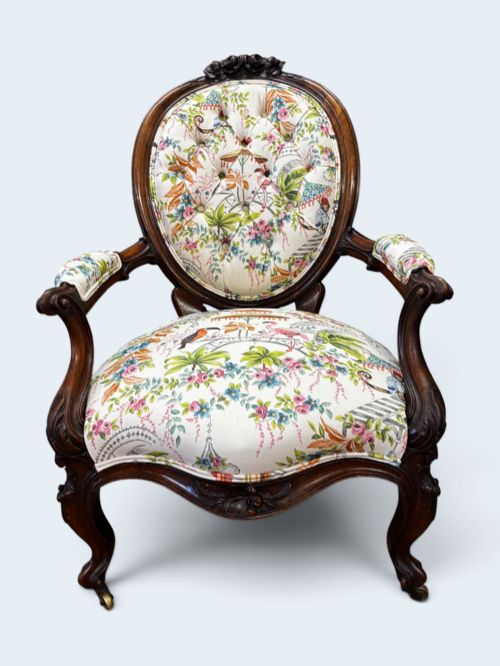
A carved mahogany fireside chair meets the eye as a substantial wooden frame paired with sprung or padded seating designed for the hearth. These pieces span Georgian, Victorian, and Edwardian periods, appearing in forms ranging from gentleman's armchairs and wingbacks to nursing and library chairs.
Buyers most frequently encounter Victorian and Edwardian interpretations on this page, often retaining mahogany showwood frames alongside leather, velvet, or calico upholstery. The selection draws on armchairs and salon types built with hardwood structures and occasional brass details.
The phrase encompasses revival styles such as Chippendale and Regency, reflecting how later cabinetmakers adapted eighteenth-century proportions for nineteenth-century rooms. Such seating balances formal carved decoration with the domestic comfort required beside an open fire.
How they were made
Upholstery techniques combined traditional stuffing with textiles including leather, velvet, fabric, and calico. Many examples incorporate brass castors or decorative tacking to secure the textile coverings to the wooden chassis.
Listings feature mahogany, brass, leather, velvet, and calico across Victorian, Georgian, and Edwardian periods.
What varies in quality
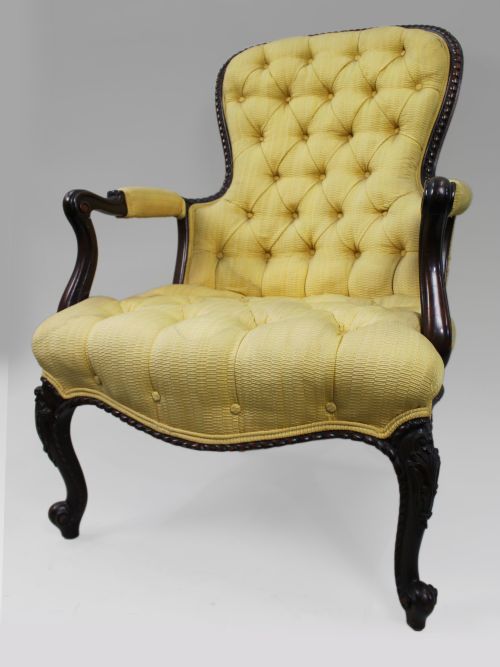
Quality reveals itself in the crispness and depth of the timber carving upon the showwood frame. Superior examples display carefully executed hand-carved details on cabriole legs, arms, and crest rails, whereas simpler pieces rely on plain turned members.
The integrity of the internal joinery and the proportion of the mahogany timber dictate the piece's long-term stability. Heavier gauge hardwoods and traditional joint construction separate refined library and gentleman's chairs from more utilitarian parlour seating.
Howard And Sons
The Carved Mahogany Fireside Chair Glossary
- Mahogany
- A dense tropical hardwood prized for its rich reddish-brown colour and stability in cabinetmaking. It served as the primary framing material for finer chairs across the Georgian and Victorian eras.
- Showwood
- The exposed polished wooden sections of a chair frame left visible around upholstered padding. This timberwork often carries the carved ornament that defines the style of the piece.
- Cabriole leg
- A furniture leg that curves outward at the knee and tapers inward toward the foot, frequently ending in a pad or claw. It appears widely on Georgian and revival armchairs.
- Calico
- A plain-woven unbleached cotton fabric used historically as an initial upholstery lining or as an interim stage before final decorative covering. Many antique frames survive in this neutral foundation state.
- Spoon back
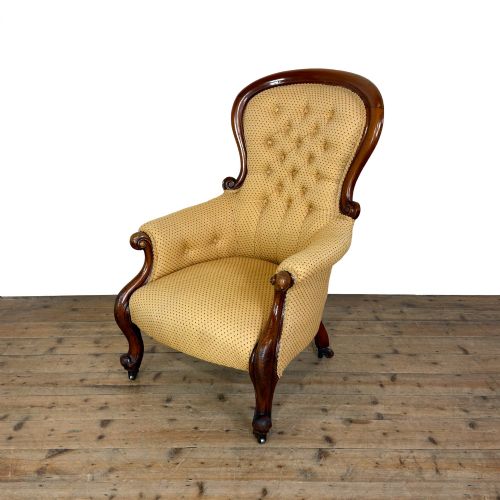
- An upholstered chair back hollowed out in a concave oval shape resembling the bowl of a spoon. This ergonomic contour became characteristic of Victorian gentleman's and ladies' seating.
Carved Mahogany Fireside Chair: Frequently Asked Questions
What is a carved mahogany fireside chair?
A carved mahogany fireside chair is a traditional upholstered seat built on a hardwood timber frame featuring decorative woodwork. These pieces were designed to offer comfort and warmth near a domestic fireplace.
They combine structural wooden arms and legs with padded seating surfaces upholstered in leather, velvet, or fabric. Historical examples range from compact Victorian ladies' chairs to large library armchairs.
How do I date a mahogany armchair?
Dating relies on observing the interplay of stylistic traits, construction methods, and materials across the Georgian, Victorian, and Edwardian periods. Cabinetmakers shifted from the carved cabriole legs of the eighteenth century to the buttoned leather and showwood frames of the nineteenth.
Examining the internal joinery and secondary woods provides further chronological clues. Revival pieces often mimic earlier Georgian or Regency aesthetics while utilising later nineteenth-century manufacturing techniques.
Were these chairs used only by the fire?
While named for their proximity to the hearth, these armchairs served versatile roles in libraries, parlours, and bedrooms. Gentleman's chairs and wingback designs provided enclosed seating to block draughts in large rooms.
Smaller nursing and salon variations functioned as movable seating for domestic tasks. Their supportive proportions made them suitable for prolonged sitting throughout the home.
How should I care for antique upholstery and wood?
Preserving these pieces involves protecting both the mahogany frame and the textile or leather covering from direct sunlight and extreme temperature fluctuations. Regular dusting keeps the carved showwood clean without risking moisture damage.
Leather surfaces benefit from appropriate conditioning treatments to prevent cracking over time. Fabric and calico upholstery require gentle vacuuming with a soft brush attachment to remove accumulated particles.