





Grey Pattern Armchair
These grey pattern armchairs span the nineteenth century and bring patterned upholstery and various wood frames straight into your interior.
Grey Pattern Armchair
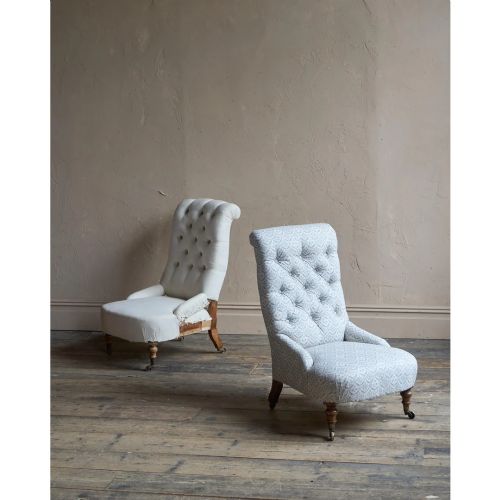
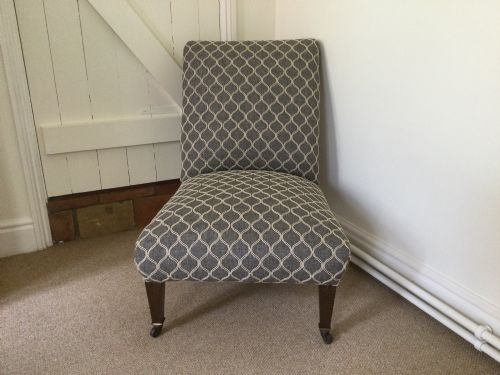
A grey pattern armchair covers a range of nineteenth-century seating, from bedroom chairs and slipper chairs to larger elbow chairs and country house armchairs. You will most frequently encounter nineteenth-century examples upholstered in ticking, velvet, calico, or kilim carpet.
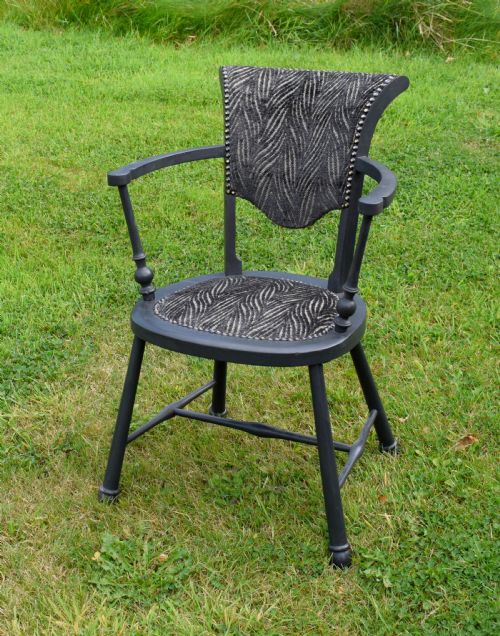
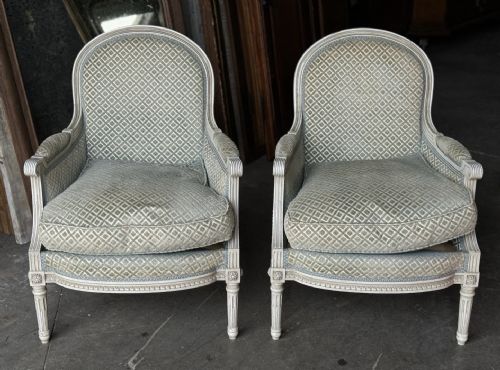
The styles recorded across these listings include Victorian, Arts and Crafts, Louis XVI, French Napoleon III, and Gustavian Neoclassical. Frames range from simple painted wood and mahogany to walnut and brass-detailed structures.
Makers such as Howard and Sons appear among the nineteenth-century pieces, offering distinct country house forms alongside French bergere and scroll back designs.
What varies in quality
The distinction between standard pieces and top-tier examples rests upon the integrity of the wooden frame and the pedigree of the maker. Pieces bearing attribution to established workshops like Howard and Sons command greater attention than anonymous utilitarian frames.
The refinement of the carving, the choice of timber such as figured walnut or solid mahogany, and the historical accuracy of the upholstery style all separate ordinary seating from exceptional examples.
Listings feature nineteenth-century seating upholstered in grey ticking, velvet, and kilim carpet across Victorian and Gustavian styles.
Howard and Sons
The Grey Pattern Armchair Glossary
- Bergere
- A French upholstered armchair with enclosed upholstered sides. The wooden frame is often exposed and polished or painted.
- Ticking
- A tightly woven cotton or linen fabric traditionally used for mattress covers and durable upholstery. It frequently appears in neutral stripes on country house chairs.
- Slipper chair
- A low-seated bedroom chair originally designed for ladies to sit upon while dressing. These feature compact proportions and lack arms.
- Kilim
- A flat-woven carpet or rug originating from the Middle East or Eastern Europe. When utilised on Victorian chairs, it provides a durable and patterned textile surface.
Grey Pattern Armchair: Frequently Asked Questions
What periods do these armchairs come from?
The available pieces originate primarily in the nineteenth century, including specific dates such as 1850, 1880, and 1900.
Styles span Victorian, Arts and Crafts, and various French and Swedish influences.
What materials are used for the frames?
Frames are constructed from woods such as mahogany, walnut, and painted wood. Brass components also appear on certain chairs.
Upholstery materials include fabric, velvet, calico, ticking, and kilim carpet.
Are these chairs suitable for daily use?
Most of these nineteenth-century chairs provide sturdy seating, though some pieces are specifically sold for recovering. Upholstery condition varies from antique ticking to modern fabric.
Heavier models like country house armchairs offer robust construction suited to regular sitting.
How do I identify a French style chair?
French armchairs from this selection often include Napoleon III scroll back designs and bergere forms with enclosed upholstered sides. They reflect neoclassical and Louis XVI influences.
Makers or origins from France bring distinct carved wooden frames and lighter proportions.