
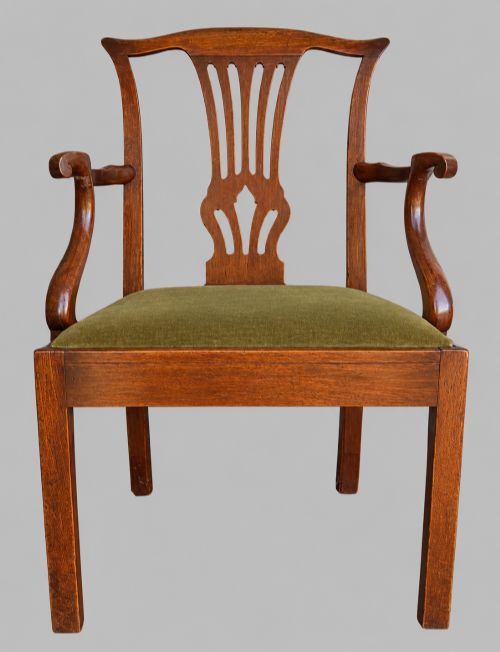
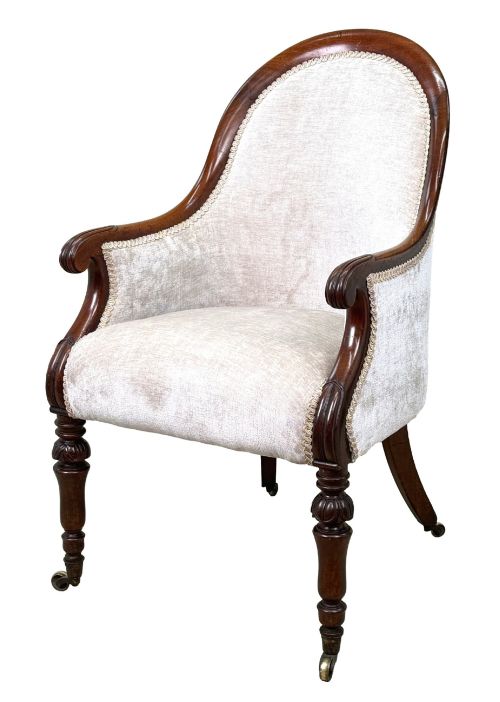
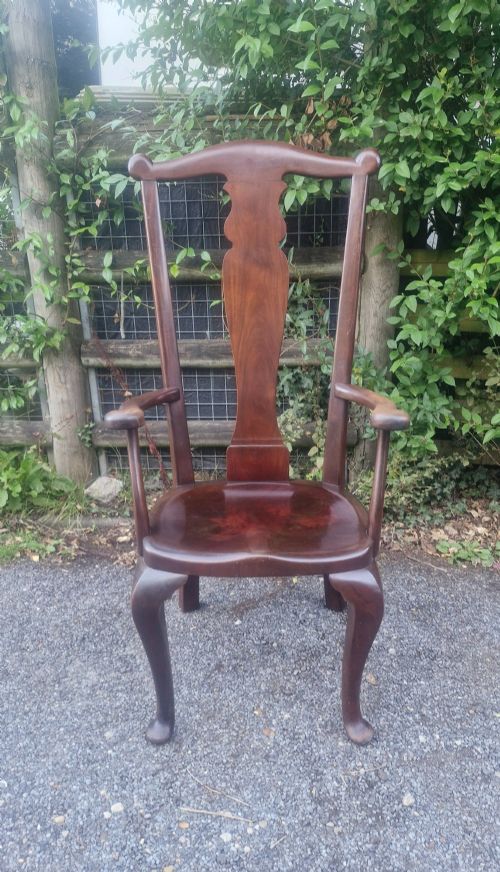
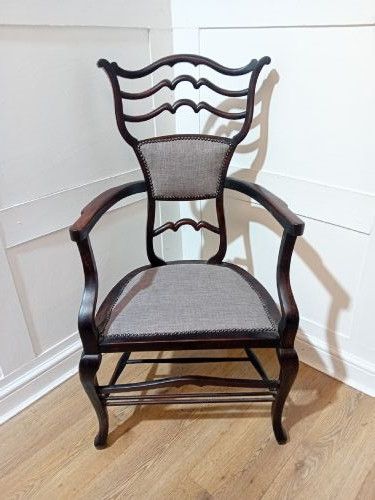

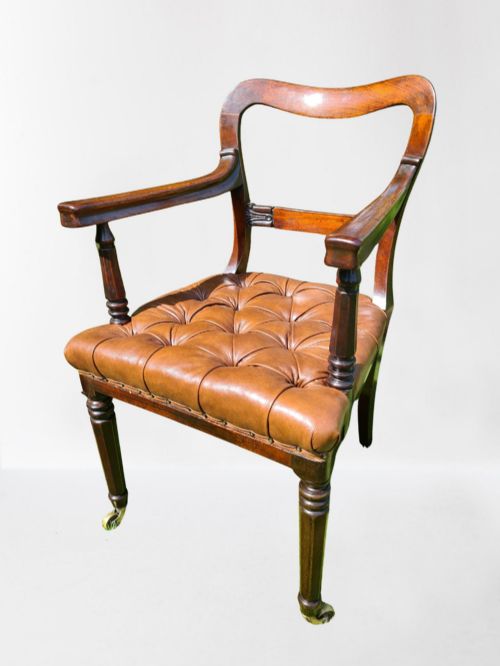
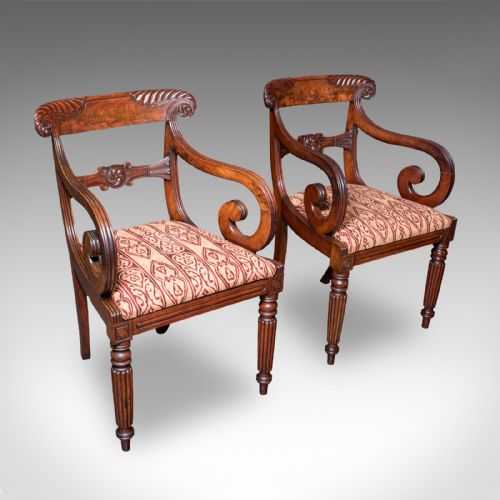
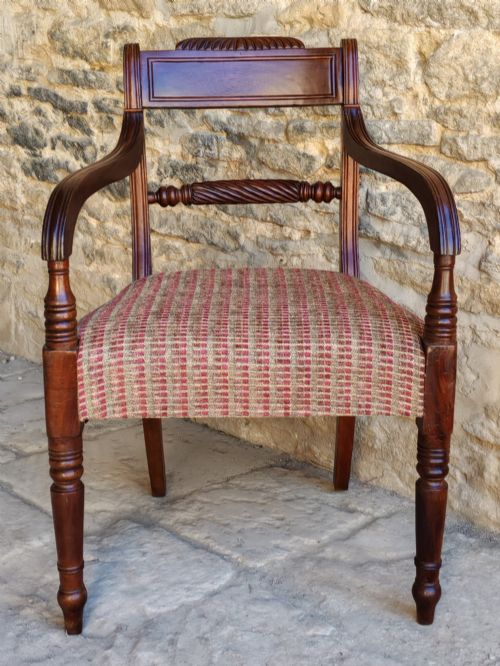
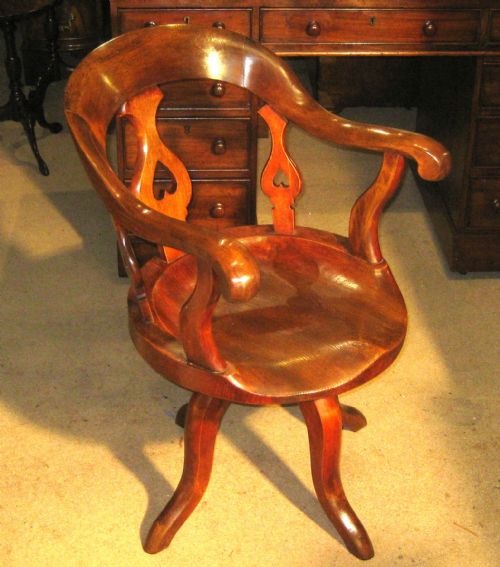
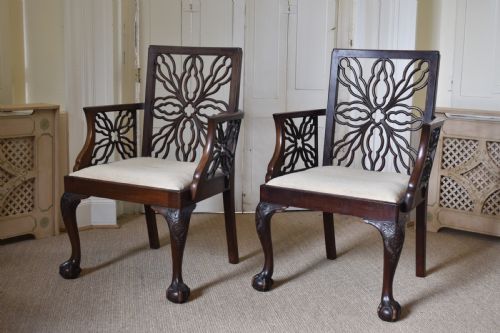
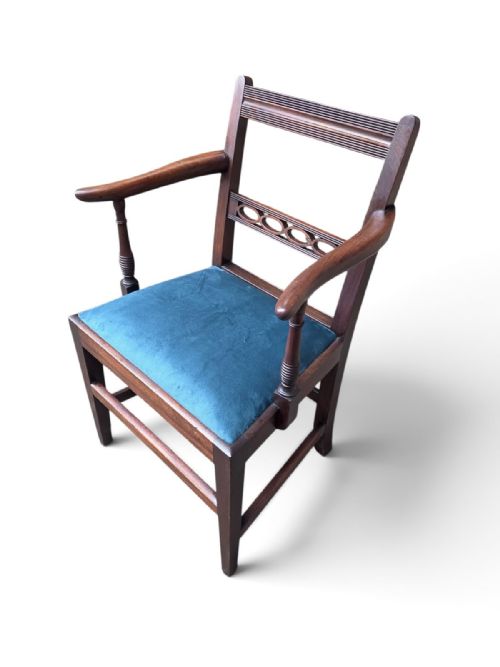
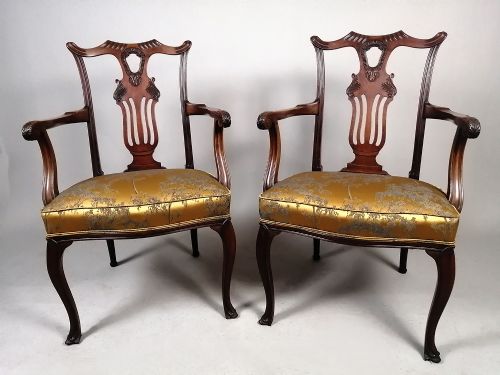
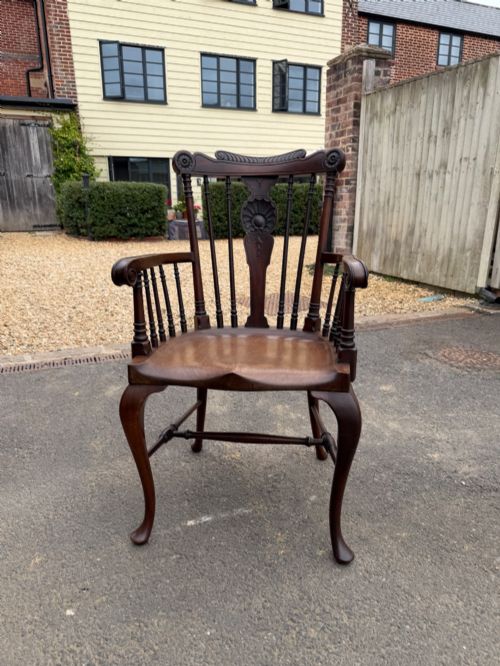
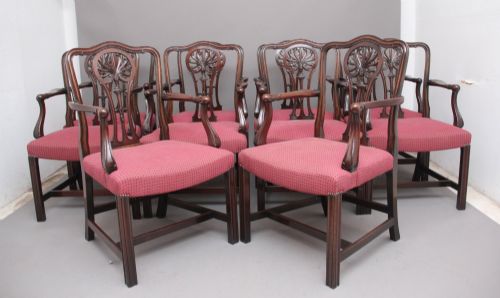
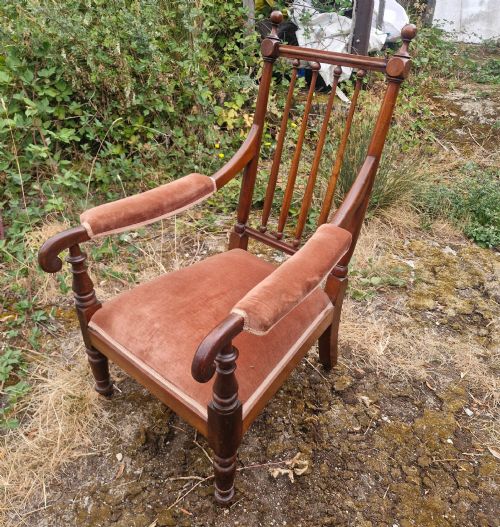
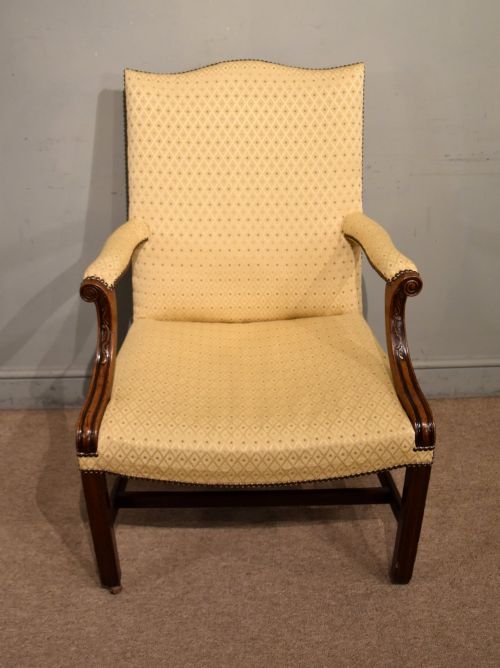
Carved Mahogany Desk Armchair
A carved mahogany desk armchair brings substantial timber and period carving to a study, offering sturdy support for daily writing.
Carved Mahogany Desk Armchair
A carved mahogany desk armchair is a seating form designed for study and library use, taking shape across the eighteenth, nineteenth, and early twentieth centuries. The pieces encountered here span formal library armchairs, tub chairs, revolving seats, and carvers originating from English, Georgian, Regency, and Victorian periods.
Makers and workshops produced these chairs in various stylistic revivals, including Chippendale, Hepplewhite, and Sheraton designs. Buyers frequently encounter nineteenth-century interpretations alongside genuine eighteenth-century examples featuring open arms and upholstered or cane seats.
The objects serve primarily as functional desk seating or library chairs, constructed with timber frames and detailed carving on the backsplats, rails, and arm supports. Regional variations encompass English workshops alongside continental pieces such as Swedish armchairs.
Materials and Construction
Makers utilised solid mahogany timber for the primary frames, applying hand-carved details to armrests, top rails, and legs. This dense wood provided the structural strength required for heavy library and desk armchairs.
Upholstery materials such as leather, fabric, velvet, and brass tacks were integrated into seats and back panels. Alternative versions incorporated cane panels within timber frames for lighter seating forms.
Listings feature mahogany timber combined with brass, cane, leather, fabric, and velvet across Georgian, Victorian, and Regency periods.
Judging Quality
Quality rests in the crispness and depth of the timber carving, distinguishing hand-shaped details from softer mouldings. Superior examples display thoughtful proportions, sound joinery in the arm joints, and well-figured mahogany grain.
The treatment of secondary materials dictates overall merit, seen in the selection of hand-dyed hide leather, tight cane work, or substantial brass hardware. Finer pieces maintain original framing integrity without excessive structural timber replacement.
Alfred Allen of Birmingham
The Carved Mahogany Desk Armchair Glossary
- Carver
- An armchair, often designed to match a set of dining or office chairs, featuring open arms.
- Gainsborough armchair
- A wide, upholstered eighteenth-century armchair with short open arms, designed for writing desks and libraries.
- Chippendale style
- A decorative design vocabulary characterised by elaborate carving, ribbon-backs, and blind fretwork, originating in the mid-eighteenth century.
- Tub armchair
- A rounded upholstered chair where the back and arms form a single continuous curved enclosure.
- Ropeback
- A chair back featuring carved horizontal rails resembling twisted rope.
Carved Mahogany Desk Armchair: Frequently Asked Questions
What is a desk armchair?
A desk armchair is a sturdy timber seat with side supports, built to accommodate long periods of writing and reading in a study or library.
These pieces combine functional ergonomics with decorative period carving, often featuring upholstered or cane seating surfaces.
How do I identify a Georgian desk chair?
Georgian desk chairs are identified by timber framing, characteristic cabriole or straight legs, and distinct stylistic motifs like Chippendale fretwork or Gainsborough proportions.
They rely on solid mahogany construction and hand-carved details that reflect eighteenth-century cabinet-making standards.
Can I use an antique armchair at a modern desk?
Antique armchairs fit well at modern desks provided the seat height aligns comfortably with standard desktop clearances.
Many buyers pair these timber and leather chairs with contemporary workspaces to add period character and robust construction.
What is a revolving desk chair?
A revolving desk chair is a nineteenth-century innovation featuring a swivel mechanism integrated into a solid mahogany frame.
This form allows mobility while retaining the carved wooden arms and upholstered seating of traditional library chairs.