
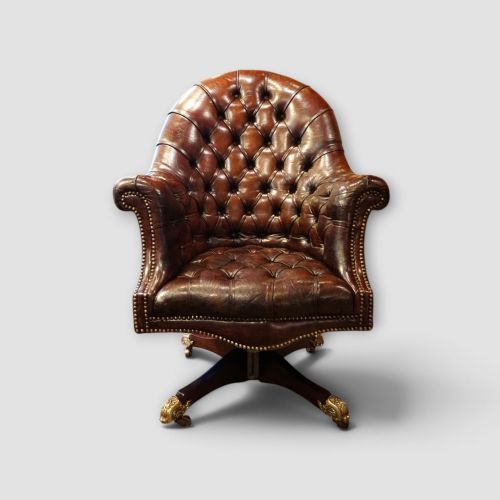


Chesterfield Desk Chair
These chesterfield desk chair pieces combine substantial wood frames with buttoned leather upholstery for practical daily seating.
Chesterfield Desk Chair
A chesterfield desk chair brings together traditional seating forms and utilitarian desk furniture from various historical periods. The listings include pieces described as armchairs, desk chairs, dining chairs, and library chairs.
Most examples originate from the nineteenth century, including Victorian, William IV, and Regency periods, alongside some twentieth-century items. These chairs often feature upholstered arms, deep buttoning, and sturdy wooden frames designed for study or office use.
Buyers encounter variations ranging from standard desk armchairs to reclining variants and matching dining sets. The form adapts across eras while retaining the characteristic leather upholstery and robust construction.
How they were made
Frames are constructed from hardwoods such as mahogany, oak, and pollard oak, providing structural support for daily use. Wood components are shaped and joined to form sturdy bases, arms, and backrests.
Upholstery relies on leather, often in brown or oxblood tones, secured with brass detailing. Deep buttoning techniques create the characteristic textured backrests seen across these examples.
Listings feature items from the Georgian, Regency, William IV, and Victorian periods, constructed using mahogany, oak, leather, and brass.
What varies in quality
The choice of primary timber influences the character of each piece, with figured woods like pollard oak sitting alongside dense mahogany and standard oak. Timber selection determines the visual depth and weight of the frame.
Upholstery execution separates standard seating from finer examples, particularly in the precision of the buttoning and the grade of the leather. The integration of mechanical elements, such as reclining hardware or writing slopes, also distinguishes more complex designs from simpler forms.
The Chesterfield Desk Chair Glossary
- Buttoned leather
- Upholstery technique where leather is pulled deep into the padding and secured with buttons to create a diamond pattern. This method provides structural tightness to the padding.
- Library chair
- Seating designed for reading rooms and studies, typically featuring supportive arms and upholstered backrests. These pieces prioritise comfort during extended periods of sitting.
- Pollard oak
- Timber derived from trees that have been pruned above browsing height, producing dense wood with distinctive grain patterns. Cabinet makers utilised this material for decorative furniture surfaces.
- Writing slope
- A slanted desk surface integrated into or accompanying a chair for reading and writing tasks. This feature appears on specific nineteenth-century library models.
- Regency
- A British design period spanning the early nineteenth century, characterised by classical influences and refined proportions. Furniture from this era often incorporates dark hardwoods.
Chesterfield Desk Chair: Frequently Asked Questions
What periods do these desk chairs come from?
The pieces span from the Georgian era through the Regency, William IV, and Victorian periods into the early twentieth century. Each era brings distinct proportions and timber choices to the design.
Victorian and nineteenth-century examples appear most frequently, alongside eighteenth-century Georgian items and later twentieth-century iterations.
Which woods are used in the frames?
Makers utilised various hardwoods including mahogany, oak, and pollard oak for the structural elements of these chairs. These timbers provide the necessary strength for daily office or library use.
Specific pieces highlight the distinct grain of pollard oak or the deep reddish-brown tones of traditional mahogany.
How do library chairs differ from standard office chairs?
Library chairs are built with upholstered arms and deep buttoned leather designed for comfort in reading spaces. They often feature generous proportions suitable for studies and drawing rooms.
Desk and captain chairs within the selection offer similar ergonomic benefits tailored specifically for writing tables and office desks.
Do any chairs include mechanical adjustments?
Certain nineteenth-century armchairs incorporate reclining mechanisms supported by steel hardware. These functional additions allowed users to adjust their seating angle.
Other variants combine the basic armchair frame with integrated writing slopes for practical study use.