


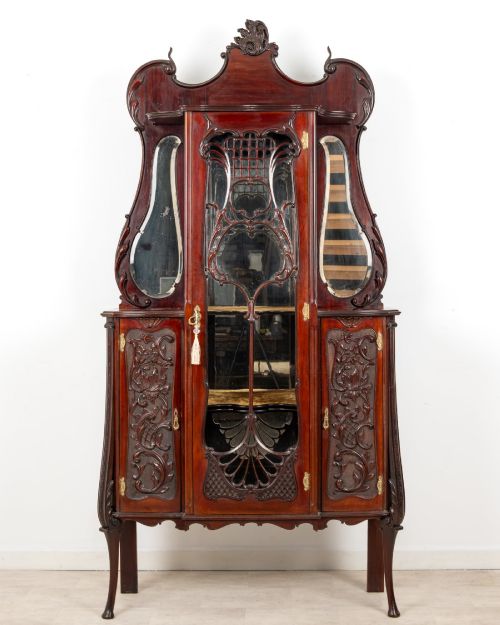


Carved Mahogany Curio
These carved mahogany curio cabinets and display tables bring elegance to any room by safely showcasing your cherished collections behind glass.
Carved Mahogany Curio
A carved mahogany curio brings together rich timber and glazed display space to hold precious objects. You are most likely to meet Edwardian and Victorian versions on this page, alongside pieces spanning from the eighteenth century to the twentieth.
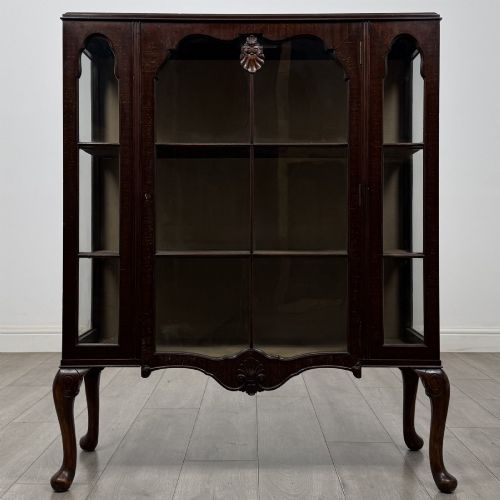
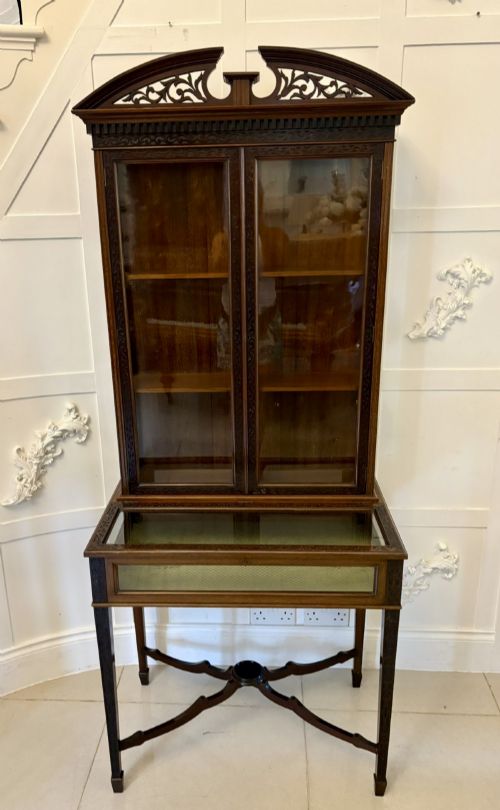
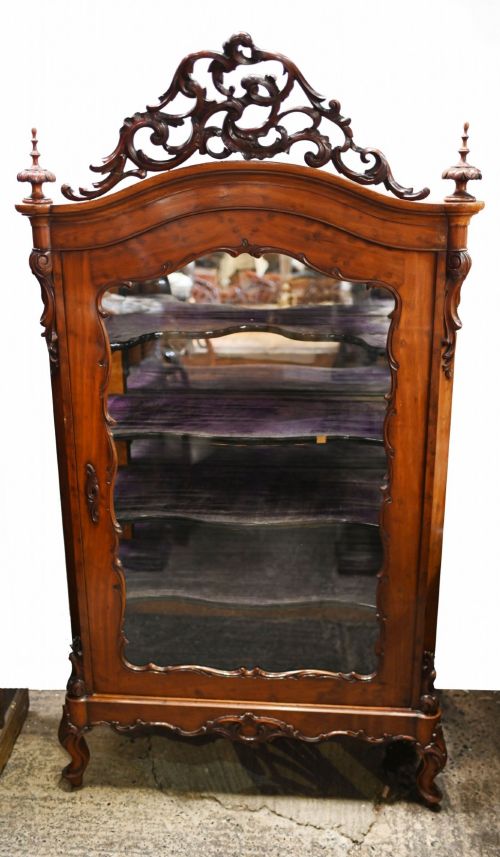
The selection ranges from tall display cabinets to low bijouterie tables with glass tops. Styles vary from simple bow fronts to elaborate French Rococo Revival, Queen Anne, and Chippendale revival forms.
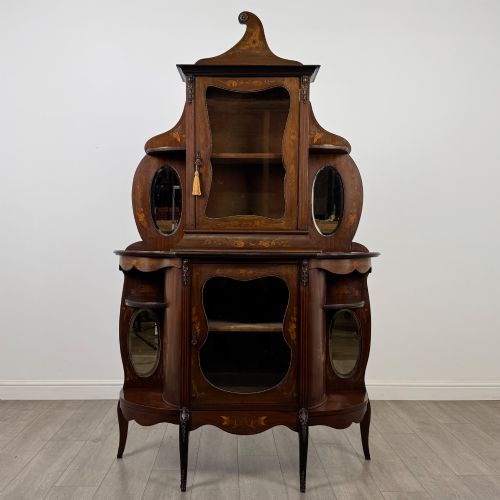
Makers utilised mahogany supplemented by satinwood inlay, mirror glass, fabric, and velvet linings. Brass hardware and delicate legs complete the typical construction seen across these display pieces.
How They Were Made
Cabinet makers utilised solid mahogany and mahogany veneers over secondary timbers to build the structural carcass of each curio. Carved details such as cabriole legs and serpentine shapes required skilled hand woodworking.
Glazing involved fitting glass panels into rebated wooden frames, sometimes incorporating curved or bow front glass. Interiors frequently featured mirror glass backs and surfaces lined in fabric or velvet to enhance the displayed items.
Carved Mahogany Curio Retail Price Guide 2026
Typical asking prices for carved mahogany curio among the pieces listed under this phrase on Sellingantiques today, from the lower quarter to the upper quarter. They describe what is for sale here now, not the wider market.
Many Edwardian display cabinets spent a century guarding delicate porcelain teacups that nobody was ever allowed to touch.
What Varies In Quality
The refinement of the timber and the crispness of the carved ornamentation set finer examples apart from simpler utilitarian pieces. Superior cabinets display thoughtful proportions, balanced inlay work in satinwood, and harmonious integration of brass hardware.
Internal execution matters just as much as exterior presence. Better examples feature high quality mirror glass, intact velvet or fabric linings, and well fitted doors that operate smoothly within their mahogany frames.
The Carved Mahogany Curio Glossary
- Bijouterie table
- A glass topped display table designed specifically for showcasing small valuable items, jewellery, or trinkets. These low tables often feature hinged glazed lids.
- Vitrine
- A glass fronted cabinet or display case used for exhibiting fine porcelain, curiosities, or decorative objects. The term derives from the French word for glass.
- Cabriole leg
- A furniture leg that bends outward in a convex curve at the top and inward in a concave curve at the bottom, terminating in a decorative foot. This form draws inspiration from animal limbs.
- Satinwood
- A durable, lustrous yellowish timber native to India and Sri Lanka, frequently utilised for contrasting inlay work on mahogany furniture. It creates bright decorative panels and banding.
- Serpentine shape
- A undulating line or furniture front featuring a convex centre flanked by concave curves. This contour adds dynamic movement and visual depth to cabinet framing.
Carved Mahogany Curio: Frequently Asked Questions
What is the difference between a curio cabinet and a vitrine?
A curio cabinet generally refers to any tall or medium sized case designed to hold small decorative objects. A vitrine specifically denotes a glass fronted or glass sided cabinet originating from French furniture traditions.
Both serve the primary purpose of protecting and displaying collections behind glass panels.
How do I care for a mahogany display cabinet?
Keep mahogany furniture away from direct sunlight and strong heat sources to prevent timber warping and fading. Dust the carved surfaces regularly with a soft, dry cloth.
Avoid silicone based polishes, opting instead for traditional beeswax applied sparingly to maintain the natural lustre of the wood.
Were these cabinets meant for the parlour or drawing room?
These display pieces were traditionally placed in formal reception rooms where guests gathered. They functioned as conversation starters by displaying family treasures, travel souvenirs, and fine porcelain.
Today, they perform the exact same role in domestic interiors, offering dust free visibility for treasured items.
How can I tell an Edwardian curio from a Victorian one?
Victorian cabinets often display heavier carved ornamentation, darker finishes, and robust proportions influenced by historic revival styles. Edwardian pieces tend to exhibit lighter construction, brighter mahogany tones, and refined Sheraton or satinwood inlay.
Both periods embraced glass display doors, but Edwardian examples frequently favour simpler, airier silhouettes.