


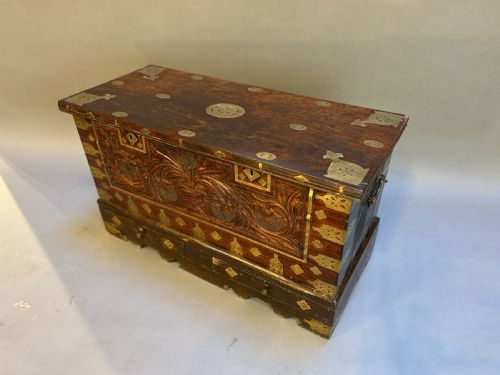
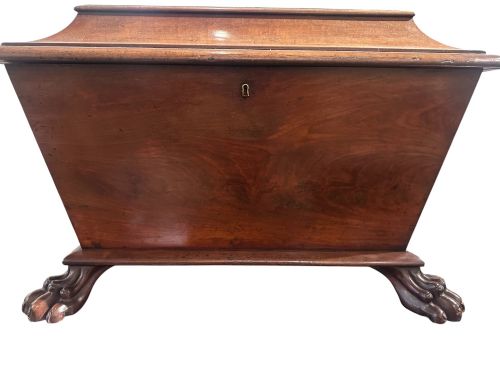


Carved Mahogany Coffer
A carved mahogany coffer brings deep timber grain and historic storage into a room, offering both robust utility and sculptural presence.
Carved Mahogany Coffer
A carved mahogany coffer encompasses solid timber chests, cellarettes, and box settles spanning from the seventeenth century through the twentieth century. These substantial storage pieces emerge in various regional interpretations, including English Georgian designs, Anglo-Indian works, and Portuguese Colonial examples.
The pieces on this page appear most frequently in nineteenth-century and Georgian forms, alongside specialised wine coolers and box settles fashioned from dense Brazilian mahogany and assorted hardwoods. Buyers encountering this selection will find robust domestic storage items and social containers built for serious utility.
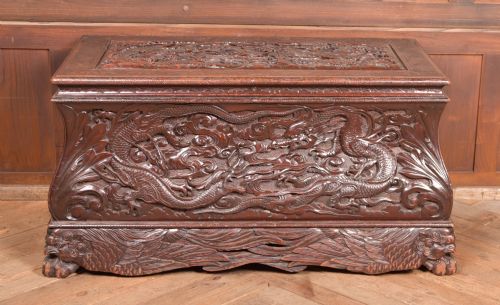
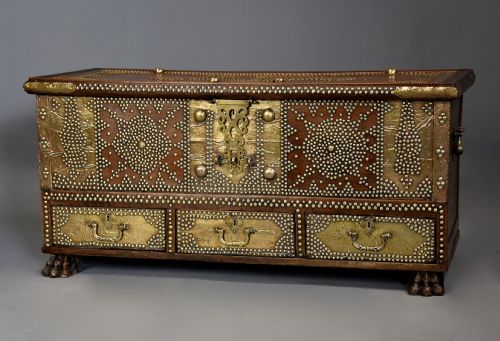
Makers and workshops across diverse geographies utilised heavy timber to construct storage chests that double as decorative furniture. Each piece reflects the specific aesthetic of its origin, ranging from austere panelled box settles to heavily embellished Zanzibar traders chests.
Construction and materials
Cabinet makers constructed these pieces primarily from solid mahogany, frequently augmented by secondary hardwoods, fruitwood inlay, and structural iron or brass elements. Metal studs, hinges, and corner brackets provided essential reinforcement for large storage vessels and transport chests.
Carpenters utilised traditional joinery techniques, panel construction, and surface carving to shape the dense timber into functional containers. Surface enrichment relied heavily on hand carving and applied brass studwork rather than delicate veneer work.
Carved Mahogany Coffer Retail Price Guide 2026
Typical asking prices for carved mahogany coffer among the pieces listed under this phrase on Sellingantiques today, from the lower quarter to the upper quarter. They describe what is for sale here now, not the wider market.
Many historic trade chests carry the secret ghost marks of old brass studs that drifted slightly during an apprentice's hurried afternoon shift.
Judging the standard
Quality rests in the weight of the timber, the crispness of the hand carving, and the integrity of the original metal fittings. Superior examples display thoughtful proportions and substantial timber thickness that withstands generations of use.
The articulation of carved details and the preservation of original brass work separate standard utility items from exceptional regional expressions. Pieces retaining their primary structural timber and uncompromised joinery command greater appreciation among collectors.
The Carved Mahogany Coffer Glossary
- Cellarette
- A lockable container designed for holding bottles of wine or spirits near the dining table. These vessels often incorporate lead lining and interior partitions to keep bottles secure during storage.
- Sarcophagus
- A monumental container shape featuring a domed lid and tapered body reminiscent of ancient stone tombs. Cabinet makers utilised this classical silhouette extensively for Regency wine coolers and grand chests.
- Box settle
- A wooden bench featuring a high back and a concealed storage compartment beneath the seat. This form combines seating utility with enclosed space for domestic textiles or personal belongings.
- Zanzibar chest
- A heavy trading chest distinguished by elaborate brass studding, strapwork, and specialised compartment layouts. These items reflect maritime trade routes and diverse cultural influences in their decorative metalwork.
- Mule chest
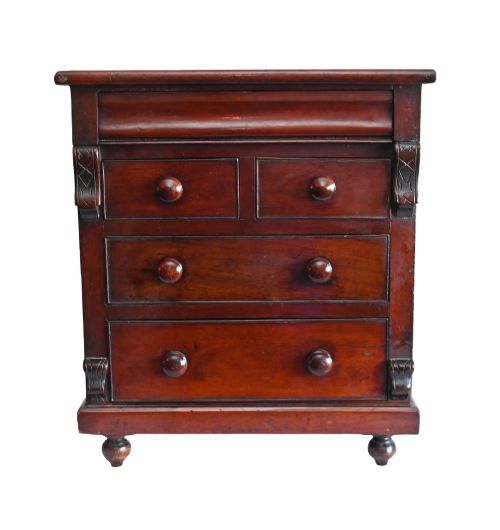
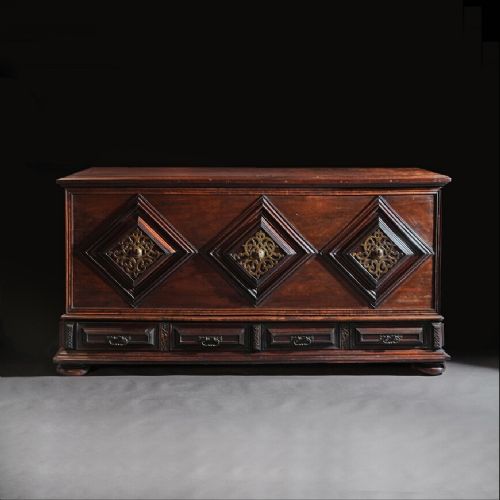
- A traditional storage chest featuring one or more drawers built into the base beneath the primary compartment. This development bridged the evolution between simple trunk storage and modern chest of drawers designs.
Carved Mahogany Coffer: Frequently Asked Questions
How were these chests used historically?
Historically, these vessels secured valuable household goods, linens, and provisions against theft, moisture, and pests. Cellarettes specifically managed wine service in formal dining rooms by keeping bottles organised near the table.
Traders utilised sturdy chests for transporting personal belongings across maritime routes. Box settles provided both fireside seating and concealed domestic storage in communal rooms.
How do I style a coffer in a modern home?
Place a coffer at the foot of a bed for spare blankets, or position it in a hallway as a striking focal point. The substantial timber top also functions effectively as a display surface for lamps or collections.
Allow sufficient clearance around the piece to showcase its carved details and metal hardware. The warm tones of aged mahogany anchor contemporary neutral spaces with historical depth.
How do I distinguish regional styles?
Examine the hardware, carving motifs, and secondary timbers to identify regional origins. Anglo-Indian and Portuguese Colonial examples often incorporate distinct brass stud configurations and native hardwood variants.
English Georgian pieces typically adhere to classical architectural proportions and disciplined carved ornamentation. Comparing the structural framing helps reveal the manufacturing workshop's geographic context.