


Carved Mahogany China Cabinet
A carved mahogany china cabinet brings polished timber and glass together to hold porcelain.
Carved Mahogany China Cabinet
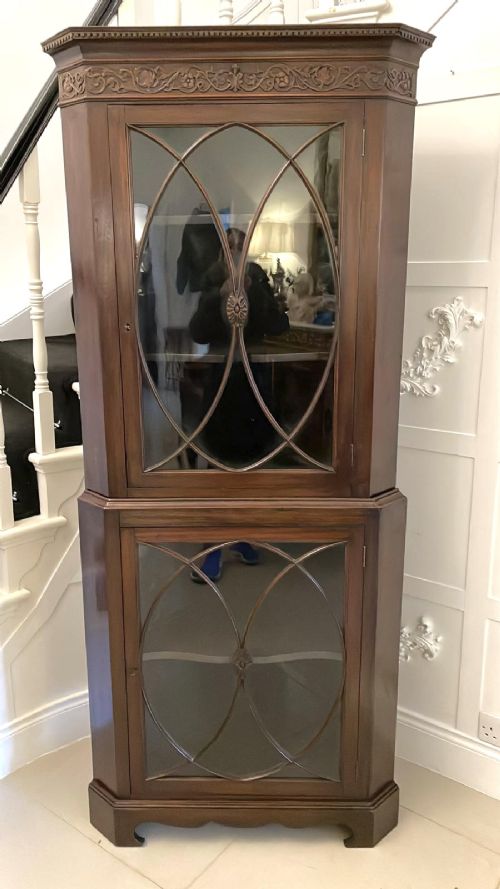
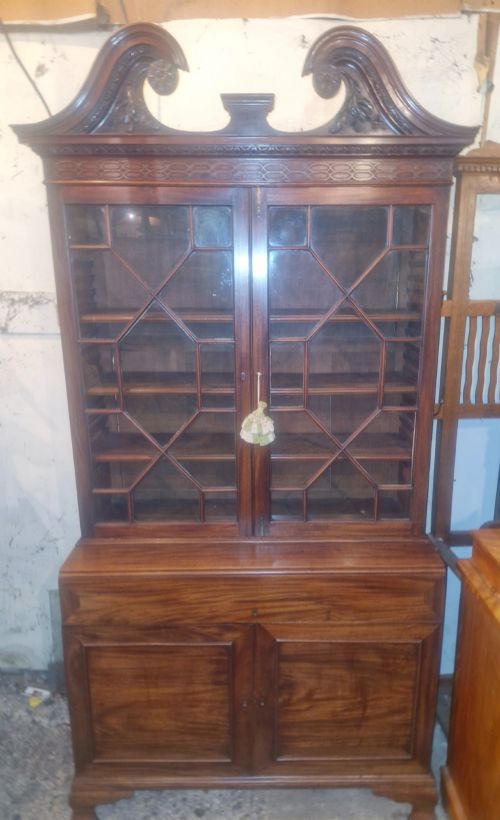
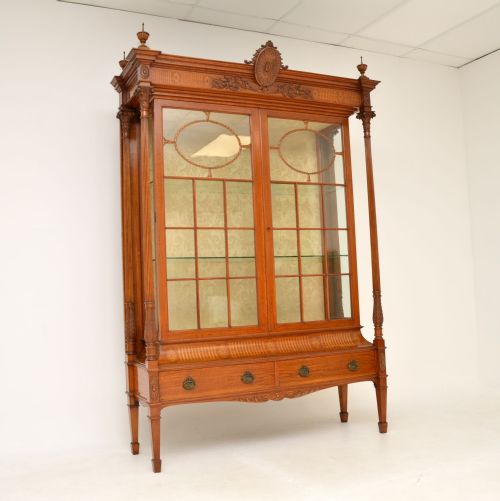
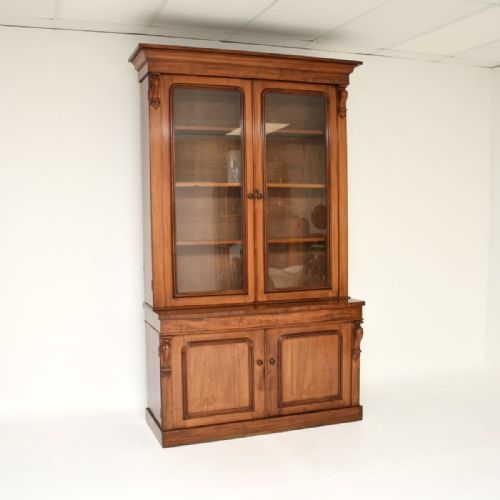
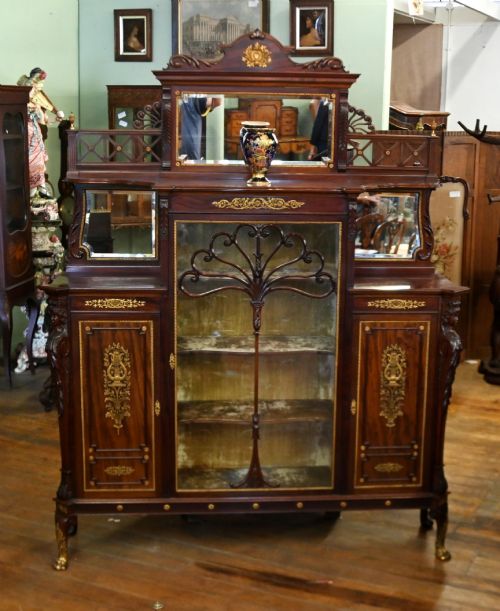
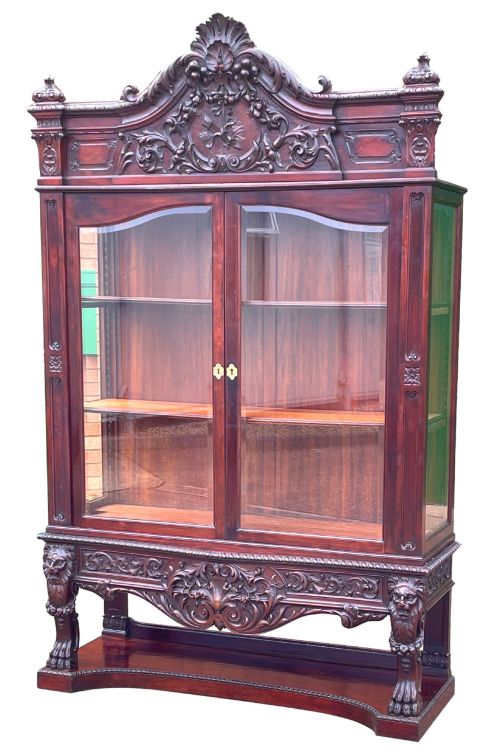
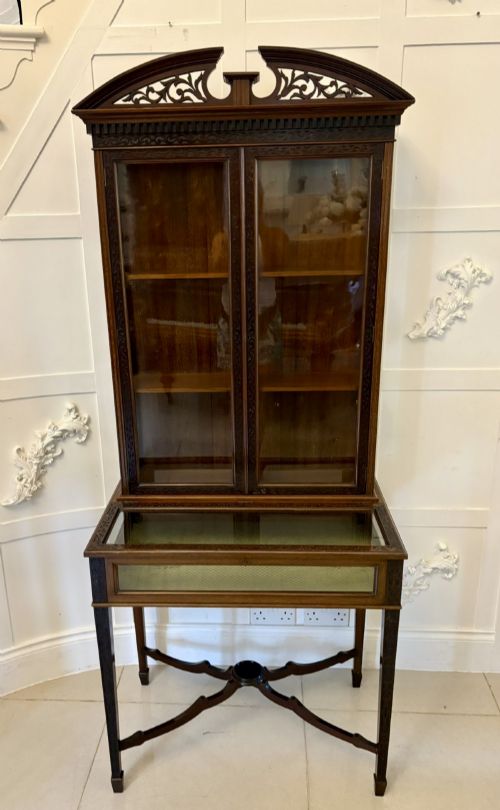
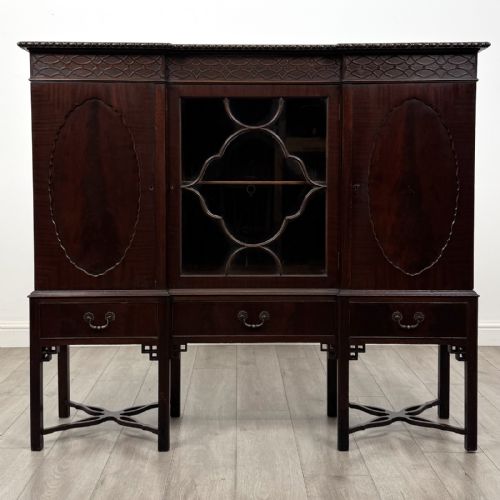
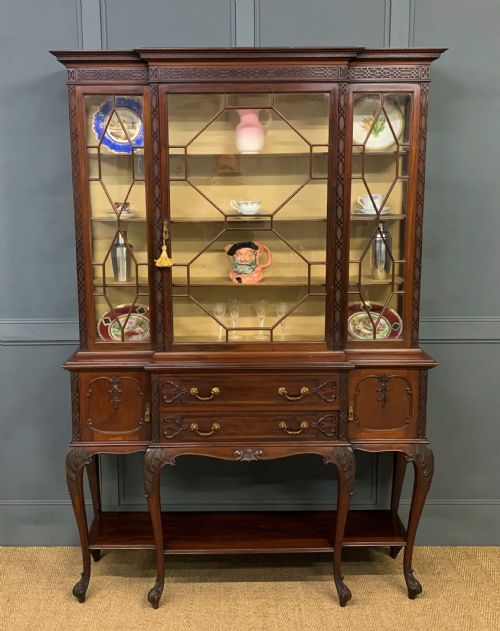
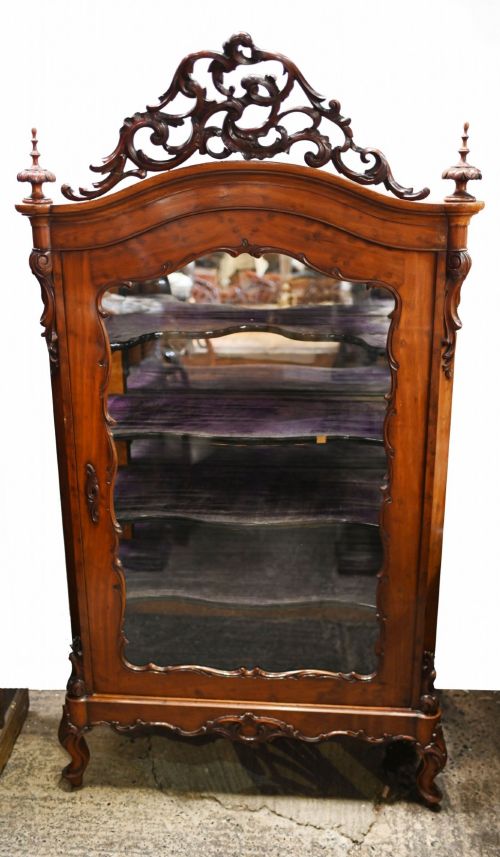
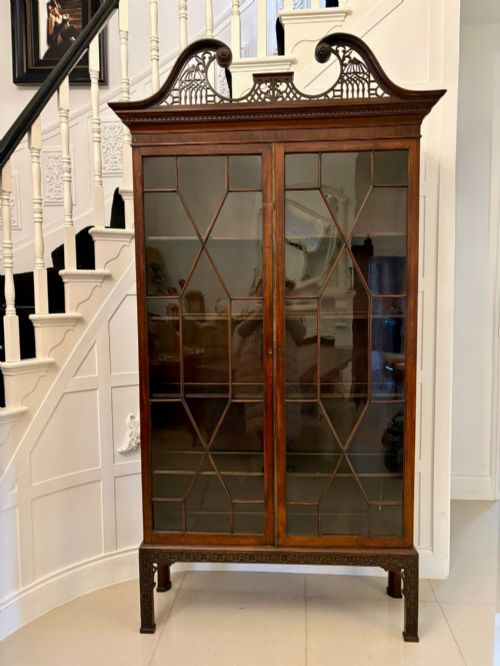
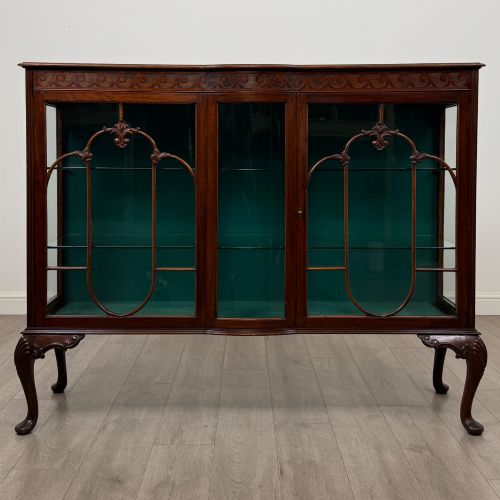
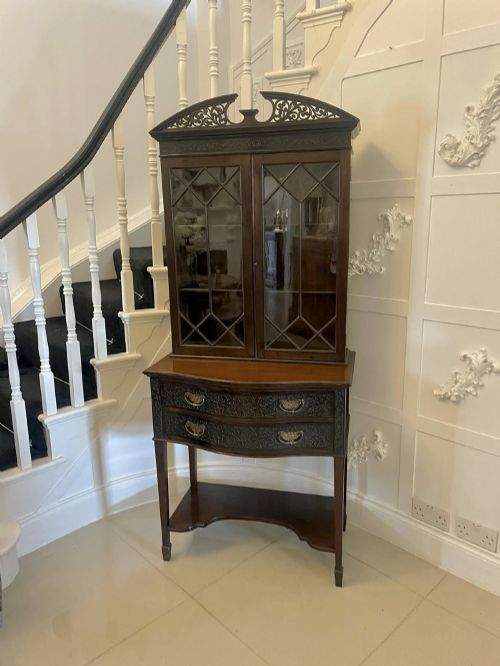
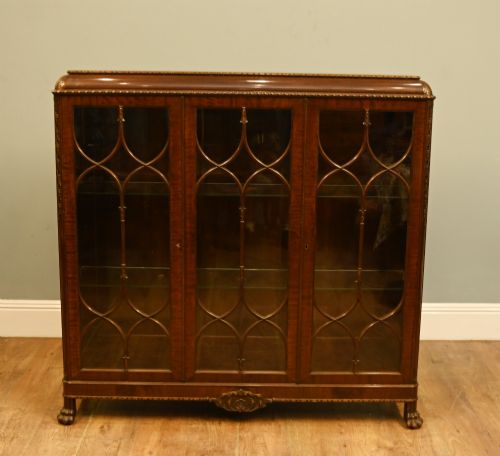
A carved mahogany china cabinet serves as a display piece for porcelain and glass, appearing in forms from tall bookcases to breakfront cabinets and corner units. These pieces emerge chiefly from Victorian and Edwardian workshops, alongside Georgian and early nineteenth-century examples.
The timber used is solid mahogany or mahogany veneers, frequently paired with glass doors and occasional satinwood or brass details. Stylistic influences span Chippendale Revival, Art Nouveau, and French Rococo Revival.
Most examples found on this page date from the nineteenth and early twentieth centuries, reflecting the period taste for displaying domestic collections behind glazed panels.
Materials and construction methods
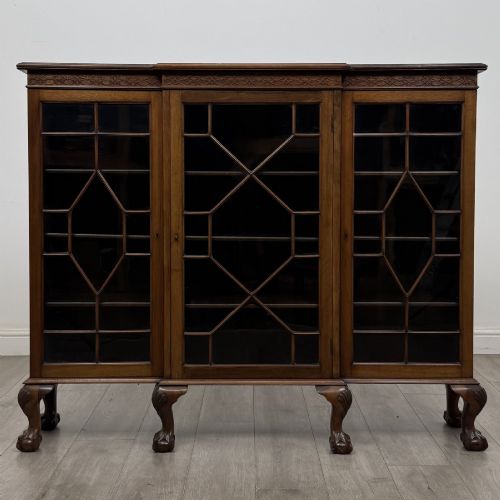
Cabinet makers utilised dense mahogany for the primary structure, applying carved detailing such as ball and claw feet or astragal mouldings to the frames. Glass panes were fitted into timber doors to protect the interior shelves.
Secondary timbers like oak appear in structural linings, while brass hardware and occasional ormolu mounts provide functional and decorative accents. Mirror glass and fabric linings frequently form the interior back panels of display sections.
Carved Mahogany China Cabinet Retail Price Guide 2026
Typical asking prices for carved mahogany china cabinet among the pieces listed under this phrase on Sellingantiques today, from the lower quarter to the upper quarter. They describe what is for sale here now, not the wider market.
Listings span multiple eras, encompassing Victorian, Edwardian, Georgian, and nineteenth-century periods alongside revival styles.
Distinguishing quality across examples
The standard of carving dictates the visual success of the piece, with crisp, hand-chiselled details standing apart from softer, mechanical mouldings. Superior examples show careful timber selection, where the grain pattern of the mahogany runs harmoniously across the doors and drawers.
Structural integrity depends on the joinery of the frame and the precise fitting of glazed doors. Cabinets featuring robust timber thickness, original brass fittings, and intact glass demonstrate superior workshop standards.
Warings·Edwards & Roberts
The Carved Mahogany China Cabinet Glossary
- Astragal glazed
- Glass doors divided into smaller panes by narrow wooden bars known as astragals. This technique creates a grid pattern typical of Georgian and revival bookcases.
- Breakfront
- A cabinet design where the central section projects forward from the flanking sides. This configuration adds architectural depth to large display furniture.
- Bijouterie
- A glass-topped display cabinet intended for small valuables and ornaments. These pieces often feature internal fabric linings.
- Chinoiserie
- Decorative style employing Chinese motifs and imagery applied to European furniture. It appears on cabinets through carved or painted ornamentation.
- Satinwood
- A pale, lustrous timber used for contrasting inlay and stringing on mahogany furniture. Cabinet makers deployed it to create decorative borders.
Carved Mahogany China Cabinet: Frequently Asked Questions
What is a china cabinet used for?
These cabinets store and display fine porcelain, glassware, and decorative objects behind protective glass doors. The internal shelves keep collections visible while shielding them from household dust.
Historically, they served as formal dining room furniture where households showcased their best tableware to guests. Today, they function similarly in living spaces for mixed decorative displays.
How do I date a mahogany cabinet?
Dating relies on examining construction methods, timber choice, and stylistic revival markers. Victorian and Edwardian pieces often display machine-planed secondary woods alongside hand-carved decorative flourishes.
Earlier nineteenth-century and Georgian examples typically show denser mahogany construction with hand-cut dovetails in the drawer joints. Revival pieces adopt eighteenth-century motifs like ball and claw feet while retaining later manufacturing traits.
Where should I place my cabinet?
Position the cabinet away from direct sunlight and damp walls to protect the mahogany timber and any internal fabric linings. Stable indoor temperatures prevent the wood from warping and the joints from loosening over time.
Allow sufficient clearance around doors and drawers for easy opening. Placing the unit against a load-bearing wall ensures stability, particularly for taller bookcases and breakfront designs.
How do I clean mahogany wood?
Dust the exterior regularly with a soft, dry cloth to prevent particle buildup on the carved surfaces. Avoid silicone-based polishes, which can leave a residue and attract more dust.
Occasional application of traditional beeswax feeds the timber and maintains the natural lustre of the mahogany. Wipe glass panels with a mild glass cleaner applied to a cloth rather than sprayed directly onto the wood.