

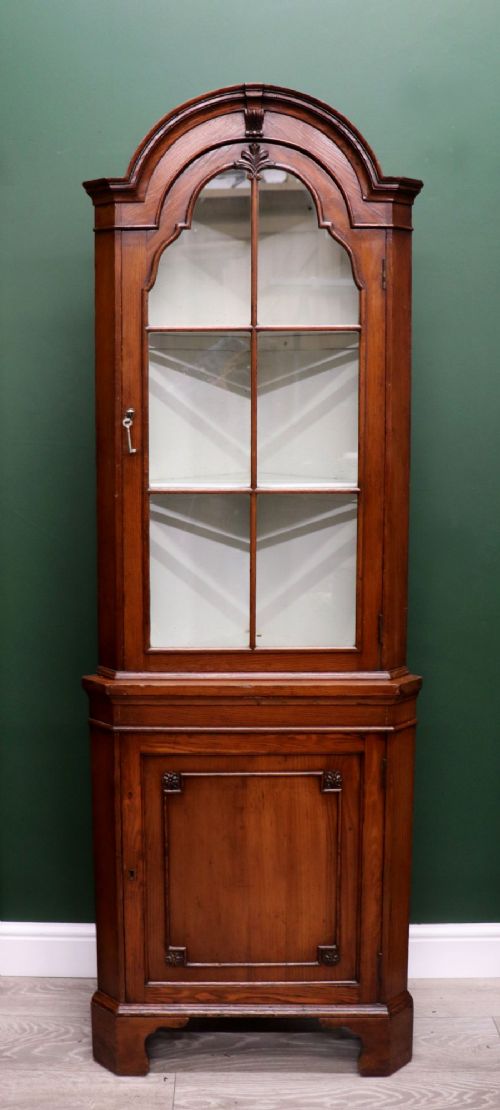


Vintage Corner Display Case
A vintage corner display case turns an empty room angle into a focal point for your cherished objects.
Vintage Corner Display Case
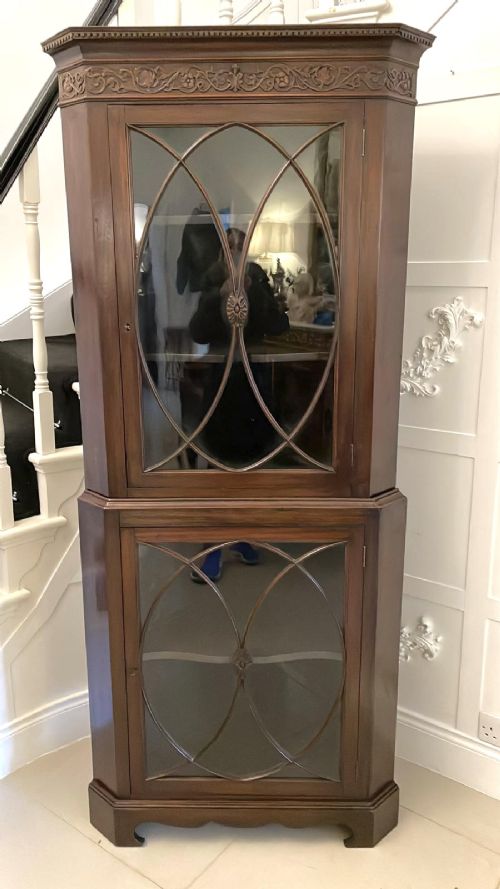
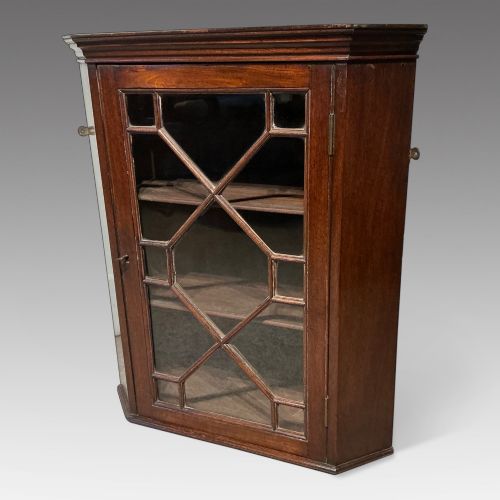
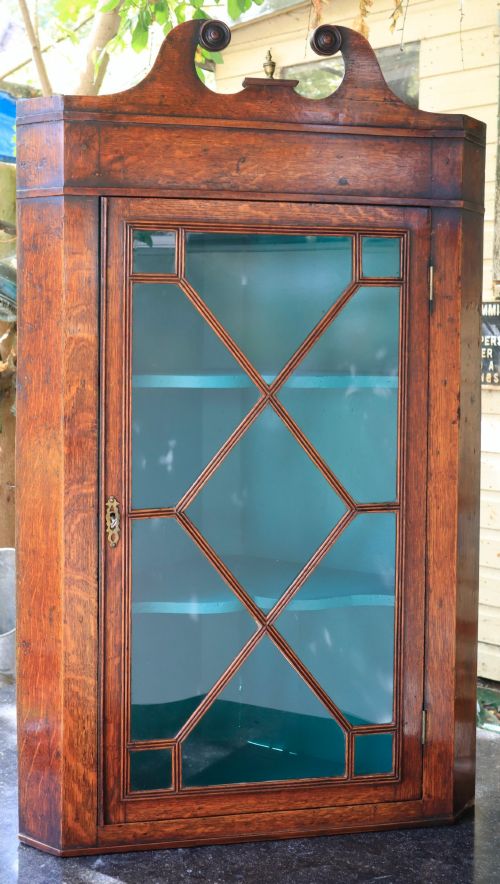
When you search for a vintage corner display case, you are looking at timber furniture designed specifically to fit the intersection of two walls, using space that usually remains empty. These pieces range from Georgian and 19th Century designs to Edwardian, Art Deco, and 1960s interpretations, often taking the form of standing floor cabinets or hanging cupboards.
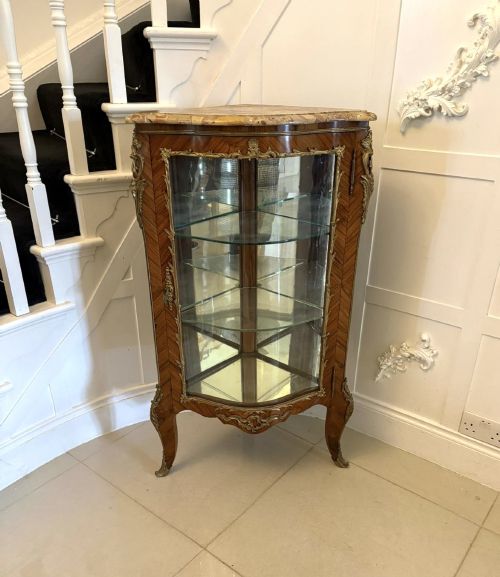
The version you are most likely to meet on this page is an Edwardian mahogany freestanding or hanging corner cabinet, frequently featuring glass doors and delicate satinwood inlay. You will also encounter taller double-height Georgian styles, oak Arts & Crafts examples, and French-influenced serpentine shapes.
These cabinets serve primarily to exhibit glassware, ceramics, or small collections behind glass panels while storing bulkier items in lower wooden cupboards. Their geometric footprint makes them practical for both compact rooms and larger period interiors.
How they were made
Cabinet makers utilised dense hardwoods such as mahogany, oak, walnut, and kingwood for the primary carcase and framing, often applying contrasting satinwood inlay or marquetry for decorative surface detail. Timber selection focused on grain stability and rich natural colour, frequently enhanced through polishing.
Glazing techniques defined the display sections, employing astragal bars to hold individual glass panes securely within door frames. Brass hardware, mirror glass backs, marble tabletops, and gilt ormolu mounts appear on select pieces to elevate the decorative finish.
Construction methods combined traditional joinery for the angled back panels with secure rebate work for shelving and door hanging. Hanging versions incorporated sturdy internal brackets to support the weight of timber and glass against plaster walls.
Vintage Corner Display Case Retail Price Guide 2026
Typical asking prices for vintage corner display case among the pieces listed under this phrase on Sellingantiques today, from the lower quarter to the upper quarter. They describe what is for sale here now, not the wider market.
Listings span periods from Georgian and Victorian times through Edwardian and Art Deco up to the 1960s, constructed predominantly in mahogany, oak, and walnut.
What varies in quality
The standard of timber preparation and marquetry execution defines the upper tier of these cabinets. Finely figured mahogany grains, precise satinwood stringing, and hand-cut astragal glazing bars distinguish ambitious workshop production from simpler utilitarian pieces.
Structural refinement in the corner joints and door alignment separates superior examples from ordinary furniture. Cabinets that retain original glass, matching brass fixtures, and well-fitted internal shelving demonstrate greater integrity through the decades.
Stylistic ambition also marks the range, moving from plain functional pine or hardwood cupboards to serpentine-fronted statement pieces with marble tops, ormolu mounts, and integrated two-part construction.
Edwards And Roberts·SAGE & CO
The Vintage Corner Display Case Glossary
- Astragal
- Timber moulding bars that divide a glass window or cabinet door into smaller panes. They create a formal geometric grid across the display front.
- Serpentine
- A curved furniture front characterised by a convex centre flanked by concave ends. This undulating shape requires advanced cabinet-making skill.
- Ormolu
- Gilt bronze mounts applied as decorative ornaments to furniture surfaces. They appear particularly on revival and French-influenced pieces.
- Marquetry
- Decorative patterns formed by fitting together thin veneers of different woods, metals, or shells. It is often seen on Edwardian and Edwardian-era inlaid cabinets.
- Bow front
- A convex curved cabinet front that projects outward in a smooth arc. This shape softens the sharp angles typical of corner furniture.
Vintage Corner Display Case: Frequently Asked Questions
How do I choose the right size?
Measure the available wall space from the internal corner outward along each adjoining wall to check the depth of the cabinet sides. Consider whether your room suits a hanging model that clears floor space or a tall standing unit.
Account for door swing clearances in tight corners, ensuring surrounding furniture does not obstruct the opening of the glass or wooden doors.
Are these cabinets suitable for small rooms?
Corner furniture is specifically designed to occupy dead space where two walls meet, making it an efficient choice for compact interiors. Tall glazed doors also reflect light and create a sense of depth.
Choose a hanging model to keep the floor clear entirely, or a narrow freestanding unit that draws the eye upward rather than outward into the room.
How can I tell different periods apart?
Georgian and 19th Century examples often rely on solid mahogany construction with robust astragal glazing and minimal applied ornament. Edwardian pieces frequently showcase lighter mahogany frames with intricate satinwood stringing and inlaid motifs.
Later 20th Century or Art Deco variations introduce unadorned walnut veneers, lighter oak tones, or simpler geometric lines that reflect the design shifts of the mid-century decades.
How should I care for the wood and glass?
Dust the timber surfaces regularly with a soft, dry cloth and apply a quality beeswax periodically to maintain the lustre of the polish. Avoid placing furniture in direct sunlight to prevent the timber from fading.
Clean the glass panels with a mild glass cleaner applied to a cloth rather than sprayed directly, protecting the surrounding wood frame and old finish from moisture damage.