
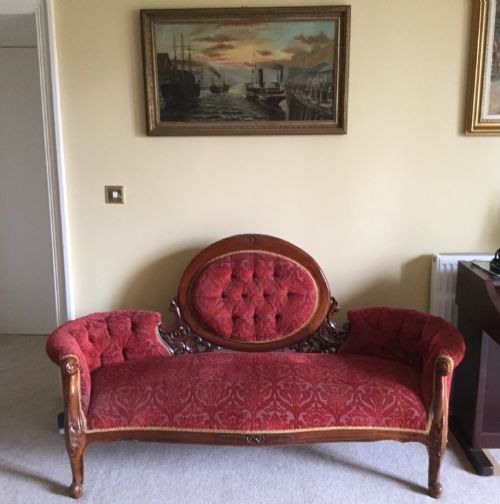
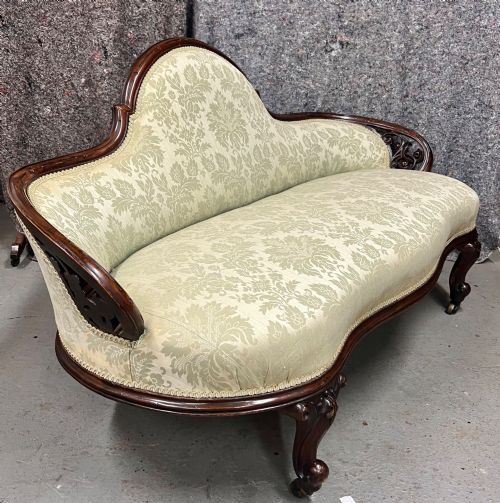
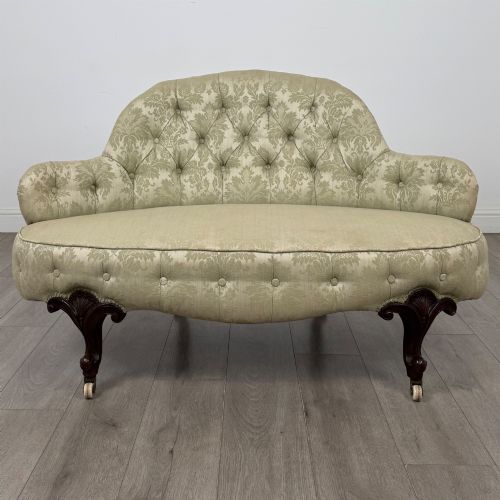
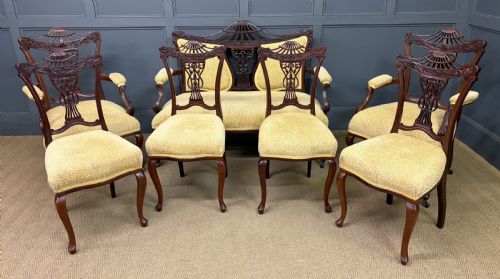


Carved Mahogany Chair Back Settee
These carved mahogany chair back settees combine structural elegance with fine timber, offering a striking seating choice for a traditional interior.
Carved Mahogany Chair Back Settee
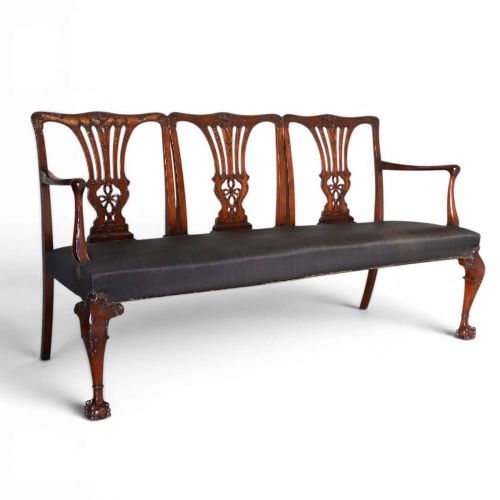
A carved mahogany chair back settee presents a joined series of individual chair backs united into a single long seating form. When searching this phrase, a buyer encounters pieces originating from the eighteenth century through to the Edwardian period and the early twentieth century.
The dominant styles include Chippendale, Hepplewhite, and Georgian revivals, alongside Victorian interpretations. These forms often feature open pierced splats or shield backs resting on sturdy mahogany frames.
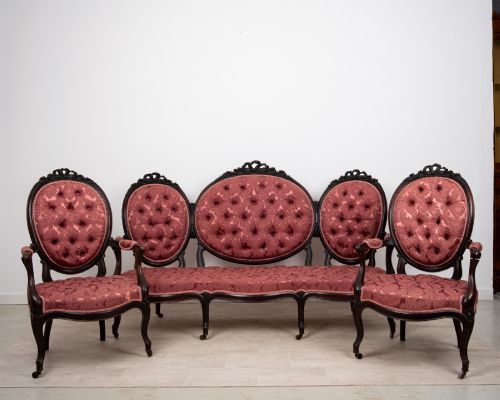
Makers and manufacturers produced these settees as double or triple seaters, sometimes as part of larger salon suites. The primary framework utilises solid timber, frequently complemented by upholstered drop-in seats or sprung bases covered in damask, brocade, or fabric.
How they were made
Makers constructed the primary frames using solid mahogany, frequently selecting rich grain patterns for visible showwood sections. Artisans shaped the crest rails and splats through careful hand carving, often incorporating satinwood inlay for decorative contrast.
Upholstery techniques varied from traditional drop-in pads to deeply sprung bases and buttoned coverings. Workshops utilised durable textiles such as damask, brocade, and fabric, secured with brass tacks where appropriate.
The listings span from the eighteenth century through the Victorian era to the Edwardian period, uniting Chippendale and Hepplewhite revivals.
What varies in quality
The crispness and depth of the timber carving dictate the visual standard of the back splats and crest rails. Sharp, well-defined pierced work demonstrates superior craftsmanship compared to softer, more rounded detailing.
The choice and execution of timber figure across the mahogany frame influence the overall presence of the settee. Pieces that integrate harmonious satinwood inlay display a higher level of decorative ambition.
The Carved Mahogany Chair Back Settee Glossary
- Chippendale style
- A furniture design influenced by Thomas Chippendale, characterised by intricate pierced splats and ornate carved details. This aesthetic frequently appears on eighteenth-century and revival settees.
- Hepplewhite style
- A design tradition associated with shield-back forms and delicate tapering legs. Settees in this manner often utilise inlaid satinwood decoration.
- Showwood
- The exposed wooden framing around a sofa or settee, particularly on Victorian and Edwardian examples. This polished mahogany border frames the upholstered sections.
- Splat
- The vertical wooden slat positioned in the centre of a chair back. On these settees, multiple splats join to form a continuous backrest.
- Brocade
- A rich, heavy woven fabric often featuring raised patterns in silk or metallic threads. Upholsterers use this material for formal seating covers.
Carved Mahogany Chair Back Settee: Frequently Asked Questions
How do I date a carved mahogany chair back settee?
Dating relies on identifying stylistic markers, timber characteristics, and construction methods. Eighteenth-century examples display different proportions and joinery compared to Victorian or Edwardian revivals.
Examining the underside, secondary woods, and wear patterns helps establish the exact period of manufacture.
Where should I place a chair back settee?
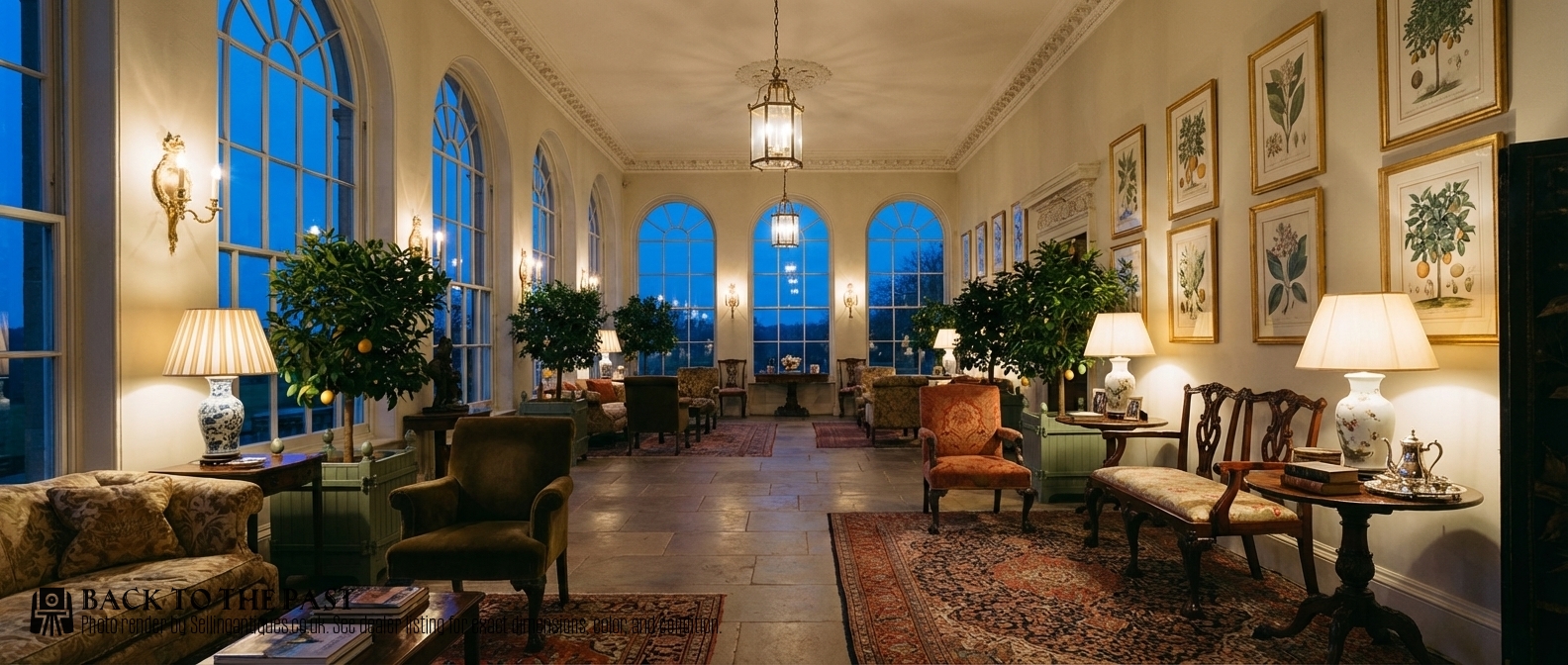
These settees suit reception rooms, large hallways, or drawing rooms where the carved back can be appreciated in open space. Their narrow profile makes them practical for placement against walls or behind freestanding tables.
Consider positioning them away from direct sunlight to protect the mahogany polish and delicate upholstery.
What is the difference between Chippendale and Hepplewhite styles?
Chippendale styles typically feature elaborate ribbon-back or interlaced splats with robust carved rails. Hepplewhite designs are recognised by graceful shield-shaped backs and lighter proportions.
Both styles utilise mahogany, but Hepplewhite pieces more frequently incorporate contrasting satinwood inlay.