
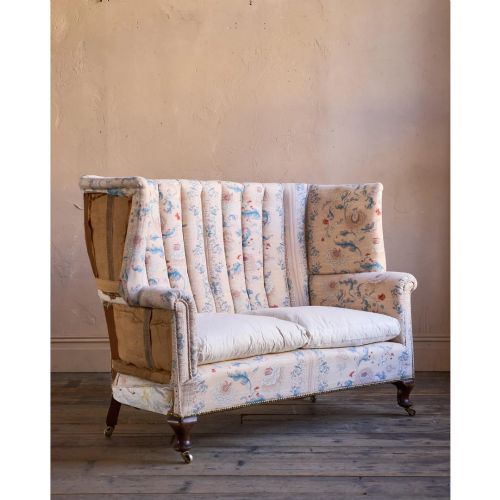


Traditional Mahogany Loveseat
A traditional mahogany loveseat offers compact seating built from rich timber, giving a room warmth and period character without taking up the footprint of a full sofa.
Traditional Mahogany Loveseat
A traditional mahogany loveseat encompasses compact two-seater settees and small sofas constructed from dark hardwood timbers. Buyers searching for a traditional mahogany loveseat find pieces designed to seat two people comfortably while occupying minimal space in a room.
The selections span multiple eras including the Georgian, Victorian, Edwardian, and later periods up to nineteen thirty. Forms range from simple two-seater sofas to carved framed settees and revival chair-back designs.
Pieces originating from English country house traditions sit alongside formal salon settees and wingback settee forms. Upholstery variations include plain fabrics, cream fabrics, and leather paired with exposed mahogany frames.
How they were made
Construction relies upon solid mahogany timber for structural frames, showing carved and turned details on arms and legs. Frames often incorporate brass castors and internal support using hessian webbing.
Upholstery techniques involve traditional fabric coverings secured with cord braid trims. Support relies on padded seating constructions enclosed within cream upholstery fabric or leather.
Some settees manage to squeeze two people into less space than a single disgruntled cat claims on a modern sectional.
What varies in quality
Quality rests in the crispness of the timber carving and the architectural proportions of the mahogany frame. Finer examples display deeper hand-carved detailing and superior timber grain across exposed show-wood sections.
The grade of upholstery materials and the execution of revival styles distinguish standard workshop output from more ambitious cabinet-maker productions. Balance in proportion between the dual seating area and the supporting frame dictates visual success.
The Traditional Mahogany Loveseat Glossary
- Mahogany
- A durable tropical hardwood prized for its deep reddish-brown colour and smooth grain. It forms the structural and visible wooden frames of these settees.
- Hessian
- A coarse woven fabric typically utilised as foundational internal support beneath upholstery stuffing. It provides hidden tension within the seat structure.
- Revival
- A design style that reinterprets historical aesthetics from earlier centuries, such as eighteenth-century George III forms produced during later decades. It brings classic decorative motifs to newer furniture.
- Wingback
- An upholstered seating form featuring protective side panels attached to the backrest. This traditional shape shields occupants from draughts.
Traditional Mahogany Loveseat: Frequently Asked Questions
How were these settees used?
These compact settees provided intimate seating in parlours, drawing rooms, and private chambers. Their smaller two-seater scale allowed placement in tighter spaces where full-sized sofas proved too large.
In country houses and urban salons alike, they served as conversational seating for two people.
How do I live with mahogany furniture?
Living with mahogany furniture involves placing pieces away from direct sunlight and heat sources to protect the wood finish. Regular dusting and occasional conditioning keep the timber surface stable.
Upholstery requires routine vacuuming and careful spot cleaning depending on whether the covering is fabric, leather, or cream upholstery material.
How are different periods identified?
Periods are identified by examining the decorative carving, structural joinery, and overall silhouette of the settee. Georgian pieces display classical proportions, while Victorian items often incorporate heavier carved and turned mahogany elements.
Edwardian and later twentieth-century pieces frequently blend historical revival styles with lighter scaled frames.