
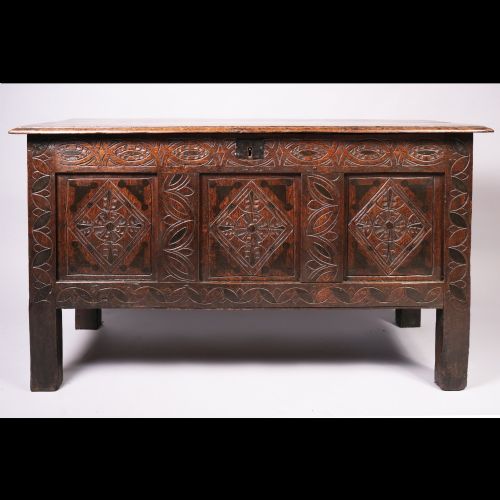


Carved Lozenge Panel Coffer
A carved lozenge panel coffer is a robust storage chest defined by geometric woodwork, offering tactile historical character for domestic interiors.
Carved Lozenge Panel Coffer
When you search for a carved lozenge panel coffer, you are looking at substantial domestic storage pieces predominantly constructed in centuries past. These sturdy chests served as secure repositories for textiles, documents and household valuables.
The examples you meet on this page span several centuries, with the seventeenth century providing the core of the selection alongside later nineteenth-century interpretations. Regional variations such as Dorset and Yorkshire pieces appear among standard English forms.
Common formats include three-panelled fronts featuring geometric lozenge carvings, sometimes accompanied by inlay work. These heavy storage chests function equally well today as blanket boxes or coffee tables in traditional and contemporary spaces.
How they were made
The primary material across the selection is oak, worked by hand using traditional carpentry methods. Cabinet makers also utilised walnut and ebonised wood for specific commissions and regional styles.
Decoration relied on chisel work to form the distinctive lozenge panels, leaf motifs and geometric patterns characteristic of the period. Iron and brass hardware such as hinges and locks completed the functional construction.
Listings span periods from the sixteenth to the nineteenth century, utilising oak, walnut, brass and iron.
What varies in quality
Quality in these chests rests upon the crispness of the hand-carved lozenge details and the integrity of the timber joints. Pieces retaining their original patination and uncompromised structural boards command greater appreciation.
The sophistication of the regional design and the depth of the relief carving distinguish finer examples from standard utilitarian boxes. Original ironwork and brass mounts further elevate the distinction of a piece.
The Carved Lozenge Panel Coffer Glossary
- Lozenge
- A diamond-shaped geometric figure frequently carved in relief upon the front panels of seventeenth-century storage chests. This motif defines the principal visual characteristic of the search phrase.
- Coffer
- A large wooden chest traditionally used for storing valuables, linens or documents. These heavy storage items formed essential furniture in early homes.
- Panelled
- Construction method where frame pieces surround thin wooden panels to accommodate timber shrinkage. This technique provides structural stability to the front and sides of the chest.
- Patina
- The surface sheen and colour developed by aged wood through decades of handling and wax polishing. This quality indicates genuine age and historical use.
- Jacobean
- The stylistic period spanning the early to mid-seventeenth century, known for robust proportions and geometric decoration. Much of the woodwork on this page aligns with this aesthetic.
Carved Lozenge Panel Coffer: Frequently Asked Questions
What is a carved lozenge panel coffer used for?
These robust chests were originally designed for keeping household valuables, documents and textiles safe and dry.
Today, they function brilliantly in modern homes as practical storage trunks or sturdy coffee tables.
How do I date an oak coffer?
Dating relies on examining the construction joints, timber preparation marks and the style of the carved decoration.
Earlier pieces show hand-riven timber and specific geometric motifs typical of the sixteenth and seventeenth centuries.
Are these chests made entirely of solid oak?
The listings show that the primary material used by makers was solid oak, alongside examples in walnut and ebonised wood.
Iron and brass fixtures were also incorporated for hinges, locks and structural reinforcement.
Where were these pieces made?
Surviving examples originate primarily from English workshops, with specific regional types recorded from counties like Dorset and Yorkshire.
Craftsmen adapted local timber availability to standard domestic storage forms.