
Carved Lounge Seating
Carved lounge seating brings together armchairs, sofas, and settees built to anchor a room with solid timber frames and deep upholstery.
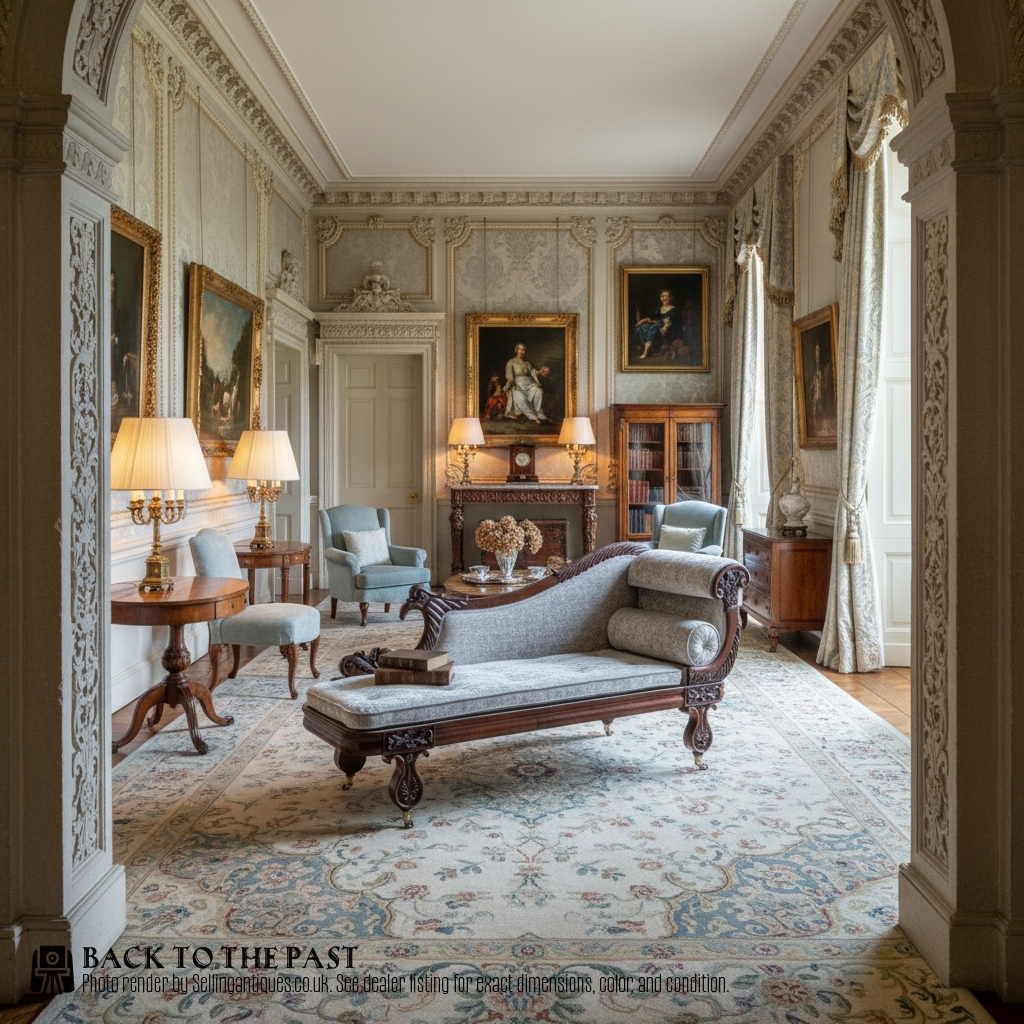
Carved Lounge Seating
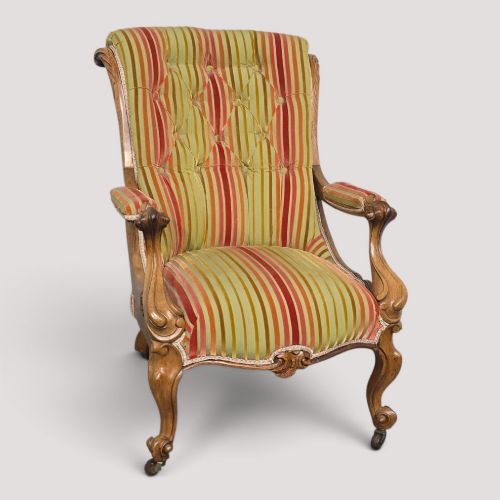
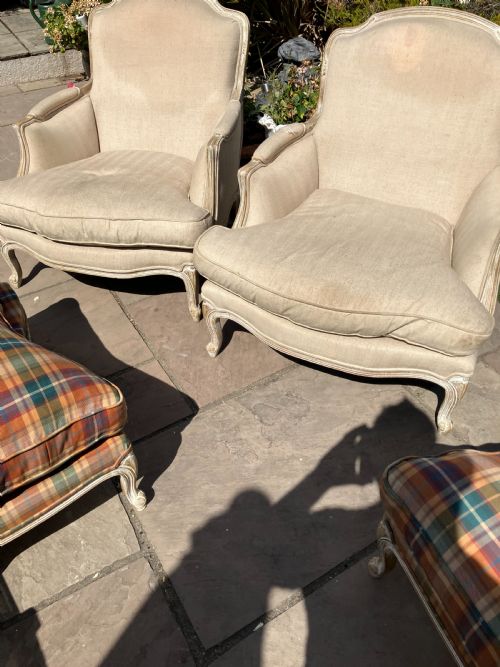
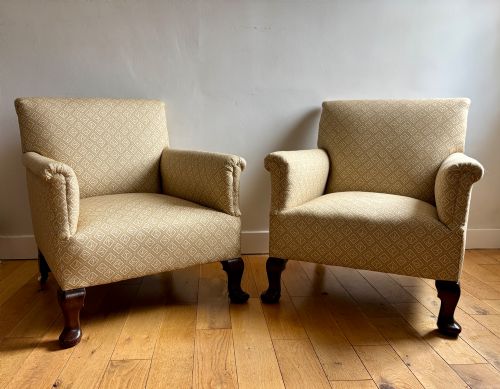
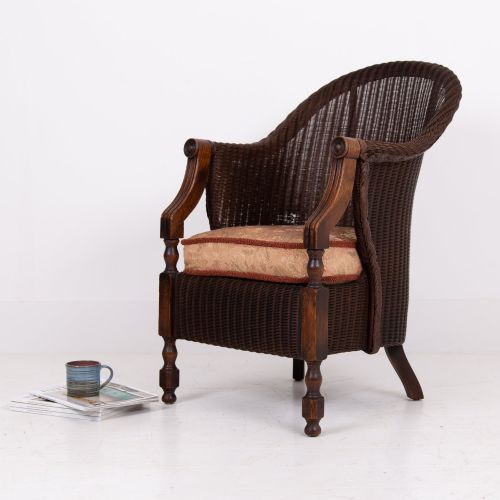
Carved lounge seating spans the nineteenth century through the interwar years, taking shape as library armchairs, button-backed sofas, chaise longues, and complete salon suites. You are most likely to meet Victorian and Edwardian armchairs alongside walnut bergere chairs and twentieth-century upholstered suites.
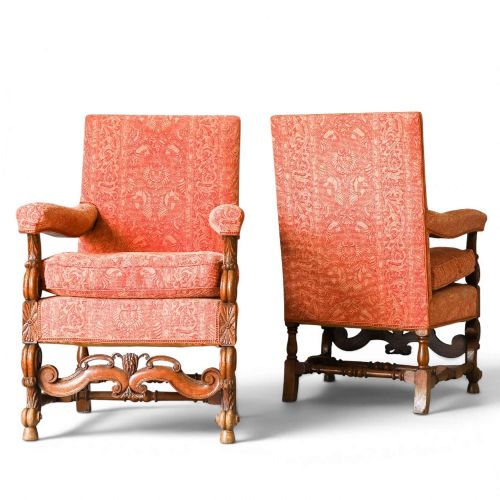
The objects serve primarily for repose in drawing rooms, libraries, and galleries, combining generous proportions with ornamental woodwork. The forms draw on Revival styles, including Louis XVI, Carolean, and French Renaissance, as well as Arts and Crafts and Art Deco designs.
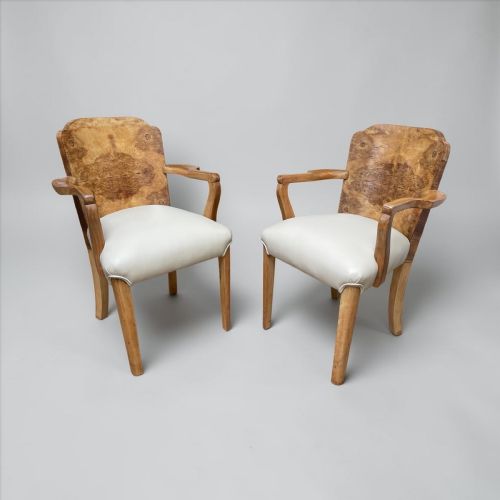
Makers and workshops range from large firms to regional cabinetmakers, producing seating framed in mahogany, walnut, satin birch, and solid ebony. Pieces frequently arrive paired or in matching three-piece suites, though single library chairs and slipper chairs appear regularly.
Materials and construction
Frames rely on hardwoods such as mahogany, walnut, oak, and rosewood, chosen for their strength in supporting carved crest rails, arms, and legs. Cabinetmakers employed solid timbers and veneers, shaping scroll arms, cabriole legs, and elaborate relief carvings directly into the wood.
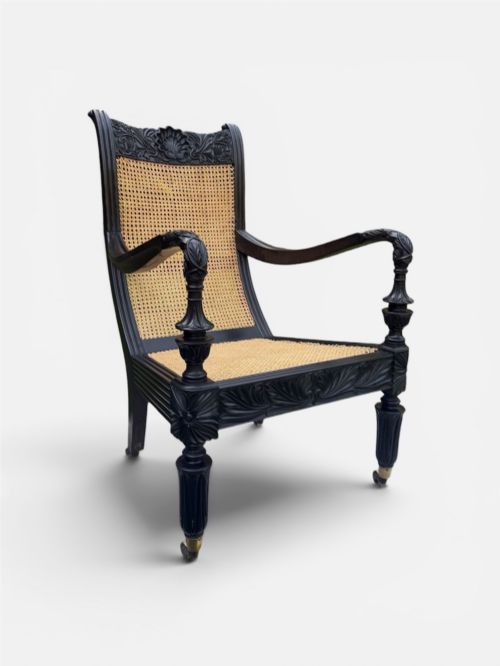
Listings feature frames in solid ebony, satin birch, and rosewood alongside standard mahogany and walnut.
Defining quality
The standard of carving dictates much of the distinction between pieces, separating crisp, deep relief work on solid hardwood frames from softer or more mechanical detailing. Crispness in the acanthus leaves, scrollwork, and fluting indicates the hand of a skilled carver rather than mass production.
The integrity of the underlying frame and the quality of the upholstery materials determine longevity and comfort. Original leather, silk velvet, or intact split cane panels sitting within tightly joined walnut or mahogany structures represent the higher end of the range.
Whytock and Reid·Gillows·Howard and Sons
The Carved Lounge Seating Glossary
- Bergere
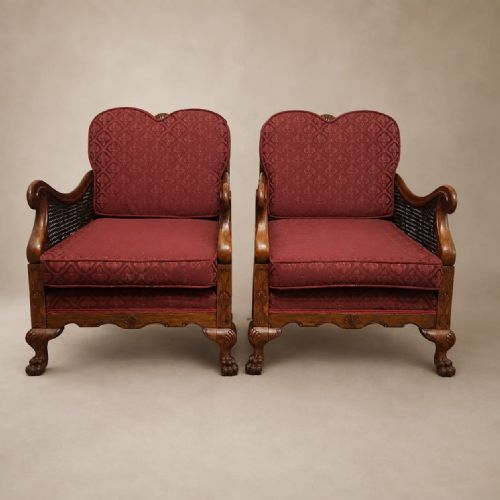
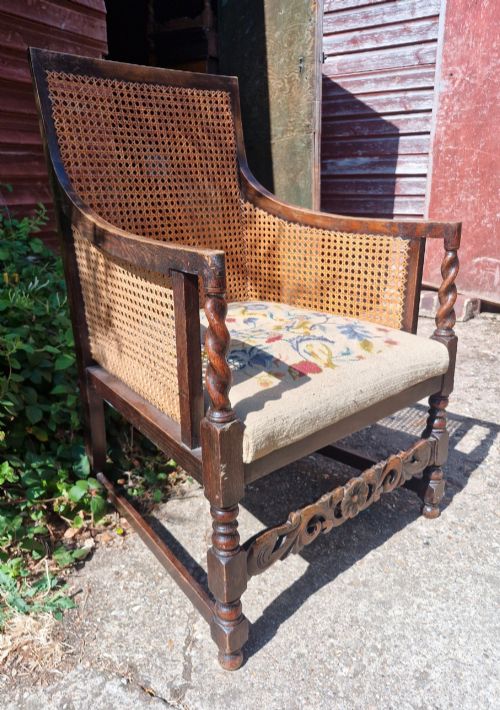
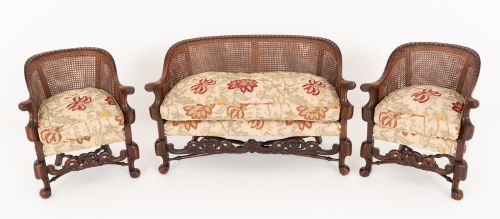
- An enclosed upholstered armchair with wooden framing, often featuring woven cane panels on the back and sides. The style originates from eighteenth-century France but reappears frequently in later revival pieces.
- Settee
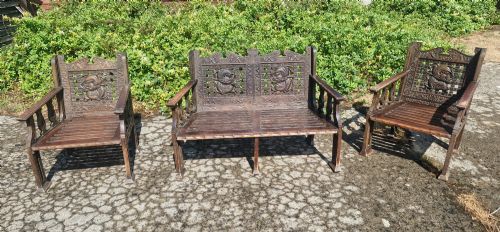
- A medium-length wooden or upholstered seat with a back and arms, designed to accommodate more than one person. These pieces frequently match larger salon or drawing room suites.
- Chaise longue
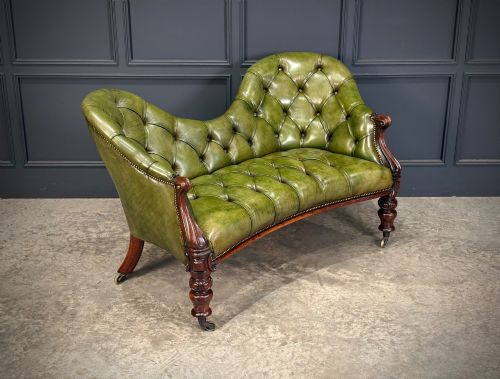
- An elongated chair suited for reclining, combining the backrest of a sofa with the seat length of an armchair. Victorian examples often display carved walnut frames and button-tufted upholstery.
- Wing armchair
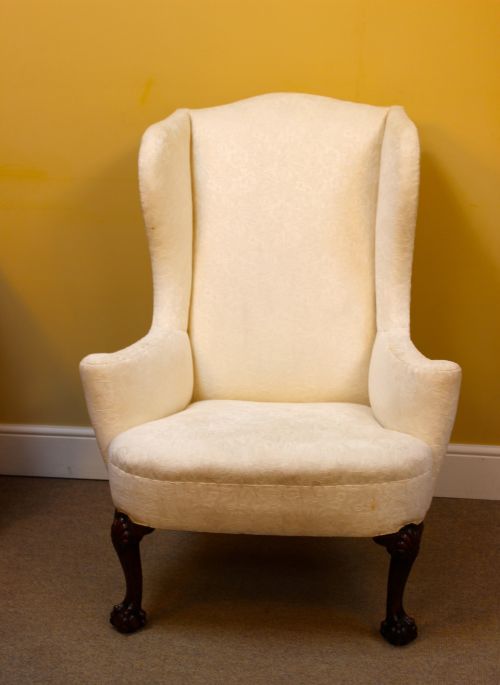
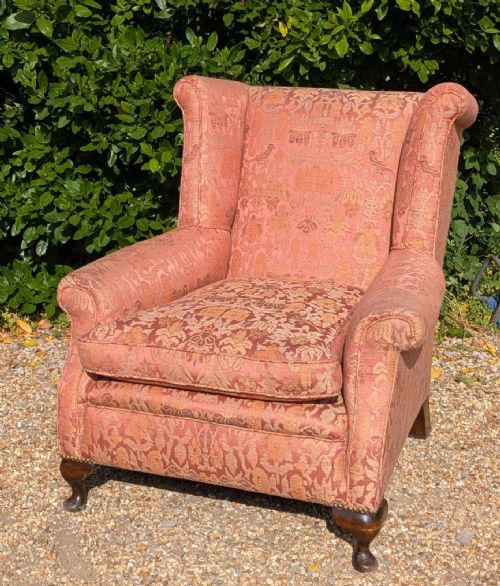
- A high-backed seat featuring projecting side pieces designed to shield the sitter from draughts. They appear in mahogany and walnut across the nineteenth and early twentieth centuries.
- Satin birch
- A pale, figured timber favoured for cabinetwork and chair frames around the turn of the twentieth century. It offers a smooth, lustrous grain that highlights clean lines.
Carved Lounge Seating: Frequently Asked Questions
How do I identify a Victorian armchair?
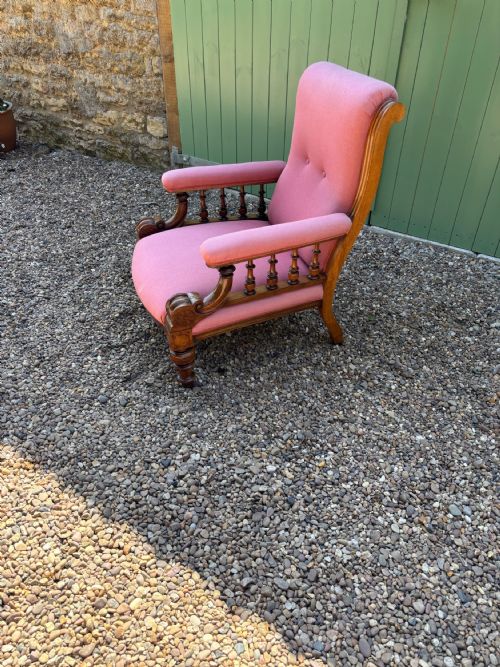
Victorian armchairs usually show dense mahogany or walnut framing, often featuring deep button-tufted leather or heavy fabric upholstery. Look for spoon-backs, scrolled armrests, and turned or fluted legs.
The scale tends to be generous, built for formal parlours and libraries, with construction methods that favour solid timbers over lighter veneers.
What is a bergere suite?
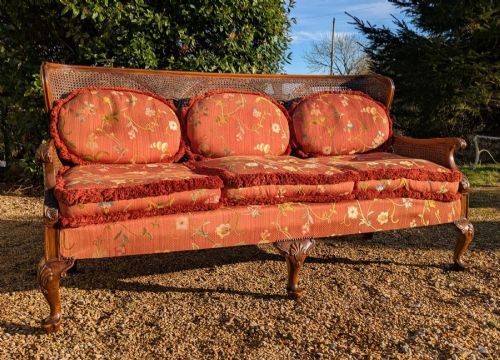
A bergere suite consists of matching seating where the chairs and sofas incorporate woven cane panels into their wooden frames. These suites typically date from the Edwardian period or the 1920s.
They bring a lighter visual weight to a room compared to fully upholstered pieces, while maintaining substantial wooden frames.
How should I care for antique leather upholstery?
Antique leather requires gentle cleaning and regular conditioning to prevent the hide from drying and cracking. Avoid direct sunlight and excessive heat sources which accelerate wear on nineteenth-century skins.
Professional restoration should be considered for button-backed pieces to preserve the original tension and stuffing.
Can I mix different periods of lounge seating?
Mixing periods such as placing an Art Deco occasional chair alongside a Regency library armchair works well if the wood tones or upholstery fabrics share a common palette. The variety in carving styles creates depth in a room.
Pay attention to seat heights and proportions to ensure comfortable seating arrangements.