
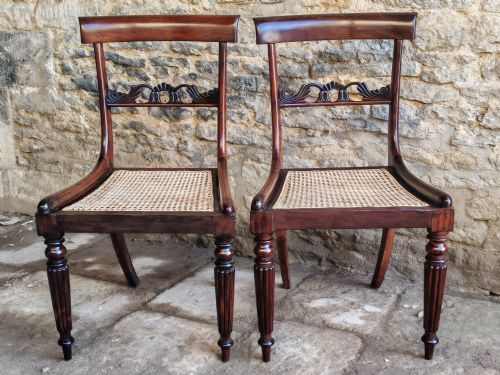
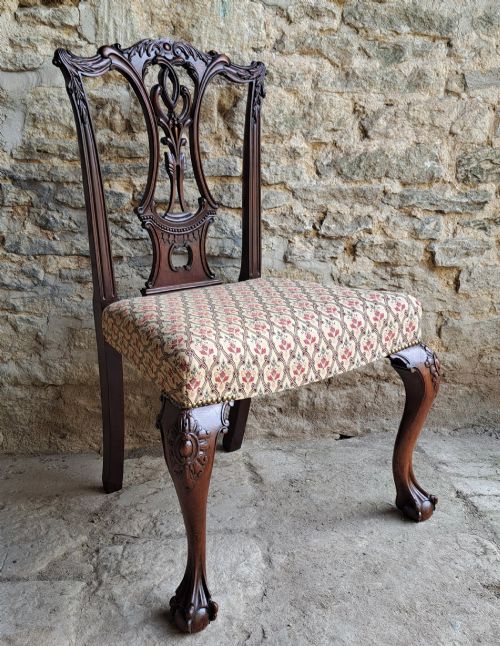
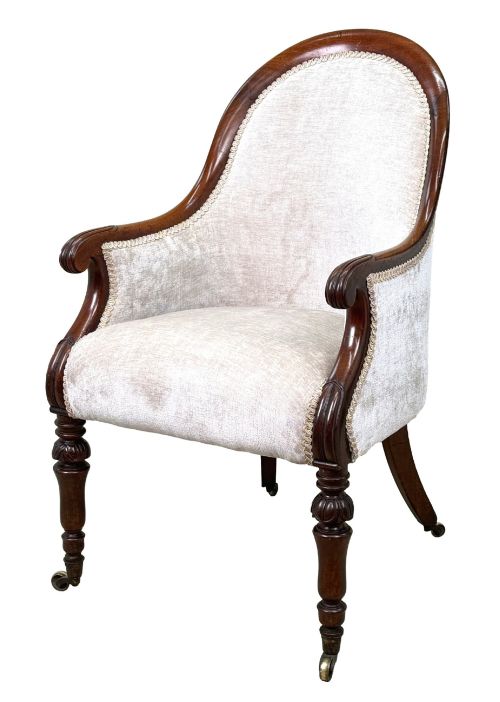
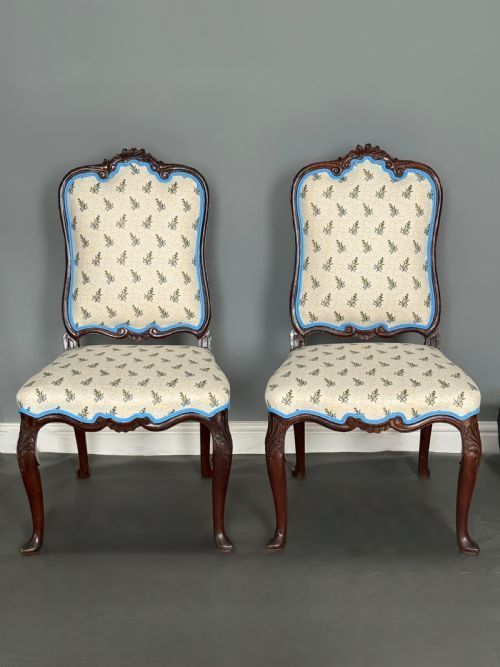
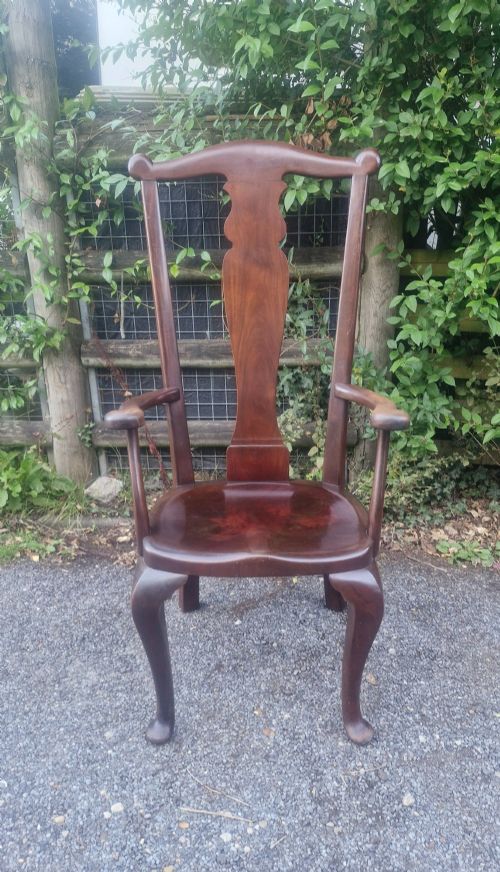
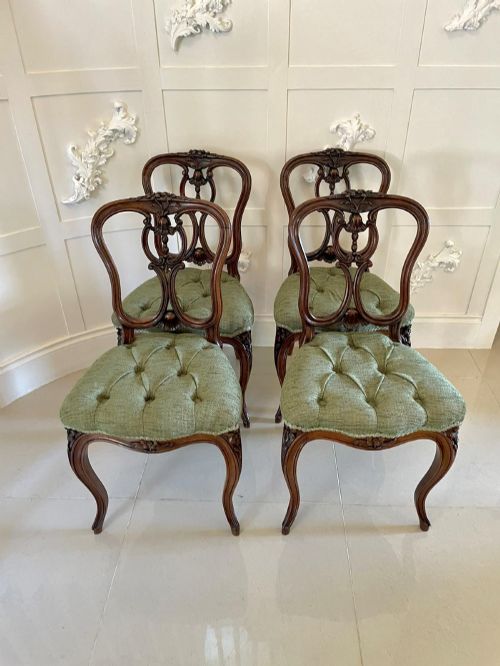

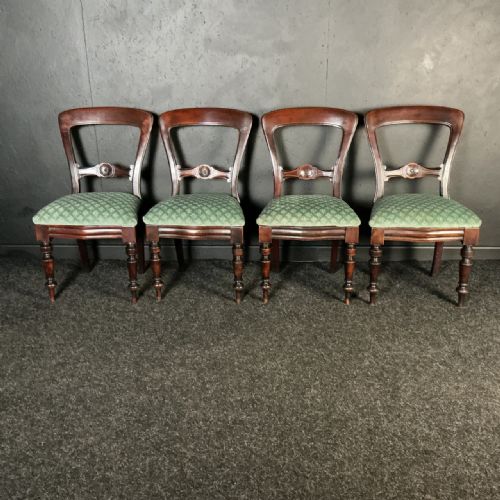
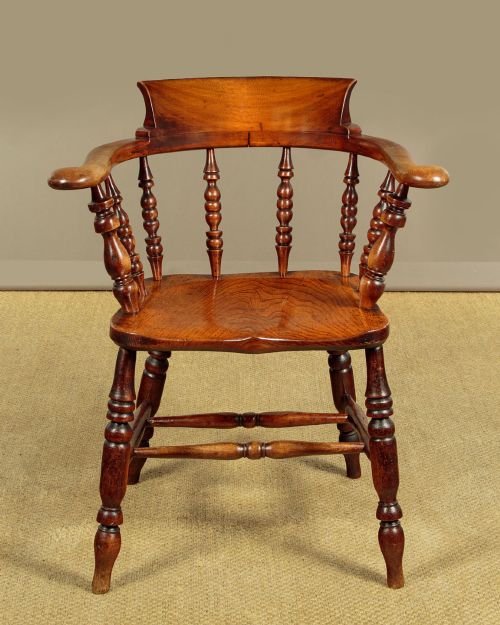
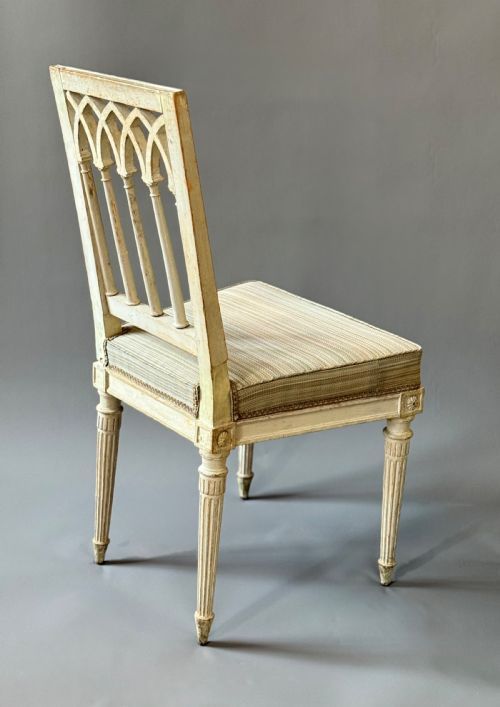
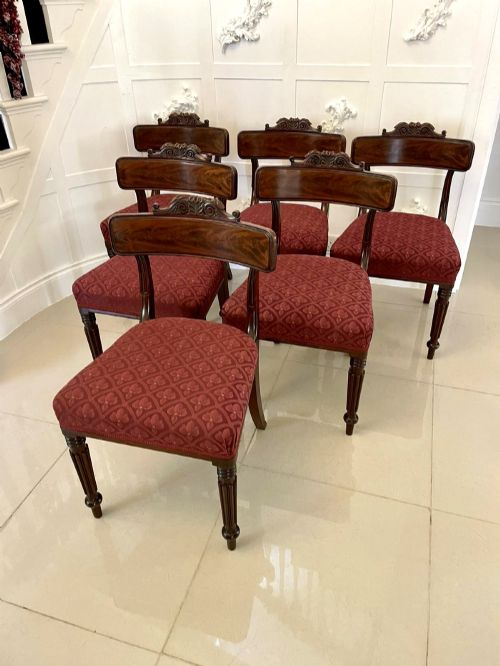
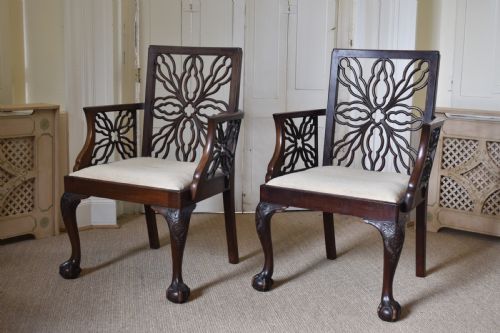
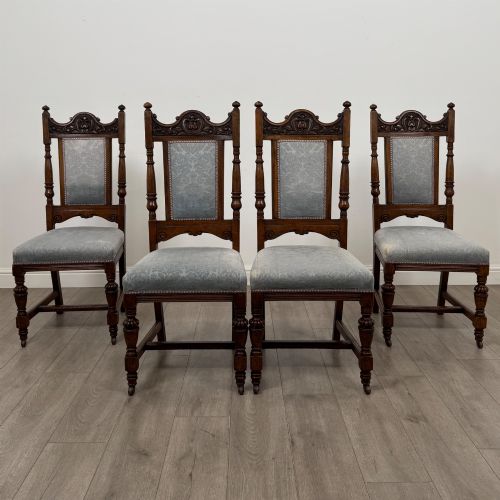
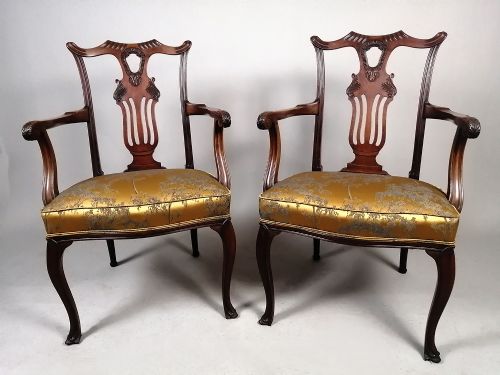
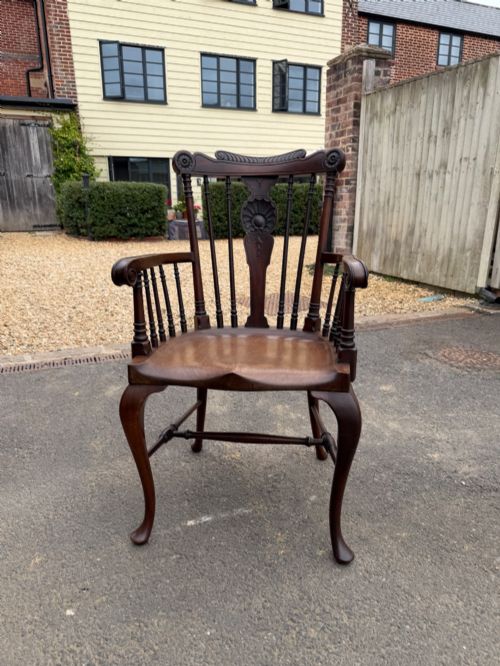
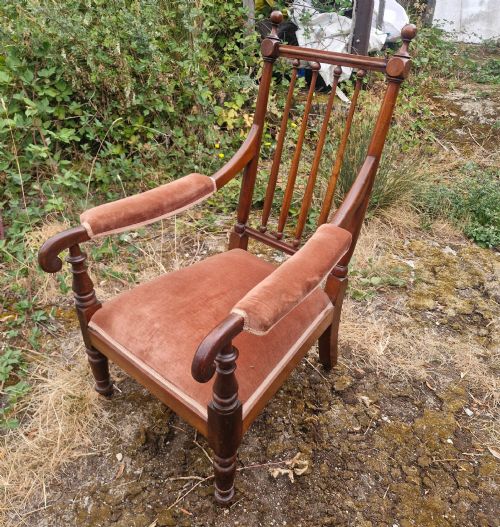
Carved Leg Desk Chair
A carved leg desk chair is a practical seat raised on shaped supports, offering a sturdy yet refined perch for writing.
Carved Leg Desk Chair
A carved leg desk chair combines functional seating with ornamental woodwork, appearing across periods from the eighteenth century to the early twentieth century. Buyers seeking this form will find examples shaped in mahogany or walnut, often featuring cabriole supports or revival details.
The selection ranges from early walnut side chairs adapted for writing to nineteenth-century mahogany library models and later Edwardian interpretations. Many specimens incorporate drop-in seats, cane panels, or upholstered pads covered in leather, velvet, or textile.
The styles span Georgian, Regency, and Victorian eras alongside later revivals, demonstrating how makers adapted classic forms for study rooms and offices. These pieces provide a solid wooden framework combined with carved cabriole or sabre legs.
Assessing quality
The distinction between standard examples and exceptional work rests on the crispness of the carving and the selection of timber figures. Superior pieces exhibit deeply articulated ornament on the knees and frame, executed by skilled hands.
Structural integrity and timber matching also dictate distinction, where uniform grain and robust joinery sustain daily use over centuries. Original surfaces, whether polished mahogany or patinated walnut, elevate the standing of an individual piece.
Smoker's bow armchairs and library seats ensure that even the most studious writer enjoys a well-turned spindle.
Charles Tozer·Gillows
The Carved Leg Desk Chair Glossary
- Cabriole leg
- A furniture support that curves out at the knee and tapers inward to an ankle, mimicking an animal's leg. This form is common on eighteenth-century walnut and revival pieces.
- Drop-in seat
- A removable wooden frame upholstered separately and dropped into a ledge within the chair seat rail. It allows easy recovering.
- Tub armchair
- A seating form featuring a continuous curved back and armrest rail enclosing the sitter. It often appears in mahogany or cane variants.
- Sabre leg
- A concave-tapered furniture support curving outward toward the back, typical of Regency designs. It provides a light yet sturdy stance.
- Library chair
- A comfortable seating form designed for reading rooms, frequently equipped with arms and upholstered surfaces. These pieces prioritize support during prolonged sitting.
Carved Leg Desk Chair: Frequently Asked Questions
What is a carved leg desk chair?
A carved leg desk chair is a wooden seat designed for writing or study, featuring ornamental woodwork on its structural supports. These pieces combine utilitarian function with decorative craftsmanship.
They appear in various historic timber types and revival styles, serving as both practical furniture and decorative interior elements.
How were these chairs used?
These chairs were placed at writing tables, bureau desks, and in libraries to provide comfortable support during administrative tasks or reading. Their sturdy frames accommodated daily domestic and professional use.
Over time, many transitioned from working spaces into general reception rooms or studies, retaining their supportive proportions.
How do I live with one?
Living with a historic desk chair involves placing it at an appropriate table or desk where its height and arms clear the apron. Regular dusting and occasional wax maintenance help preserve the wooden surfaces.
Protecting upholstered or cane inserts from direct sunlight and excessive weight ensures the materials remain resilient in modern interiors.
How do I tell periods apart?
Differentiating periods relies on observing timber choices, leg profiles, and ornamental motifs. Eighteenth-century pieces often feature walnut with cabriole legs, while Regency examples favor mahogany with sabre supports.
Victorian and Edwardian items frequently display revival characteristics, blending earlier silhouettes with nineteenth-century manufacturing methods.