
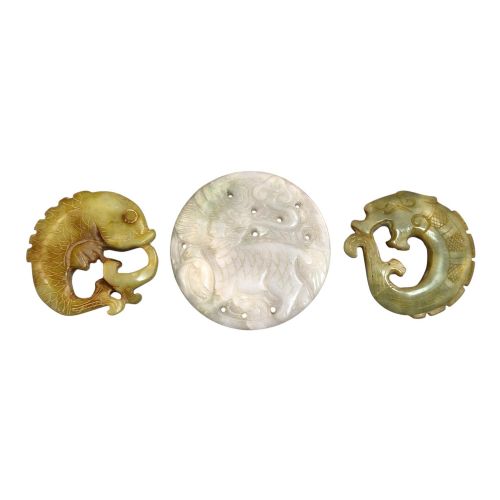
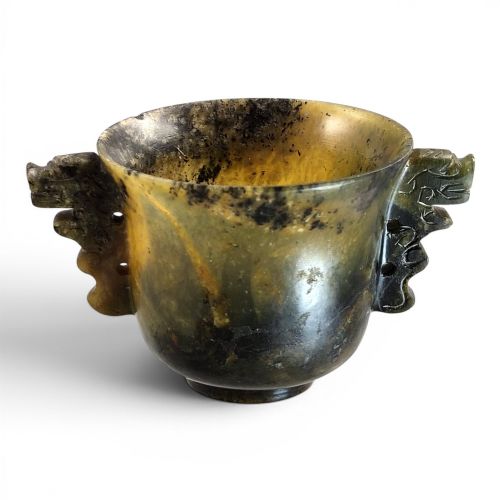
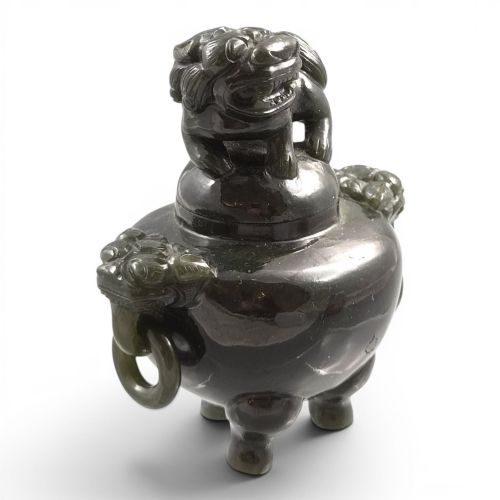


Carved Jade Dragon
A carved jade dragon brings tangible weight and historic form to a desk or collection, spanning centuries of skilled lapidary work.
Carved Jade Dragon
A carved jade dragon encompasses items ranging from pendants and amulets to ceremonial vessels and incense burners. These objects trace their origins through the Qing Dynasty, the Chinese Republic Period, and Edwardian interpretations.
Buyers will most frequently encounter pendants and smaller decorative carvings rendered in various shades of green, white, and pale celadon jade. The forms often incorporate traditional motifs such as the qilin, chilong, and taotie alongside the dragon.
The selection includes hardstone carvings and soapstone pieces that reflect traditional Chinese and archaistic styles. Examples span from the eighteenth century through the nineteenth and twentieth centuries.
How they were made
Techniques range from double-sided relief carving to hollowed vessel construction with delicate handles and tripod supports. Silver enamelling occasionally frames the stone, as seen in composite items combining metalwork and jade rims.
Listings include materials ranging from nephrite and jadeite to soapstone and hardstone.
What varies in quality
Quality rests in the precision and depth of the carving, where fluid lines distinguish a powerful dragon from a rigid execution. The handling of difficult motifs, such as intertwined chilong or intricate scales, separates standard production from superior artistry.
The natural material itself dictates much of the appeal, with smooth surfaces, even translucency, and thoughtful integration of stone colour directing the overall success of the piece.
The Carved Jade Dragon Glossary
- Nephrite
- A dense, tough form of jade favoured in traditional Chinese carving for its durability and smooth finish. It resists scratching and holds fine detail well.
- Jadeite
- A brighter, often more translucent mineral than nephrite that became widely used for jewellery and pendants during later periods. Its crystalline structure creates distinct colour pooling.
- Archaistic
- A style that consciously imitates the forms, bronzes, and motifs of ancient dynasties. Carvers used this approach to connect modern work with historic heritage.
- Chilong
- A mythical horned dragon without wings, frequently depicted twisting and crawling across jade belt buckles and pendants. It is a common motif in Qing Dynasty carving.
- Celadon
- A pale green or grey-green glaze or stone tone reminiscent of jade. Pale celadon jade shows a subtle, translucent green coloration highly prized by collectors.
Carved Jade Dragon: Frequently Asked Questions
What periods do these carvings come from?
The pieces span several centuries, including the eighteenth century Qianlong period, nineteenth-century Qing Dynasty, and Edwardian or Republic periods from the early twentieth century.
Each era brought distinct handling of motifs, materials, and vessel forms, reflecting the changing tastes of their respective times.
How were incense burners and vessels used?
Vessels and incense burners served both ritual functions and scholarly pursuits, often displayed on scholar's desks for burning aromatic woods.
Their presence added prestige and a connection to traditional ceremonial practices within a household.
How do I care for jade?
Jade is a durable stone that benefits from gentle cleaning with a soft cloth and mild soapy water when necessary. Avoid harsh chemicals and protect mounted pieces with silver or enamel elements from moisture.
Storing them away from direct sunlight helps preserve the finish of both the stone and any accompanying metalwork.
What is the difference between nephrite and jadeite?
Nephrite and jadeite are two distinct mineral species that share the common name jade. Nephrite tends to have an oily lustre and high toughness, while jadeite often presents a more crystalline and vitreous appearance.
Both materials were utilised across different periods for various carving applications.