
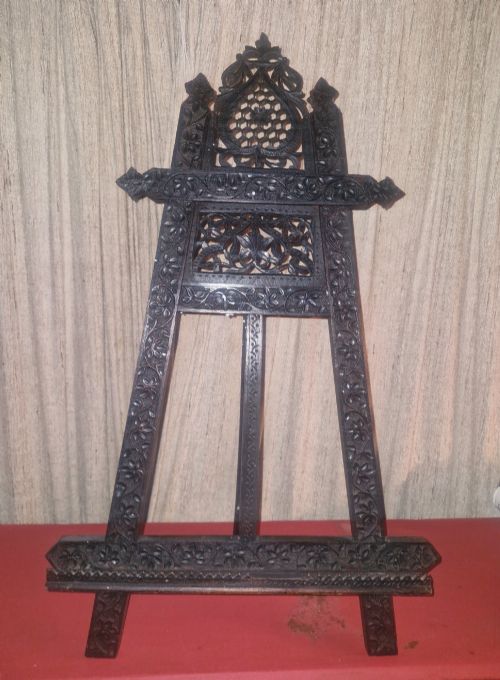
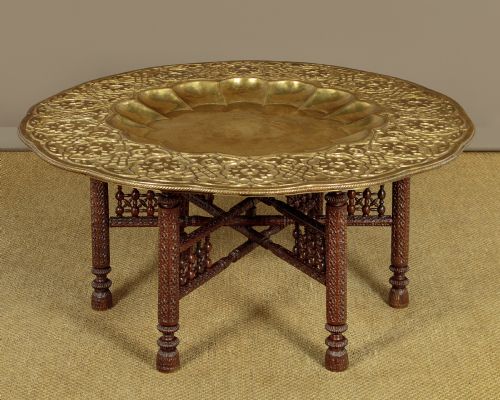
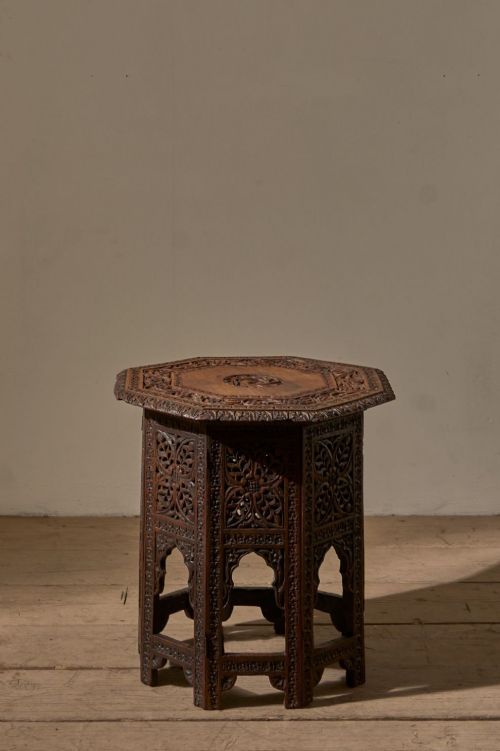


Carved Hardwood Folding Table
A carved hardwood folding table brings intricate craftsmanship and versatile display into a room, offering portable utility through historic design.
Carved Hardwood Folding Table
When you search for a carved hardwood folding table, you look at pieces that combine dense timbers with detailed surface work, designed to collapse flat when not needed. These items span various origins, including Anglo-Indian workshops, Chinese export studios, and Middle Eastern makers.
The versions you meet most frequently on this page include occasional and coffee tables shaped with octagonal or rectangular tops, often supported by folding bases. Side tables, tray tables, and campaign furniture also appear alongside related folding pieces.
Originating predominantly across the nineteenth and early twentieth centuries, these tables reflect diverse cultural styles such as Qing Dynasty, Meiji Period, and Islamic geometric patterning. They function easily as practical tea tables, card tables, or display surfaces in modern spaces.
How they were made
Carved hardwood folding tables rely on dense timbers such as teak, padauk wood, rosewood, and Hongmu, chosen for their strength and ability to hold fine detail. Artisans carved deep relief motifs directly into the wood, depicting dragons, foliage, and traditional scenes.
Many examples incorporate contrasting inlays of brass, copper, and bone set flush into the wooden surfaces. Folding mechanisms use articulated wooden cross-frames or hinges that allow the top and base to separate or collapse neatly.
Listings here feature hardwoods such as teak, padauk, and rosewood, alongside decorative inlays of brass, copper, and bone across various nineteenth and early twentieth century periods.
What varies in quality
Quality in a carved hardwood folding table rests upon the depth and crispness of the carving, where pieces with sharply defined, deeply undercut motifs surpass shallower, softer execution. The density and grain of the chosen hardwood also dictate the structural integrity and weight of the frame.
Precision in the inlay work separates standard examples from exceptional ones; tightly fitted brass, copper, or bone elements demonstrate superior craftsmanship compared to loose or uneven replacements. The complexity of the folding mechanism and the stability of the assembled table further distinguish finer production.
The Carved Hardwood Folding Table Glossary
- Padauk wood
- A dense, durable tropical hardwood prized for its deep reddish-brown colour and stability. It provides an excellent base for intricate relief carving.
- Hongmu
- A traditional Chinese term for dense hardwoods, often translated as red wood. It encompasses heavy, dark timbers used in high-status furniture.
- Campaign table
- Portable furniture designed for easy transport and rapid assembly by travellers or military officers. These items feature clever folding actions.
- Octagonal shape
- A geometric form with eight sides, frequently seen in table tops from Indian and Middle Eastern traditions. This layout accommodates complex brass inlay patterns.
Carved Hardwood Folding Table: Frequently Asked Questions
How do I care for a carved hardwood table?
Dust the deep carvings regularly with a soft, dry brush to prevent dirt accumulation in the recesses. Apply natural wax sparingly to maintain the timber without softening the detailed grain.
Avoid placing the piece near direct heat sources or strong sunlight, which can dry out dense woods and loosen inlaid metal or bone elements.
Are these tables sturdy enough for daily use?
The folding bases are engineered to support everyday items like books, lamps, and drinks when fully secured. However, care should be taken when moving them while loaded, as the hinged joints rely on proper alignment.
Checking that the cross-frame locks securely into place ensures safe, stable placement in a busy room.
How do I identify an Anglo-Indian piece?
Anglo-Indian pieces typically combine British furniture forms with dense Indian carving styles, often utilising teak or padauk wood. Look for motifs depicting foliage, animals, or figural scenes carved in high relief across the surfaces.
Many of these examples also feature contrasting metal inlays like brass or copper set directly into the dark timber.