



Carved Hardwood Chest
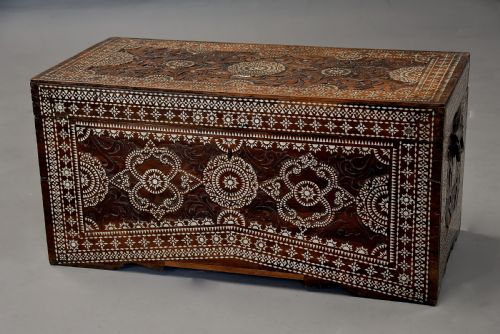
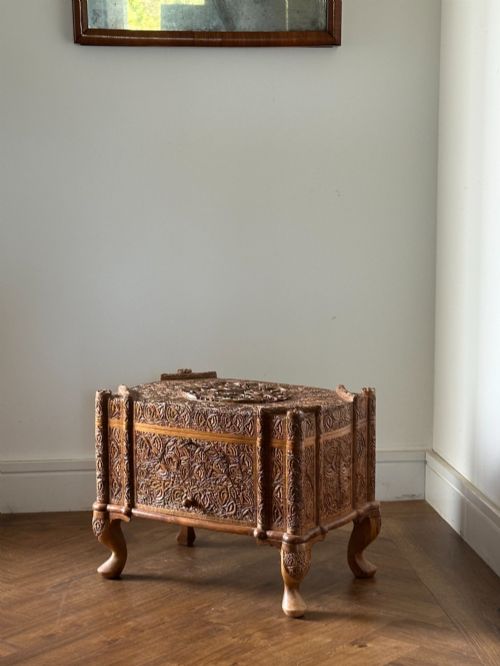
A carved hardwood chest brings heavy, densely figured timber and intricate regional carving into a room, serving as both storage and focal point.
Carved Hardwood Chest
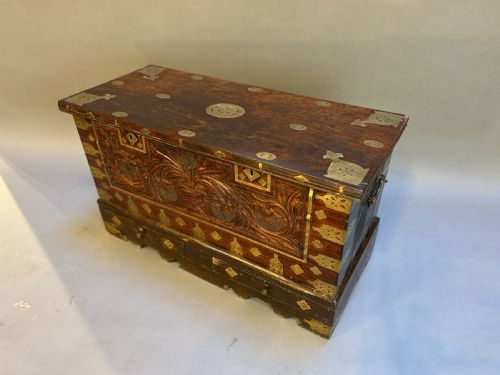
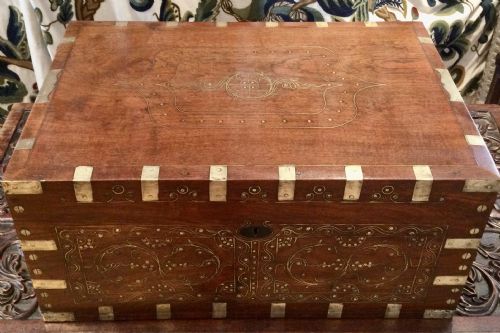
A carved hardwood chest is a sturdy storage piece shaped by diverse global traditions, spanning storage chests, blanket boxes, and smaller caskets. Buyers exploring carved hardwood chest variants will encounter regional iterations from India, China, and the Middle East alongside Victorian and Edwardian examples. The selection ranges from substantial trunk forms reinforced with brass and iron to smaller inlaid boxes and cabinets.
Most pieces date from the nineteenth century through the early decades of the twentieth century, with styles including Anglo-Indian, Chinese Export, and Qing Dynasty. These items function practically as lidded trunks or drawer units while displaying deep surface carving and decorative joinery.
Construction and materials
Construction relies on dense timbers such as teak, rosewood, sandalwood, and walnut, frequently combined with secondary woods. Artisans shaped these heavy materials using traditional joinery methods suited to domestic and travelling storage.
Surface ornamentation integrates functional metal elements including brass and iron mounts, bindings, and hinges. Many surfaces feature detailed relief carving alongside contrasting inlay work utilising mother of pearl.
The listings span from the nineteenth century to the 1930s, featuring teak, rosewood, sandalwood, and brass.
Assessing quality
Quality reveals itself in the depth and precision of the chisel work across the timber surface. Crisply defined carving and securely set mother of pearl inlay separate finer decorative pieces from simpler utility items.
The integrity of the structural joinery and the original condition of metal fastenings such as brass and iron hinges dictate the enduring strength of the trunk. Weight and density of the selected hardwood further indicate the standard of the manufacture.
The Carved Hardwood Chest Glossary
- Zanzibar chest
- A heavy merchant trunk originating from East Africa and India, typically fitted with brass studding, strapwork, and elaborate hardware.
- Sarcophagus
- A monumental casket form with a rounded or steeply pitched lid, often associated with luxury jewellery boxes.
- Cellarette
- A fitted cellar or container designed for holding bottles, adapted in Anglo-Indian workshops into decorative cabinet forms.
- Qing
- A Chinese imperial dynasty spanning the seventeenth to early twentieth centuries, known in these listings for traditional carved storage.
- Inlay
- A decorative technique where contrasting materials like mother of pearl are embedded flush into the hardwood surface.
Carved Hardwood Chest: Frequently Asked Questions
How were these chests used originally?
These pieces served primarily for the secure storage and transport of valuable personal possessions, textiles, and trade goods across maritime and overland routes.
Larger trunk forms stood in domestic interiors for linen and blankets, while smaller caskets and boxes held jewellery, documents, and domestic sundries.
Where do these carved chests originate?
The pieces originate from diverse global centres including India, China, and the Middle East, reflecting distinct regional craftsmanship and trade connections.
Colonial trade and export routes brought these styles into British homes during the Victorian and Edwardian periods.
How do I date a hardwood chest?
Dating relies on examining the timber species, metal hardware, joinery techniques, and stylistic motifs associated with specific periods like the nineteenth century or the 1920s.
Wear patterns on the base and interior surfaces also provide clues regarding the age and continuity of the piece.
How do I care for antique hardwood?
Preserving the timber involves maintaining stable indoor humidity levels away from direct heat sources and sudden temperature shifts.
Regular dusting with a dry cloth keeps the carved recesses clean without requiring heavy polishes or chemical treatments.