



Carved Hallway Table
A carved hallway table brings character and a solid surface to an entrance, drawing the eye with detailed woodwork and period design.
Carved Hallway Table
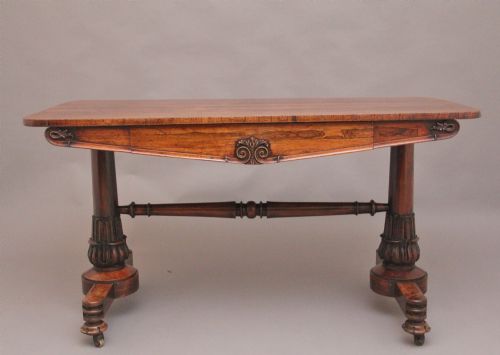
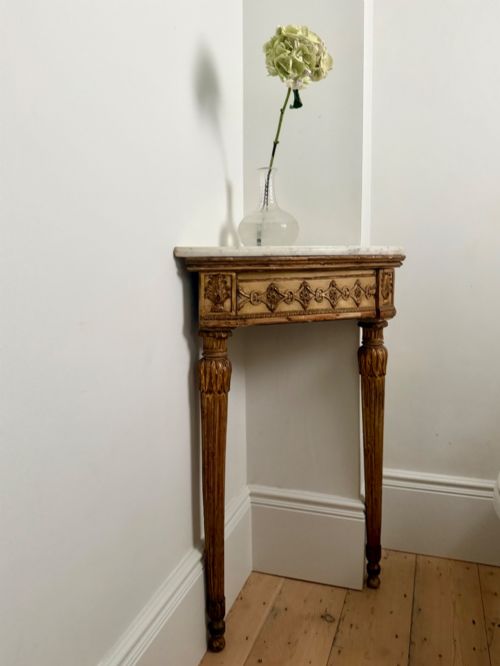
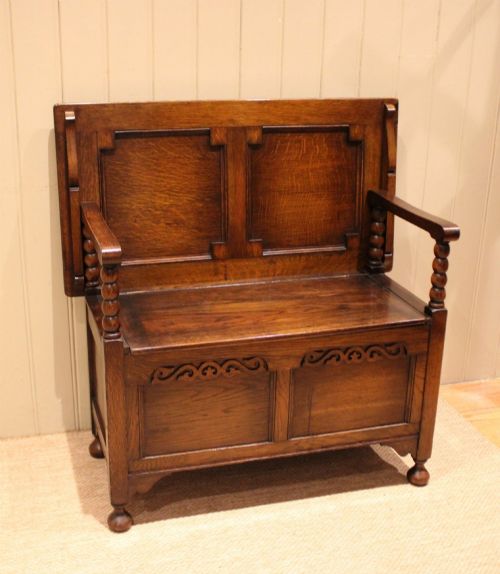
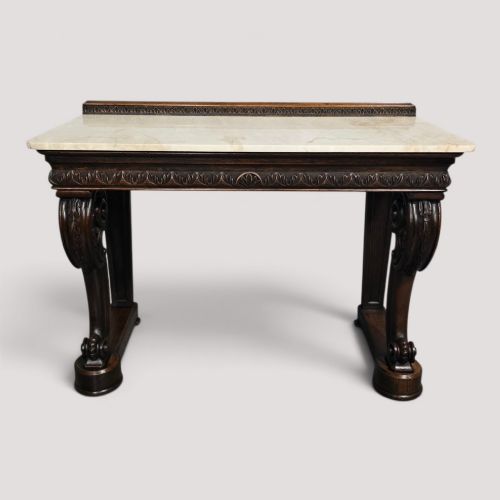
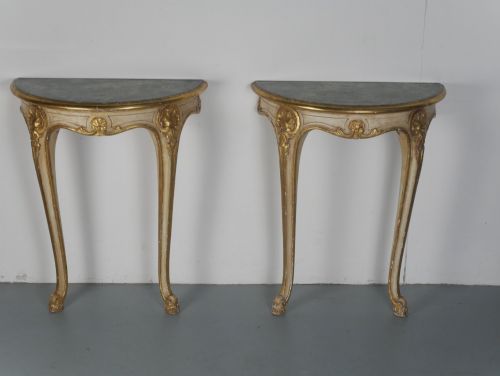
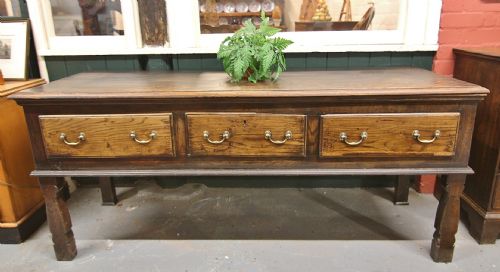
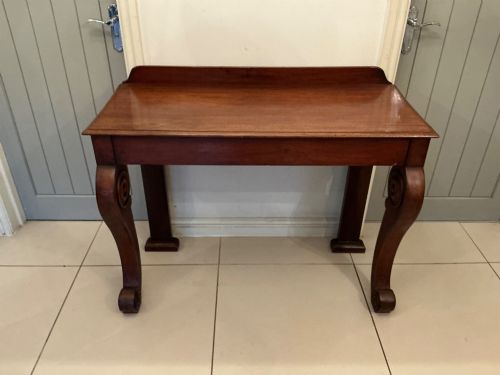
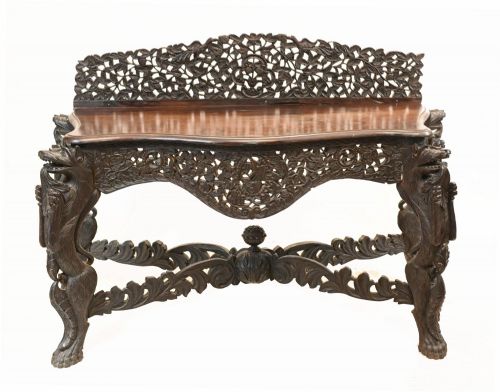
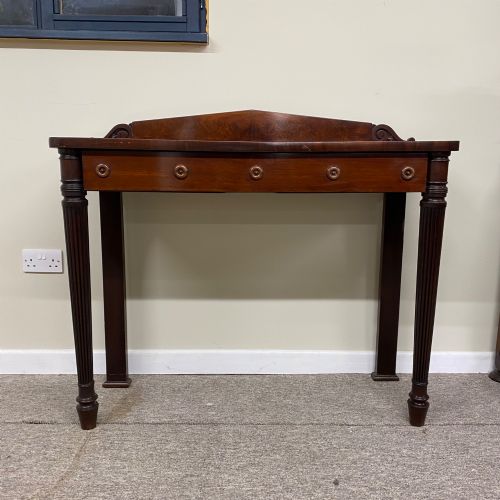
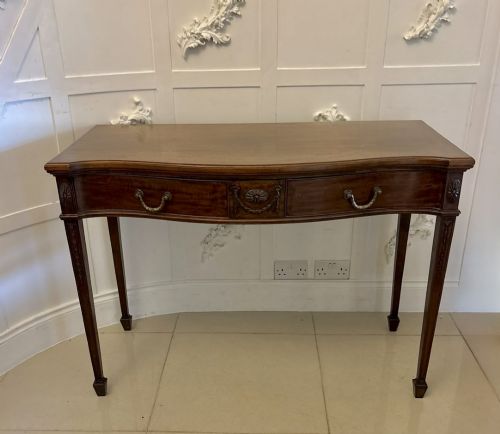
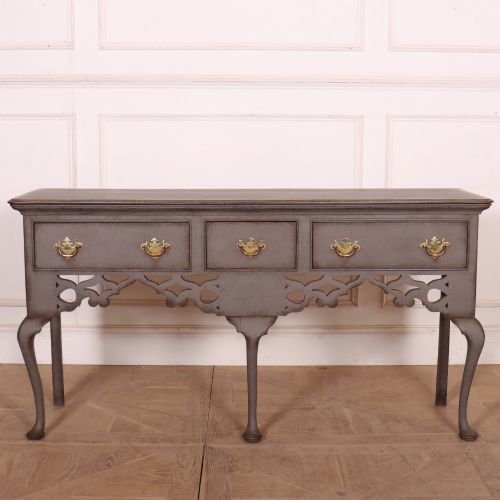
A carved hallway table primarily takes the form of a console table, side table, or serving table designed to stand against a wall in an entrance or reception space. The selection spans numerous decades and centuries, ranging from 17th-century solid oak examples to Victorian mahogany pieces and later revivals from the 1920s and 1930s.
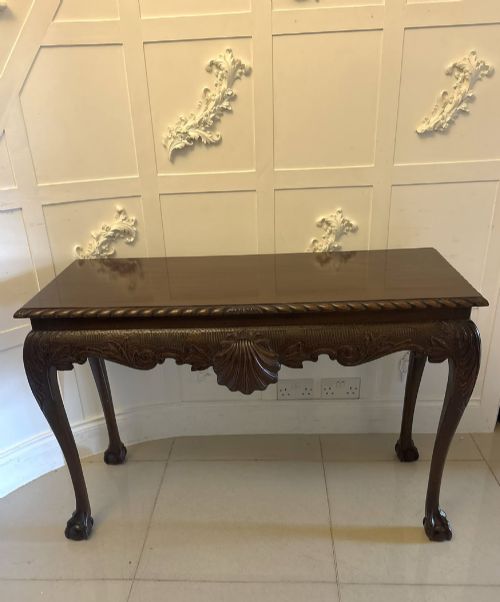
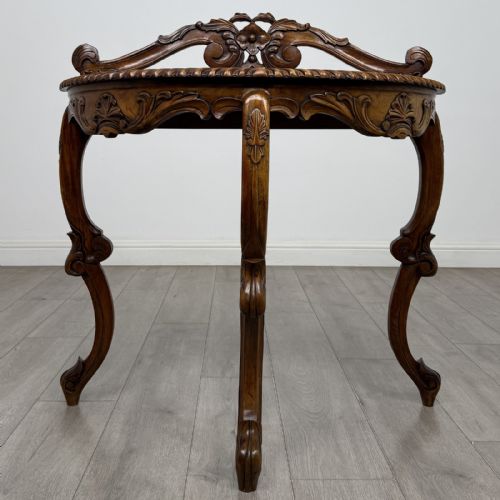
Makers and craftsmen utilised various regional styles, incorporating French Rococo, Neoclassical, Jacobean Revival, and Chippendale Revival aesthetics into the timber frames. Buyers frequently encounter Victorian and Edwardian iterations featuring cabriole legs, gadrooned edges, or turned stretchers tailored for compact corridors.
Beyond standard console designs, the offerings encompass washstands, tea tables, and centre tables that function equally well as a hallway focal point. These domestic surfaces reflect diverse international origins, including English workshops, French ateliers, Italian studios, and Chinese Qing Dynasty production.
Materials and Construction
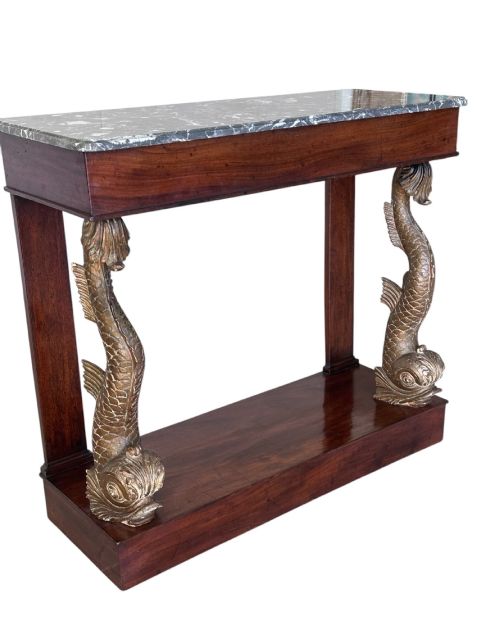
Cabinetmakers constructed these tables using dense hardwoods such as mahogany, oak, walnut, burr walnut, and rosewood, often pairing them with inset marble tops. Timber selection dictated the structural integrity and grain pattern, with solid oak and mahogany providing robust frames for heavy daily use.
Decorative embellishments relied on manual carving techniques, gilding on giltwood surfaces, and painted finishes. Artisans applied detailed mouldings, such as green man carvings or serpentine shaping, to elevate the visual weight of the furniture.
Carved Hallway Table Retail Price Guide 2026
Typical asking prices for carved hallway table among the pieces listed under this phrase on Sellingantiques today, from the lower quarter to the upper quarter. They describe what is for sale here now, not the wider market.
The inventory spans the 17th, 18th, 19th, and early 20th centuries, featuring oak, mahogany, walnut, and marble.
Craftsmanship and Proportion
The distinction between standard and superior pieces rests on the crispness of the hand carving and the selection of timber veneers. Finely figured burr walnut or rich mahogany grain paired with deeply chiselled mouldings indicates a higher tier of workmanship from the workshop.
Proportion and structural honesty also define quality, where joints fit securely without excessive modern intervention. Original marble slabs, intact giltwood surfaces, and balanced cabriole legs retain their intended aesthetic integrity much better than altered examples.
M. D. Miller and Sons
The Carved Hallway Table Glossary
- Console table
- A table designed to be fixed against a wall, frequently supported by ornamental brackets or front legs rather than standing independently.
- Cabriole leg
- A furniture leg that curves out and then in, resembling the shape of an animal's leg, commonly seen on 18th-century and revival pieces.
- Gadrooned edge
- A decorative carved border featuring convex curves or reed motifs, often found along the tabletops of Edwardian and Victorian designs.
- Giltwood
- Wood that has been coated with gold leaf or gold paint to create a luminous, metallic finish characteristic of French Rococo and Neoclassical styles.
Carved Hallway Table: Frequently Asked Questions
Where should I place a carved hallway table?
Position the piece in an entrance hall or narrow corridor against a blank wall where it can serve as a drop zone for keys and mail.
Pair the surface with a matching mirror or a low lamp to balance the visual weight of the carved timber in a compact space.
How do I care for a marble top table?
Clean the stone surface regularly with a soft damp cloth and mild soap, avoiding acidic cleaners that etch the polished finish.
Use coasters and protective pads underneath objects to prevent scratches and staining on antique marble.
Are these tables suitable for small hallways?
Many console and side tables feature shallow depths and demi-lune shapes specifically designed to fit restricted floor plans without blocking movement.
Select a slim profile with slender legs to maintain an open, uncluttered appearance in a tight entranceway.
How do I distinguish Victorian from Edwardian styles?
Victorian pieces often display darker, heavier timbers with elaborate carvings like green man motifs or heavy serpentine shaping.
Edwardian designs tend to exhibit lighter mahogany or walnut framing with more restrained decorative accents and delicate cabriole supports.